Infantino's $4.2B Stake Sale Blows Up—UEFA Boycott Puts His Re-Election on the Line
The FFE stake sale plan with JPMorgan has been pulled, but UEFA and CONCACAF still refuse to lift their boycott. With the re-election threshold at 106 votes, Infantino still holds support across Africa, South America, and Argentina—making this race far messier than it looks from the outside.
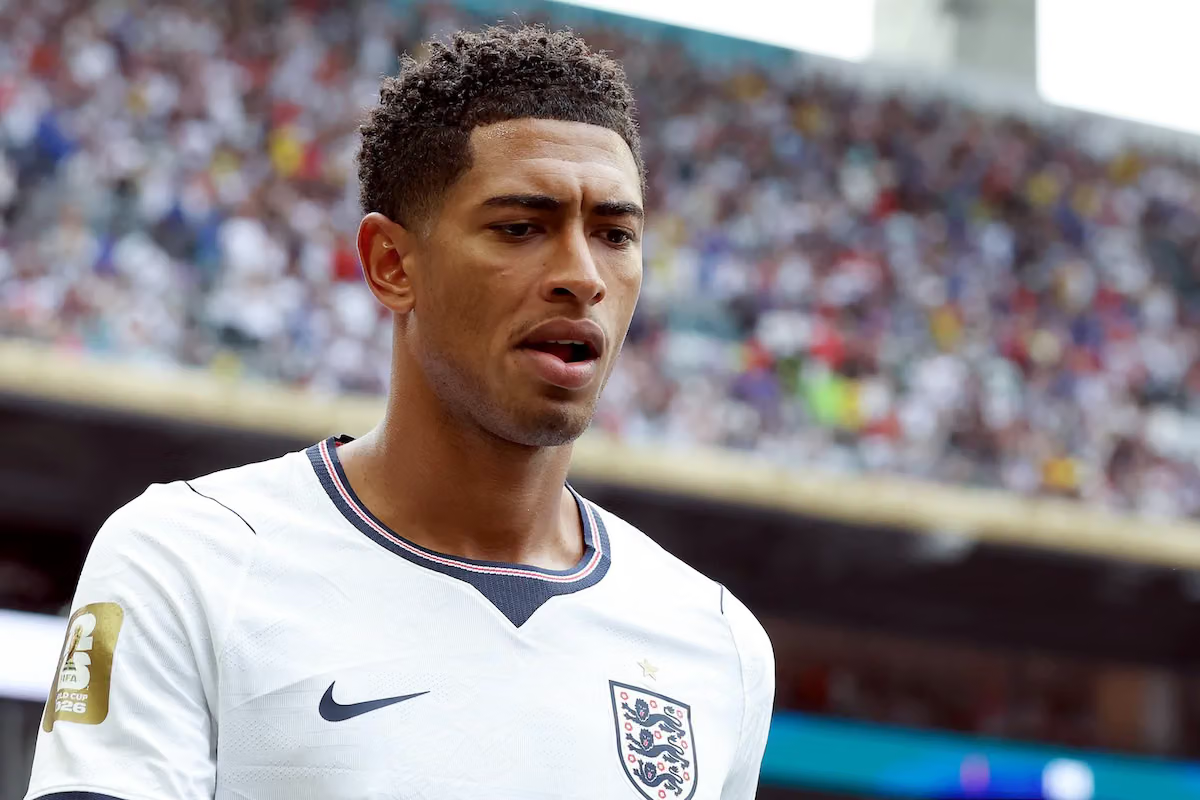
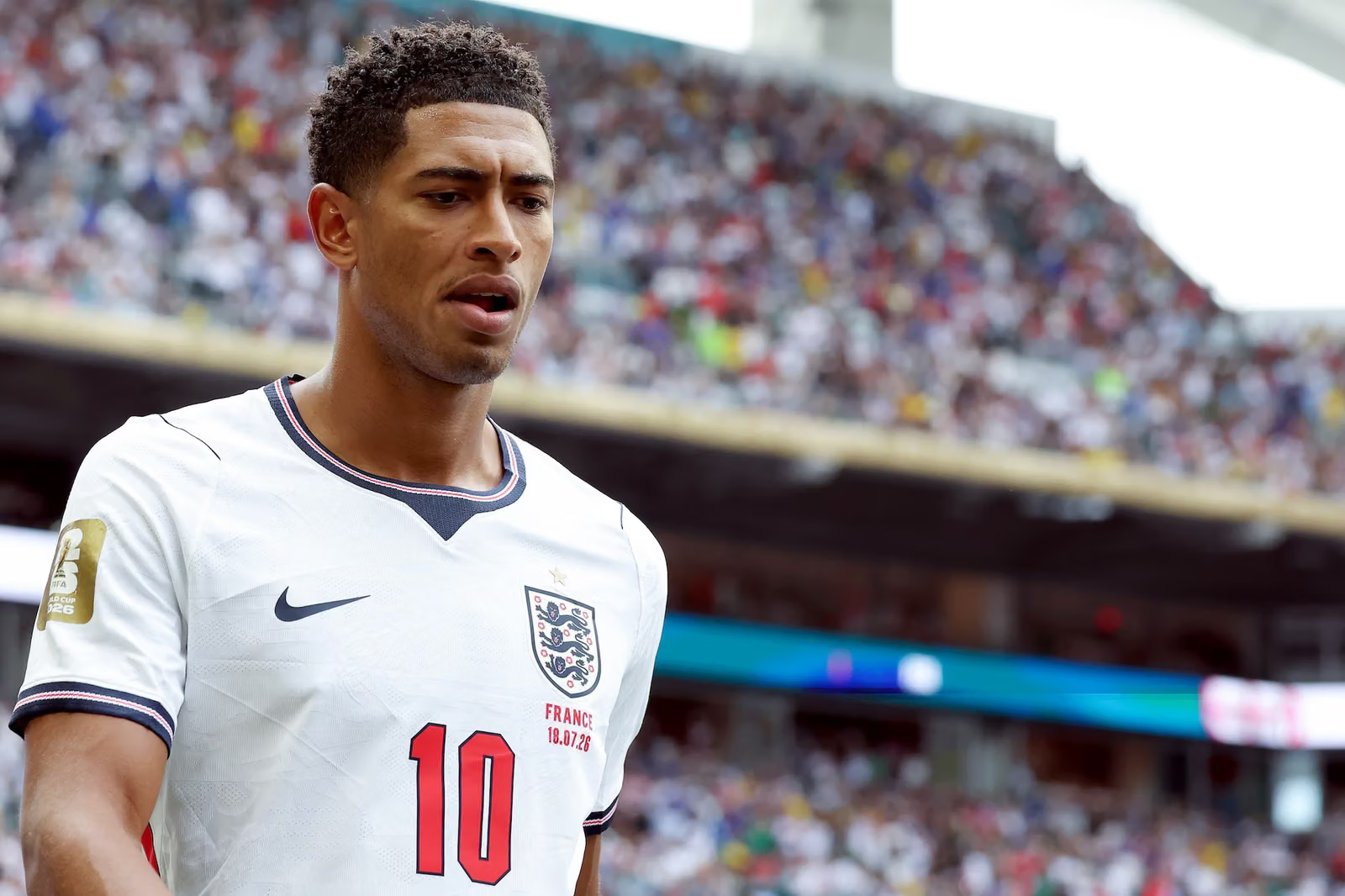
The World Cup is over and Argentine fans are still celebrating, but the real final inside FIFA has only just kicked off. According to Sky News, this year's tournament saw the highest number of domestic violence incidents in the UK for a tournament of its kind, with 384 cases recorded. Things haven't calmed down on the pitch either—FIFA has already launched an investigation into Argentina over the Falkland Islands flag raised after their semifinal win against England, on top of the chaos following the final loss to Spain: midfielder Leandro Paredes faces three assault charges stemming from a clash with Spain's Eric García, while Nahuel Molina has been hit with two assault charges and one misconduct charge. The Argentine Football Association then declared July 15—the date they beat England—"National Football Team Day," which almost reads like a parting gift for the British press.
But all of that is just a side plot. What's actually shaking FIFA to its core is a failed business gamble by President Gianni Infantino, and the re-election crisis it has now triggered.
A $4.2 Billion Equity Play
Right after the World Cup, FIFA teamed up with JPMorgan to propose a new commercial subsidiary called FIFA Forward Enterprise (FFE), which would bundle broadcasting rights, sponsorships, ticketing, and licensing for the men's and women's World Cups along with the Club World Cup, then sell minority stakes to private investors with a target raise of $4.2 billion. Thrive Capital, the venture firm founded by Jared Kushner's brother Joshua Kushner, was tapped to line up investors. FIFA claimed the deal would ultimately generate over $10 billion in additional payouts for its 211 member associations—framed as charity, but effectively marking the first time private capital could take a cut directly from the World Cup's own commercial machine.
The backlash was almost instant. All 55 member associations under UEFA voted unanimously to boycott FIFA competitions collectively if the plan went through, stating flatly: "The World Cup is not for sale." CONCACAF, representing 41 associations across North America, Central America, and the Caribbean, followed suit in opposition. On August 1, Infantino announced he was withdrawing the plan, admitting that "the division it has caused no longer serves its original purpose." But UEFA didn't back down even after the investment deal was pulled—its 55 members are keeping the boycott in place, insisting FIFA has yet to guarantee that "something like this will never happen again."
A Jordanian Prince's Accusation, and a Tricky Re-Election Math Problem
FIFA's next presidential election is set for March 18, 2027, in Rabat, Morocco, and Infantino is gearing up to run for re-election. Before all this, he had already elevated Trump onto the stage by awarding the first-ever FIFA Peace Prize. Then, after the investment deal collapsed, he was publicly accused of "extortion" by Jordan Football Association president Prince Ali bin al-Hussein—the prince wrote on X that FIFA had refused to assist the Jordanian federation for months, until someone passed along a verbal message during the World Cup suggesting that things would "greatly improve" for the association's struggles if he publicly backed Infantino's re-election.
No one has formally announced a challenge to Infantino yet, but The Guardian reports that UEFA is considering fielding its own candidate. Before the investment scandal broke, more than 200 of the 211 member associations had expressed support for Infantino; after the storm, several European associations withdrew their backing, with Norway going as far as directly calling for his resignation, and the English FA formally withdrawing support on August 6. Still, his support across Africa, South America, and parts of Asia remains intact, and the Argentine Football Association just announced it's fully backing his re-election bid. The threshold to win is 106 votes—meaning that even if Infantino loses all 55 UEFA votes and all 35 CONCACAF votes, he could theoretically still clear the bar. This election is shaping up to be a lot more suspenseful than it looked before the World Cup even kicked off.