Police don't need a license plate, don't need a name, don't even need a case that's already occurred — just draw a boundary on a map, enter a time range, and type a sentence describing behavior, and the algorithm handles the rest. This is how Flock's new tool works, according to a report by tech outlet Wired, and it reveals the biggest gap yet between the company's public image and its actual capabilities.
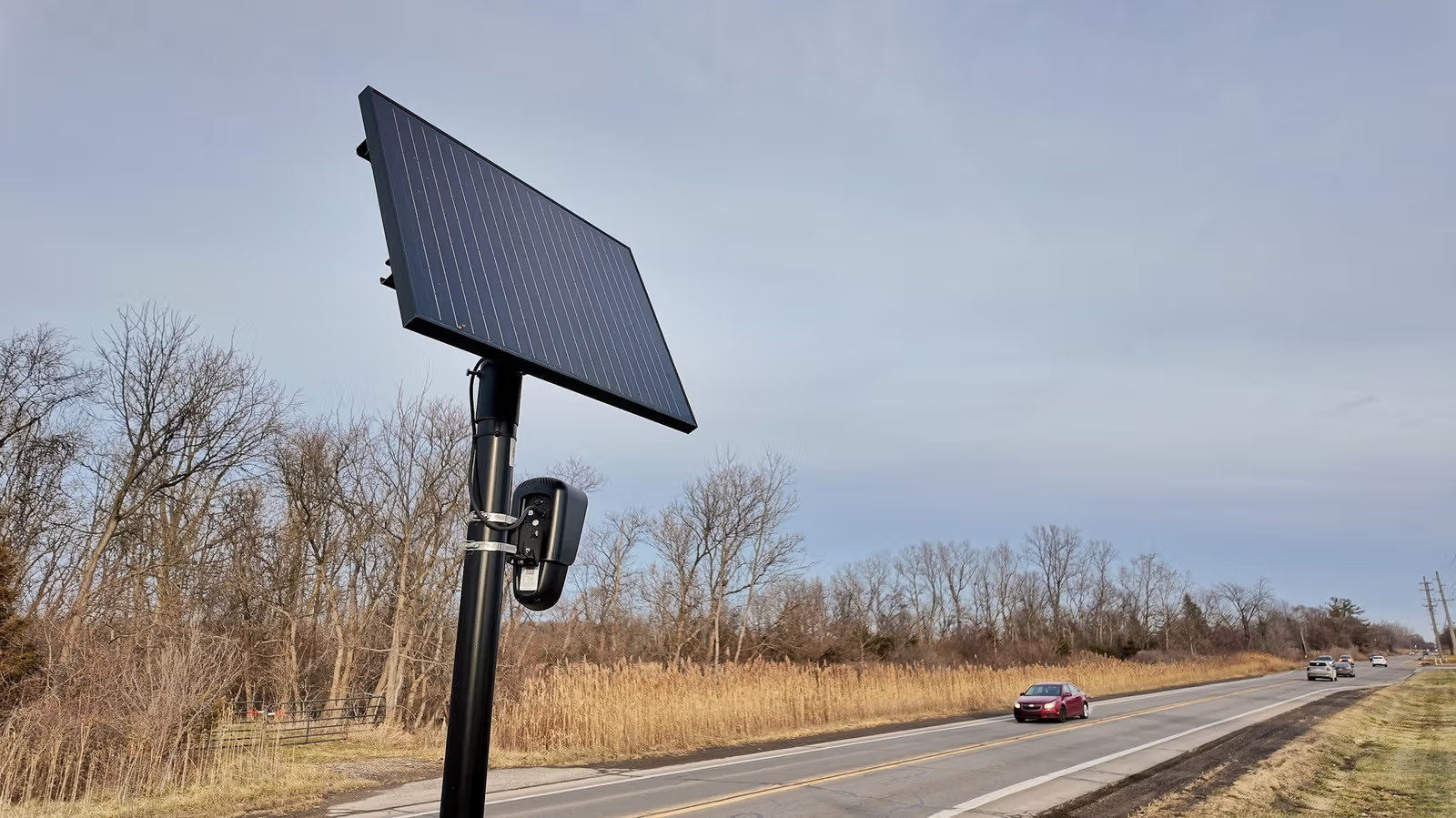
Flock has long positioned itself as simply an automatic license plate recognition (ALPR) company, but outsiders have long suspected its cameras could do far more than just read plates. According to the Wired report, Flock internally developed new software under the codename Nightshift, now publicly known as OS Investigate. This system connects a camera network spanning 6,000 communities across the US, tracking vehicle movement within those communities. For example, if an incident occurs somewhere, the system can analyze vehicle activity near the scene to identify potential witnesses, then cross-reference those leads against police case files, 911 dispatch records, and commercial identity databases to further uncover a witness's name, address, family relationships, and even friendships.
The Wired report notes that this tool "can search for people matching a description within a map-defined area, based solely on a description of their appearance." In other words, officers don't even need a license plate, a name, or a specific case to begin with — they just need to provide a location, a time frame, and a behavioral pattern, and the algorithm does the rest on its own. The system features a built-in chatbot interface that lets officers type prompts directly, such as "Find the vehicle that appeared most frequently in [community] during [time period] over the past 14 days." Fill in the blanks and submit to run the search — and these prompts don't require the user to input any specific case at all.
Flock states that OS Investigate is currently only being tested with select law enforcement partners, and that its current functionality "may not reflect" the version that will eventually be sold. The company has not denied any of the capabilities described in the Wired report, only emphasizing that this is a separate product from its license plate recognition technology.