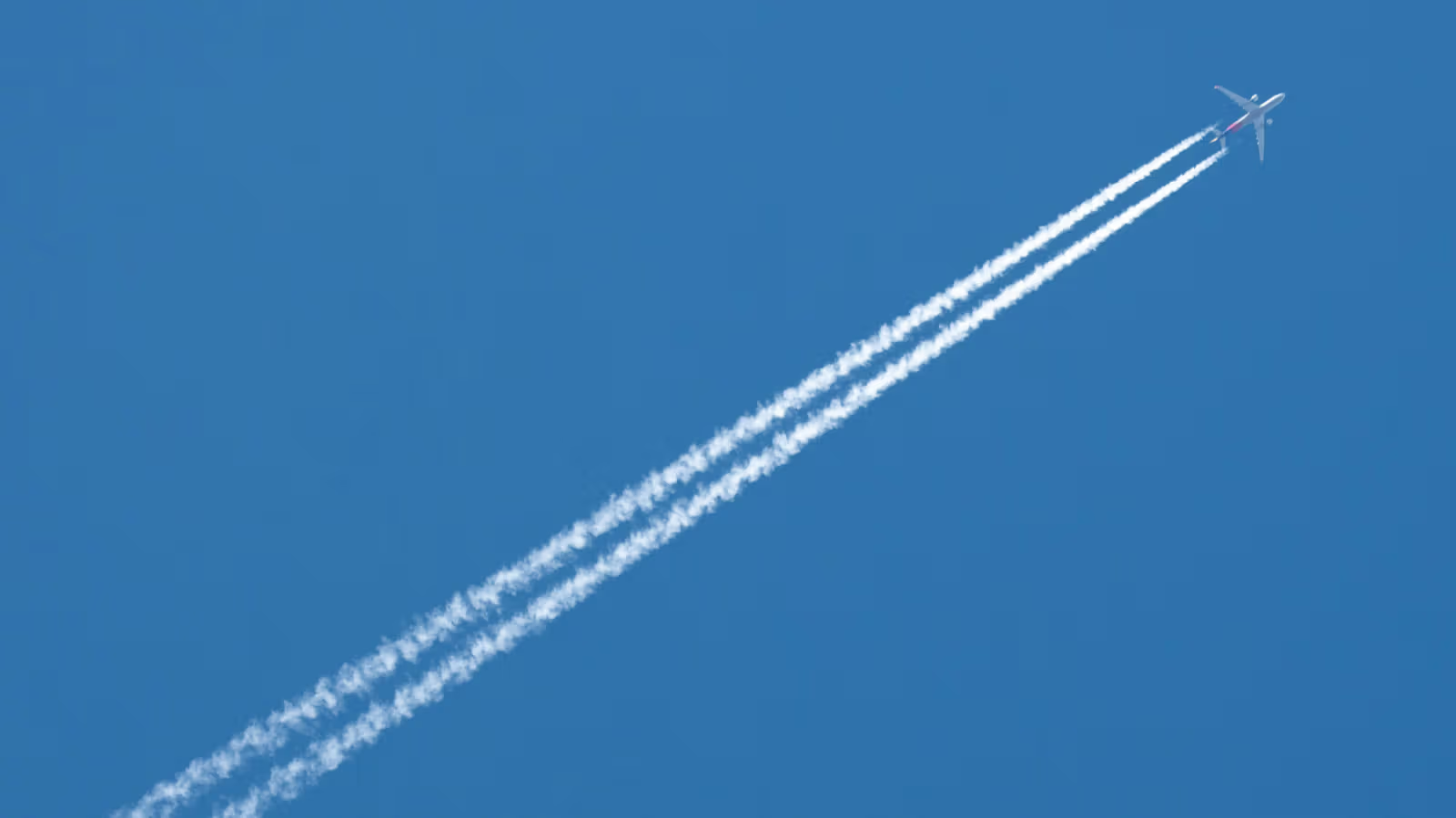
Those white streaks planes leave behind in the sky might look like harmless decoration, but they could actually be one of the drivers of global warming. Google is partnering with the UK government on an experiment called "Operation Blue Skies" to test whether fine-tuning flight paths can reduce the formation of contrails.
Contrails mostly form in cold, humid air, when water vapor from jet engines condenses and freezes, trailing that familiar white line across the sky. The problem is they trap heat radiating from the Earth's surface, warming the atmosphere. Researchers estimate that the warming effect from contrails accounts for roughly a third of aviation's overall climate impact. To be clear, this is about contrails backed by actual scientific measurements—completely different from the baseless "chemtrail" conspiracy theories circulating on social media.
The experiment is being conducted in Shanwick airspace, an air traffic control region in the northeastern part of the North Atlantic. The trial will run for 30 months, spanning the next two winters—since cold air is exactly the condition where contrails are most likely to form. Air traffic controllers will use weather forecasts to identify atmospheric zones prone to warming-type contrails, allowing select flights to make vertical altitude adjustments of up to 2,000 feet to avoid those zones, while still staying within normal flight parameters.