The first thing you notice holding this phone isn't how "light" it is—it's that it's still a bit thick. In his review of the Google Pixel 11 Pro Fold, Engadget's Sam Rutherford gave it 8.5 out of 10, but landed on a pretty blunt takeaway: every time he picked up the phone, he often found himself wishing he was holding a competitor's device instead.
That line sums up the central tension running through the whole review. The Pixel 11 Pro Fold is 10% lighter than its predecessor, the Pixel 10 Pro Fold, coming in at 238 grams with a folded thickness of 10.1mm, and it's priced at $1,899—$100 more than last year's model. On paper, that's progress, but lined up against the competition, the gains look a lot less impressive: Samsung's Galaxy Z Fold 8 weighs just 201 grams and measures 9.7mm, while the Z Fold 8 Ultra is even lighter at 215 grams and 8.9mm. Even the similarly-sized Motorola Razr Fold (243 grams, 10.1mm) feels sleeker in hand thanks to tighter bezel work. The review also notes that both Samsung's and Motorola's foldables just feel easier to open and close.
Design and Camera: 10% Lighter, But Rivals Are Still Nimbler
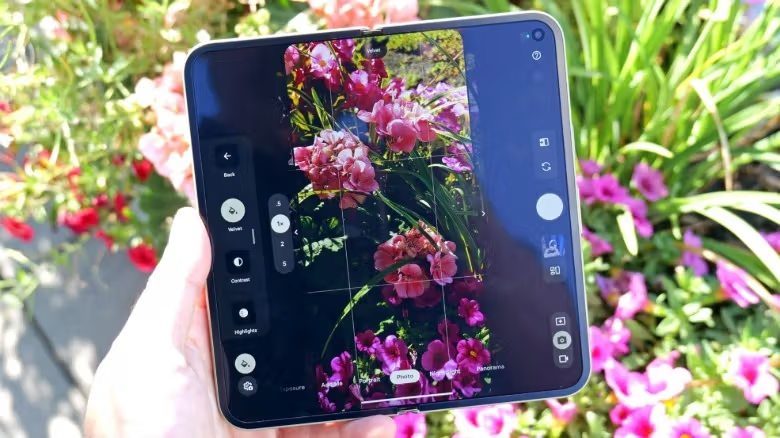
The design hasn't changed much this time around. The back is now made of a fiberglass composite Google claims is "nearly impossible to crack"—a durability claim the review notes comes from the brand itself, not from any drop tests conducted by Engadget. The reviewer's olive green unit with its pale gold trim got high marks for looking and feeling premium. The display setup stays the same: a 6.5-inch outer screen and 8-inch inner OLED, with peak brightness bumped from 3,000 to 3,600 nits for better outdoor visibility. The outer screen now uses ceramic glass, and the phone keeps its IP68 water resistance rating from last year.
The camera remains a consistent strength for the Pixel line, and this year's main sensor jumps to 48 megapixels with a larger sensor size than before, joined by new Camera Looks color profiles and a Magic Capture burst mode that makes it easier to nail split-second expressions in shots of sports or dancing. But the review flags a real gap: Super Res Zoom on the Pixel 11 Pro Fold tops out at 30x, well short of the 120x Pro Res Zoom on the standard Pixel 11 Pro and Pro XL. The telephoto (10.8MP) and ultrawide (10.5MP) sensors also fall far behind the 48MP found on the non-folding Pro models. In other words, if you want the best camera experience Pixel has to offer right now, the foldable isn't the one to get.