Acer to Lenovo: Five Googlebooks Launch Together—Nearly Identical Specs, But Prices Differ by a Full $400
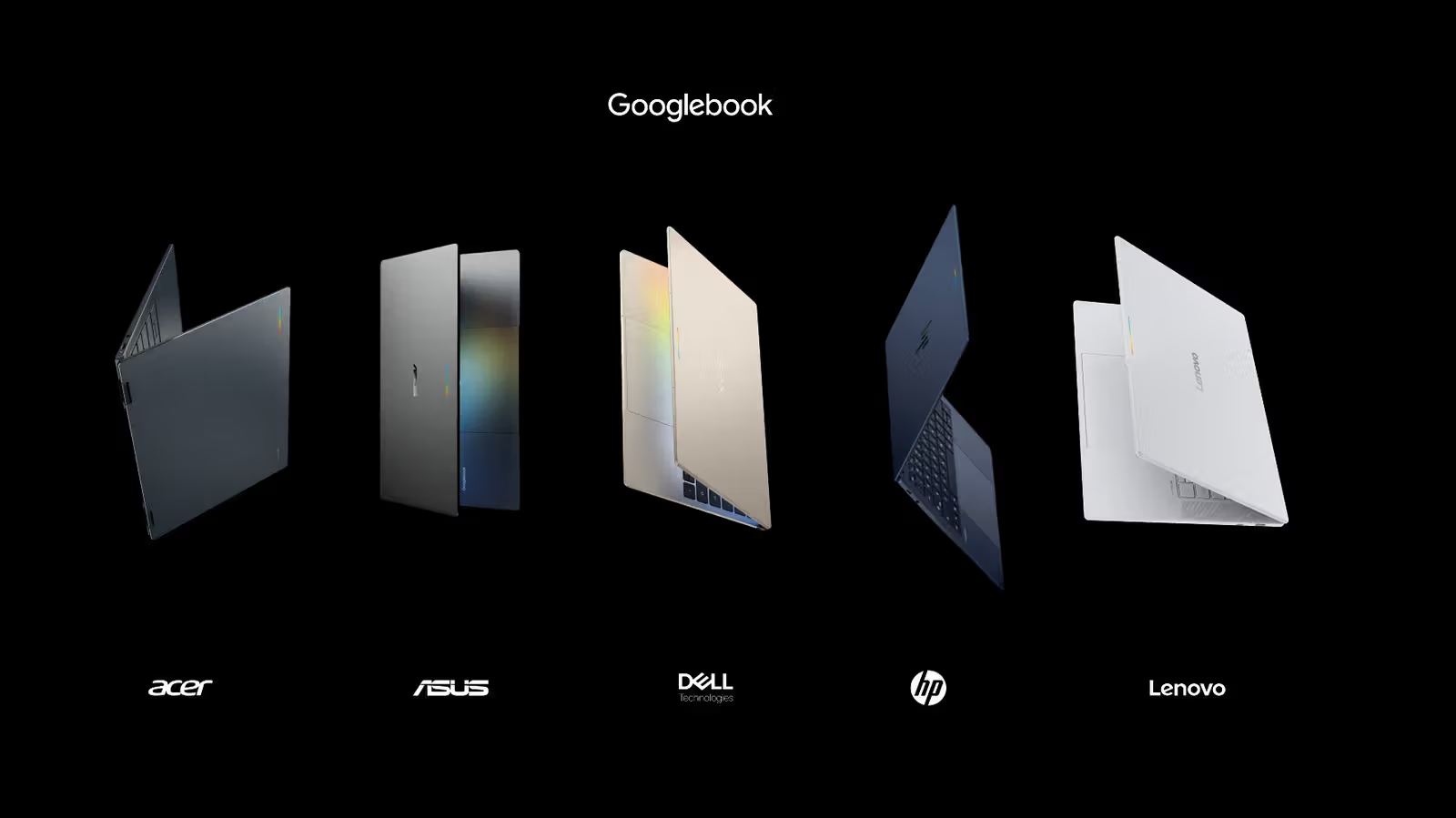
Google's first batch of Googlebooks opened for preorder today, with Acer, ASUS, Dell, HP, and Lenovo each releasing one model. Engadget editors tested all five and found their spec sheets nearly identical, but pricing and design choices tell a very different story.
Line up all five laptops side by side and their spec sheets read like they were copied from the same answer key: 16GB of RAM, 14 hours of video playback battery life, and a 120Hz 2.8K OLED display. But scroll down to the last line, and prices jump from $899 all the way to $1,299—a $400 gap. That's the most interesting part of Google's first "Googlebook" lineup, which opened for preorder today: hardware partners were handed the exact same spec sheet, yet came up with five completely different product philosophies.
The five Googlebooks from Acer, ASUS, Dell, HP, and Lenovo all opened for preorder today, and they're positioned to go upmarket rather than sticking to the entry-to-mid-tier specs Chromebooks have typically occupied. The chip choices split into two camps: Acer, ASUS, and Lenovo use the Intel Core Ultra 5 Series 3 (with Acer and ASUS also planning Core Ultra 7 variants), while Dell and HP went with the Qualcomm Snapdragon X Elite. Engadget editor Nathan Ingraham got hands-on time with all five machines at Google's media event last week, and here are his first impressions on the spot—full reviews, he says, will roll out over the coming weeks.
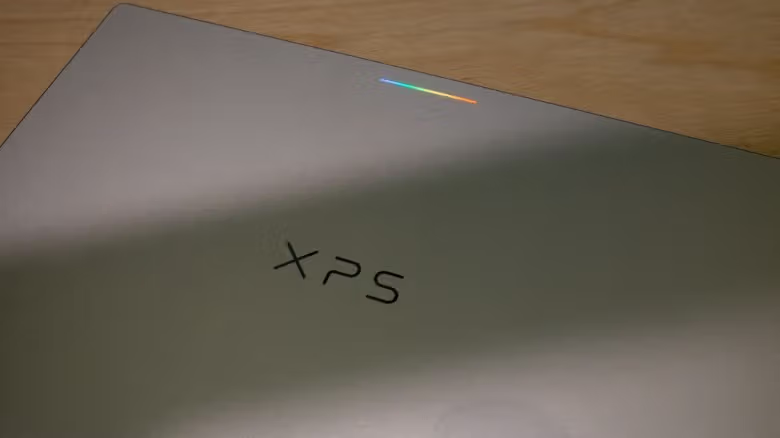
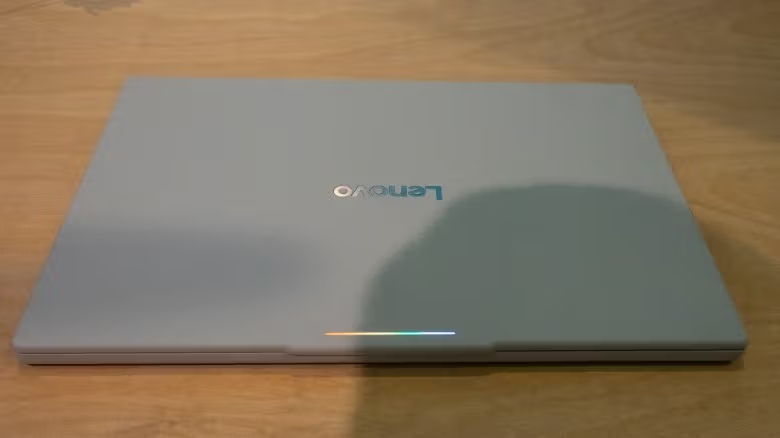
All five machines share one small quirk: a glowing Glowbar light strip on the back of the lid that runs a sweep animation on boot, shows battery level with a swipe, and lights up in response when chatting with Gemini. For now the feature is mostly a visual flourish, but Google says it'll open up the API to developers down the line. The light strip's lineage traces back to the original Glowbar on the classic Chromebook Pixel, and it also echoes the HiLight notification array on the Google Pixel 11 Pro.
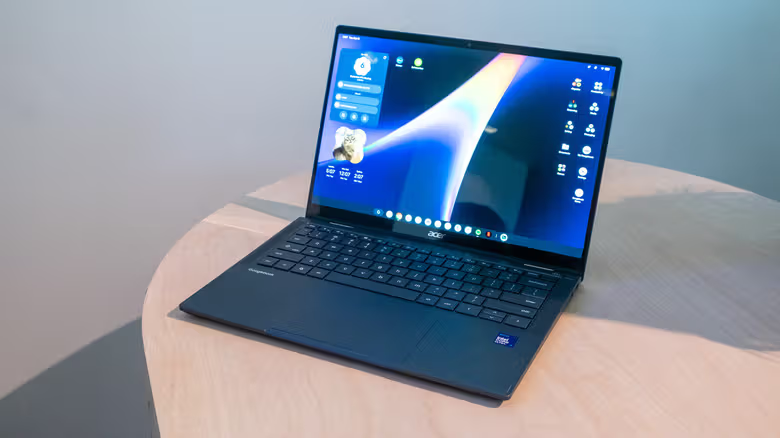
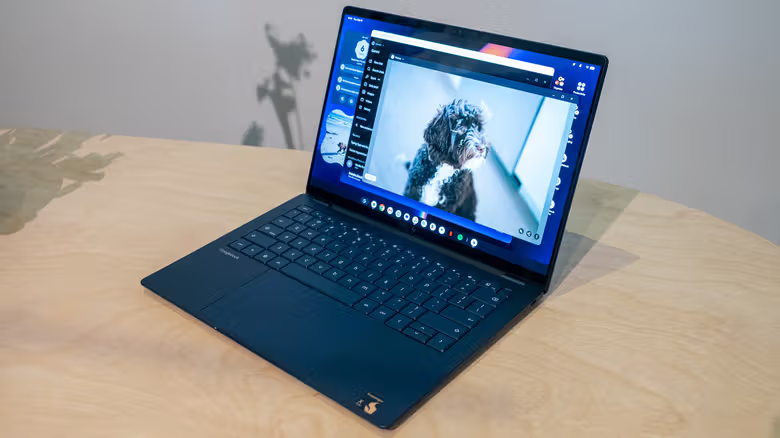
The Acer Googlebook 14 is the only convertible in the lineup, with a smooth 360-degree hinge. Ingraham describes it as a premium upgrade to the Acer Chromebook Spin 514—one of his picks for best Chromebook last year. The chassis is half a pound lighter than that older model, and it gets a bigger, better trackpad along with a 2,880x1,800, 120Hz OLED display, paired with 16GB of RAM, a Core Ultra 5 chip, and 512GB of storage. At $899, it's the only model under $1,000 in the lineup, and Ingraham calls it the best value of the five.
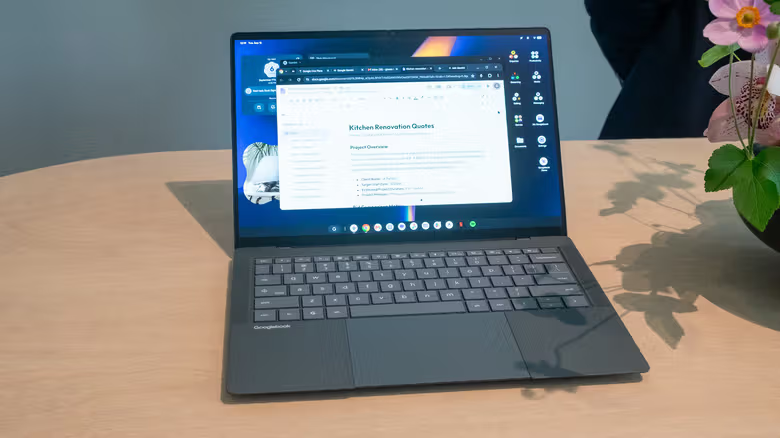
The ASUS Googlebook 14 looks nearly identical to the Acer on paper, but the differences show up the moment you pick it up: at just 2.2 pounds, it's not dramatically lighter than Acer's 2.5-pound frame, but paired with the same 14-inch footprint, it feels noticeably more compact in hand. The trackpad is the standout of the whole lineup for Ingraham—large, with solid haptic feedback, and extending nearly to the bottom edge of the chassis. ASUS reps specifically noted they fine-tuned it to avoid accidental palm touches. It's priced at $1,299, and also comes in a Core Ultra 7 upgrade option.
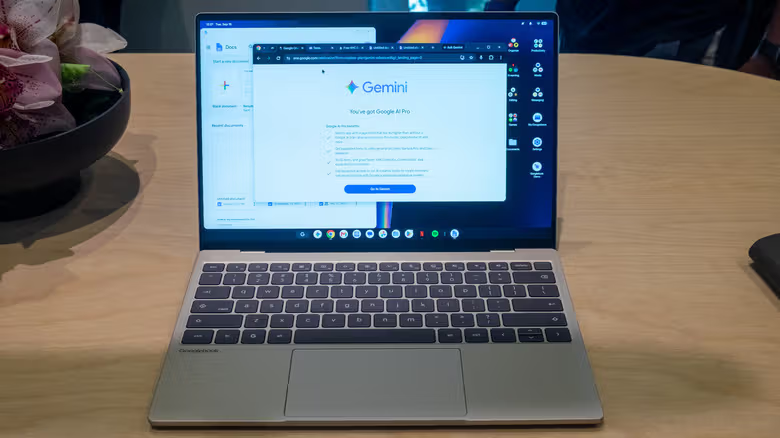
The Dell XPS Googlebook marks the first time the XPS name has been attached to a Google laptop, and it's the most visually distinctive of the five: a 13.4-inch display in a chassis just 12.7mm thick, making it look noticeably smaller than typical 13-inch laptops. The keyboard is thinner as a result, but still feels solid, and the trackpad feels unusually large and responsive given the compact footprint. It's one of two models running Snapdragon X Elite, with the base configuration starting at 16GB RAM and 512GB storage for $1,199. Dell also plans a 32GB RAM, 1TB storage variant, though pricing hasn't been announced yet.
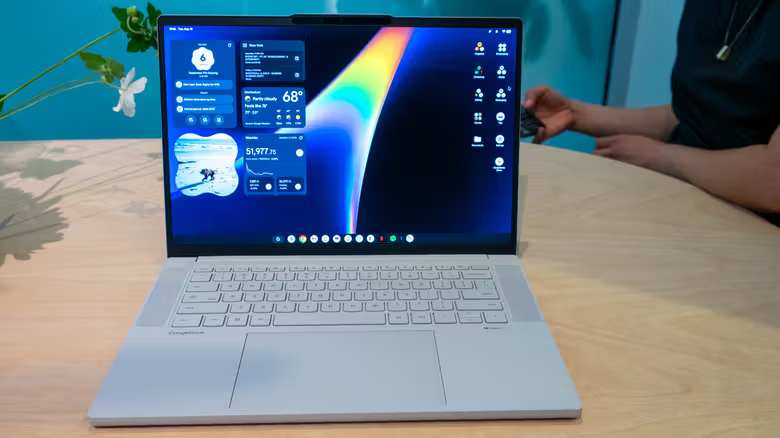
The HP Googlebook 14 also runs Snapdragon X Elite, but sticks to a standard 14-inch chassis rather than Dell's ultra-thin design language. The all-aluminum body feels solid, and the keyboard might be the best of the bunch. The trackpad is similarly large with haptic feedback, and it's the only model with both facial recognition and fingerprint recognition (the other four offer fingerprint only). The display is the same 2.8K OLED touchscreen, but base storage is just 256GB—a bit surprising, since every model except Lenovo's starts at 512GB. Despite the smaller storage, it's priced at $1,299, tying it for the most expensive in the lineup. In terms of build quality, Ingraham ranks it alongside the Dell XPS Googlebook as the most solidly constructed.
The Lenovo Googlebook 15 is the only 15-inch model in the lineup, and it also features a 2.8K OLED display—though at the larger size, pixel density naturally takes a hit, it still looks sharp. Chip and RAM specs match Acer and ASUS with a Core Ultra 5 and 16GB, and storage starts at 256GB just like HP's. The bottom edge of the chassis has a textured, non-slip finish that carries over the feel of the Lenovo Chromebook Plus 14 and, further back, the original Google Pixelbook Go. The white color option, Lenovo says, is based on this year's Pantone Color of the Year. It also includes both facial recognition and fingerprint recognition, and is the only model in the lineup with Dolby Atmos audio support. At $1,299, it ties for the most expensive of the five—but in exchange, it's the only one offering that larger 15-inch display.