How can a mechanical watch immediately recall a sneaker? H. Moser & Cie.’s Reebok collaboration, the Streamliner Pump, places its answer in a button on the side of the case. Introduced at Watches and Wonders 2026, the watch recently returned to the spotlight at a brand event at Hong Kong’s Dragon-i. It borrows the Pump’s interactive gesture, turning a familiar memory of sports culture into the act of winding.
A collaboration beyond an exchanged logo
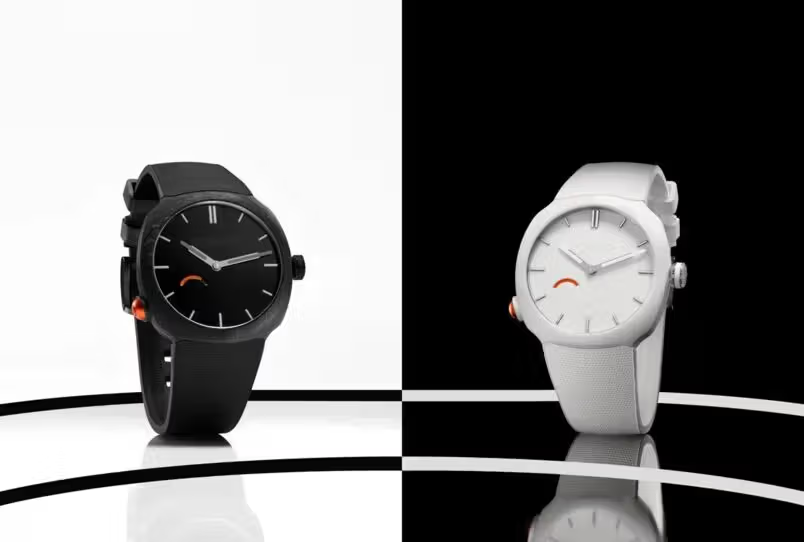
Product photographs show black and white versions treated almost entirely in monochrome. An orange button and power-reserve display provide a few striking accents. A forged quartz-fibre case lets material contribute to the design, but the watch remains mechanical: “quartz” in the case material does not mean a quartz movement. Colour, feel and operation create a more complete collaborative language than simply printing a sneaker picture on the dial.
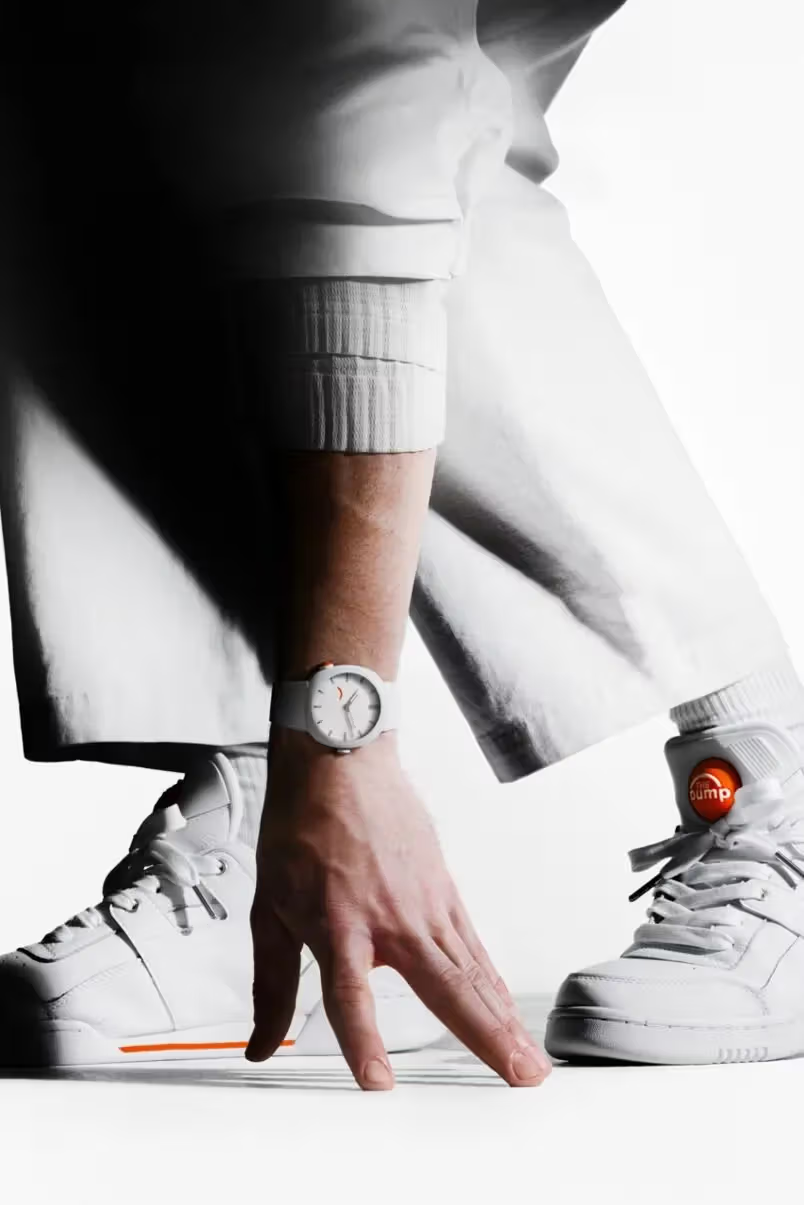
A white watch and sneaker establish a visual link through matching colours.Black and white Streamliner Pump versions pair monochrome cases with orange details.
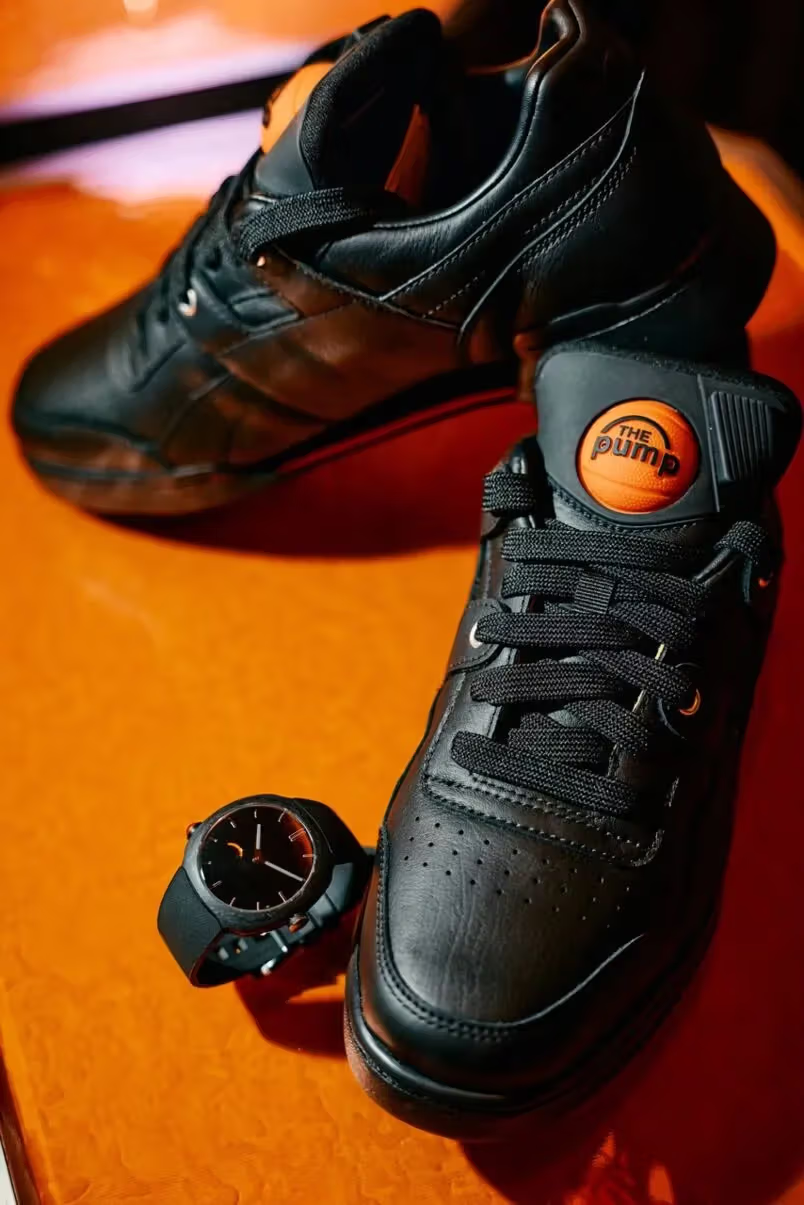
Reebok Pump is recognisable through an action: press first, then feel the product respond. Moving that gesture to the wrist links shoes and watch through bodily memory. This offers an interesting design test: if the logos were hidden, could the operation still reveal its inspiration? Streamliner Pump locates its playfulness in a mechanism that actually works.
The Reebok Pump sneaker and watch present the inspiration behind the press-to-operate design.
What does the button control?
The official instructions confirm that the side button winds the mainspring and that the watch has a power-reserve indication. Approximately 60 presses fully wind it. The crown retains manual winding and time-setting functions, so the button offers another route to operation rather than making the crown decorative. For someone who enjoys mechanical interaction, pressing and watching the display become part of daily use.
Unlike the haptic response of an electronic device, the finger’s action directly contributes to replenishing mechanical power. Complexity need not appear through numerous subdials: a clear time display can conceal a mechanism rearranged around one apparently simple gesture. In product photographs, it is worth looking beyond the dial towards the button position, its connection to the case and the angle of the wrist.
The Hong Kong setting makes the cultural context clearer
The event at Dragon-i placed sneakers, watches and nightlife in one setting. In a related interview, brand co-founder Bertrand Meylan discussed his memories of 1990s Pump shoes. That is his personal experience, rather than a substitute for every customer’s response. For people familiar with sneaker culture, extending an outfit from the feet to the wrist offers an everyday route into fine watchmaking.
Bertrand Meylan introduces the collaboration at the Hong Kong event.
A pressable button does not remove the operating rules of a mechanical watch. Official instructions specify a screw-in crown that must be secured for normal wear; the 10-bar water-resistance rating also depends on correct operation. The attraction is the coexistence of interaction and craft: playful associations can remain light, while the owner still needs to understand the construction and care of a precision timepiece.