HAZZYS and Rocky Mountain Featherbed rework the Western yoke in suede and checks
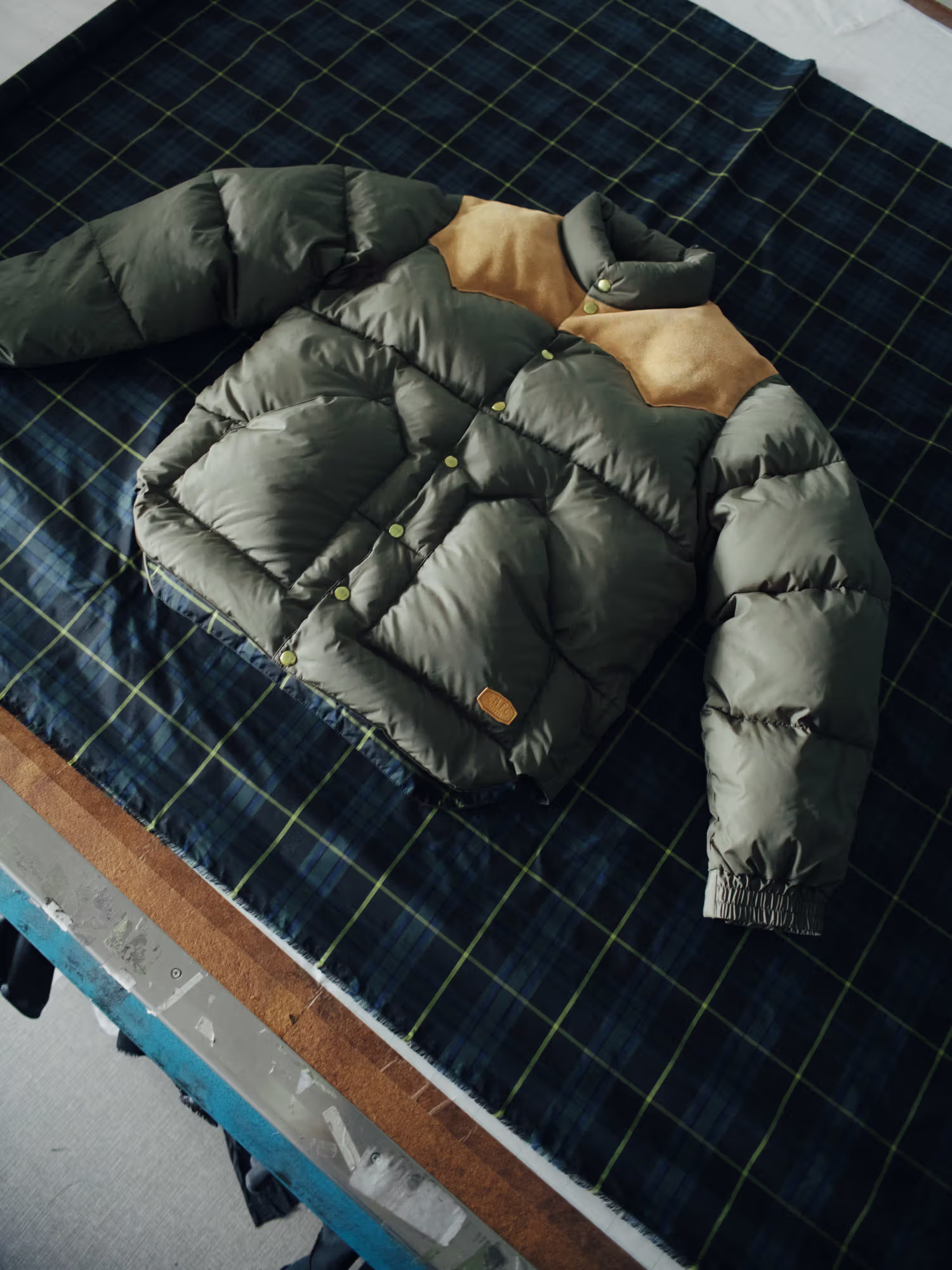
The collaboration keeps a familiar downwear silhouette while changing Japanese KIP SKIN suede yokes, 70D nylon construction, Hackney Check linings and dedicated hardware.
HAZZYS and Rocky Mountain Featherbed place the identity of their collaboration in shoulder lines, linings and fastenings, beyond simply putting two logos side by side. On October 26, 2026, LF published development details for a collection centered on down jackets and vests. The partners worked together on fabrics, bulk and components, bringing an American Western cold-weather silhouette into HAZZYS’s more everyday casual vocabulary. This recent announcement does not mean sales began that day.
How did the wing-shaped yoke become a signature?
Rocky Mountain Featherbed originated in Wyoming in the late 1960s, making cold-weather clothing for cowboys. Its Western Yoke, stretching across the shoulders like open wings, remains the collection’s most prominent structural feature. It draws a clear boundary below the neck and gives the padded chest a visual center. The collaboration retains that outline but uses premium Japanese KIP SKIN suede for the yoke, contrasting a matte, napped surface with the smooth nylon body.
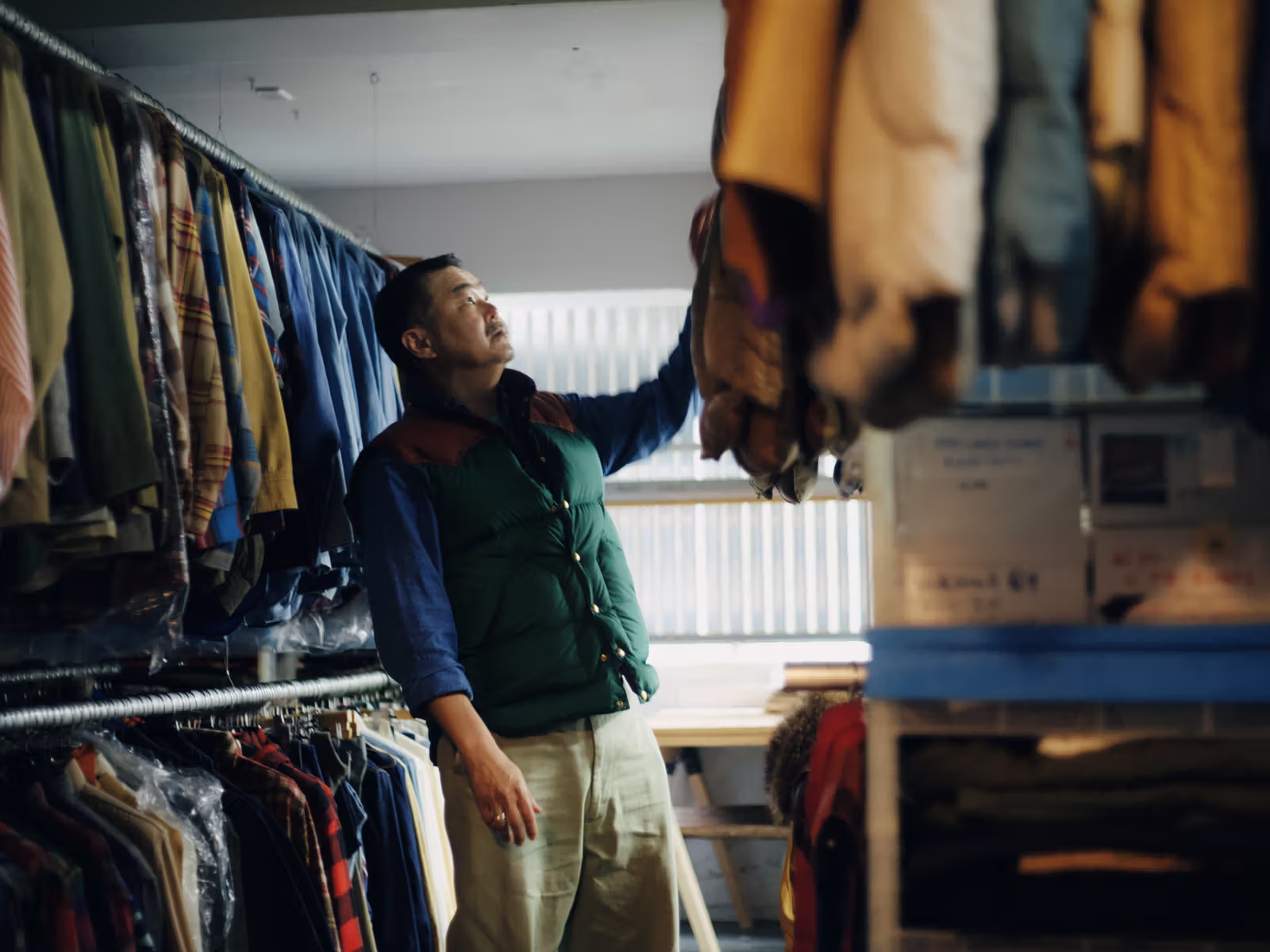
The brand did not operate without interruption. LF’s account of its history says it ceased in the late 1980s and was revived in Japan in 2005. Kinji Teramoto, who led that revival, spent years collecting and studying vintage pieces and reconstructing production methods. That history helps explain why this collaboration concentrates on details within a recognizable form, rather than inventing an entirely different jacket shape.
Kinji Teramoto wears a contrasting down vest in front of a clothing collection.
Beyond 70D nylon: lining and hardware
The outer fabric is the same 70D nylon taffeta used for the original model. According to the brand, the collaboration reduces bulk by approximately 20% compared with the original. That figure describes volume, not a 20% reduction in the complete garment’s weight, and it is not a quantified warmth result. In terms of proportions, more restrained padding paired with the broad yoke keeps the upper body’s divisions legible without relying on greater volume to communicate an outdoor character.
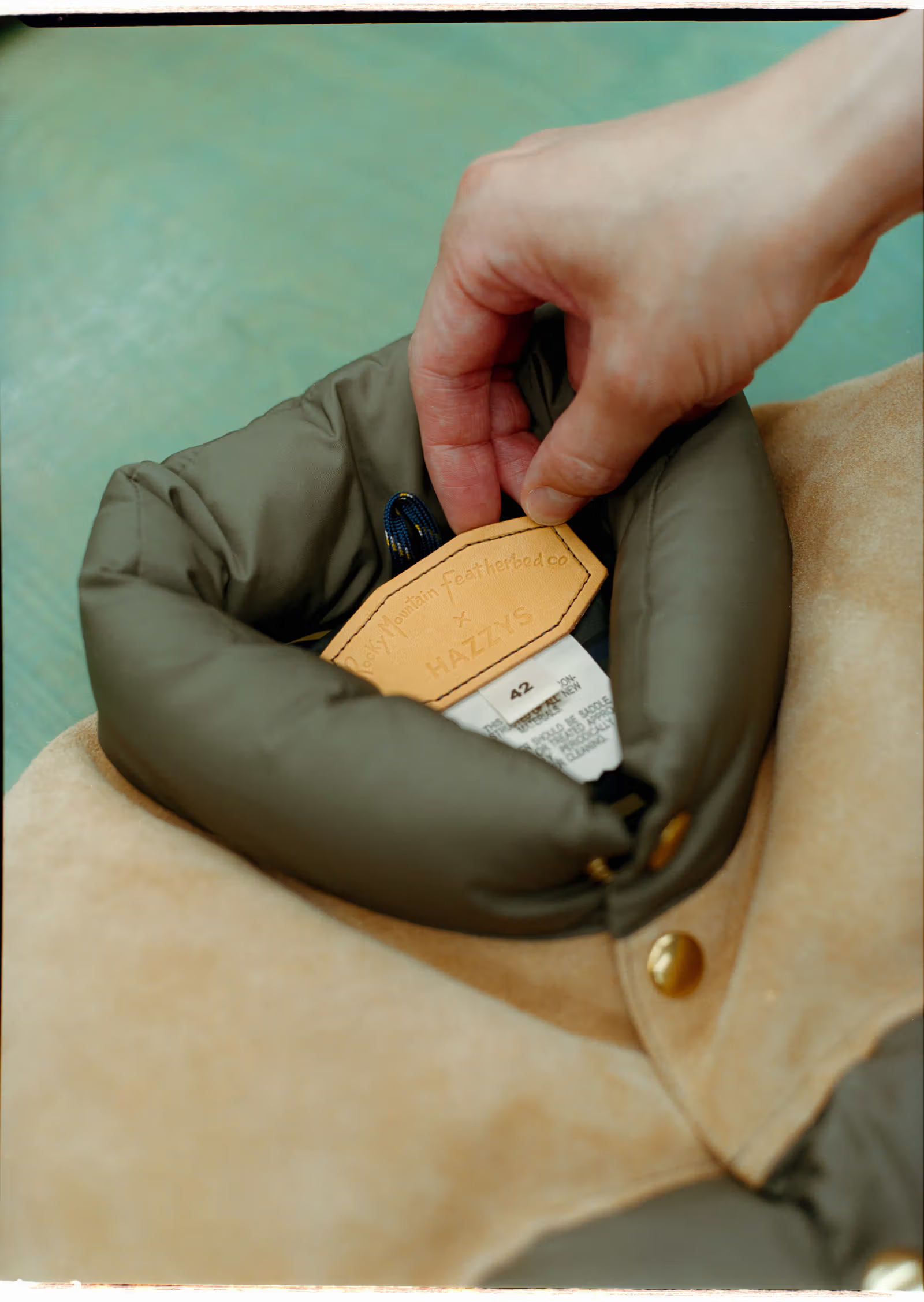
Inside, HAZZYS’s own Hackney Check creates another layer of identity, alongside snaps and leather patches developed specifically for the collaboration. These details appear around the neckline, front opening and interior, rather than all being decorations visible from a distance. When a jacket is open or a vest is layered over a shirt, the inner and outer color blocks can appear together. For vintage outdoor clothing enthusiasts, these changes reveal more about the partnership than a chest logo alone.
The collaboration leather label and suede yoke at the neckline.
What distinguishes the jackets and vests?
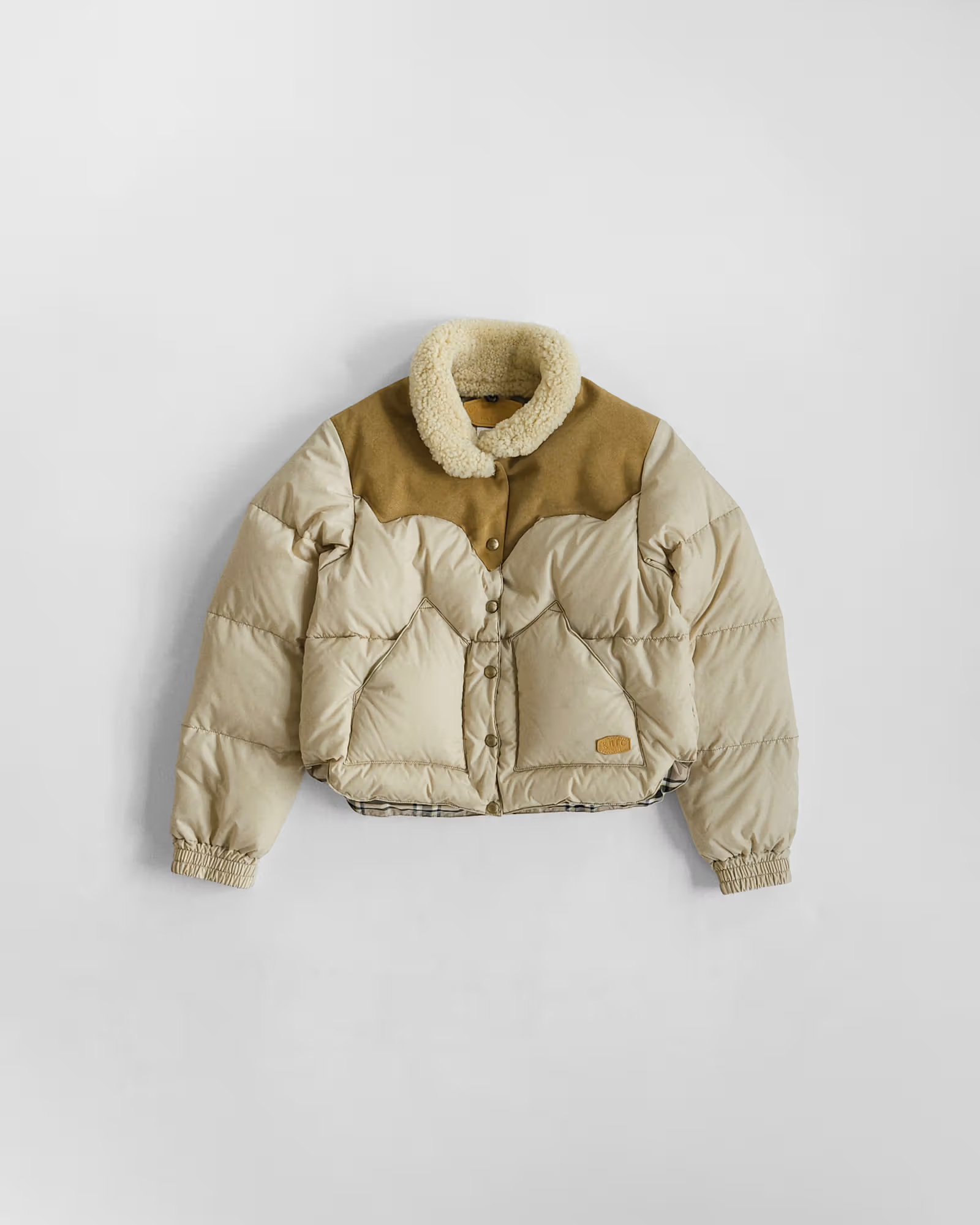
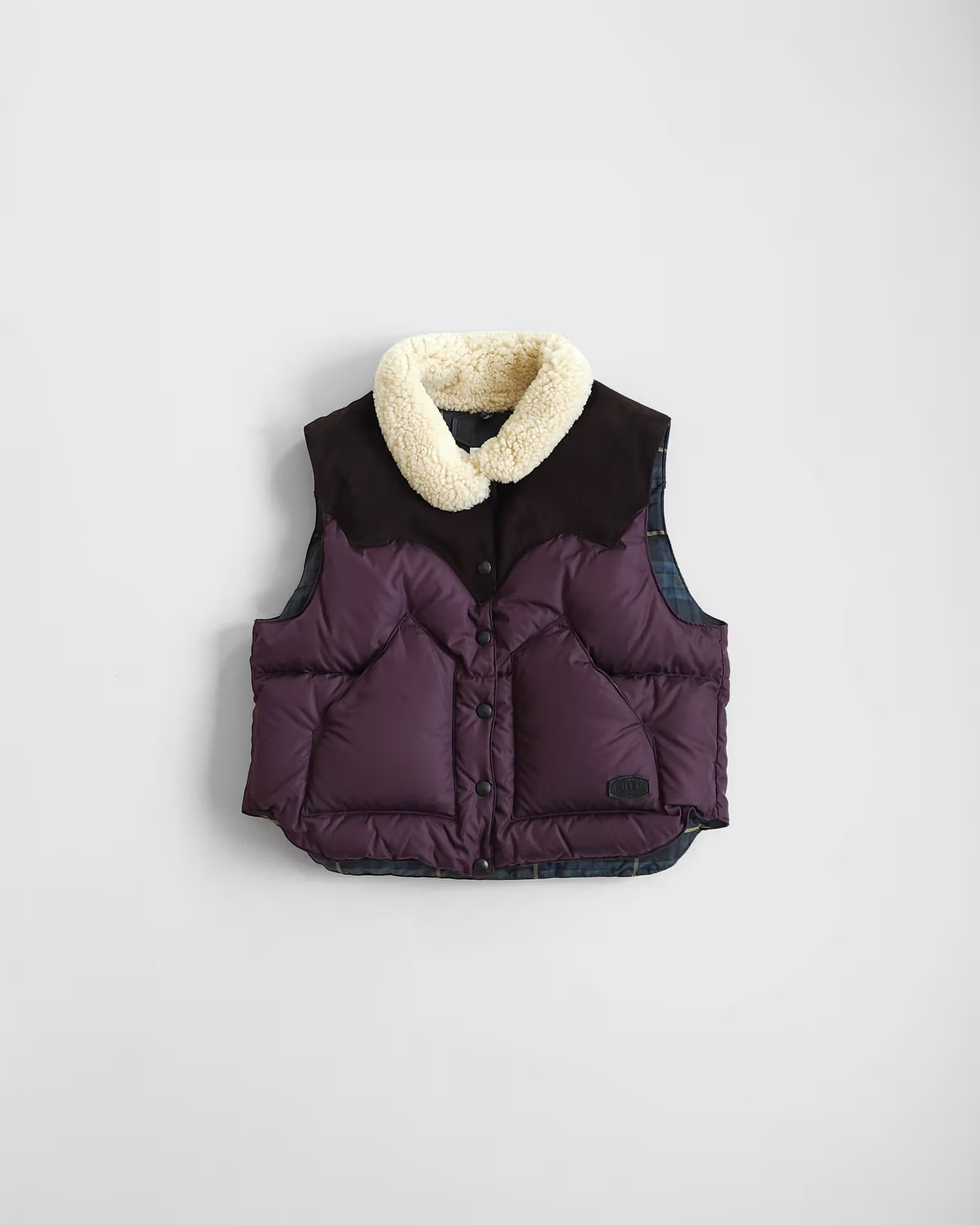
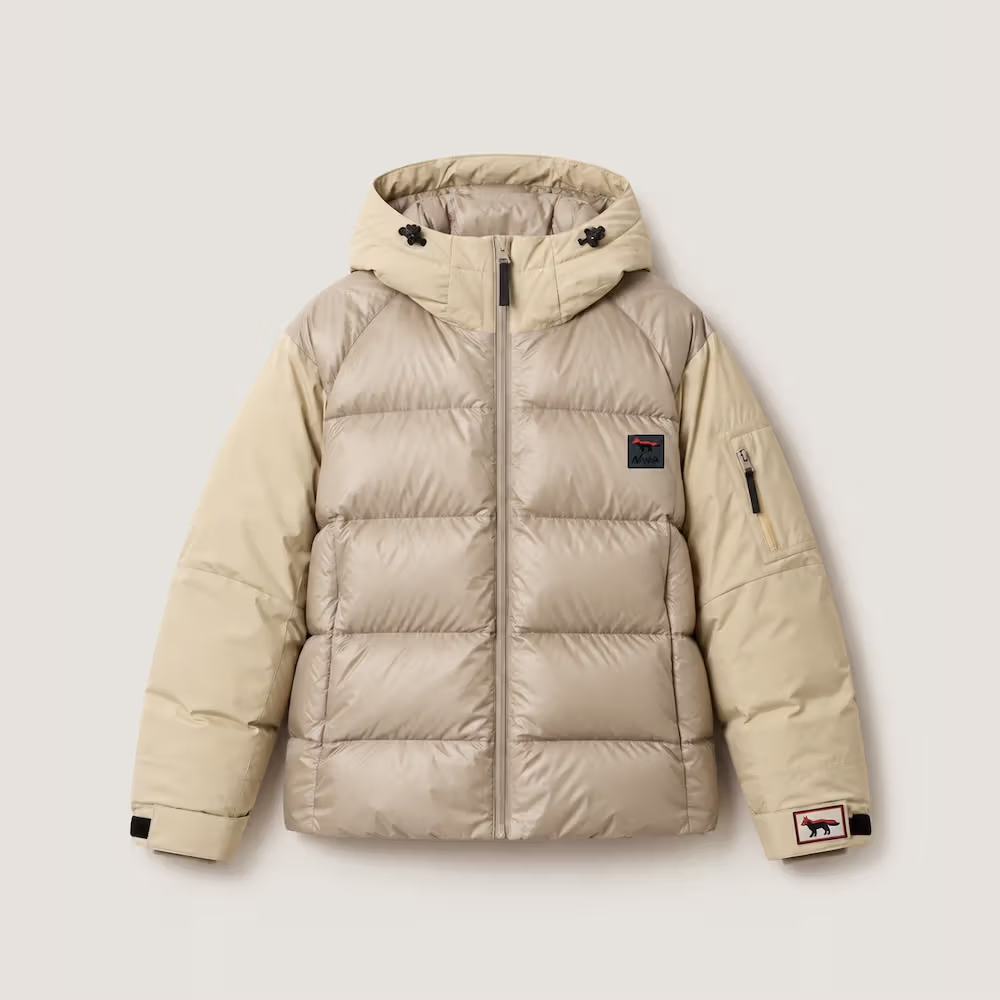
The official description pairs quiet solid colors with contrasting details on the jackets and explicitly identifies goose-down filling. The vests use quilting and color combinations to accommodate different layers underneath. Published product photographs show a beige jacket with a light brown yoke and a purple vest with a strongly contrasting dark yoke. A vest leaves room for the movement and color of shirt or knit sleeves, while a long-sleeved jacket carries the full shoulder line into the sleeves. Their styling emphasis is consequently different.
A beige down jacket combines a light brown yoke with a textured, fleece-like collar.A purple down vest contrasts with a dark yoke, with checks visible inside.
The brands also released a behind-the-scenes video filmed at an actual production factory in Japan, incorporating material handling, sewing and down quality control into the collaboration’s story. Current styles can be explored through the official HAZZYS collaboration page. Check sizing, filling details and prices for each piece: the goose-down information stated for jackets should not automatically be applied to every vest. The key point remains how fabric and lining rearrange the proportions beneath that familiar Western shoulder line.