How to Choose Lee x F/CE.: 91-B Modular Jackets, a Separately Sold Vest and Two Different Denims
Lee x F/CE.’s FW26 collaboration spans seven styles. The 91-B jacket starts at ¥60,500 and the ¥33,000 modular vest is sold separately. Compare Japan denim with the 70% cotton, 30% CORDURA nylon alternative, plus two work-pant cuts and their prices.
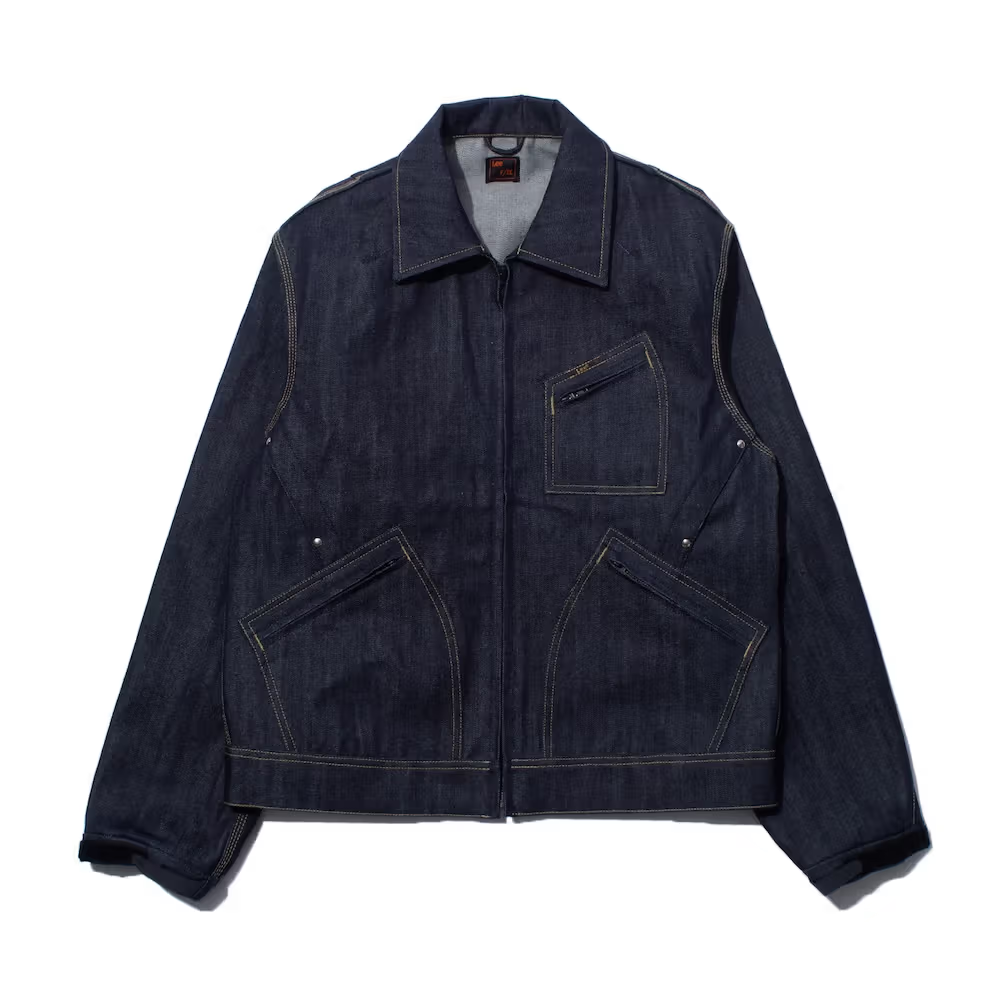
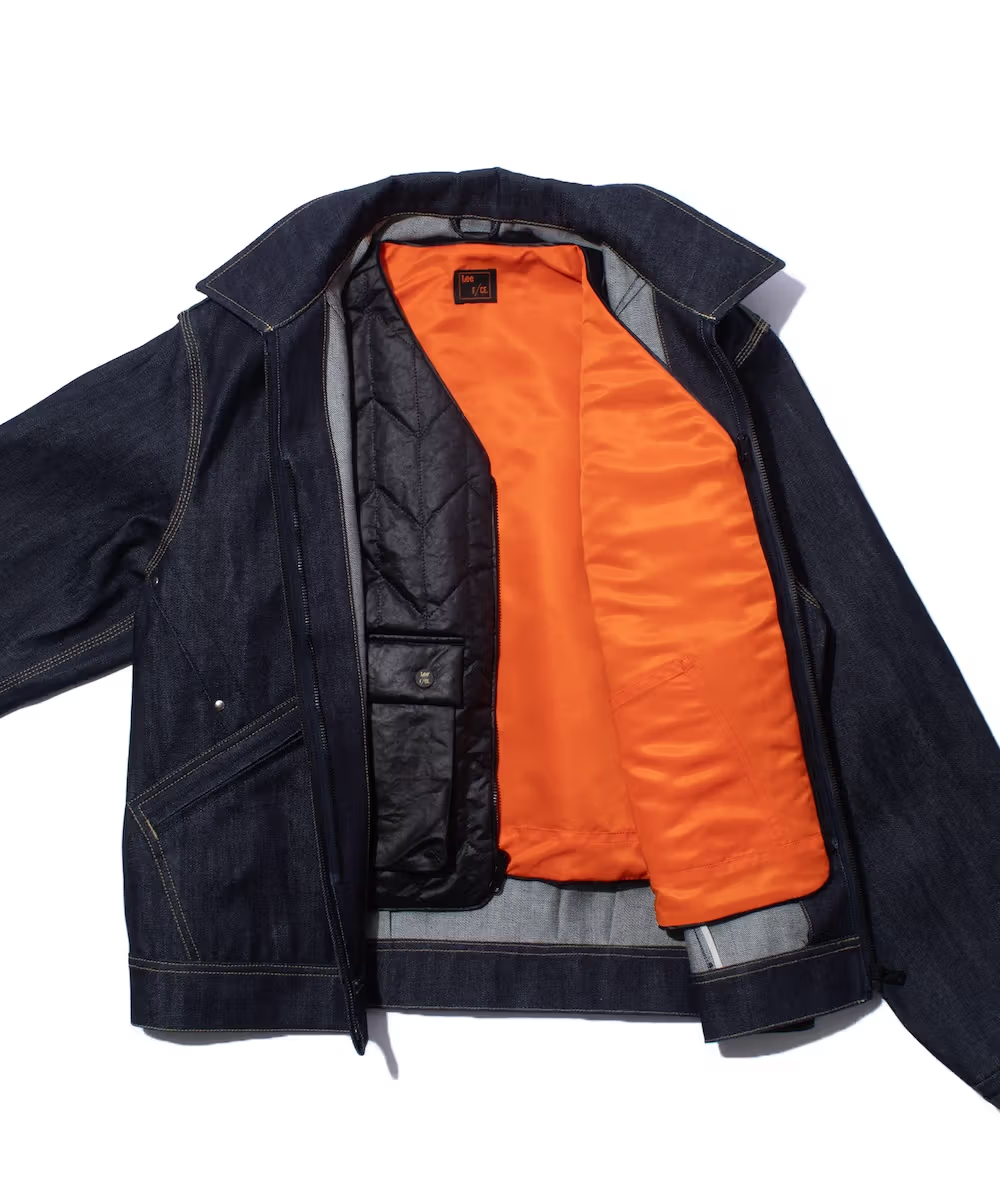
Lee and F/CE.’s first collaboration rearranges work jackets, trousers and a vest through seven Fall/Winter 2026 styles. Officially introduced October 16 and already on sale, the 91-B modular jacket is ¥60,500 in Japan denim or ¥69,300 in CORDURA denim. The key distinction comes first: the connectable 91-B MODULE VEST is sold separately at ¥33,000. An open-jacket photograph showing the vest does not mean the jacket price includes the complete layered combination.
How should the 91-B jacket and modular vest be understood separately?
The jacket starts from Lee’s 91-B, introduced in the 1940s, and redesigns its construction and layering. The separately sold vest can be worn alone, attached inside as a lining layer, or placed outside. That flexibility makes the same vest a center of styling rather than merely an accessory. Consider which combinations you would use as well as the combined cost. Liking the jacket’s pockets and length need not make the entire connection system a necessary purchase.
An open-jacket combination image; the modular vest pictured is sold separately.
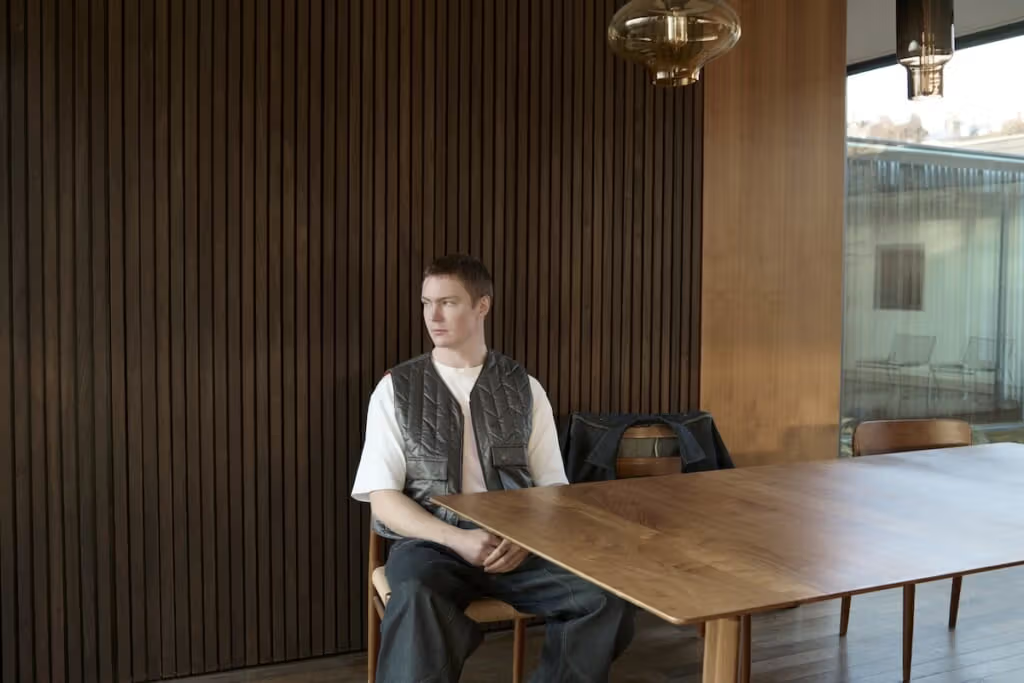
The vest’s outer fabric combines polyester and nylon in a special microfiber, with high-shrinkage processing producing body and fine texture; PrimaLoft provides the filling. The brand emphasizes waterproofness and breathability of the fabric without publishing a whole-vest pressure rating, complete-rainwear classification or figures. Separate the material description from the garment’s protective scope. Black, brown and gray can be worn alone or change the proportions visible over dark denim; the photographed orange interior adds a bright block when the jacket opens.
An interior look layers the modular vest over a white short-sleeve tee as a standalone styling reference.
How do Japan denim and CORDURA denim differ beyond durability?
Japan denim uses COD6616, a double-width adaptation of RS66 developed by studying vintage garments. Differently irregular yarns create vertical texture; the official specification is number-7 yarn in both directions and 470 grams per square meter. CORDURA denim instead uses a 70% cotton, 30% CORDURA nylon blend in both warp and weft, deliberately choosing more uniform straight yarn to reduce vintage-like unevenness. The former emphasizes vertical depth, the latter a cleaner surface. The blend ratio does not apply to every version.
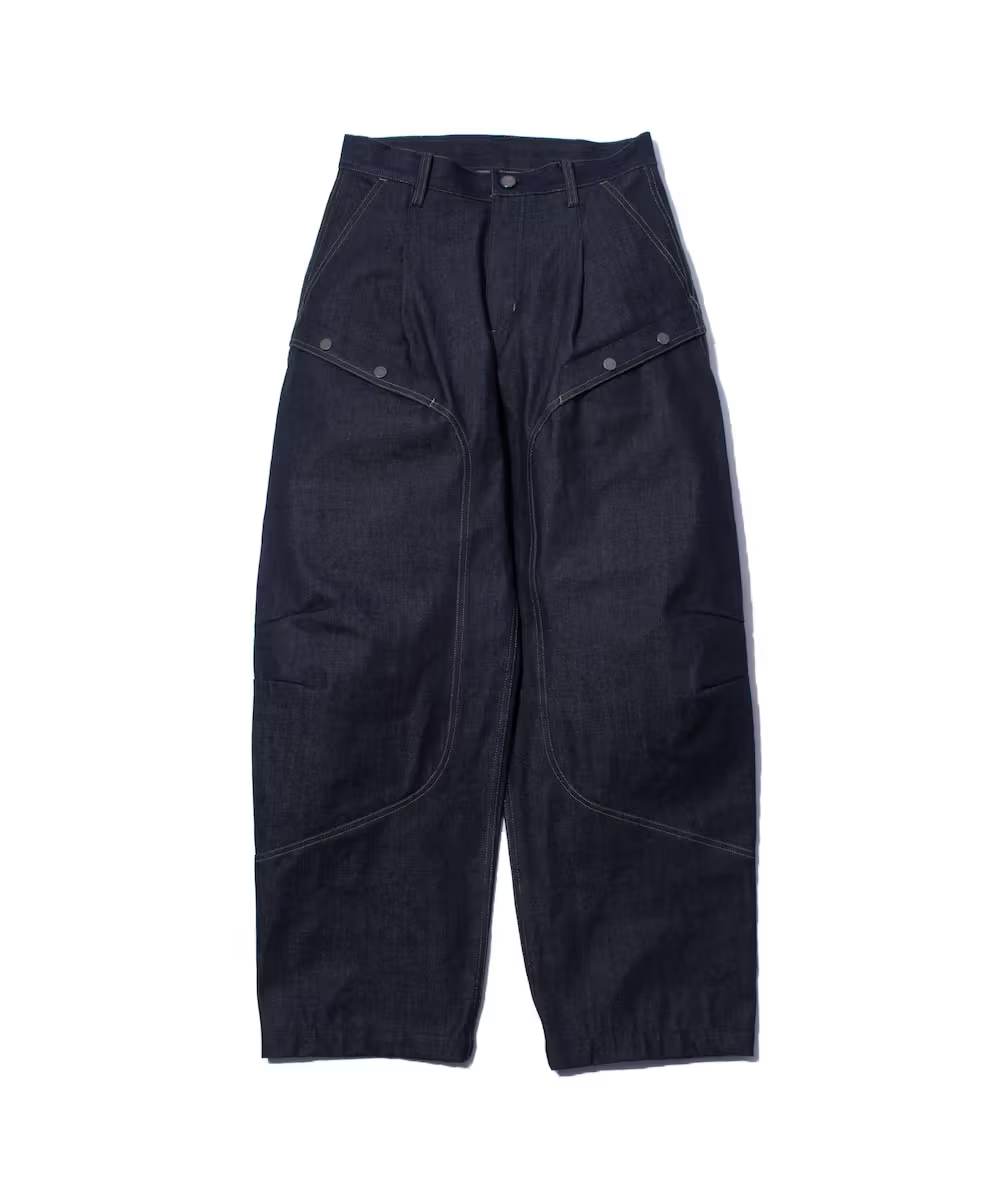
Trousers come as painter pants or design work pants. The former references 1920s–30s work trousers, with a baggy silhouette and easy waist, simplifying details such as hammer loops and tool pockets. The latter reworks traditional construction through pattern and range of movement. Japan-denim prices are respectively ¥41,800 and ¥46,200; CORDURA versions are ¥49,500 and ¥57,200. Decide on your preferred waist and leg shape before selecting fabric rather than assuming all “functional” trousers are identical.
The design work pants rearrange the front through curved lines and pocket placement.
Where should image and sizing comparisons begin?
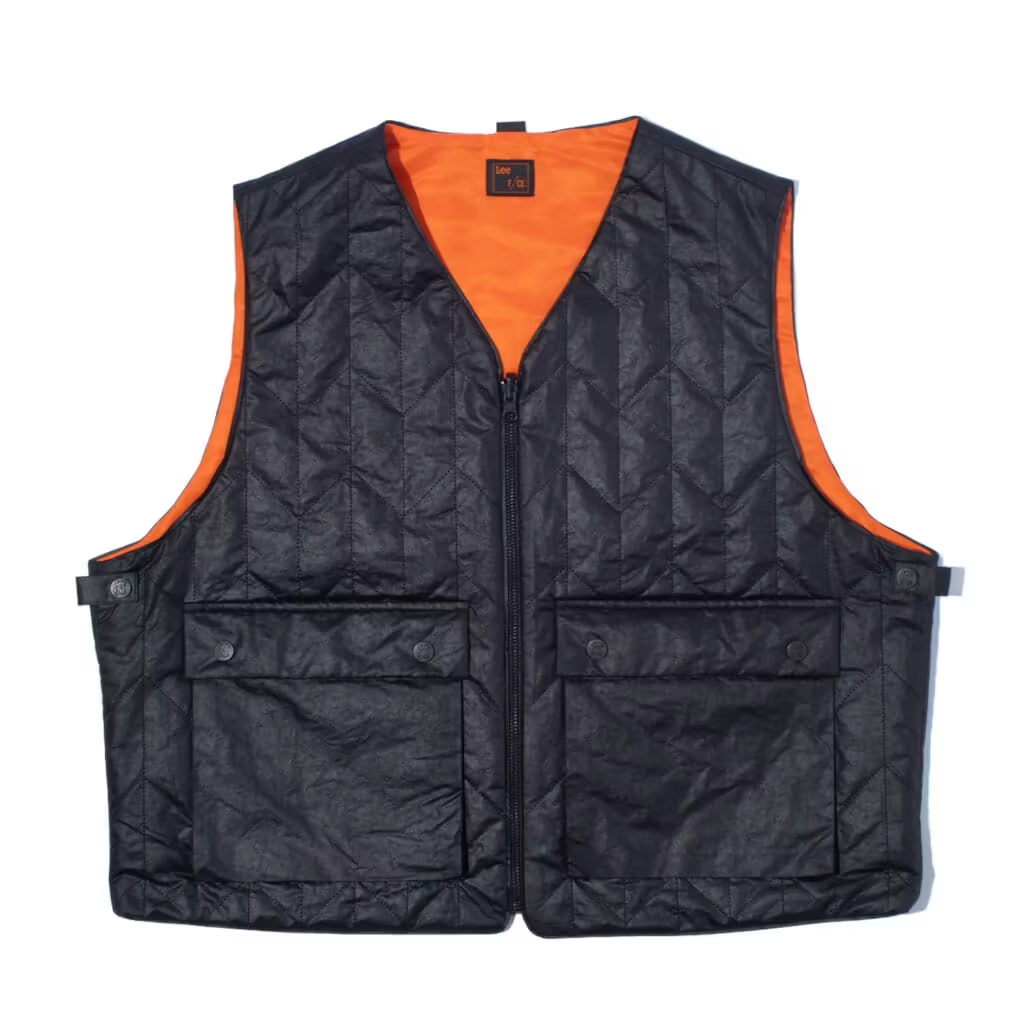
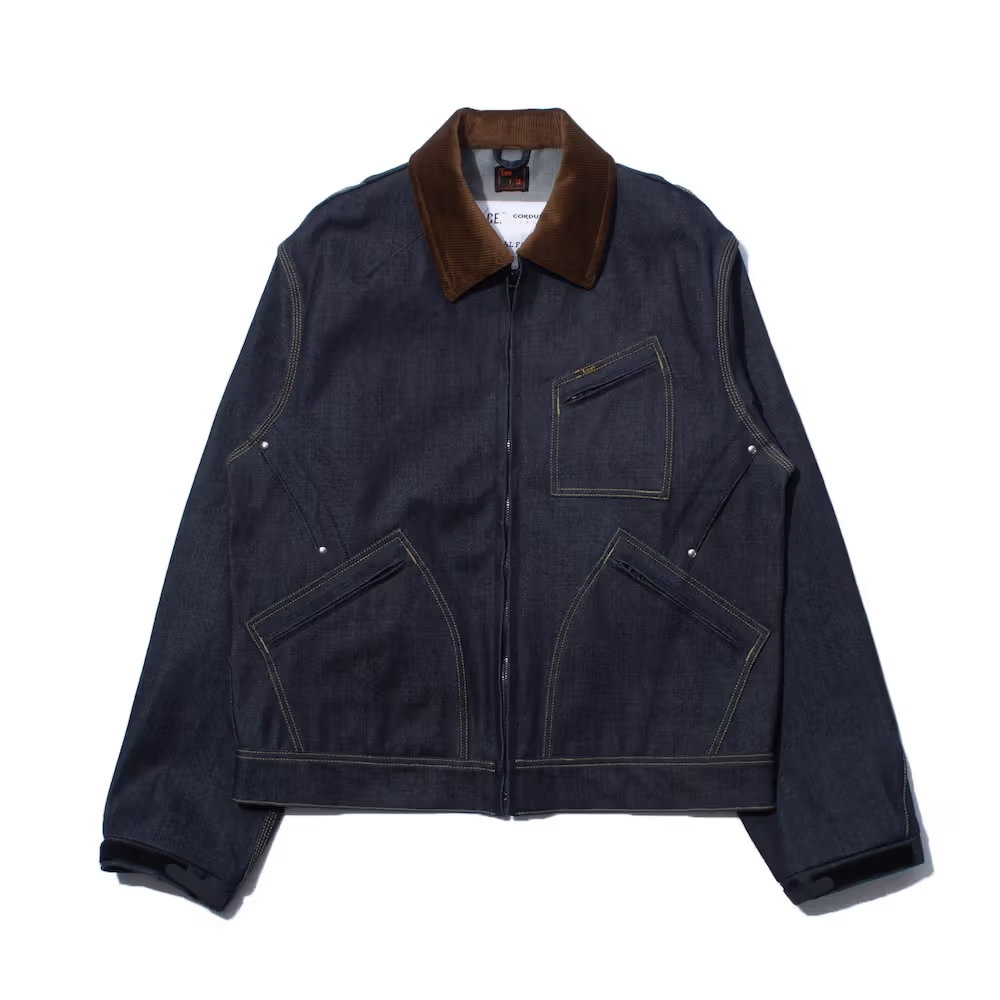
Product photographs show the jacket’s angled large pockets and chest zip, while the CORDURA version adds a contrasting brown corduroy collar. A vest flat lay clarifies quilting, front zip and large pockets; an interior styling photograph then places it over a white short-sleeve tee, giving a more relaxed proportion than a full workwear outfit. Examine individual garments and combinations separately: compare length, shoulders and pocket positions, then the body line with the jacket open or closed, rather than choosing a size from one complete look.
A vest flat lay clearly shows quilting, zip and front pockets.The CORDURA-denim jacket adds a material contrast with a brown corduroy collar.
See F/CE.’s official collaboration introduction for materials, the separately sold vest and product links. Prices above include Japanese tax; the editorial also lists tax-exclusive prices, so distinguish the labels when reading. If accustomed to conventional denim, consider the texture you want and care preferences, then confirm sizing and supply with the store. The collaboration’s useful proposition is detachable layers and two material approaches that make everyday dressing choices more concrete.