Prada Re-Cashmere vs Re-Wool: Fiber Percentages, Italian Recycling and NFC Traceability Explained
Prada extends its recycled-material approach to natural fibers: Re-Cashmere uses 100% recycled cashmere, while Re-Wool blends 50% virgin wool, 40% recycled wool and 10% recycled cashmere. Understand their sources, certification scopes and NFC garment records.
Prada’s Re-Cashmere and Re-Wool bring its exploration of recycled materials to natural fibers. Their names run in parallel, but their compositions differ: the official site specifies 100% recycled cashmere for the former, while the latter’s yarn contains 50% virgin wool, 40% recycled wool and 10% recycled cashmere. This is a materials project with products already presented online, rather than one item newly launched today. Understanding the distinction turns “recycled” from an image-building term into product information that can be checked.
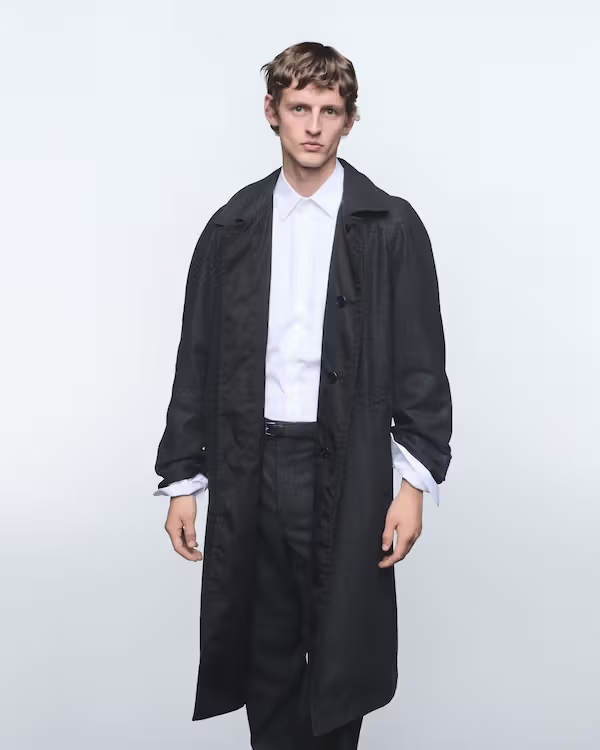
A dark long coat and white shirt create an elongated upper-body line.
Where do the surplus materials come from, and how do they return to clothing?
Re-Cashmere begins with fine residues from spinning and cashmere offcuts collected at the Prada Group’s Torgiano facility. Materials are collected, sorted and separated by color before becoming new yarn through a recycling process conducted entirely in Italy. These sources are surplus from production. They should not be described as consumers’ worn-out sweaters: the collection methods and material histories differ, a distinction worth keeping clear when reading a product story.
Re-Wool draws on a broader pool: wool, cashmere, defective fabrics and cutting-room remainders from different Prada Group product lines, sorted by color and processed into yarn and fabric. The official blend still includes half virgin wool, so the “Re” name should not be taken to mean the entire piece is made from 100% recycled fiber. For comparisons, the complete composition is more useful than the label’s name and avoids confusing natural-fiber type with recycled origin.
How should the certifications be read, and what can photographs show?
The site identifies Re-Cashmere yarn as certified to the Global Recycled Standard, or GRS. Re-Wool’s 50% virgin wool is certified to the Responsible Wool Standard, or RWS, while its 40% recycled wool and 10% recycled cashmere are GRS-certified. These claims apply to specified materials and standards. They do not establish zero environmental impact for an entire garment or provide a basis for calculating unpublished water or carbon savings. Percentages and scope are more useful than a generalized environmental adjective.
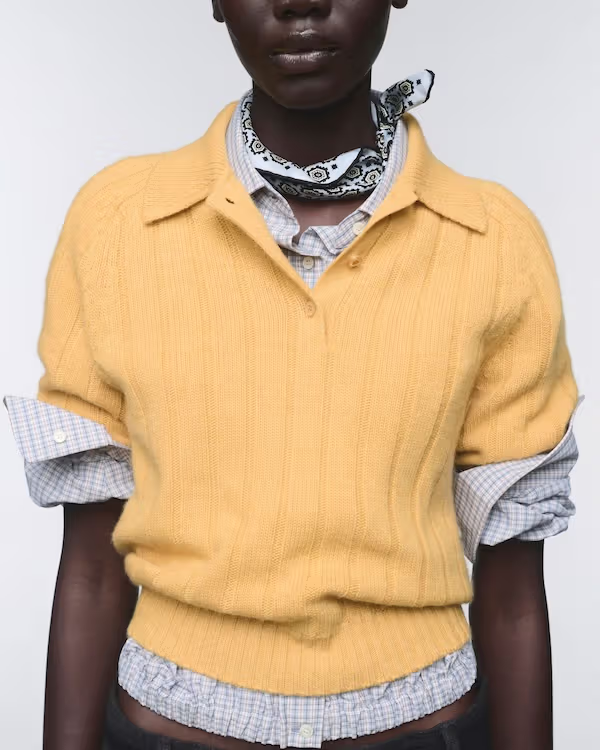
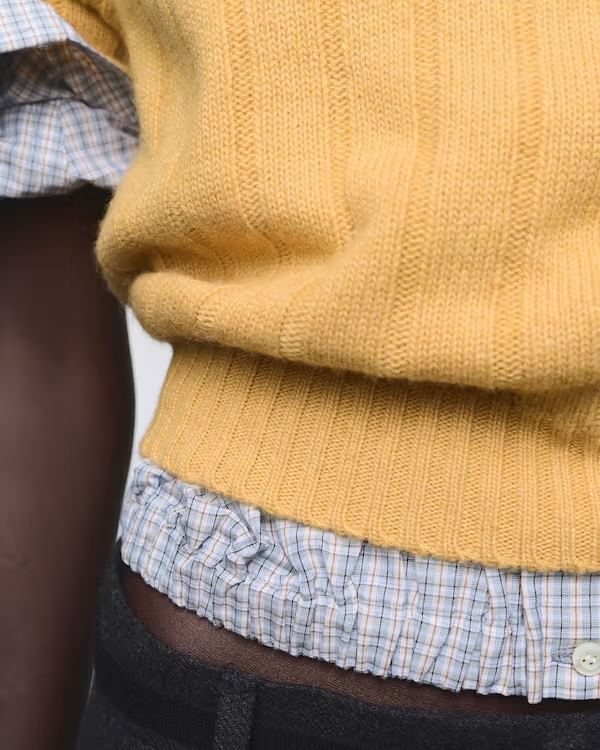
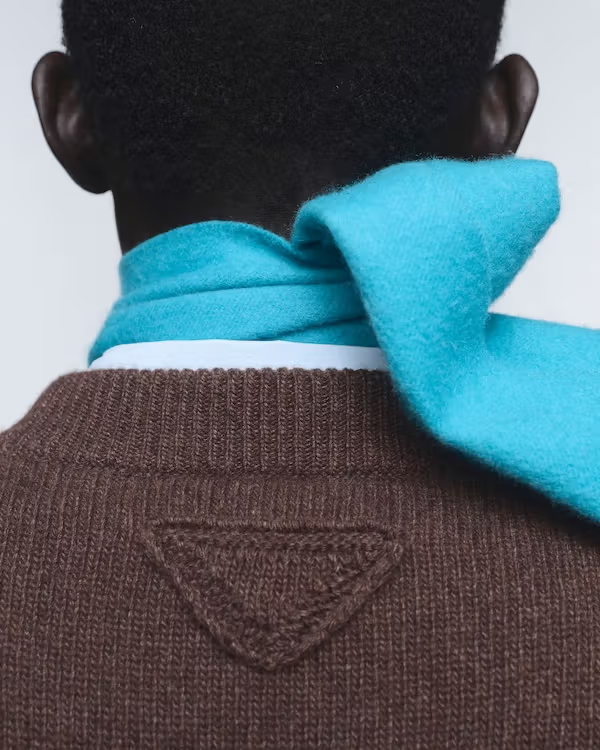
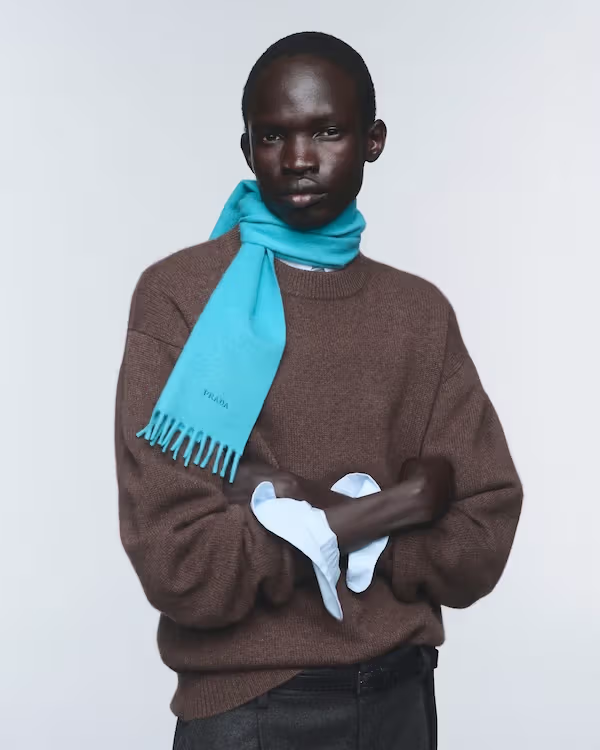
The photographs retain Prada’s familiar clean silhouettes: a yellow short-sleeve knit layers over a fine checked shirt, with cuffs and hem showing; a brown sweater gains a small, bright-blue contrast from a scarf. Close-ups reveal stitches, ribbing and a triangle detail at the back neck, while a long-coat look redirects attention to shoulder lines and length. These are visible design cues. Recycled content and supplier history still require product records, rather than assumptions based on a photograph’s suggestion of softness.
A hem detail makes the stitches, ribbing and light shirt layer clearer.A back-neck detail retains the sweater’s original triangle, contrasted with a bright scarf.
What should an NFC garment record tell you?
Prada states that each piece carries an NFC tag giving access to the Aura Consortium platform and traceability information about materials, suppliers and successive stages. Buyers can treat it as an entry point connecting the physical item with its material history: compare the name and composition with the object in hand, then see which production stages the platform records. It is not another fabric or a replacement for care instructions on the label. Cleaning, storage and measurements still need individual checks.
A bright-blue scarf accents a brown sweater, with shirt cuffs showing.
See Prada’s official Re-Cashmere and Re-Wool page for the complete material explanation and current products. The US site lists a Re-Cashmere crew-neck sweater at US$1,990, a local-market reference rather than a guaranteed Taiwan price or stock commitment. When choosing winter knitwear, consider recycled content, certification and traceability alongside color and cut, selecting a garment whose material background is as clear as its place in your wardrobe.