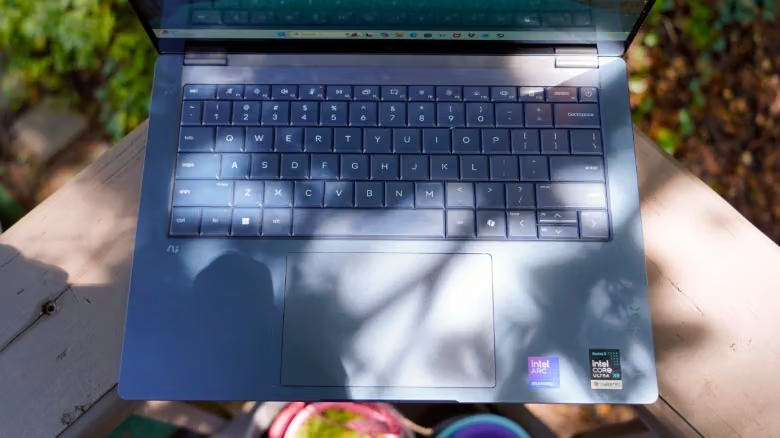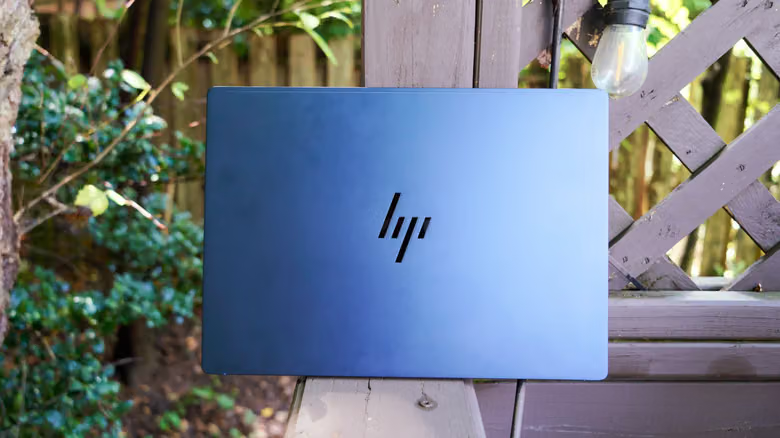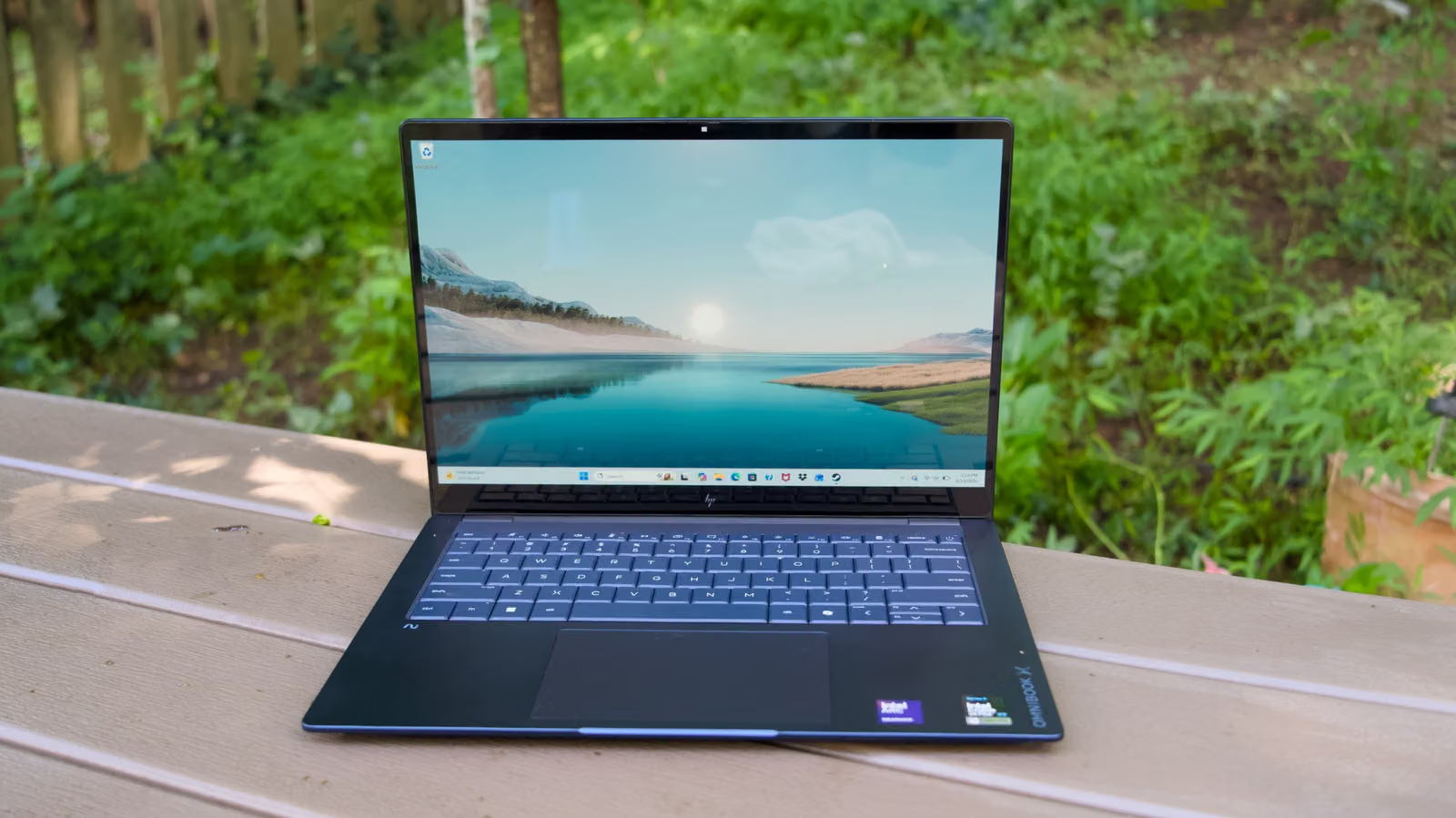
No flip screen, no obsessively slimmed-down chassis — the HP Omnibook X (2026) looks like a laptop that's deliberately trying not to steal the spotlight. But according to an overseas TIDEZINE editor's review, this $1,400 machine, currently on sale for $900, earned a 9/10, and the reasoning is straightforward: it gets nearly everything right where it counts.
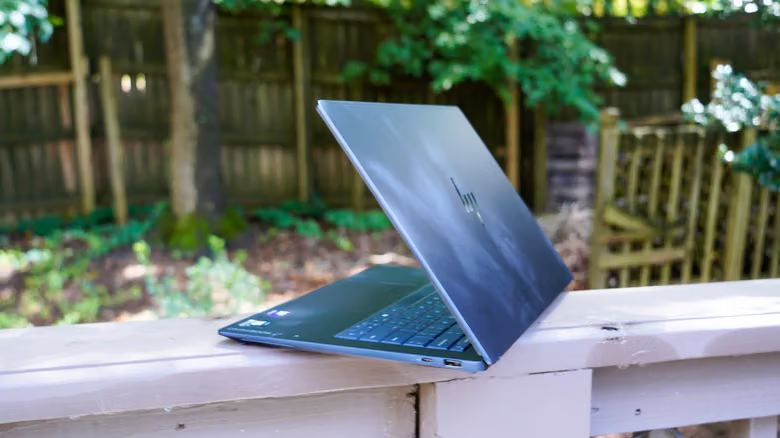
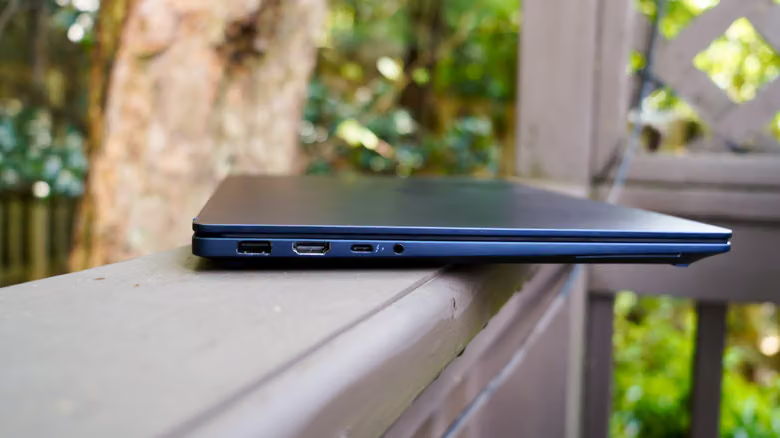
The chassis is built from anodized aluminum, weighing 2.9 pounds — lighter than the 14-inch MacBook Pro's 3.4 pounds — and measuring 12.6mm thick. The review notes that the build quality feels "like it was made for a tank." Open it up and you'll find a 14-inch 3K OLED display capable of 1,100 nits HDR brightness and 500 nits for everyday SDR use, with 100% DCI-P3 color coverage, 120Hz refresh rate, and a 16:10 touchscreen aspect ratio that offers more vertical viewing space than typical 16:9 machines. HP also offers 2K IPS LCD and 2K OLED variants, but both come with lower brightness and no touch support.
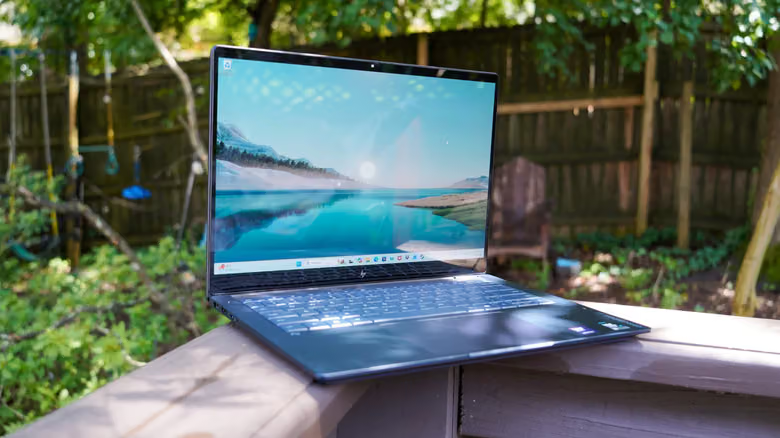
The review unit came equipped with 32GB of RAM and an Intel Core Ultra X9 388H processor, featuring a 16-core design with an integrated Arc B390 GPU. The author described the entire Windows 11 setup process as "blazing fast," and daily use — juggling multiple browser tabs, heavy photo editing, and 4K video editing — showed no signs of lag. In PCMark 10 benchmarks, the Omnibook X outperformed every other PC tested this year, only narrowly losing to the HP Omnibook Ultra (which uses the same processor) in Geekbench 6.
On the gaming front, the integrated Arc B390 averaged 81 fps in Cyberpunk 2077 at 1080p high settings with Intel XeSS enabled, dropping to 45 fps with low-level ray tracing turned on. Its 3DMark Wildlife Extreme score beat comparable ultraportables from Intel and AMD, but lost to the ASUS ZenBook A16 running a Qualcomm Snapdragon X2 chip — a result the review called surprising. The author noted this isn't a gaming laptop, but it still holds practical value for media rendering or AI workloads, and cross-platform-optimized titles like Arc Raiders and Overwatch 2 run smoothly at 1080p.