Moon's Shadow to Sweep Over Karnak Temple: 2027's "Eclipse of the Century" Triples the Darkness of This Year's Show
The 2026 eclipse has barely wrapped up, but the real highlights of the "Iberian Peninsula Eclipse Trilogy" are still to come. In 2027, Luxor, Egypt will see totality last a full 6 minutes 23 seconds, while 2028's ring of fire over Brazil will stretch to 10 minutes 27 seconds — neither visible from Taiwan.
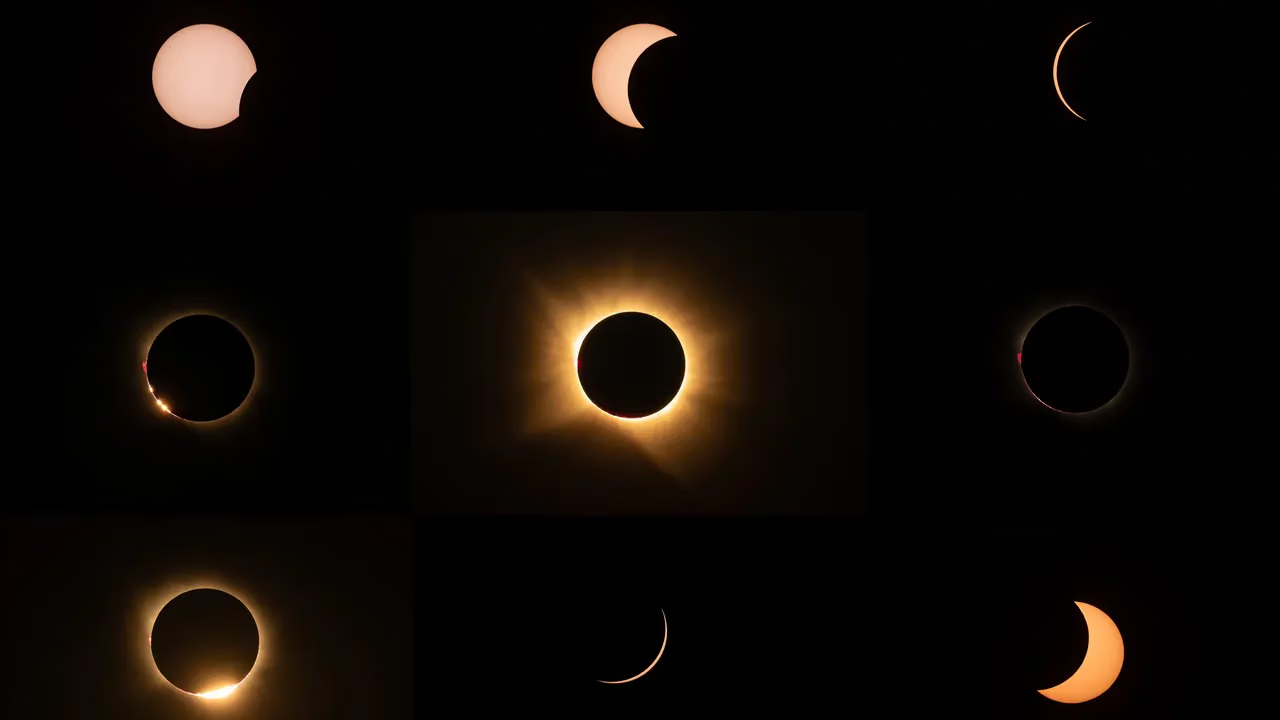
During the total eclipse on August 12, 2026, the sun disappeared for just 2 minutes 18 seconds. By comparison, on August 2, 2027, the moon will completely block out the sun for a full 6 minutes 23 seconds — nearly triple the duration, which is exactly why it's earned the nickname "Eclipse of the Century."
There aren't many places you can catch these 6 minutes 23 seconds. The path of totality starts in southern Spain and North Africa, sweeping across Morocco, Algeria, Tunisia, Libya, and Egypt before stretching on to Saudi Arabia, Yemen, and Somalia. Spain is the only country in Europe where totality will be visible — Taiwan won't see any of it.
Luxor, Egypt is the real spot to watch. Here, the sun will sit over 80 degrees above the horizon, and the moon will block it out for more than 6 minutes — making this the region with the longest totality and greatest eclipse magnitude anywhere on Earth. To put it more precisely: the moon's shadow will sweep directly over ancient Thebes — home to Karnak Temple, Luxor Temple, and the Valley of the Kings across the Nile. Giza's pyramids to the north just barely fall outside the path of totality, so they'll only get a partial eclipse.
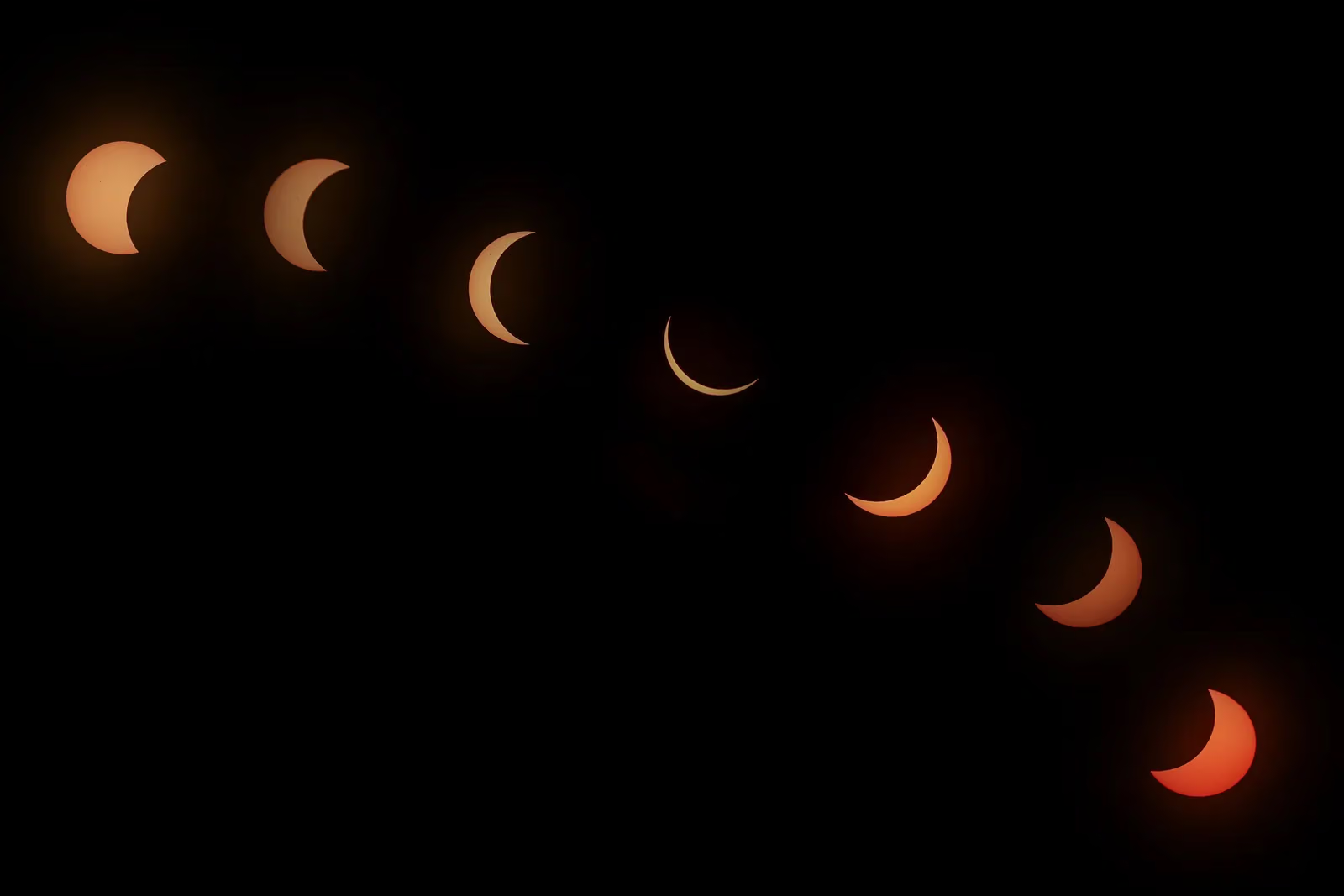
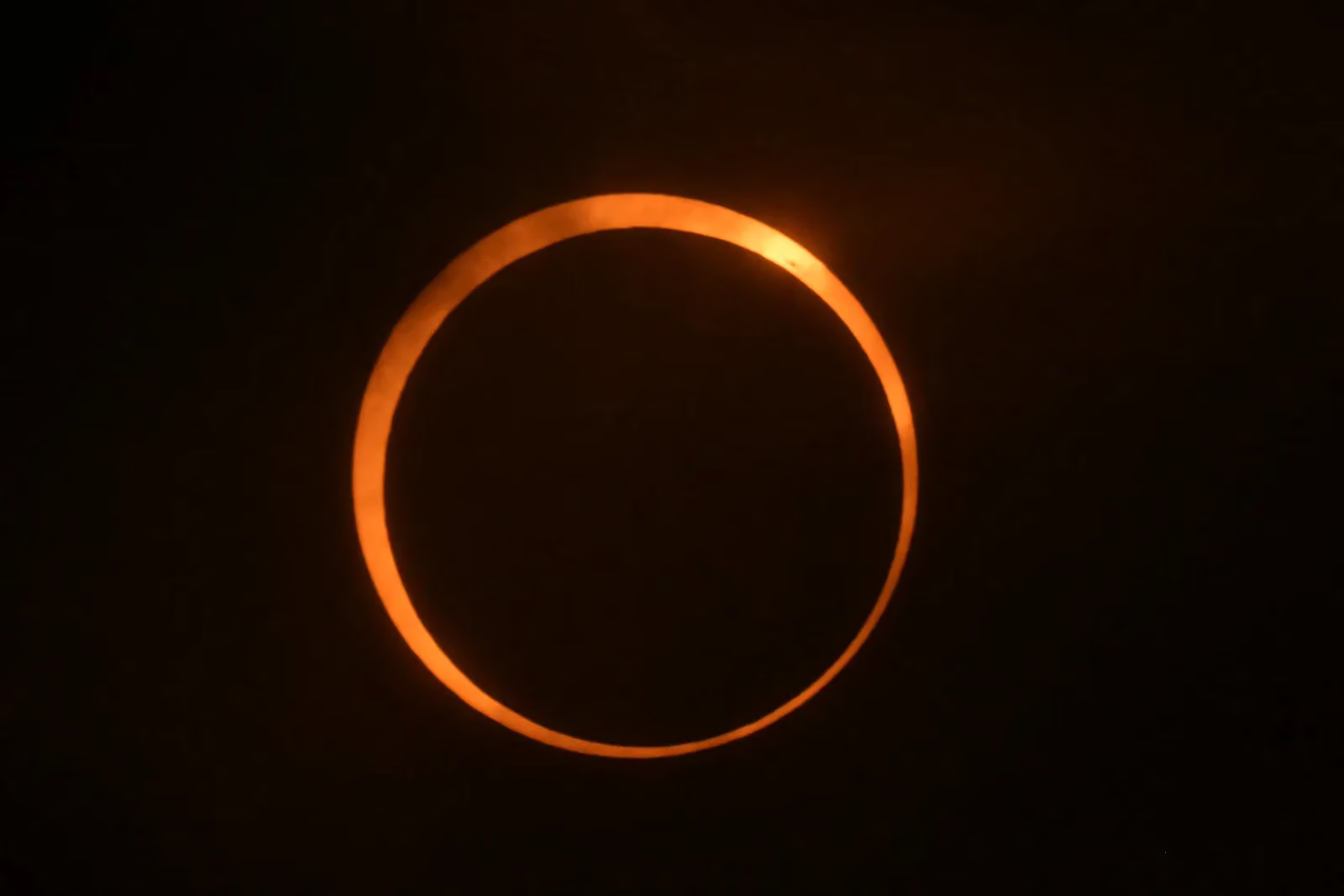
The trilogy's finale — the annular eclipse on January 26, 2028 — will look completely different. This time, the moon won't fully cover the sun, leaving a "ring of fire" glowing around its edges instead. The path of annularity runs from Ecuador and Peru through Brazil, crosses the Atlantic, and reaches Portugal and Spain. Brazil will get the longest stretch of the ring of fire — a whopping 10 minutes 27 seconds, making it one of the longest annular eclipses of the century. Cities like Seville, Córdoba, Albacete, and Valencia in Spain will see about 7 minutes of the ring, but with the sun sitting low near the horizon just before sunset, conditions there will actually be even better for photography. Taiwan won't catch this one either.
10 minutes 27 seconds is longer than 6 minutes 23 seconds, but that doesn't mean the ring of fire is more spectacular than totality — it's just physics. The moon is farther from Earth during an annular eclipse, so its apparent size is smaller than the sun's, meaning it can't fully block it out. The antumbra it casts naturally covers a wider area than the umbra, so annular eclipses simply last longer as a matter of course — it's not a sign of rarity.
Zooming out across history, the longest total solar eclipse on record happened in 744 BCE, with totality lasting 7 minutes 28 seconds — 2027's eclipse comes within just over a minute of that record. As for annular eclipses, the historical record belongs to the year 150 CE, when the ring of fire held on for a full 12 minutes 24 seconds.
Neither of these eclipses will be visible from Taiwan. If you want to witness the sun vanish over Karnak Temple with your own eyes, or catch that ring of fire above Brazil, you'll need to start planning your trip early — this article doesn't cover visa requirements, flights, or tour packages.