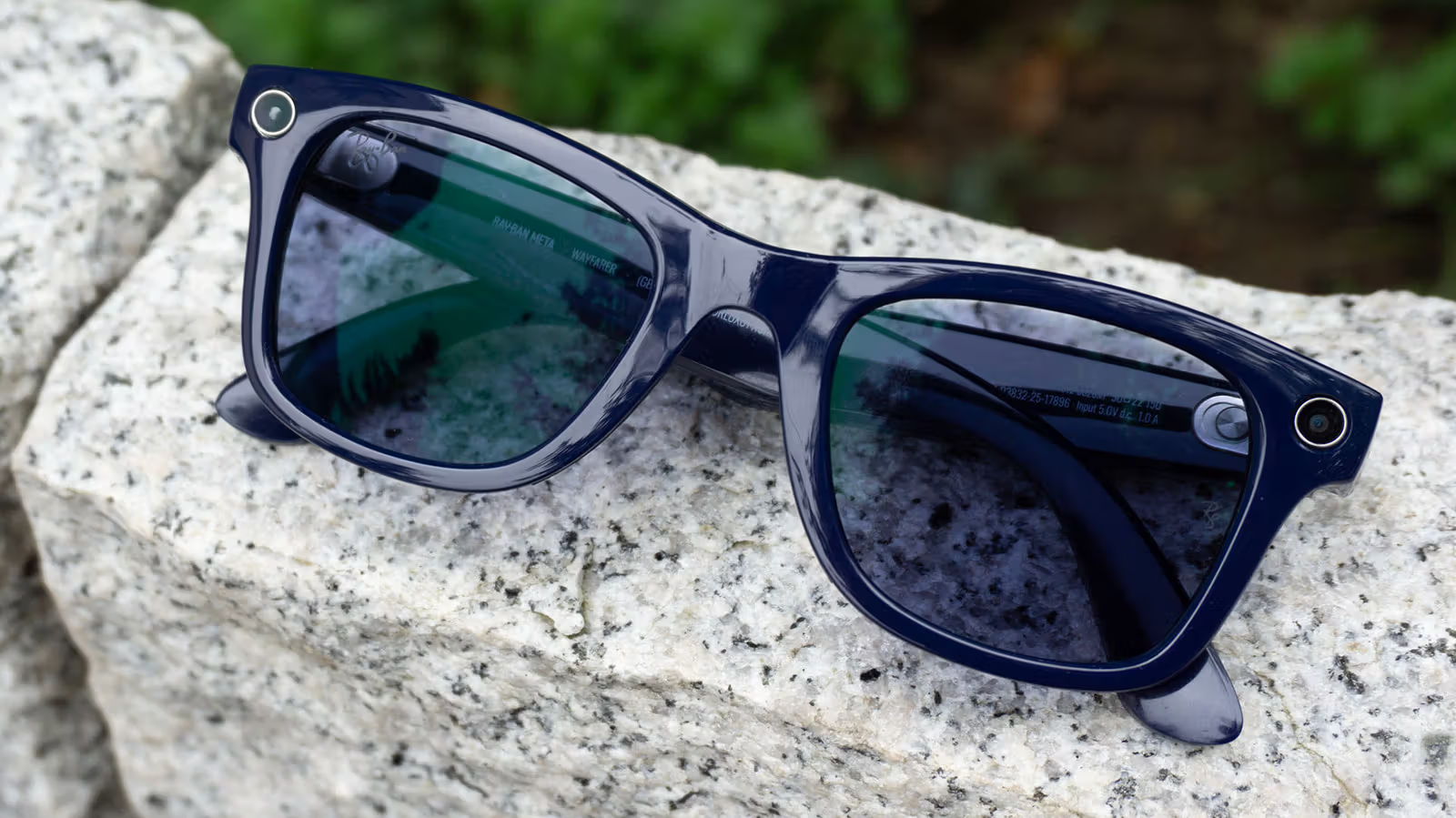
A Border Patrol agent showed up at an immigration raid wearing Meta smart glasses, with nothing on the frames to indicate he was recording — exactly the kind of scene ICE is now scrambling to shut down with a memo.
According to The New York Times, U.S. Immigration and Customs Enforcement (ICE) has sent employees a memo warning against wearing Meta Glasses or similar devices while on duty. The memo states that such devices "may inadvertently capture, record, or transmit sensitive information, thereby compromising privacy and legal protections." The rule applies to all ICE employees, not just field agents. A Department of Homeland Security (DHS) spokesperson told the Times that employees have "always" been barred from using "personal wearable cameras" — in other words, the memo reads more like a reaffirmation of an existing rule than a new policy.
But the fact that the memo had to be issued at all says something on its own: Meta's smart glasses have been showing up at immigration enforcement scenes so often in recent months that the agency could no longer avoid addressing it head-on. 404 Media previously reported on a CBP officer caught recording with the glasses in violation of the rules; in another case, a Border Patrol agent wore the same device to an immigration raid. According to an investigation by The Independent, similar sightings have occurred in at least six states.
Ironically, while DHS is telling employees not to wear the consumer version of Meta's glasses, it's reportedly working on an official version of its own. Budget documents obtained by independent journalist Ken Klippenstein show ICE wants to equip agents with dedicated smart glasses featuring "biometric capabilities" by next year. In other words, the issue was never whether smart glasses should exist at all — it's whose glasses they are, and what features are built in.
Meta has yet to publicly address whether its product is suitable for law enforcement use, and the timing couldn't be worse for the brand. Concerns about Meta's smart glasses have been mounting lately: an unreleased facial recognition feature has raised surveillance worries, and the recording indicator light — originally meant as a privacy safeguard — has been shown to be easily bypassed. ICE's memo just puts all of that back in the spotlight.