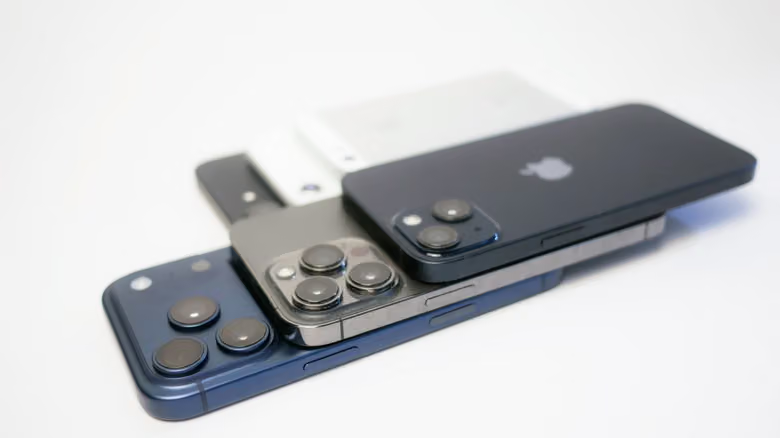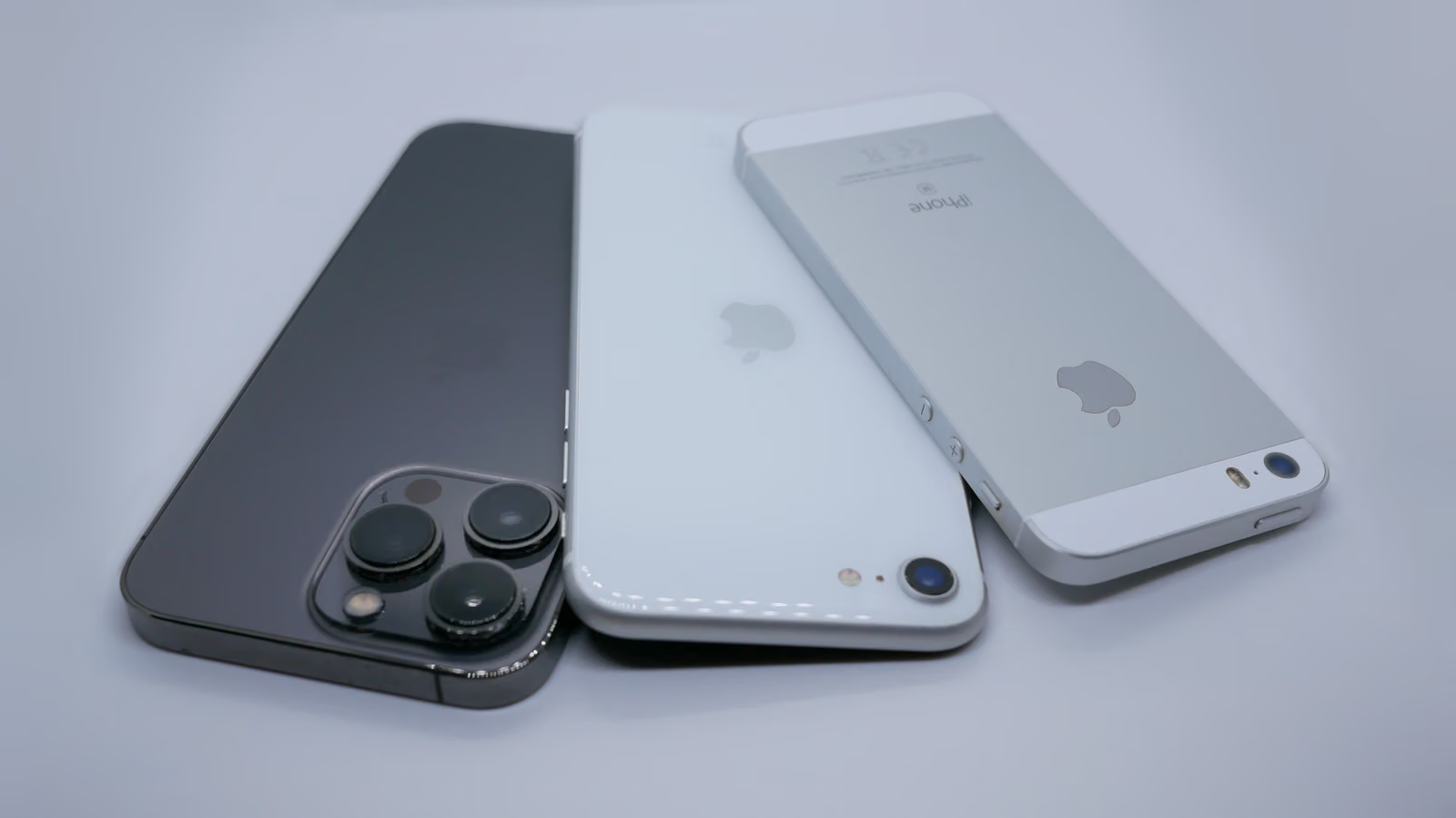
If there's one thing that best captures how much — and how little — the iPhone has changed over the past five years, it's not the growing number of camera lenses. It's iCloud's free storage. That 5GB figure hasn't budged since the service launched back in 2011. Over that same stretch, the base storage on a standard iPhone has doubled, climbing from 128GB on the iPhone 13 to 256GB on the 2025 lineup. The cloud, meanwhile, hasn't moved an inch. That contrast is the perfect entry point into the last five years of iPhone evolution — the hardware has genuinely shifted almost every single year, while certain parts of the system have stayed frozen in time.
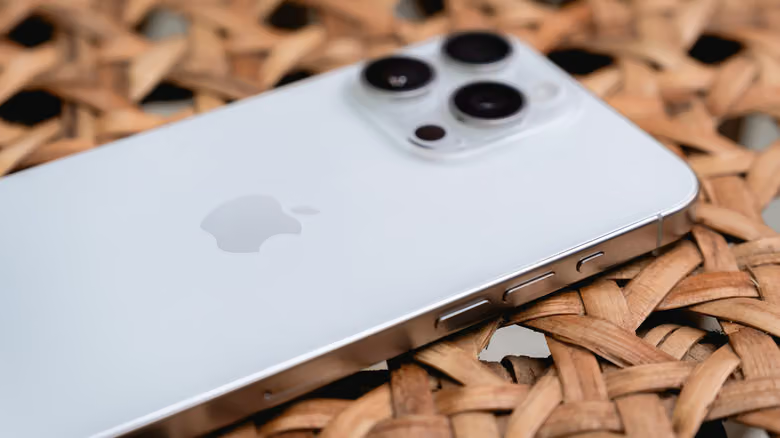
The most visible hardware turning point came at the port and button level. The Lightning port had been a fixture since the iPhone 5 in 2012, lasting over a decade until EU regulations forcing all phones sold in the region to switch to USB-C finally pushed Apple to make the change, starting with the iPhone 15 lineup in 2023. That same generation also marked the end of an era for the mute switch — the slider that had sat in the top-left corner since the original iPhone in 2007 was replaced on the iPhone 15 Pro and Pro Max by the Action Button, which kept the mute function but could also be customized through the Shortcuts app to trigger the flashlight or launch the camera, a feature that's carried through the entire lineup since the iPhone 16. The iPhone 16 and 17 (excluding the entry-level e-series) added an entirely new Camera Control button on top of that — press it and the camera opens instantly, while the touch-sensitive surface lets you adjust zoom and exposure on the fly.
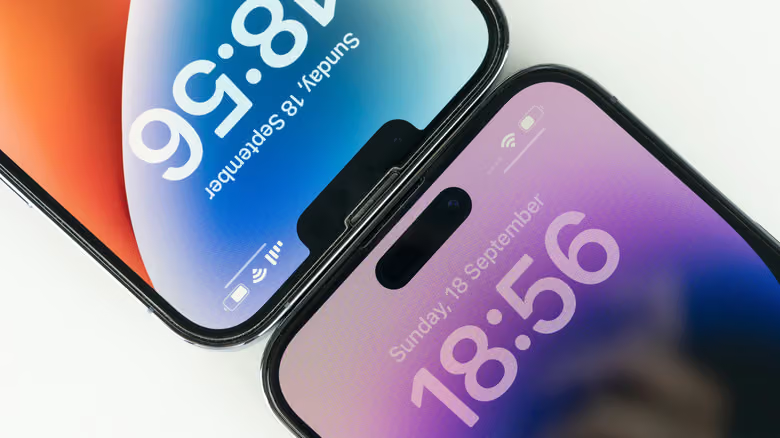
The Screen: From the Notch to Dynamic Island
Screen changes haven't been as dramatic as the button overhaul, but they hit closer to the everyday experience. ProMotion's variable refresh rate started rolling out with the iPhone 13 Pro/Max and now covers the entire iPhone 17 lineup (including the Air) at 120Hz — buttery-smooth scrolling and gaming, dropping to 1Hz on static screens to save battery. Models without this feature are still stuck at 60Hz. The notch introduced with the iPhone X in 2017 went essentially unchanged for five full generations until the iPhone 14 Pro/Pro Max swapped it out for the Dynamic Island, which started surfacing live info like timers, navigation, and music playback. That design has stuck around on every iPhone since, except the e-series. Always-On display debuted on Pro models starting with the iPhone 14 Pro, and now the entire iPhone 17 lineup (including the Air) has it too.