In a recent interview, Kachong Hills Tented Resort operator Jirawat “Mick” Viraponsawan connects his Trang property with the province’s coffee, rice and communities. Forest land originally sought for family retirement became a restaurant and accommodation, with an expanding wish to help travellers understand Trang itself. This is an established property recombining local resources, rather than a hotel opening today.
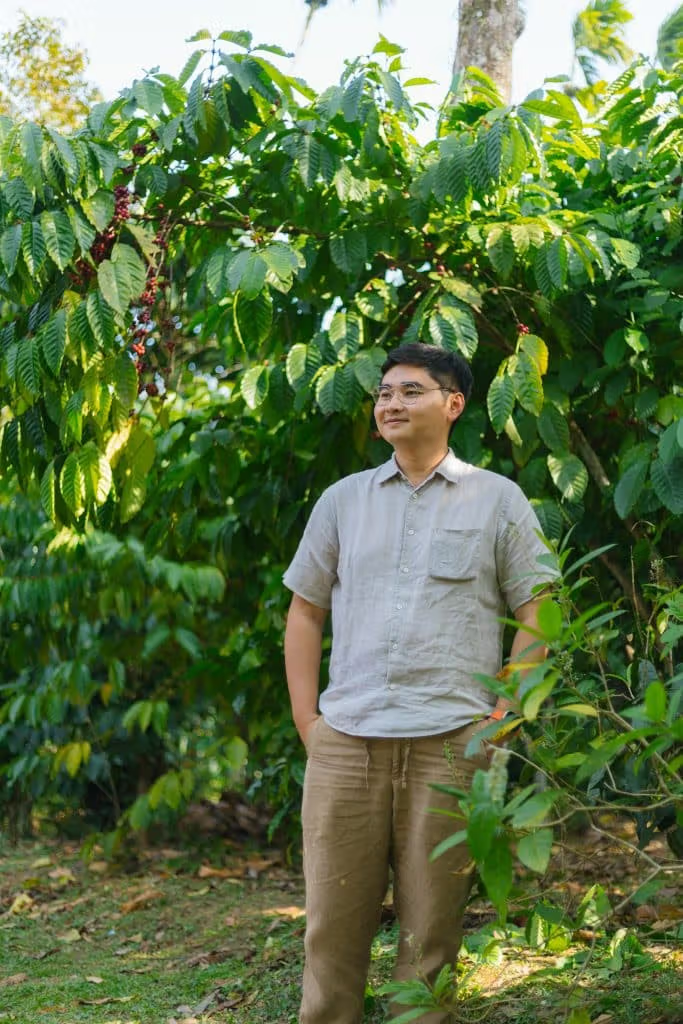
Jirawat “Mick” Viraponsawan beside coffee plants.
How does tented accommodation relate to the forest?
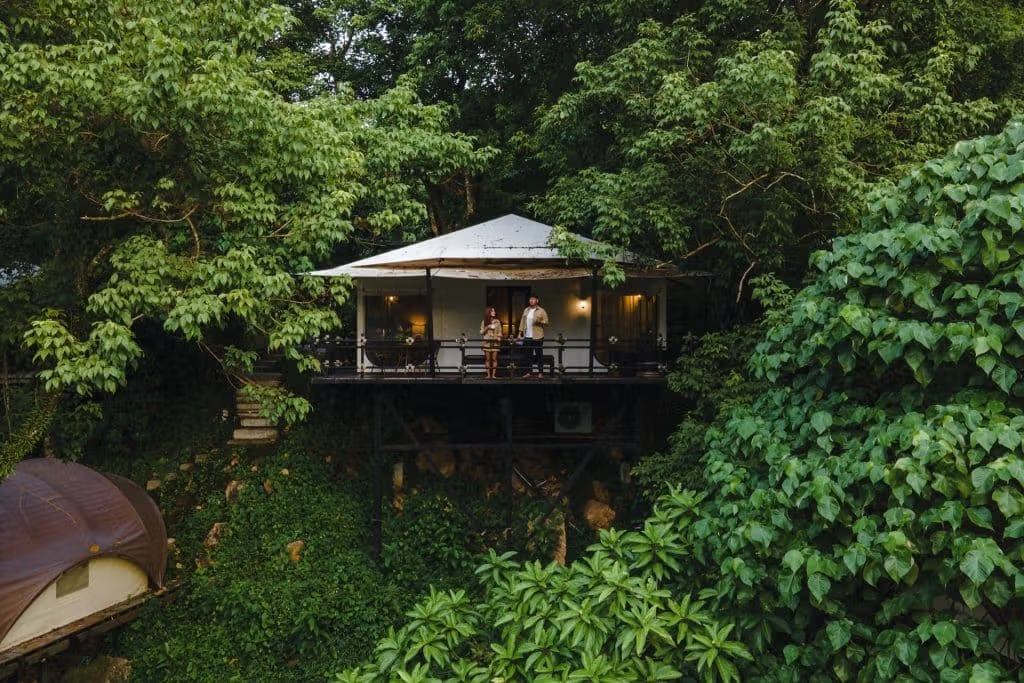
Official information lists several types: a 44-square-metre Exclusive Explorer tent, a 46-square-metre mountain-view room and a 100-square-metre Pool Suite. Terraces, daylight and interior arrangements make them more than enlarged or reduced versions of one space. With his architectural background, Mick wants structures to fit within the landscape and leave the forest as the main subject of attention.
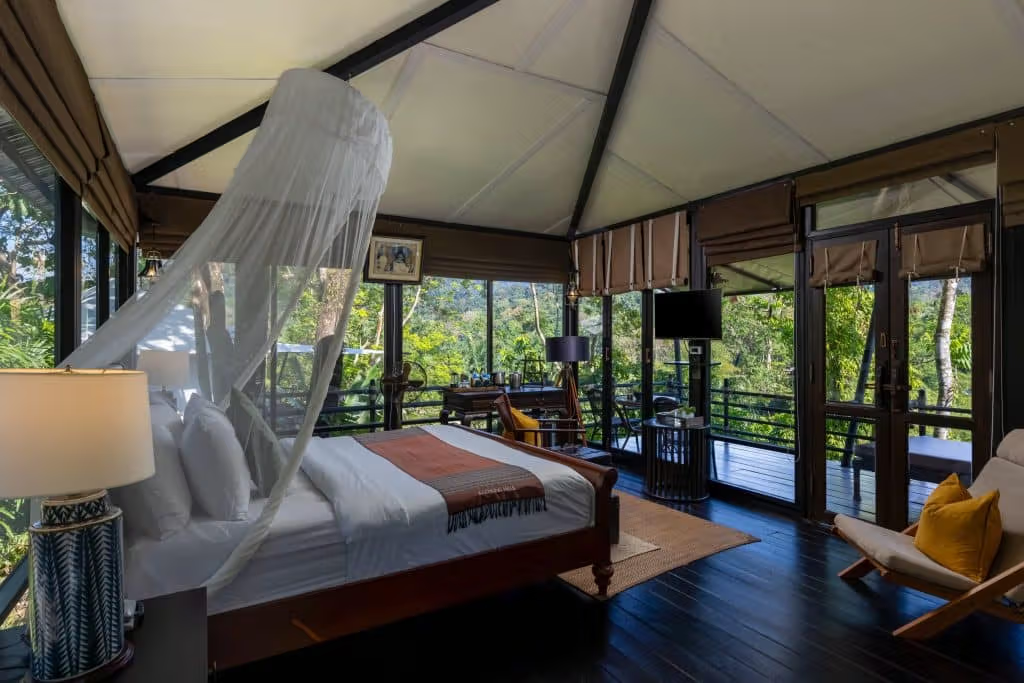
Photographs show broad openings connecting rooms with greenery. Some place a bathtub, seating or terrace at the boundary between inside and out. A stay becomes more than a bed, involving the ways a person’s gaze moves through a room. Begin a room choice with activities: time on a terrace, the size of the group and storage needs, rather than assuming every tent offers one identical camping experience.
An opening and terrace connect the Exclusive Explorer tent with greenery.
Why does Looklom discuss Trang’s food?
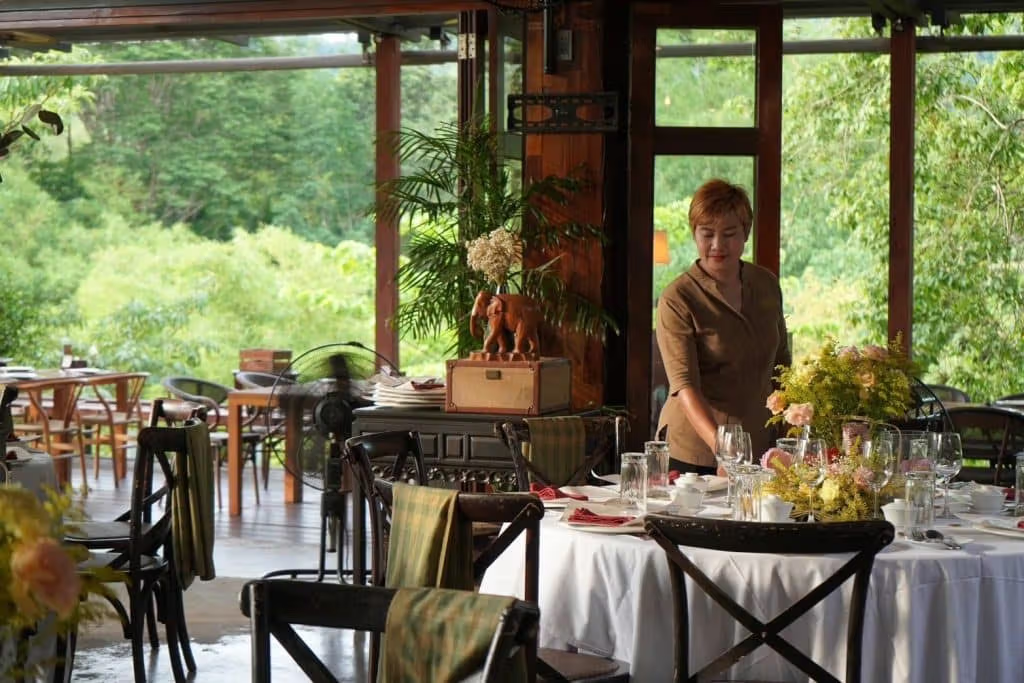
Looklom café and bistro at Kachong Hills introduces local food and ingredients while receiving travellers. Mick wants a table to communicate the value of Trang’s culture and relationships with small producers. Rice, seafood and recipes can combine with accommodation to form a more complete journey, beyond consuming a single meal.
Looklom’s tables share a continuous setting with the greenery outside.
For visitors, local becomes a set of questions rather than an ornamental term. Which rice is used, where does an ingredient come from and does a season alter its preparation? Such details are more specific than a broad claim of regional character. Understanding them does not require rating every dish. Dining can first be a route into how people and environments work together.
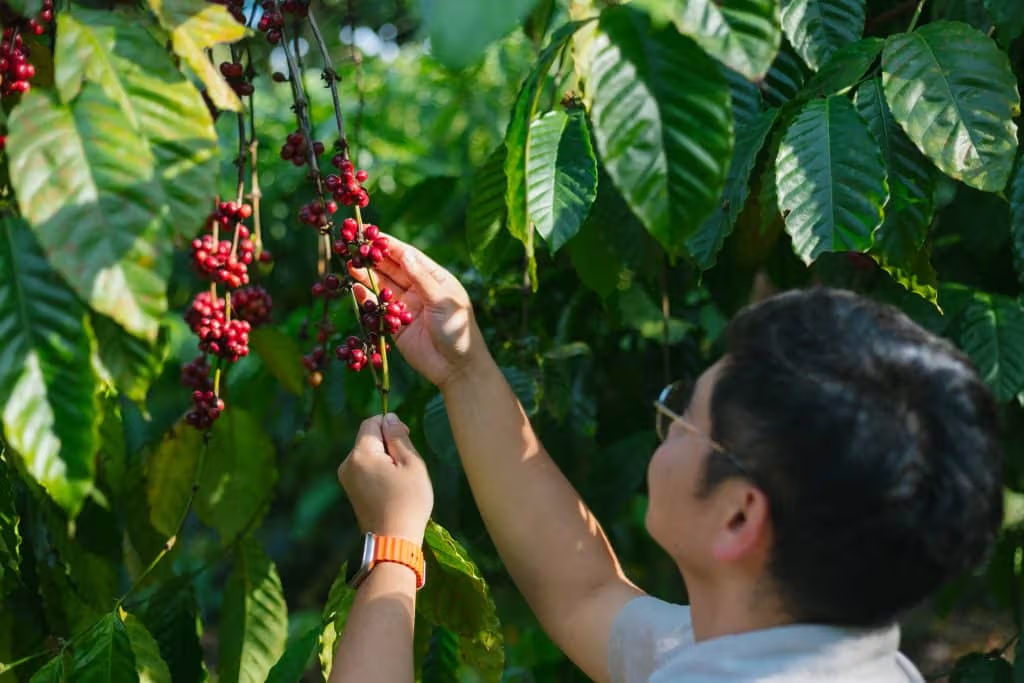
Robusta fruit provides an entry to Trang’s growing context.
How does Robusta reconnect with local history?
The interview describes Mick working with communities and researchers on Khao Chong coffee varieties and Trang’s Robusta context, alongside plans for a coffee event in December. The arrangements remain in development. Without a complete programme, they should not be offered as a bookable itinerary. The question worth following is whether coffee can connect growers, hospitality and visitors, making the work behind a drink visible.
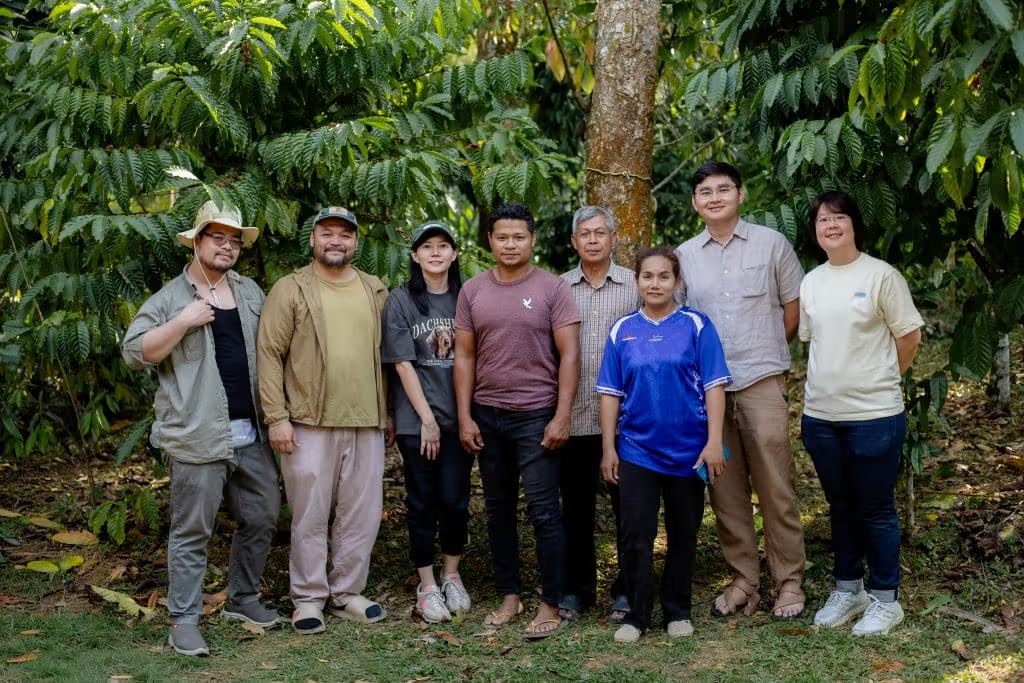
Local participants and coffee plants establish a community-work setting.
Consider Kachong Hills through three elements when planning Trang: accommodation, Looklom and coffee. Room rates, menus and event schedules change at different speeds and require separate checks for a particular visit. The interesting move is to extend the property’s boundary beyond a room, allowing forest, food and producers to contribute to understanding Trang.