The story of Thai silk need not wait for a complete traditional outfit. In Ubon Ratchathani, northeastern Thailand, Wiyada Unnanuntana develops Chanhom by connecting local weavers, cloth and contemporary products. Khum Chanhom adds a museum and learning centre where making becomes visible. Beyond the price of a piece of fabric, three questions offer a useful route: who makes it, how techniques continue and how the textile enters life today.
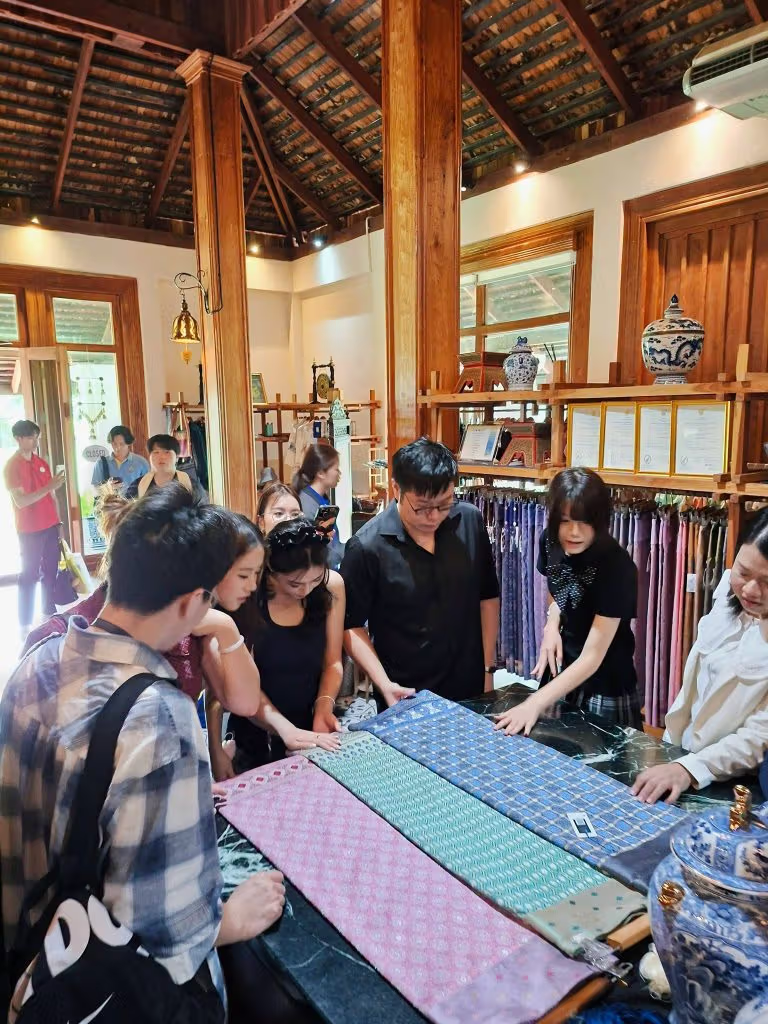
Visitors look closely at the process beyond the finished product.
What is preserved in a move from banking to weaving?
Wiyada’s interest began with her grandparents introducing her to Thai silk. The practice did not continue through every generation. After leaving banking, she developed that interest into a business working with local communities. She describes a current network of more than seventy households. Its importance lies in opportunities for skills to remain in use and provide income, rather than surviving only in memory.
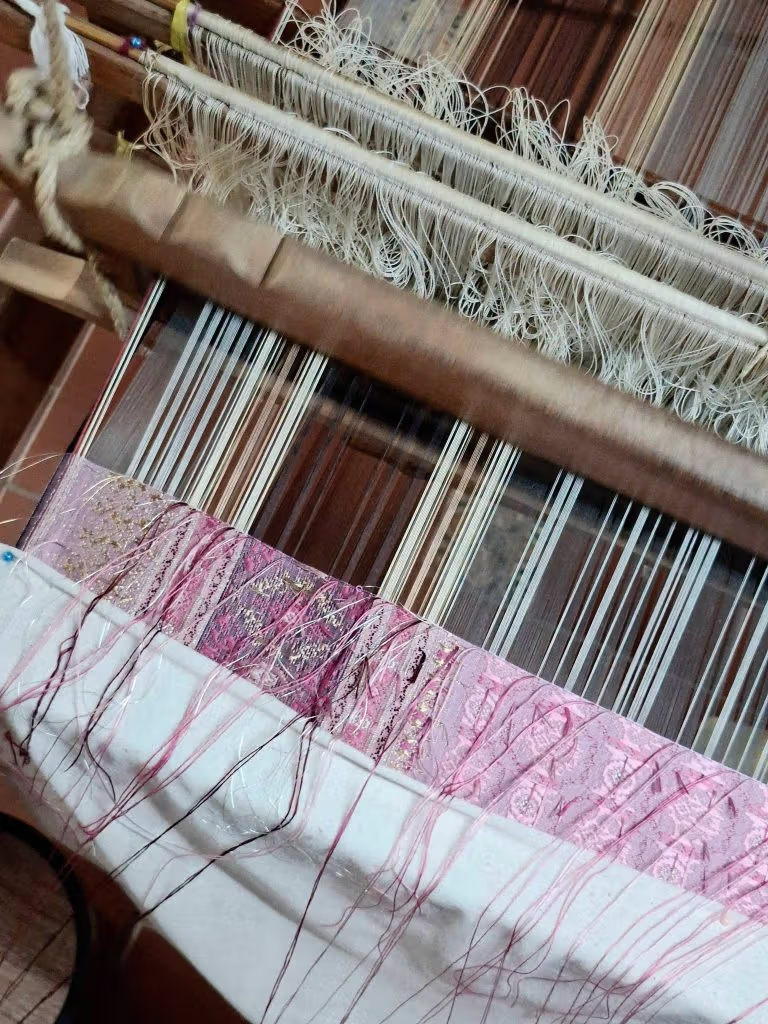
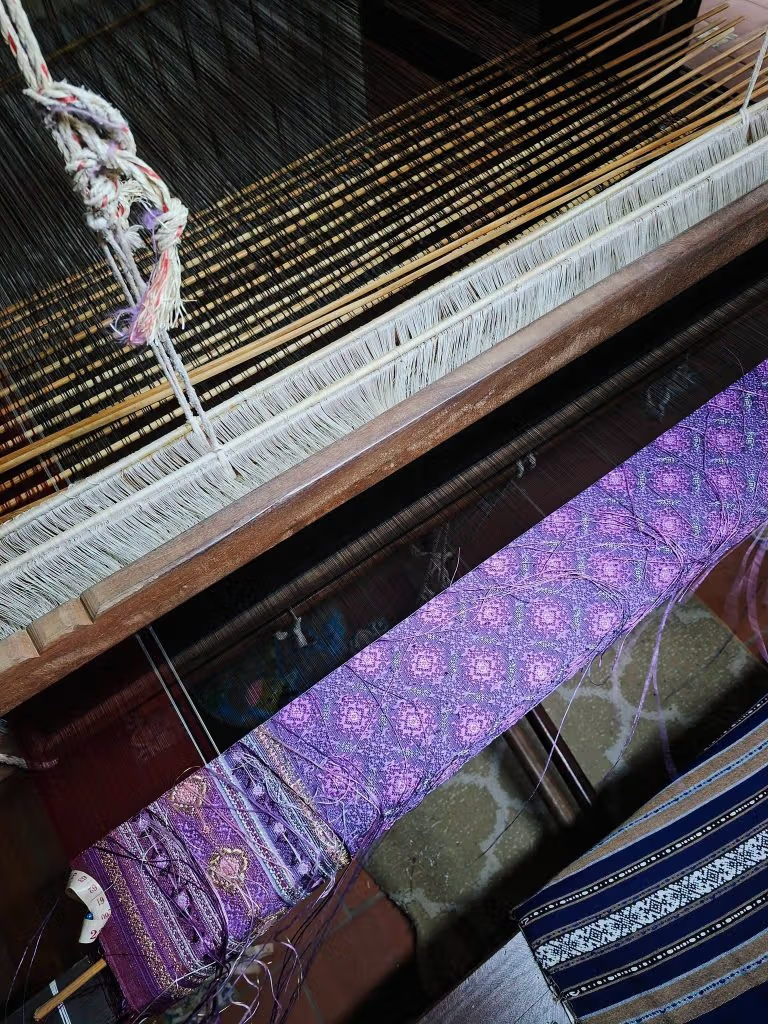
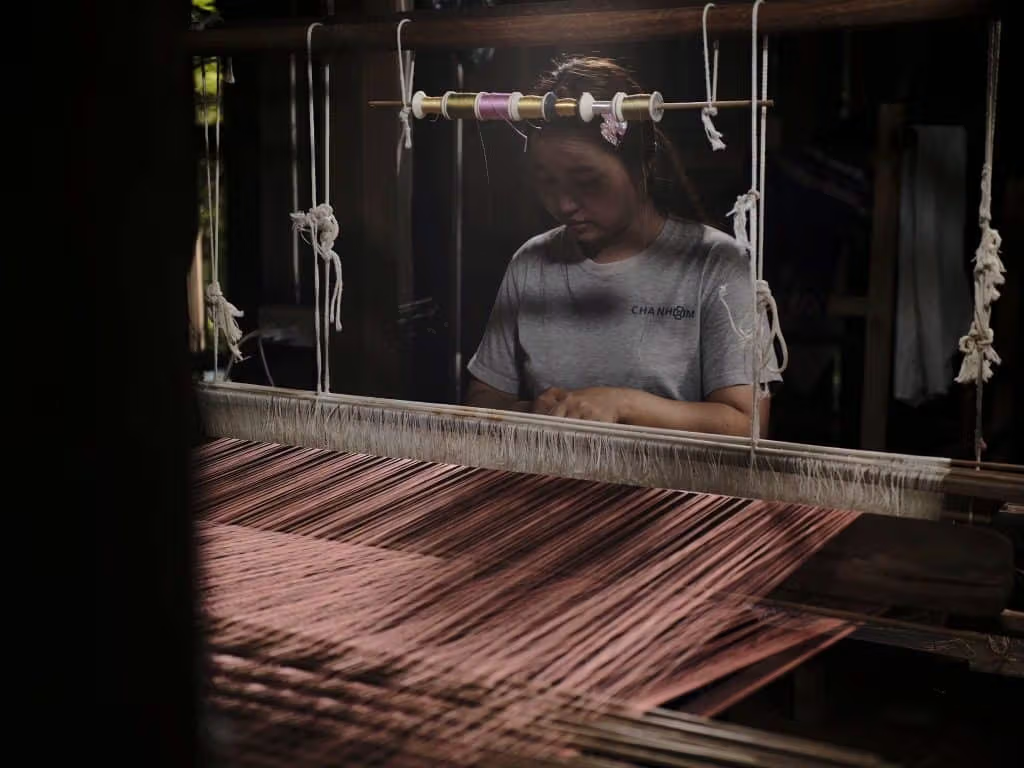
Threads on a loom reveal work moving at different speeds: preparing the warp, handling colour, arranging a pattern and repeatedly passing the weft. A seemingly simple change on the finished fabric may require planning in advance. Judging handwoven cloth only by machine-like uniformity risks missing the details left by material, gesture and time.
Threads on a loom reveal colour and structure during production.A purple pattern takes shape along the loom.
How can local patterns move beyond a souvenir?
Chanhom draws on Ubon’s landscapes and culture, including Pha Taem and the locally associated Kab Bua pattern. A sense of place need not appear as a large printed location name. It can reside in colour order, rhythm and fabric structure. Compare the arrangement of repeated units, then notice whether colour interrupts that regularity. This stays closer to the textile than immediately demanding a single symbol for every shape.
Alongside sin skirts, scarves and shawls, the range extends to clothing, bags, ties, accessories and homeware. Different uses require different thickness, drape and cutting. A traditional technique need not be confined to one garment type. Bringing it into a contemporary wardrobe means finding something that will remain in use, without requiring an entire traditional outfit.
Why make the process visible in a learning centre?
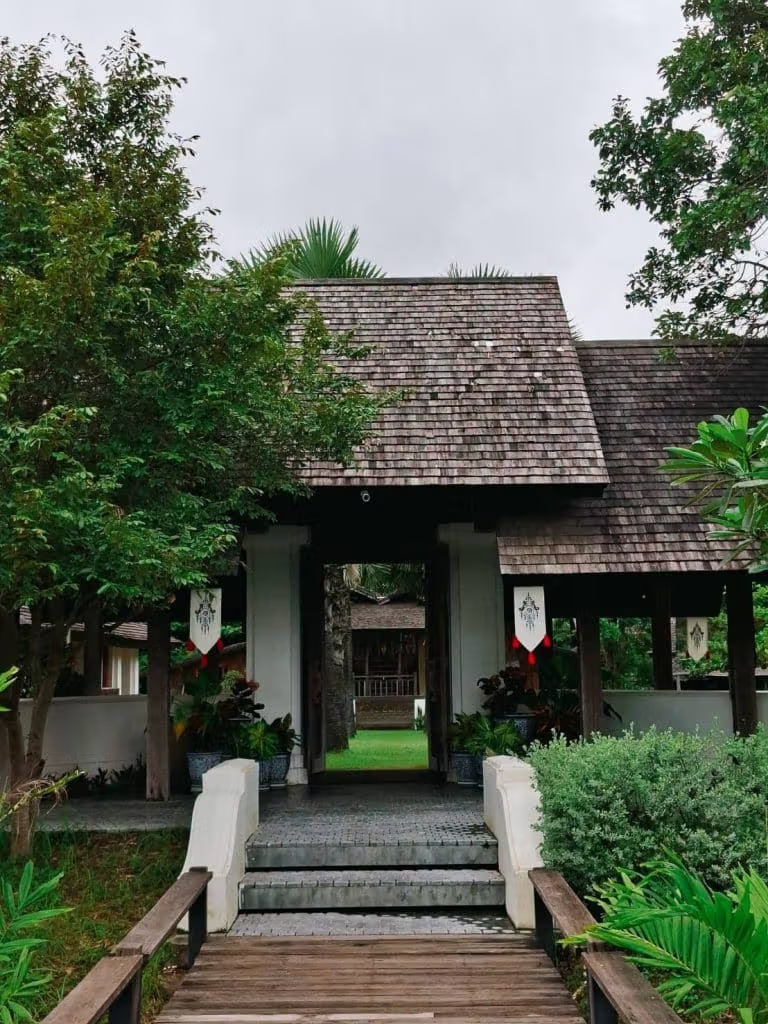
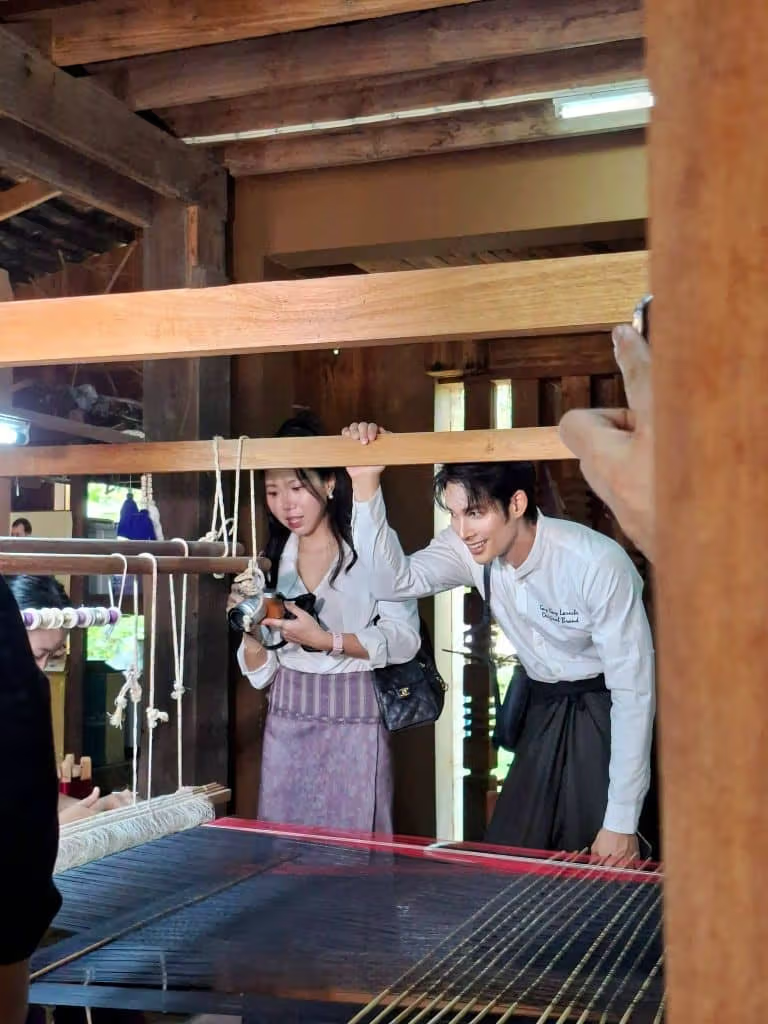
Khum Chanhom takes inspiration from traditional Isan architecture and connects silkworm rearing, reeling, dyeing and weaving as stages to understand. Historical patterns and new work can be compared, while workshops offer contact with artisans. Buildings, timber structures and looms bring material knowledge beyond written explanations: the maker’s position, hand movements and tool dimensions can also be read.
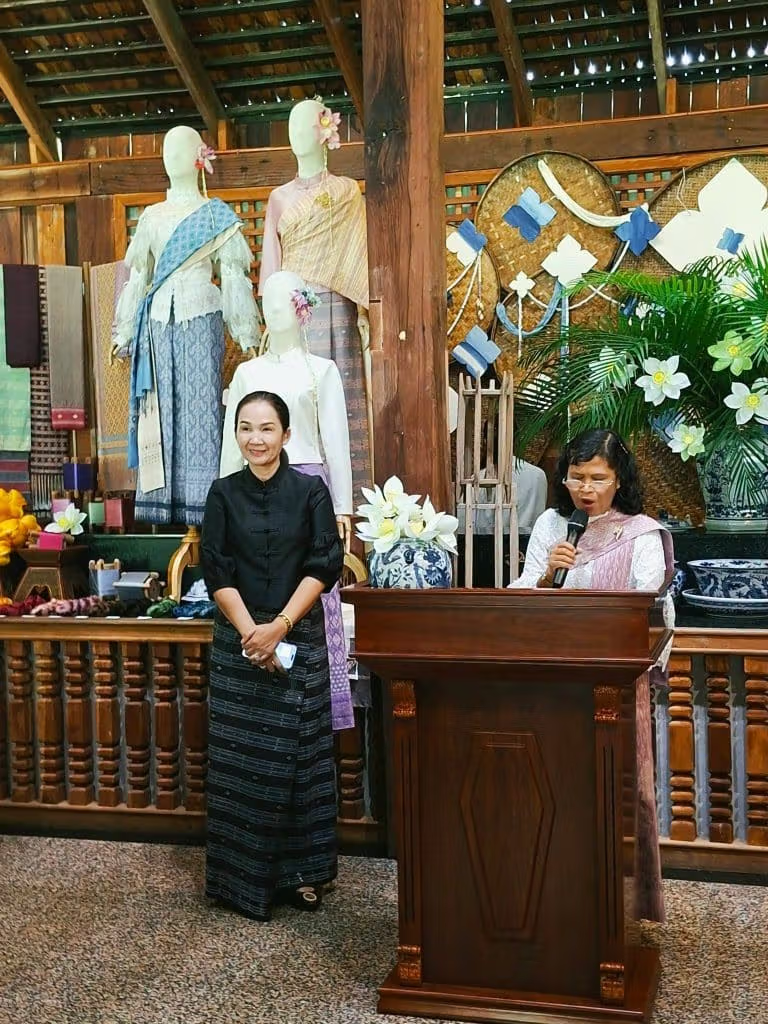
Wiyada appears alongside textiles in the display space.The maker and tools establish the working scale of weaving.
Approach the site through a loom, a finished cloth and an everyday product, asking what changes between them. Confirm visits and workshops with the venue rather than assuming every photographed demonstration is always available. Keeping craft at work allows inheritance to mean more than preserving old objects. It also gives another generation a reason to continue learning and using the skills.
A workshop places learning beside working tools and materials.