Seven Korean Hot-Spring Stays: From Podo’s In-Room Baths to Busan’s Coastal Waterhouse
Private baths, public outdoor pools and city hotels create different travel rhythms. Compare spatial formats and landscapes rather than treating all hot-spring rooms alike.
Choose a Korean hot-spring stay by its spatial format rather than treating “has hot springs” as one condition. Detached villas in Yesan, in-room baths in Jeju, mountain-view outdoor pools in Gyeongbuk and city or coastal hotels in Busan create different travel rhythms. The original selection page contains affiliate booking links through which its publisher may earn a commission. The comparison below focuses on architecture, bath locations and regional planning.
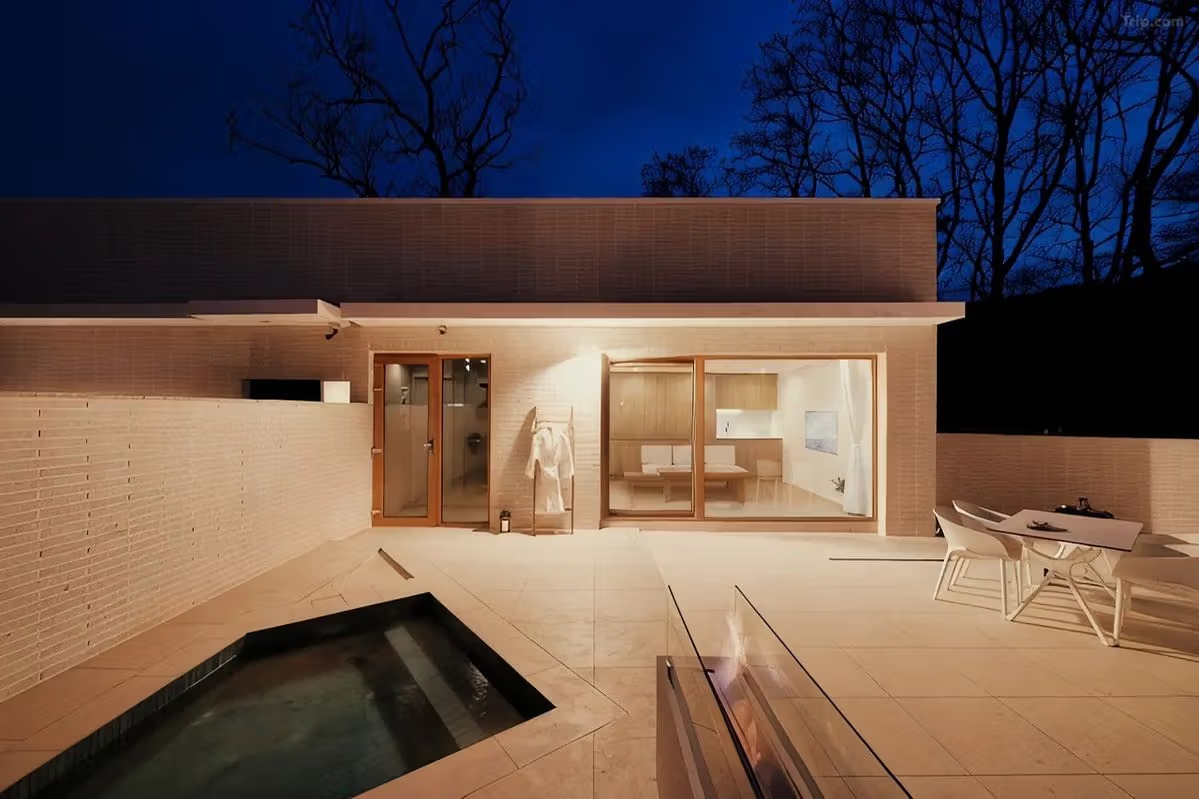
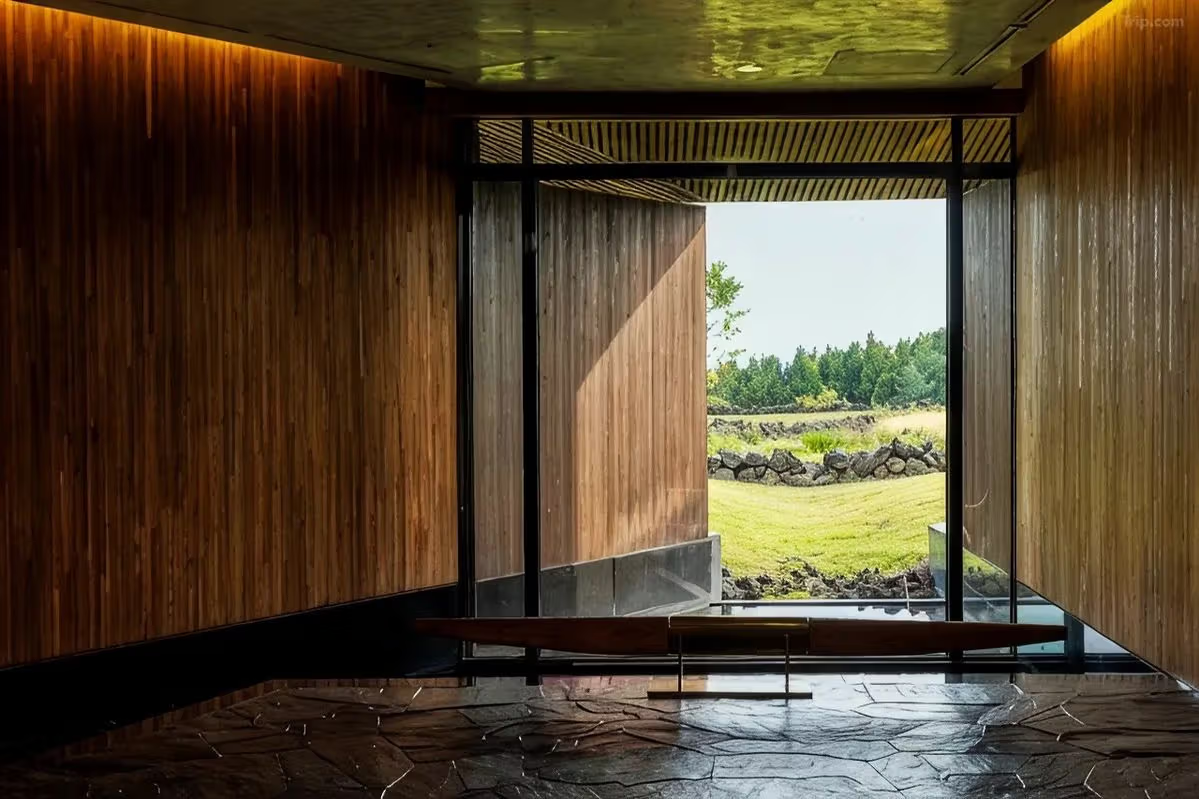
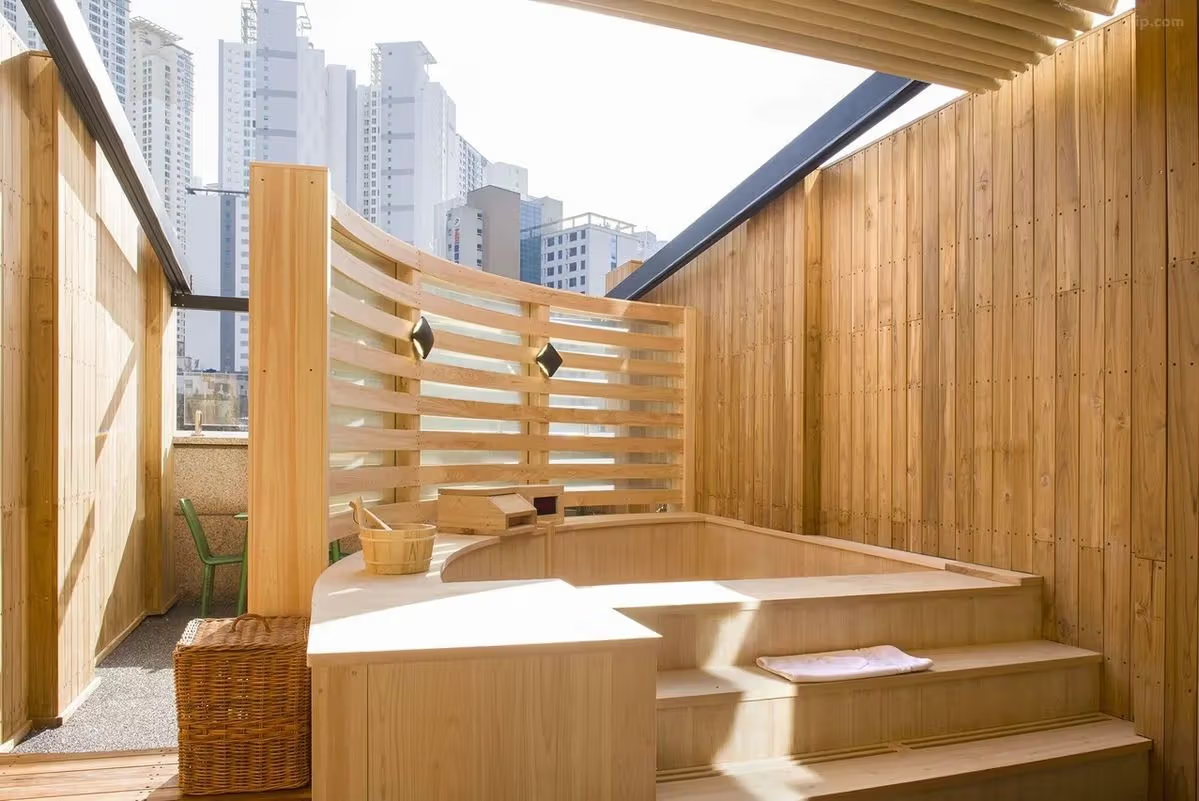
An in-room bath at Podo Hotel faces the Jeju landscape.
For a Bath Within Your Own Space, Begin with Yesan and Jeju
Onyeon Private Villa, near Deoksan Hot Springs in Yesan, Chungcheongnam-do, is at 69-5 Oncheondanji 1-ro. Five detached villas each contain bedrooms, living space, a kitchen, terrace and outdoor bath. Bathing and staying occupy the same private unit, a straightforward format for travelers sharing living space and minimizing trips to public facilities. Individual rooms also deserve separate attention for their layout and atmosphere.
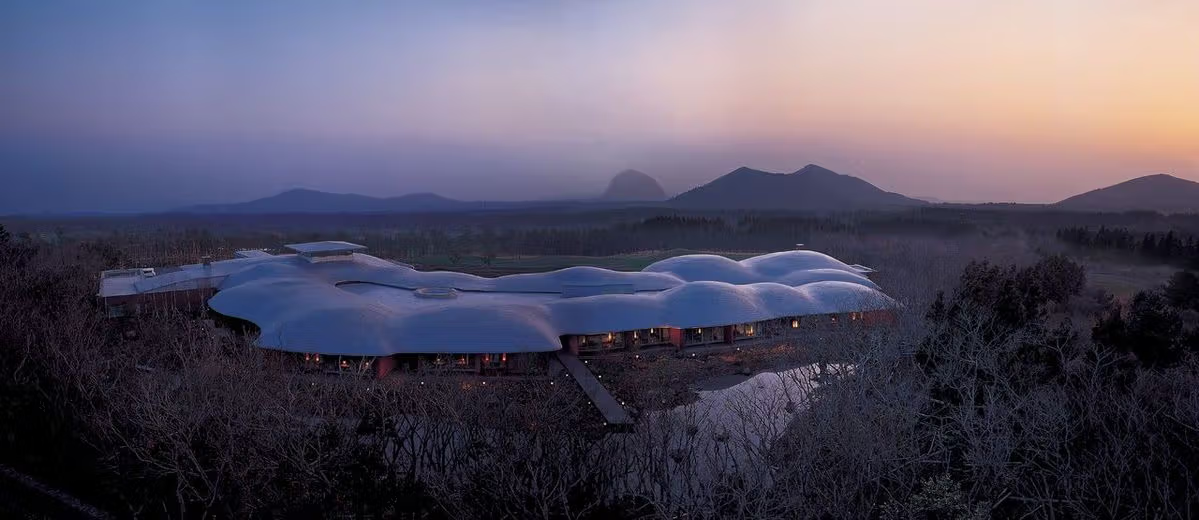
Podo Hotel in Seogwipo, Jeju, was designed by Itami Jun around volcanic hills and traditional roofs. Its low, single-story cluster resembles grapes from above. All 26 rooms receive aragonite hot-spring water; Korean- and Western-style rooms differ in features such as hinoki or stone baths. Unlike a large spa complex, it links the bath, the view and the room itself. For architectural travel, the roof’s relationship to the terrain merits as much attention as bathing.
Podo Hotel’s low roofline continues the surrounding terrain.
Public Mountain Baths and an Urban Hot-Spring Base
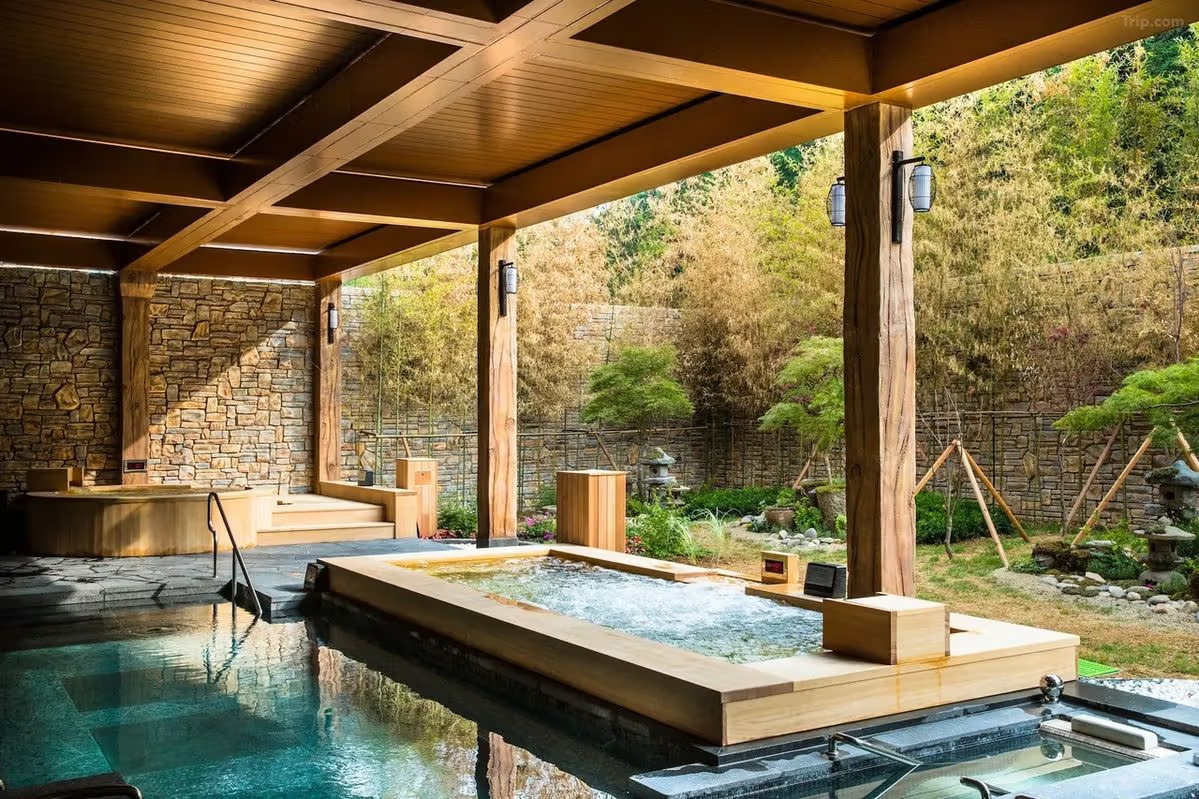
Deokgu Hot Spring Condo sits at the foot of Eungbongsan in Uljin, Gyeongbuk, at 924 Deokguoncheon-ro. Spa World adds bubble baths, wooden pools and outdoor facilities. Known for naturally emerging hot-spring water, Deokgu offers different layers between accommodation and shared facilities. Hotel Nongshim, at 23 Geumganggongwon-ro 20beon-gil in Busan’s Dongnae district, instead keeps the trip within urban life, making meals, walks and hotel rest easier to combine.
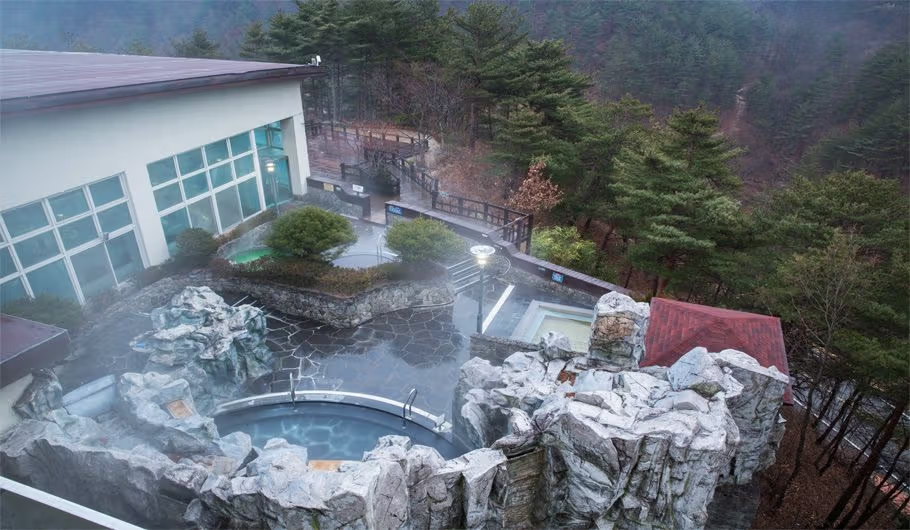
Outdoor bathing and mountain scenery at Deokgu Hot Springs.A hot-spring area associated with Hotel Nongshim shows an outdoor bath in the city.
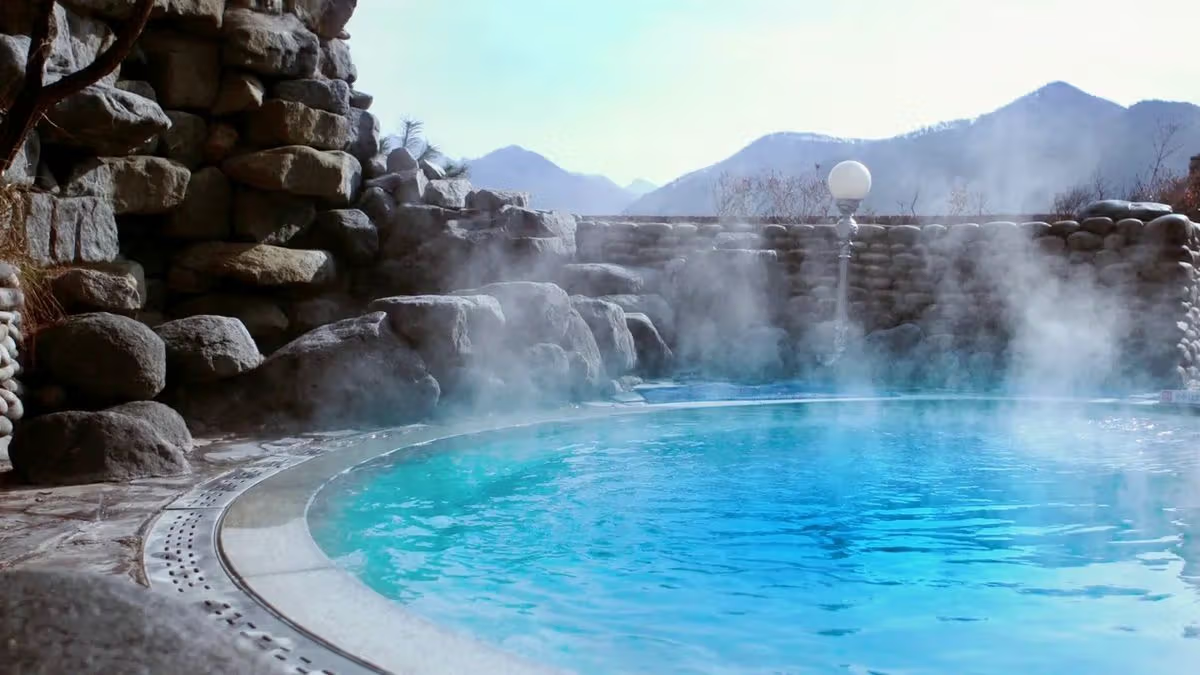
Solsaem Hot Spring at Sono Belle Cheongsong places indoor and outdoor baths in the mountain setting around Juwangsan. Official information lists two wells at approximately 800 and 870 meters, distinguishing them from a generic claim that all deep springs share one depth. Nearby Juwangsan National Park and Jusanji can form a daytime plan, with bathing reserved for the return rather than filling every hour with activities.
Wooden structures and natural scenery shape Solsaem Hot Spring at Sono Belle Cheongsong.
Mountain Views in Chungju, Sea Views in Gijang
Suanbo Park Hotel in Chungju, at 36 Tapgol 1-gil, has outdoor baths overlooking mountains and a more traditional hot-spring-travel atmosphere. Its appeal differs from a newly built design hotel: the mountain position, indoor and outdoor baths and Suanbo district itself are central. Travelers seeking slow walks and bathing rather than constant new facilities still have a clear reason to choose an established spring town.
Suanbo Park Hotel’s outdoor bath faces mountains.
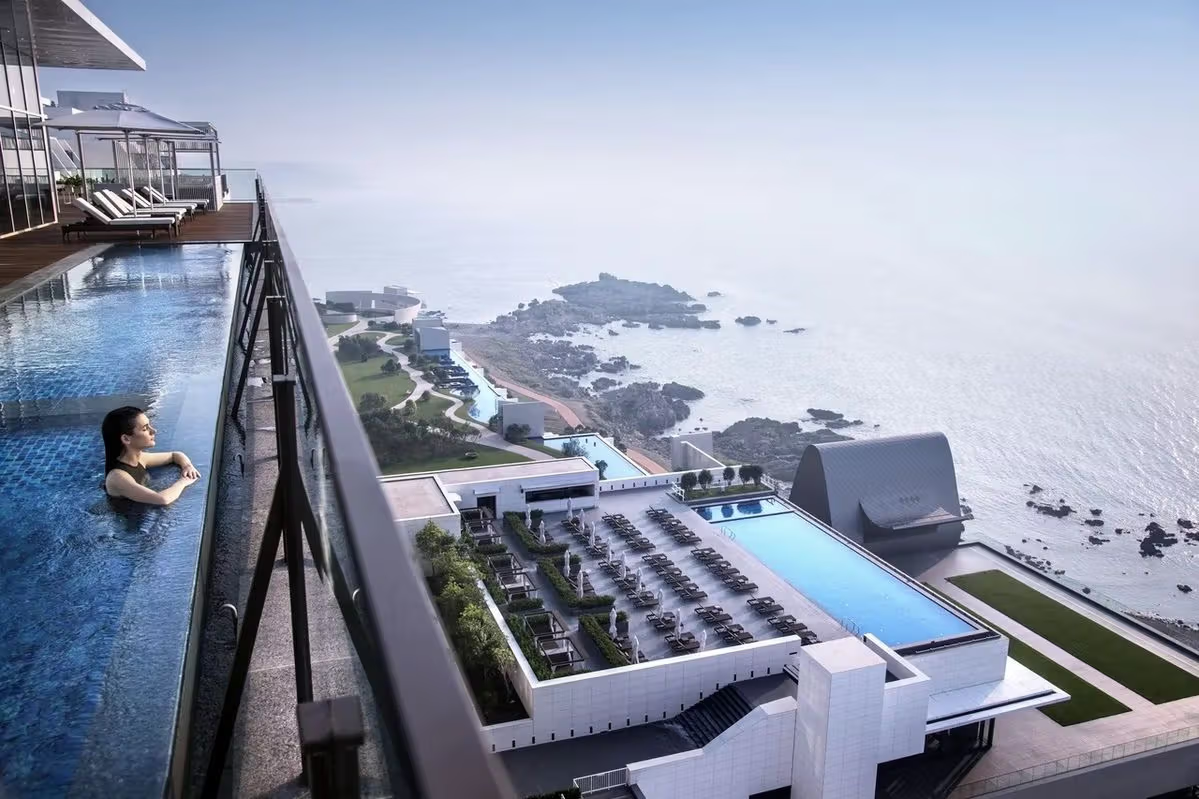
Ananti at Busan Cove, at 268-32 Gijanghaean-ro on the Gijang coast, combines indoor water areas, outdoor facilities and sea views in Waterhouse. The main distinctions among these seven are whether baths are private or shared, mountains or sea surround them, and whether dining and transport should remain urban. Check the selected room, bath access and package inclusions when booking. A pictured bath does not mean every room has identical equipment, and spring-water characteristics are not medical guarantees.
Water facilities at Ananti at Busan Cove overlook the coast.