The easiest way for autumn layering to lose focus is not too many garments, but every layer trying to lead. Looks from Byeon Woo-seok, CORTIS’s Martin, TXT’s Beomgyu, Park Jinyoung and RIIZE’s Sohee offer five strategies: show bright color in small areas, separate warm shades with white, or let gray support orange. They organize shirts, knits and jackets already in the wardrobe rather than requiring a complete replacement.
Black-Red and Brown-Red Give Highlights Defined Places
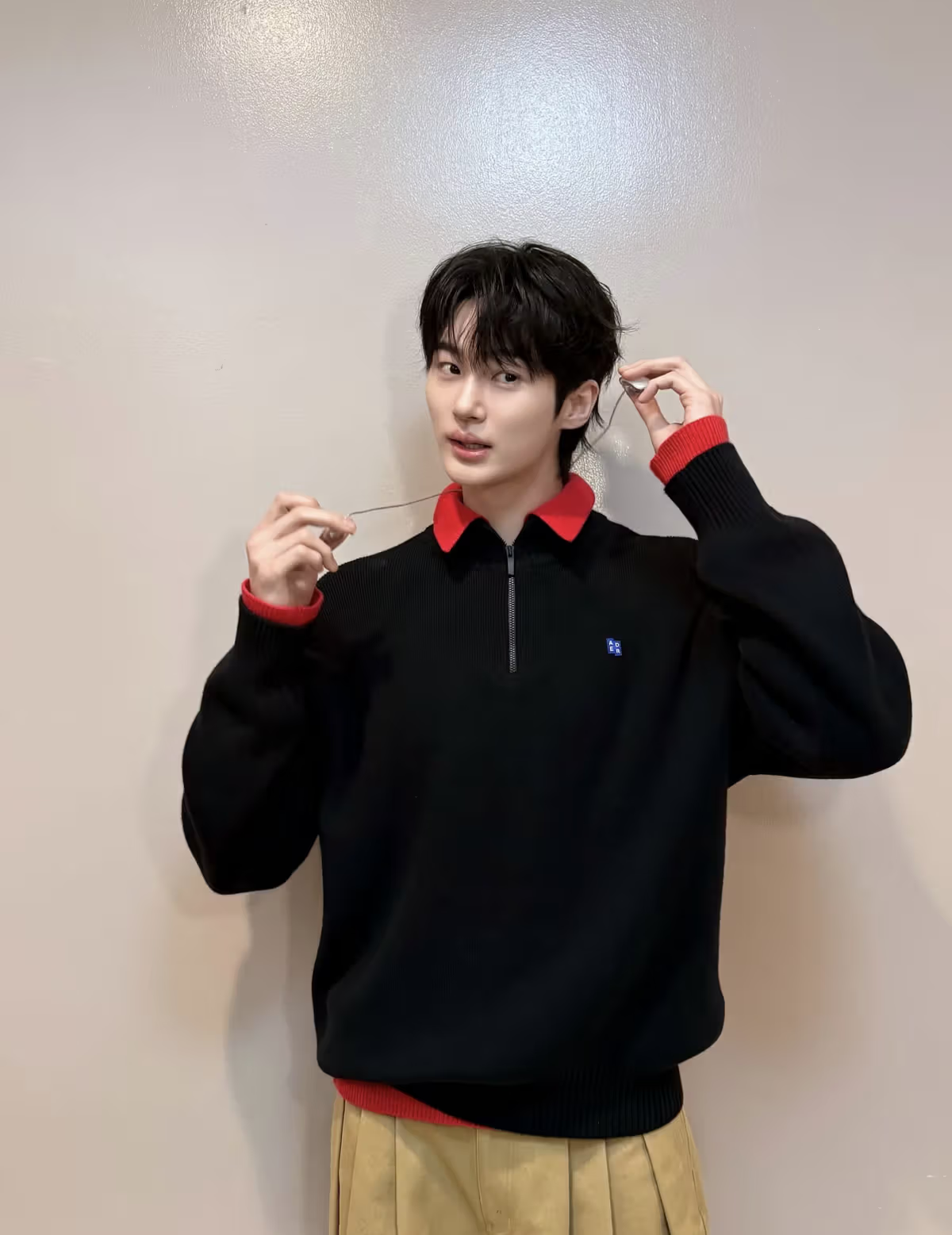
Byeon Woo-seok puts black knitwear over red, showing it at collar and cuffs, with beige trousers softening the lower half. Rather than making red the largest area, he repeats it in two places. The eye moves from neck to wrist while black remains dominant. A regular wearer of basic knits can begin by changing one inner garment to test a comfortable proportion of bright color.
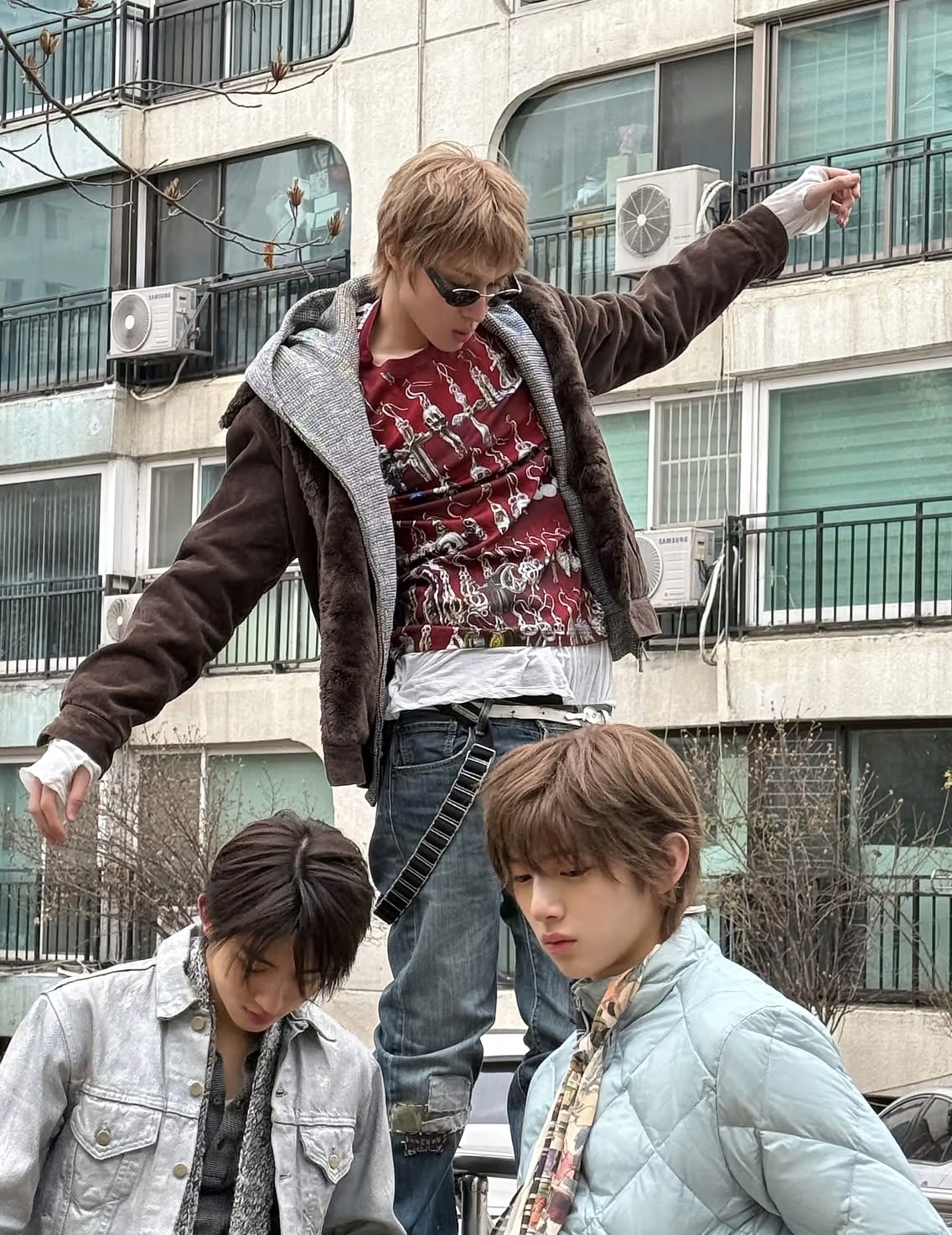
CORTIS’s Martin brings a brown jacket, red printed T-shirt, gray and white together. Brown and red share warmth, readily suggesting vintage dressing; an exposed white inner layer cuts a bright line between heavier blocks. When a print already carries much information, the jacket and other elements can stay quieter, giving the pattern space instead of introducing another equally forceful focus.
CORTIS’s Martin layers a brown jacket, red print and white inner garment.
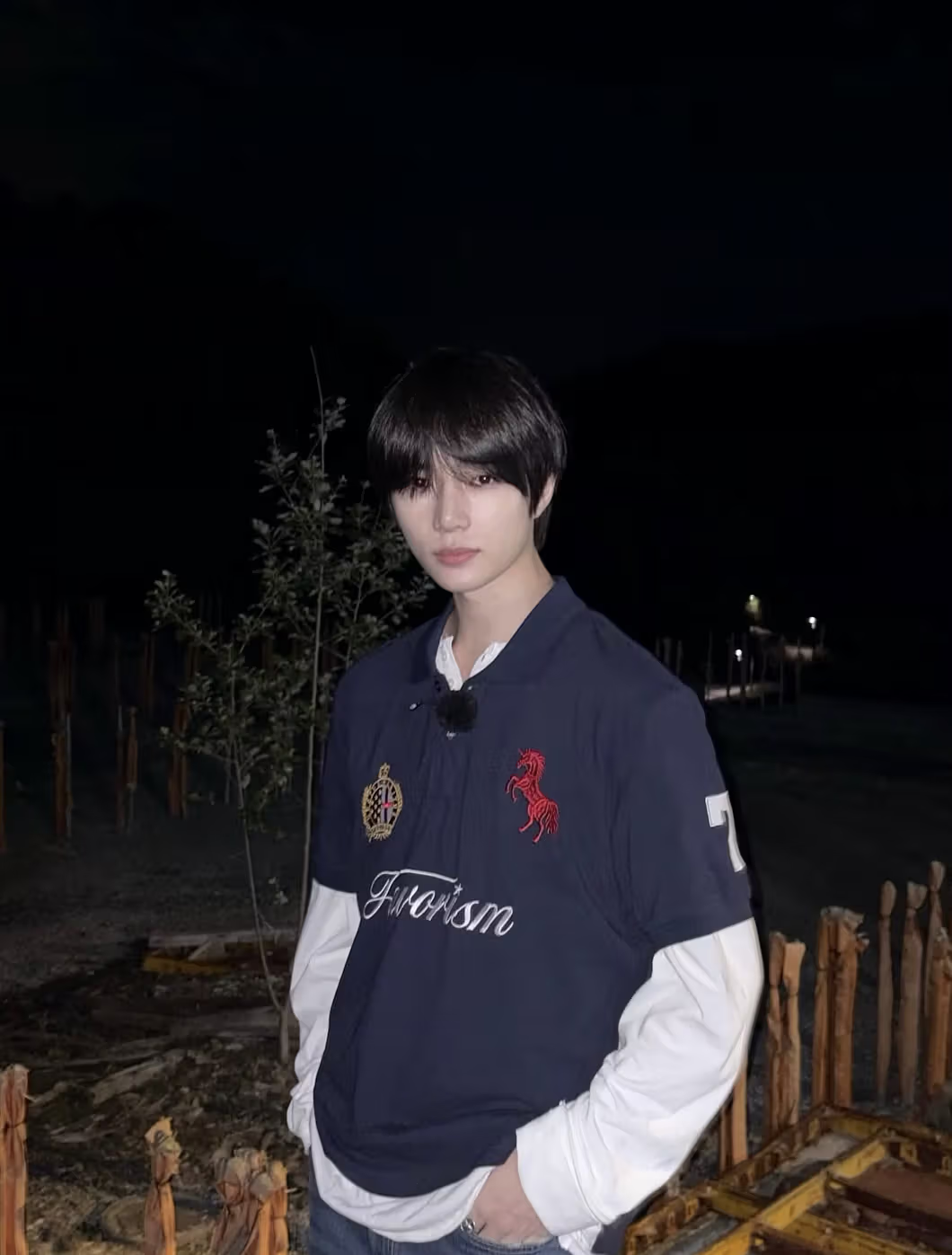
TXT’s Beomgyu layers a navy rugby top over white long sleeves, exposing white at the arms and neck, with mid-blue denim. The depth comes from dark and light rather than a warm-cool clash. Familiar everyday colors can still separate layers clearly. Beginners may find two shades of distinctly different lightness easier to observe than several patterns at once.
TXT’s Beomgyu contrasts a navy rugby top with white long sleeves.
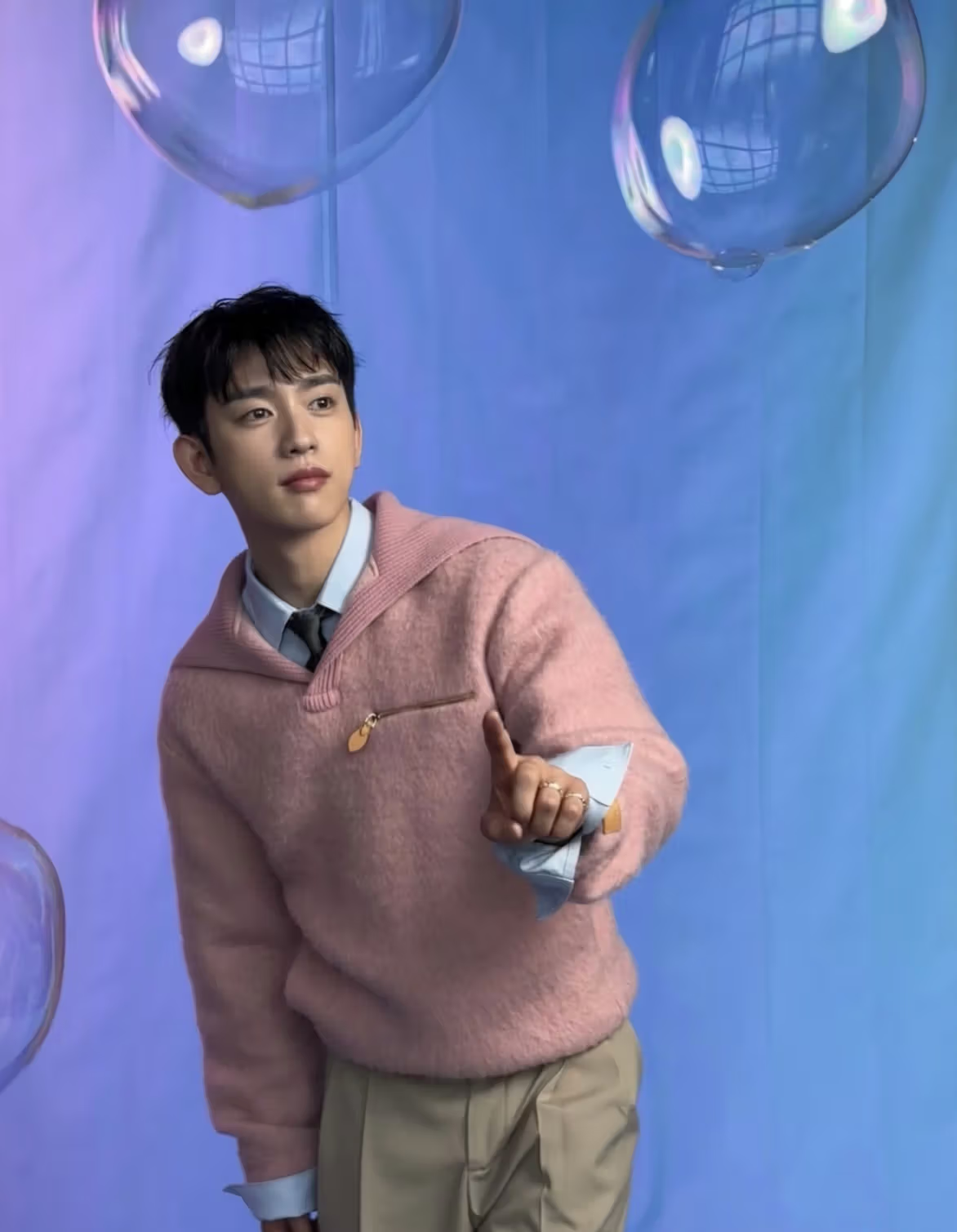
Park Jinyoung’s pink knit, sky-blue shirt, tie and beige trousers soften collegiate dressing. Pink and blue differ, but reduced saturation allows them to coexist at a similar level of gentleness. The shirt collar and cuffs give blue fixed locations, while the tie adds a narrow vertical line. Not every pink works with every blue: intensity and exposed area must be controlled together.
Park Jinyoung softens a collegiate look with pink knitwear, a blue shirt and tie.
Gray Buffers Orange and Gives Streetwear Structure
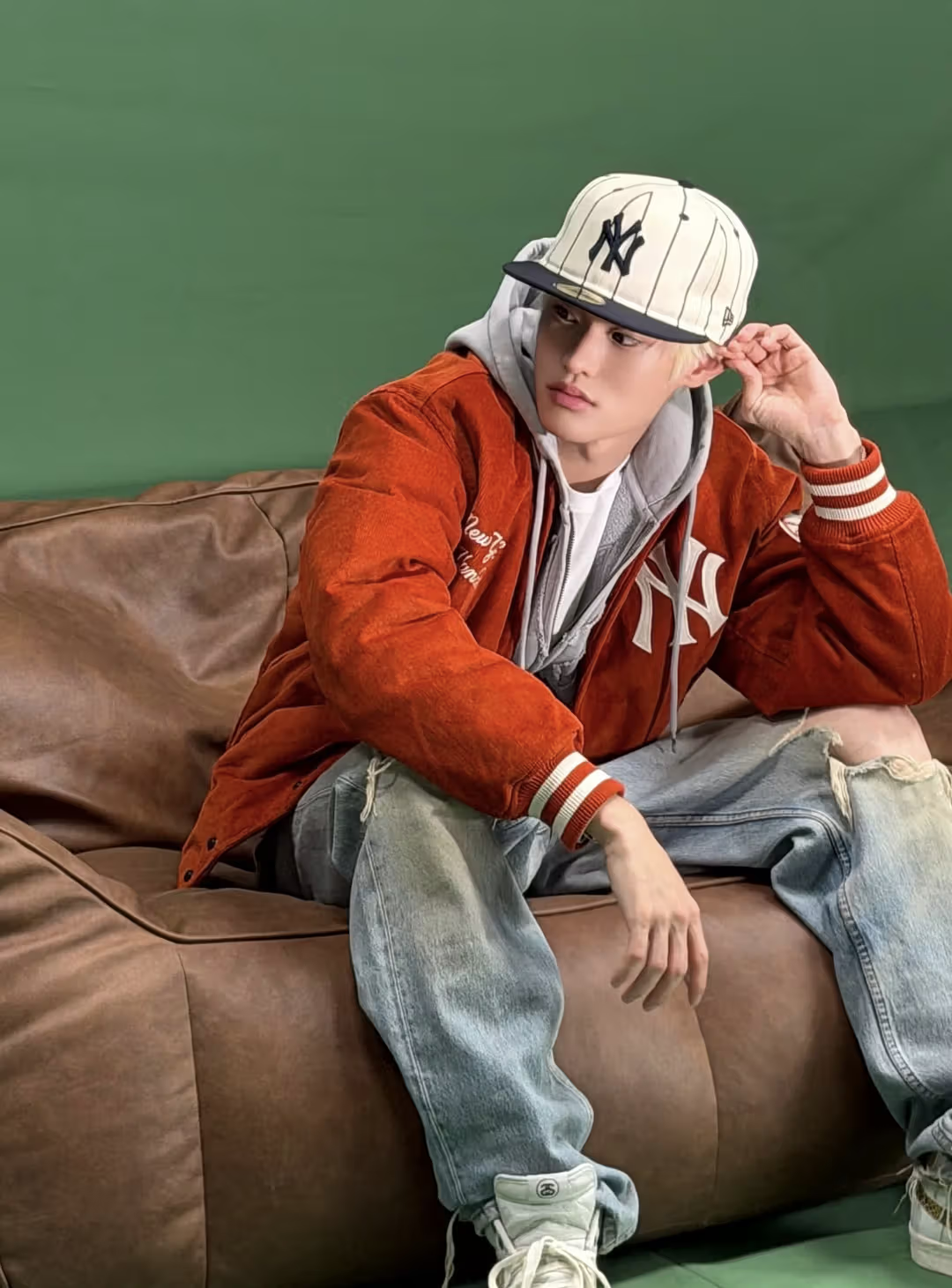
RIIZE’s Sohee pairs an orange varsity jacket with a gray zip hoodie, light-blue denim and white shoes. Orange supplies the strongest highlight; the gray hood and body form an intermediate layer, easing a direct clash between jacket and inner garment. Lighter, neutral trousers and shoes give the upper-body colors somewhere to land, creating a streetwear mood without making the whole outfit vivid.
RIIZE’s Sohee builds layers with an orange jacket, gray hoodie and light denim.
For your own outfit, designate one main color, then decide whether the other layers continue, divide or buffer it. Black-red repeats a small highlight; brown-red uses white to separate; navy-white distinguishes lightness; pink-blue controls saturation; orange-gray supports brightness with a neutral. None is a fixed formula. A higher neckline or longer sleeve changes the exposed proportion, which is precisely why layering rewards repeated adjustment.