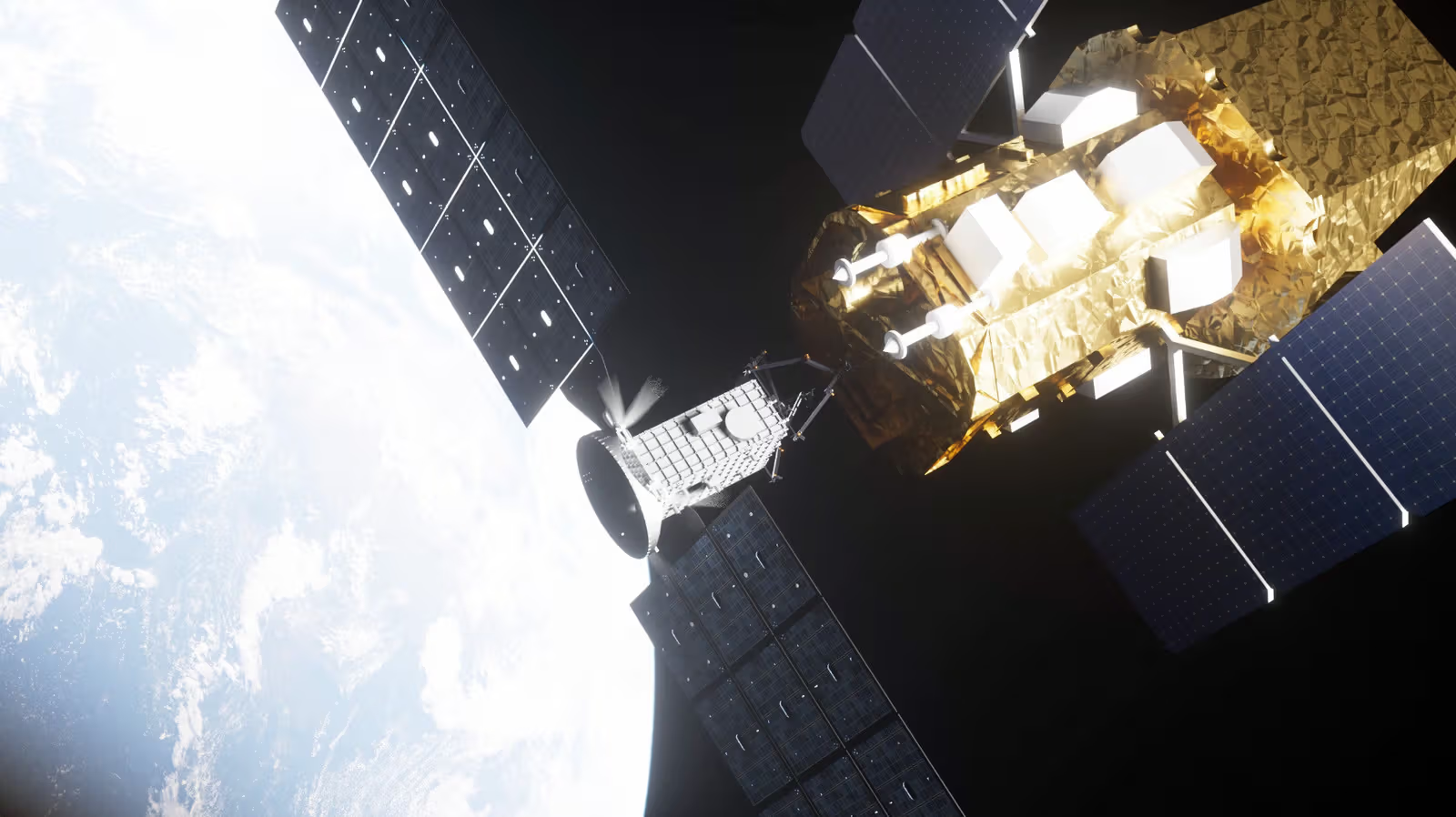
A spacecraft that was supposed to reach out and grab a falling space telescope ended up spinning out of control itself.
NASA has announced that the Swift Boost mission—originally meant to tow the Neil Gehrels Swift Observatory into a higher orbit—has officially been called off. Katalyst Space's LINK spacecraft, which was tasked with carrying out the mission, will still rendezvous with the Swift observatory as planned, but will no longer attempt the orbit-boosting maneuver. According to NASA, the issue stems from an attitude control anomaly that LINK began experiencing in late July—the spacecraft lost directional control in orbit and kept spinning, causing intermittent communication dropouts and partial loss of its propulsion system. Just last month, NASA and Katalyst still sounded optimistic about the mission's prospects, but the situation has clearly changed since then.
The Swift Boost mission launched in early July this year, with Katalyst having less than a year to design the spacecraft. Shawn Domagal-Goldman, director of NASA's Astrophysics Division, described it as a "high-risk, high-reward" mission—and the first attempt of its kind ever undertaken, leaving the team with an extremely tight timeline. Swift's orbit has been decaying faster in recent years due to increased solar activity, and this mission was meant to extend its lifespan by roughly a decade.