GameCube's Mini Disc Wasn't Retro Charm—It Was Nintendo's Calculated Cost Gamble
At just 3.15 inches in diameter, the proprietary disc made GameCube read faster and lighter, but it also meant no DVD playback. That design choice tied together console pricing, piracy prevention, and final sales numbers.
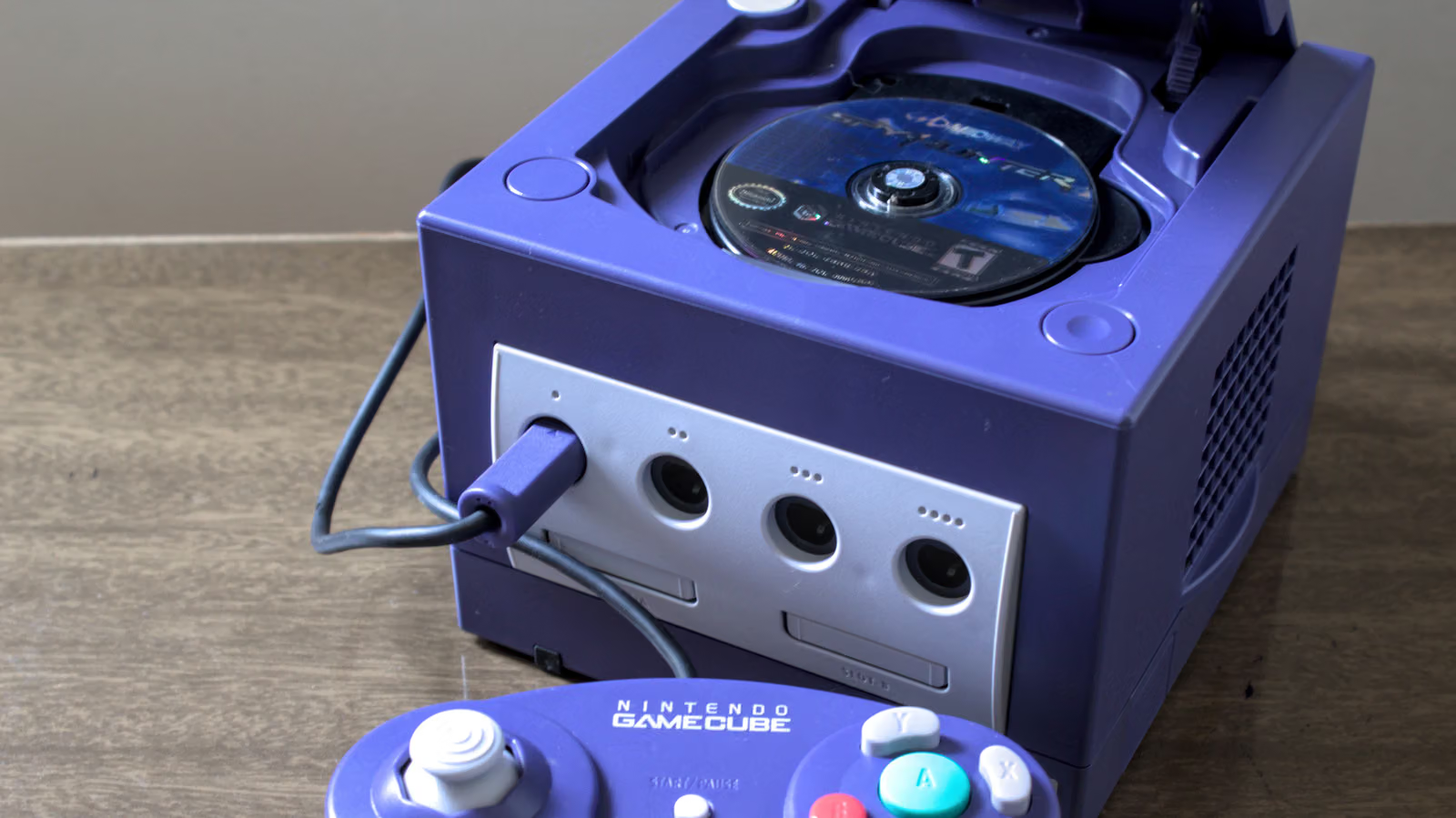
3.15 inches—a full inch smaller than a standard DVD. That's the diameter of Nintendo GameCube's proprietary discs, officially called "GameCube Optical Discs," holding just over 1.5GB. By today's standards, a single PS5 Blu-ray disc can hold up to 100GB. It was within this extremely limited capacity that the sprawling ocean of "The Legend of Zelda: The Wind Waker" had to be squeezed in.
This mini disc wasn't a whimsical design choice on Nintendo's part. It solved three problems at once: load speed, piracy prevention, and licensing costs. The smaller the disc, the shorter the distance the laser reader head has to travel—which is why GameCube's load times beat the PlayStation 2, which used standard DVDs, during the same era. The smaller disc size also let Nintendo fit a smaller disc drive, resulting in a console weighing just 5.7 pounds—compared to the original Xbox's hefty 8.8 pounds in the same generation. That's also why GameCube's shell came with a built-in carry handle, perfect for bringing to a friend's house.
Piracy prevention was another practical consideration. In the early 2000s, virtually no PC DVD burner on the market could read Nintendo's proprietary format, making GameCube games harder to pirate than PS2 or Xbox titles at the time—until the Dolphin emulator eventually broke through that barrier. Because the console couldn't play DVD movies, Nintendo also skipped paying licensing fees to the DVD Forum—$20 per unit. Added up, those savings let GameCube launch in late 2001 at $200, a third cheaper than the PS2 and Xbox's $300 price tags.
But the licensing fees saved came at the cost of an obvious gap: GameCube couldn't double as a DVD player. In an era before streaming existed, the PS2 and Xbox's ability to double as living room entertainment devices weighed heavily on consumer purchasing decisions—Xbox required an extra $30 adapter kit to play DVDs, but at least it had that option. As a purely dedicated gaming console, GameCube ultimately lacked that card to play.
The results showed up in the sales figures: GameCube sold 21.74 million units over its lifetime, Xbox sold 24 million, while PS2 sold a staggering 160 million. GameCube's third-party game support was also weak—it never got a single "Grand Theft Auto" title or a mainline "Final Fantasy" entry, which was another factor behind its lagging sales. It wouldn't be fair to pin the entire scorecard on that mini disc alone—but it was undoubtedly the most direct mark left by that decision Nintendo made all those years ago.