NÒMARHYTHM TEXTILE and Stüssy take hand dyeing and leopard print to Ginza
Released October 24 for DSMG, the capsule centres on a hand-dyed Twist sweatshirt, a large silk scarf and a cotton bandana, moving skulls, laurels and drawn patterns across different scales.
NÒMARHYTHM TEXTILE and Stüssy have collaborated for DOVER STREET MARKET GINZA’s OPEN HOUSE, releasing the collection October 24, 2026. A hand-dyed Twist sweatshirt, large silk scarf and small cotton bandana form its core. Their first collaboration since 2023 is directed to the Ginza store’s third floor and DSMG E-SHOP. Hand dyeing, vintage treatment, screen printing and drawn leopard patterns work across the garment and movable cloth surfaces, extending the collaboration beyond adjacent logos.
Dye first, then let the graphic emerge
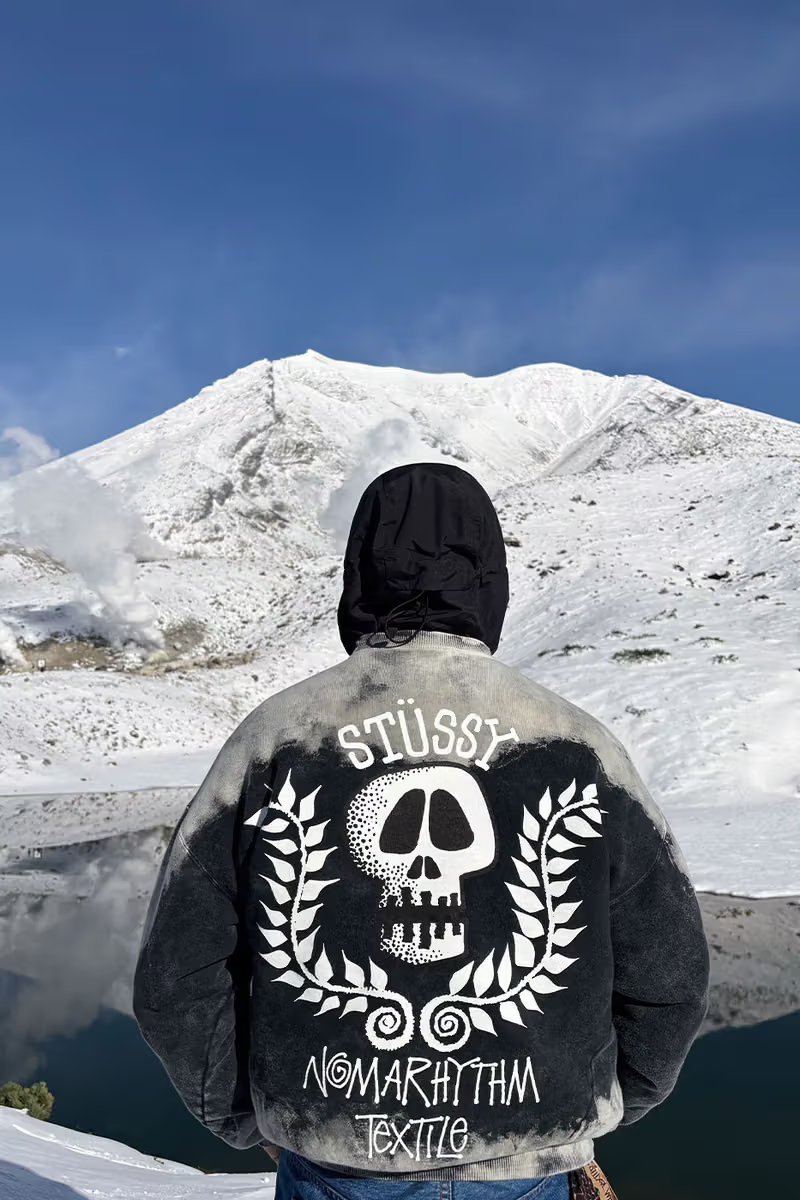
The dark sweatshirt in the styling photographs has uneven grey-white changes around shoulders, sleeves and hem, while a clearer white skull, laurels and lettering establish a centre on the back. Dye gives the broad surface variation, then printing creates a legible outline. Their densities differ: symbols register from a distance, colour changes emerge closer up. Names above and below enclose the image within a defined composition.
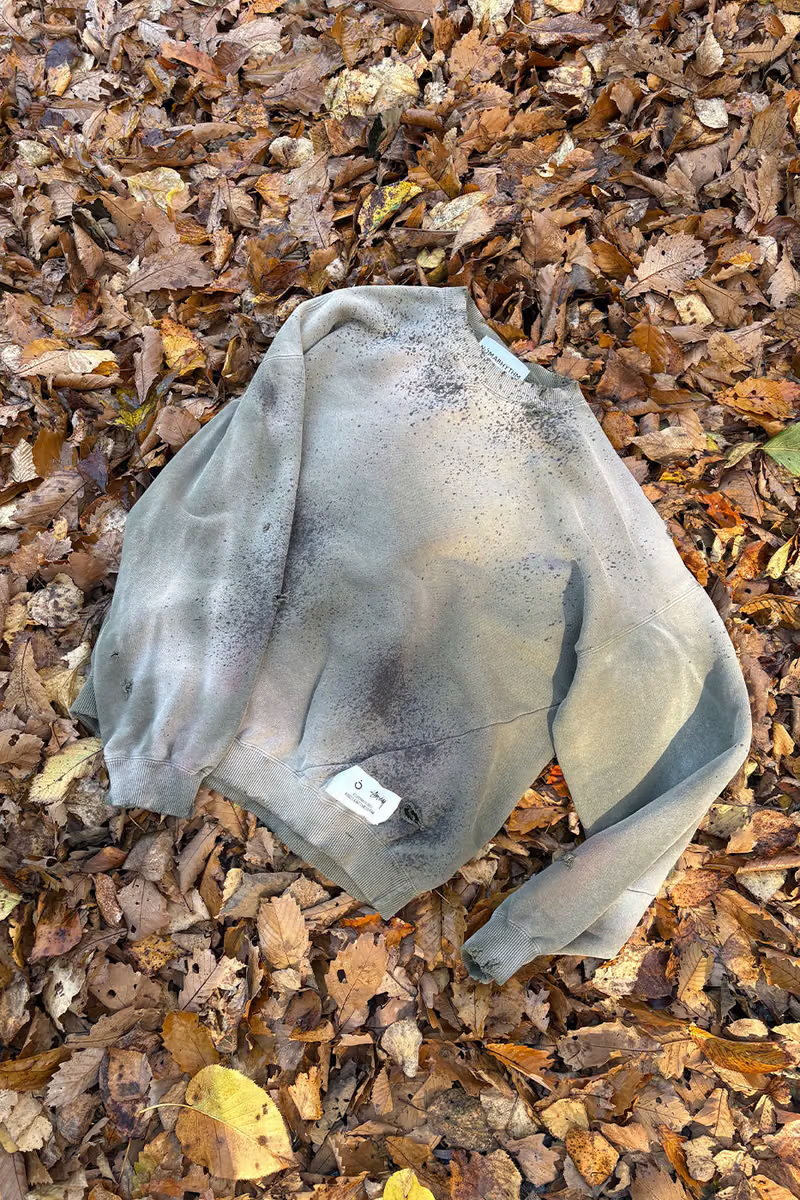
Another photograph, with the garment laid among fallen leaves, shifts attention from the back graphic to colour differences across the body, sleeves and construction. The Twist sweatshirt offers turning and asymmetrical visual clues beyond its image. Hand dyeing, however, does not let every buyer specify an identical mottled placement. The distribution on an individual garment should be considered part of the piece when choosing it.
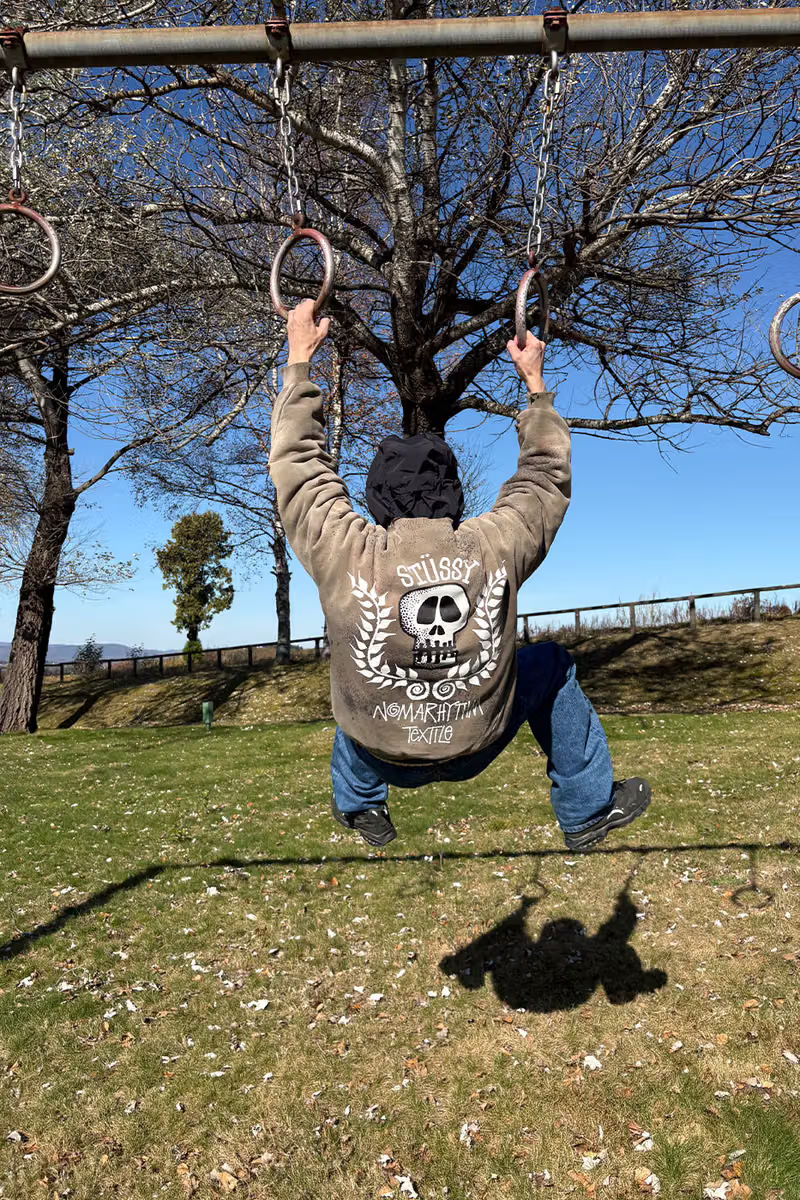
The flat sweatshirt reveals colour changes across body and sleeves.An outdoor movement changes the angle of back graphic and garment together.
Leopard print is another image, not background
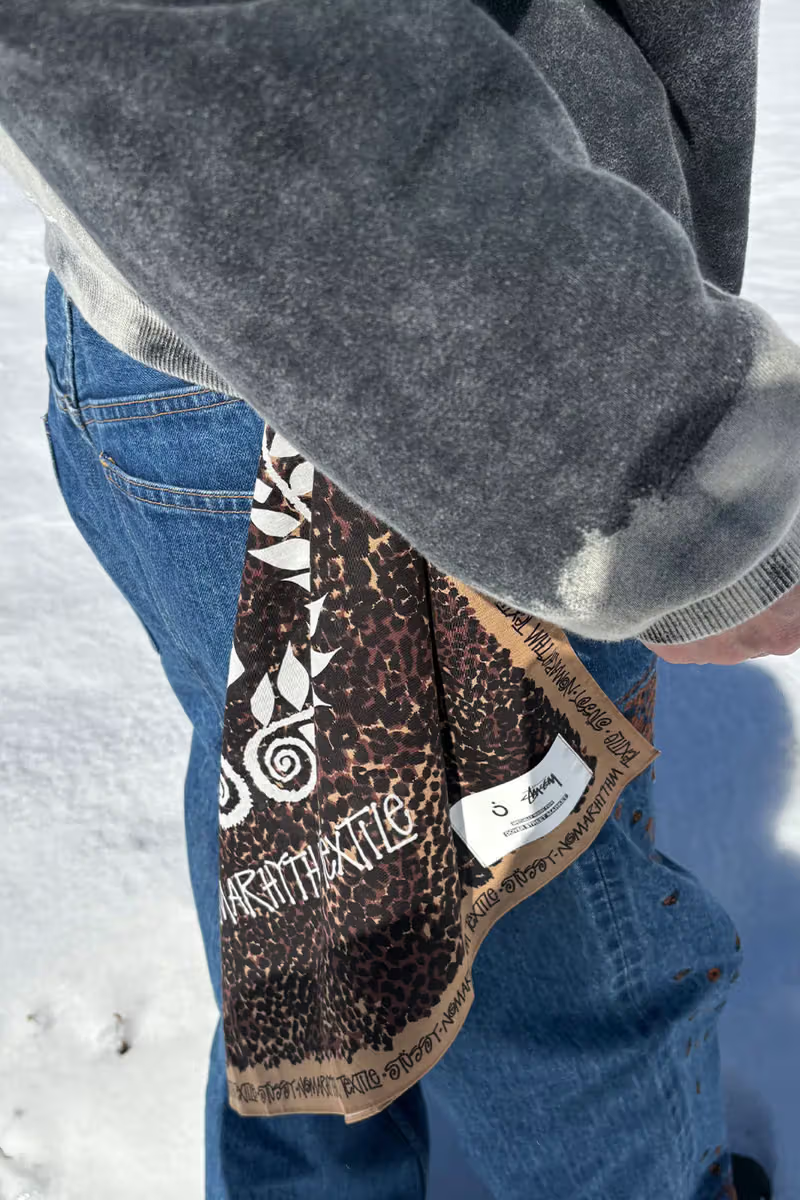
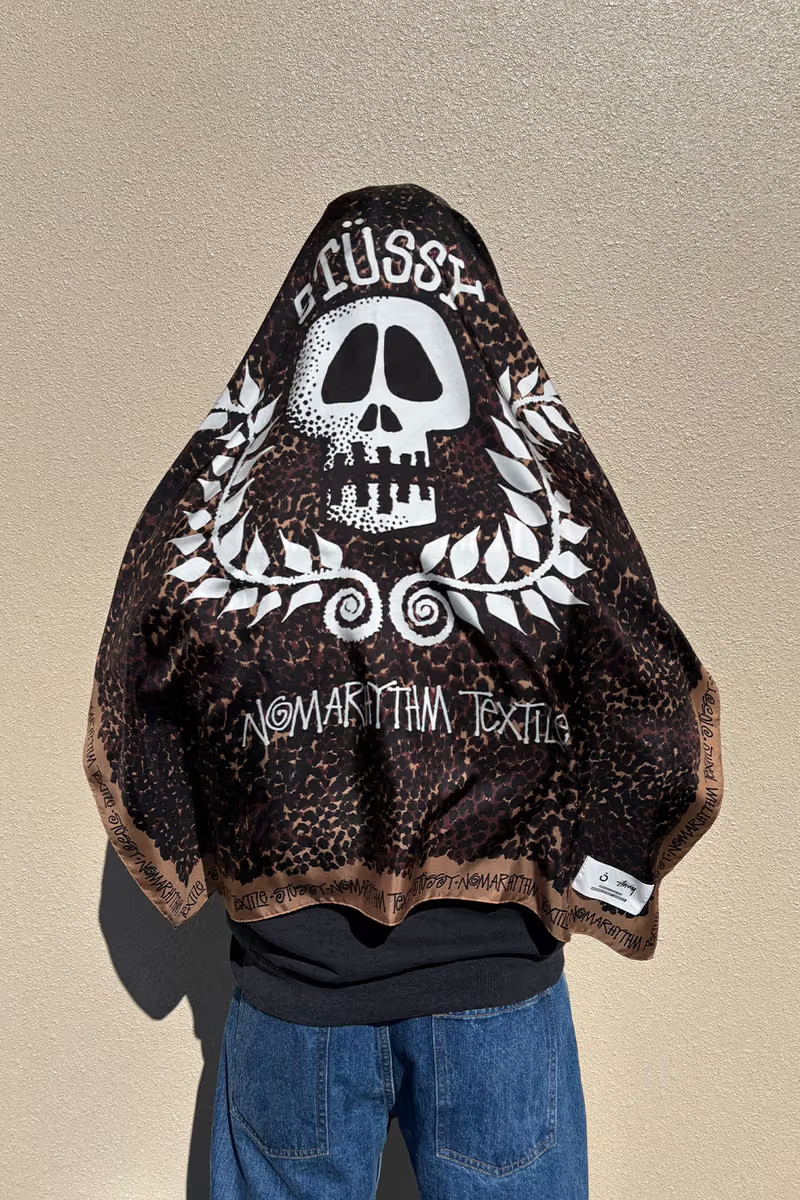
Accessories comprise a large silk scarf and a smaller cotton bandana, with different materials and size categories. NÒMA’s original leopard pattern combines with Stüssy imagery, placing skulls, leaves and lettering among dense spots. One photograph leaves only a corner visible at the rear waist; another spreads the cloth across head and back. Folding, draping and wrapping the same pattern change how much of its composition is visible.
A leopard-patterned cloth hangs at the rear waist with partial lettering visible.The cloth spreads across head and shoulders to reveal skull and leopard imagery.
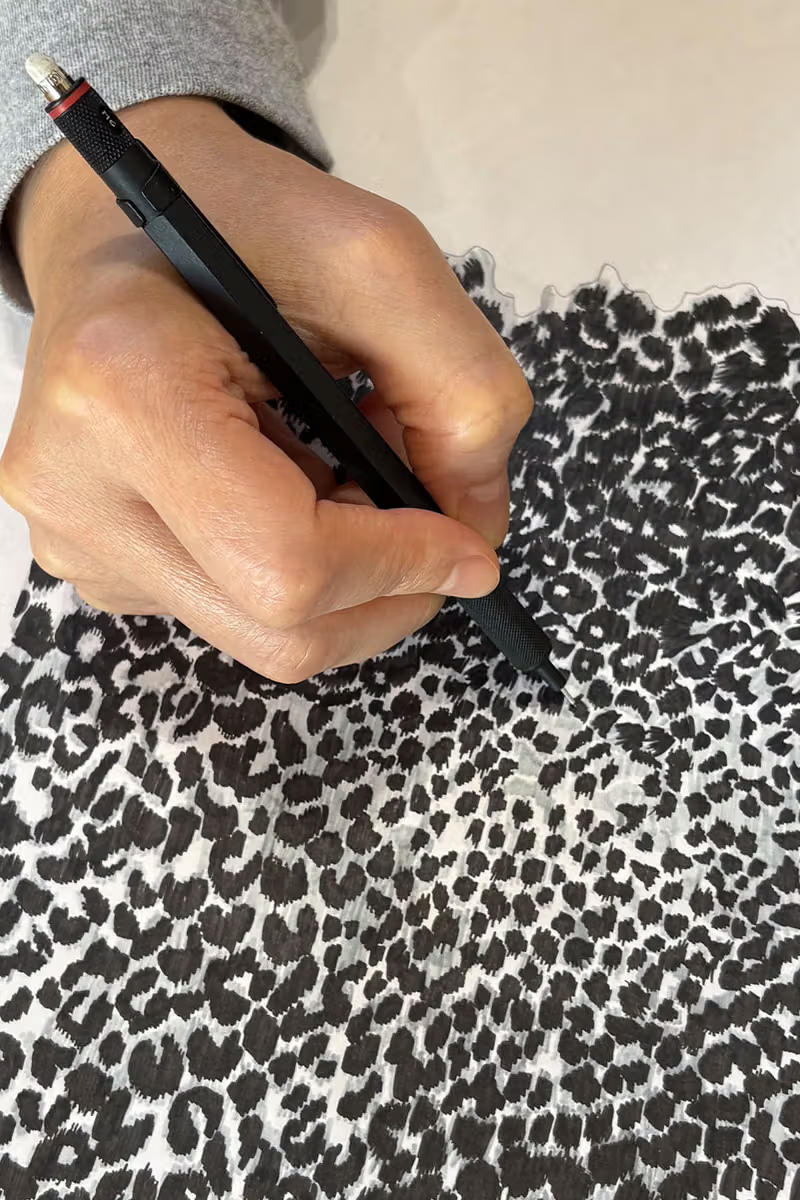
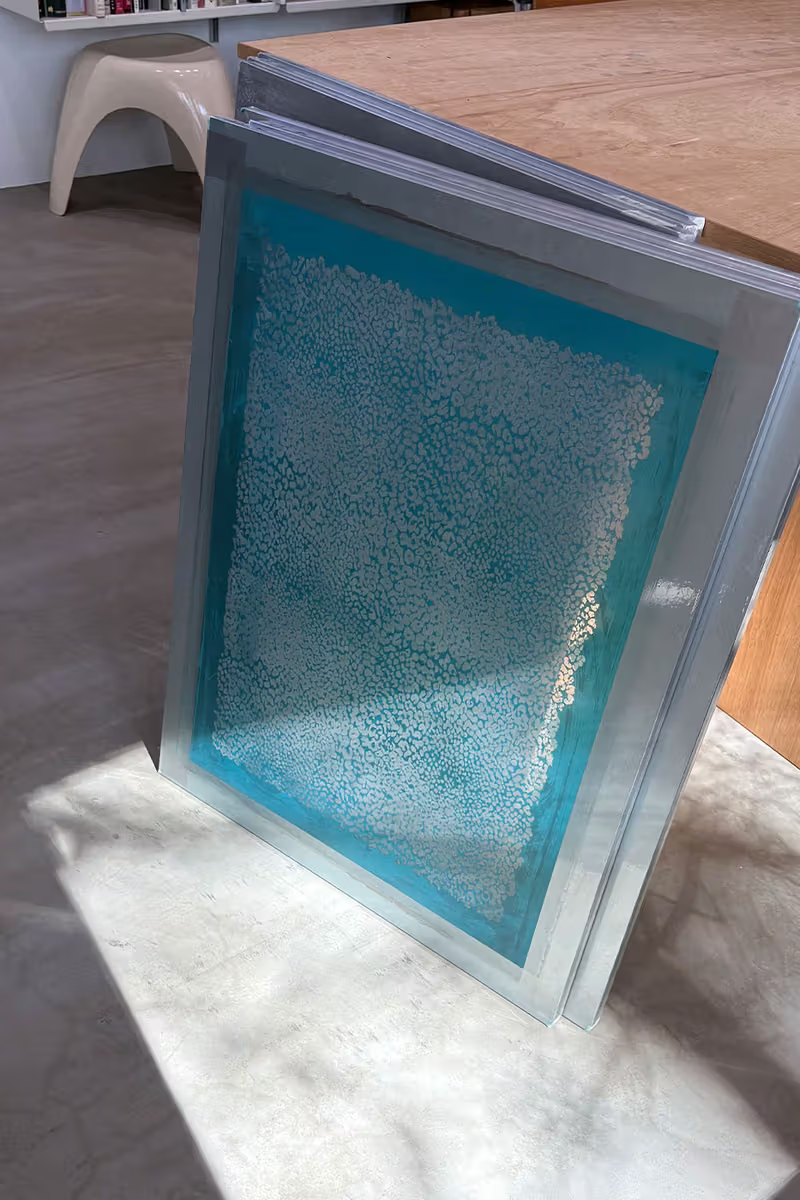
Process photographs retain a hand drawing leopard spots and screen frames resting in a workspace. These show an intermediate stage as lines become a printable surface, alongside the completed products. The pattern has the density of hand drawing, while branding operates at another scale. Their layering creates detail at close range and recognition from farther away, extending the visual language beyond a vintage effect from dye alone.
A hand draws a dense leopard pattern during the making process.Screen frames in a workspace show an intermediate production tool.
A relationship rooted in textile work
Masako Noguchi and Takuma Sasaki founded the Japanese label in 2005. Previously called NOMA t.d., NÒMARHYTHM TEXTILE continues to centre original hand-drawn textiles. This is not the partners’ first meeting: Stüssy’s official 2022 record introduced two denim suits with custom graphics. Returning to sweatshirts and scarves makes the continuity between fabric and image visible, rather than tying the relationship to one fixed product.
Distinguish this Ginza OPEN HOUSE release from regular NÒMA dyed sweatshirts and other years’ Stüssy collaborations. The official NÒMARHYTHM TEXTILE introduction provides background; ask designated stores about current prices, sizes, individual dye variations and stock. From a back-printed sweatshirt to a small waist accent or a head-and-shoulder wrap, the collection gives one visual vocabulary different viewing distances across the body.