Fumie Shibata’s Halo puts a real flame inside curved glass
EcoSmart Fire’s Halo launched in Japan on October 17. A Tokyo installation runs through November 30, with a styling and photography conversation on November 4.
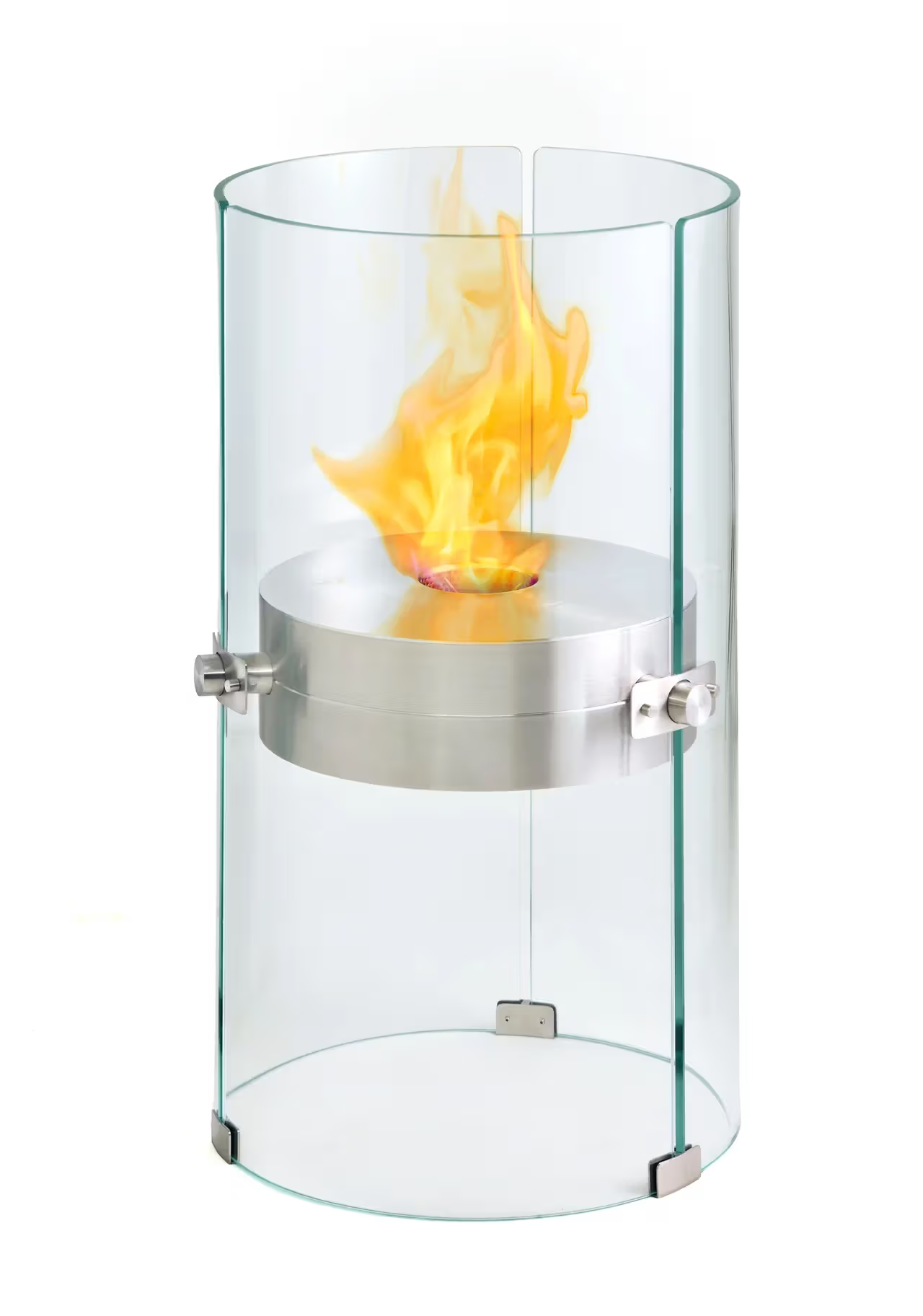
Japanese product designer Fumie Shibata’s Halo bioethanol fireplace for Australia’s EcoSmart Fire launched in Japan on October 17, 2026. Instead of a substantial traditional hearth, curved glass surrounds a central burner, leaving sightlines through the legs and lower space. The flame is real, rather than a lighting effect. Its visual transparency should not be confused with an absence of indoor installation requirements.
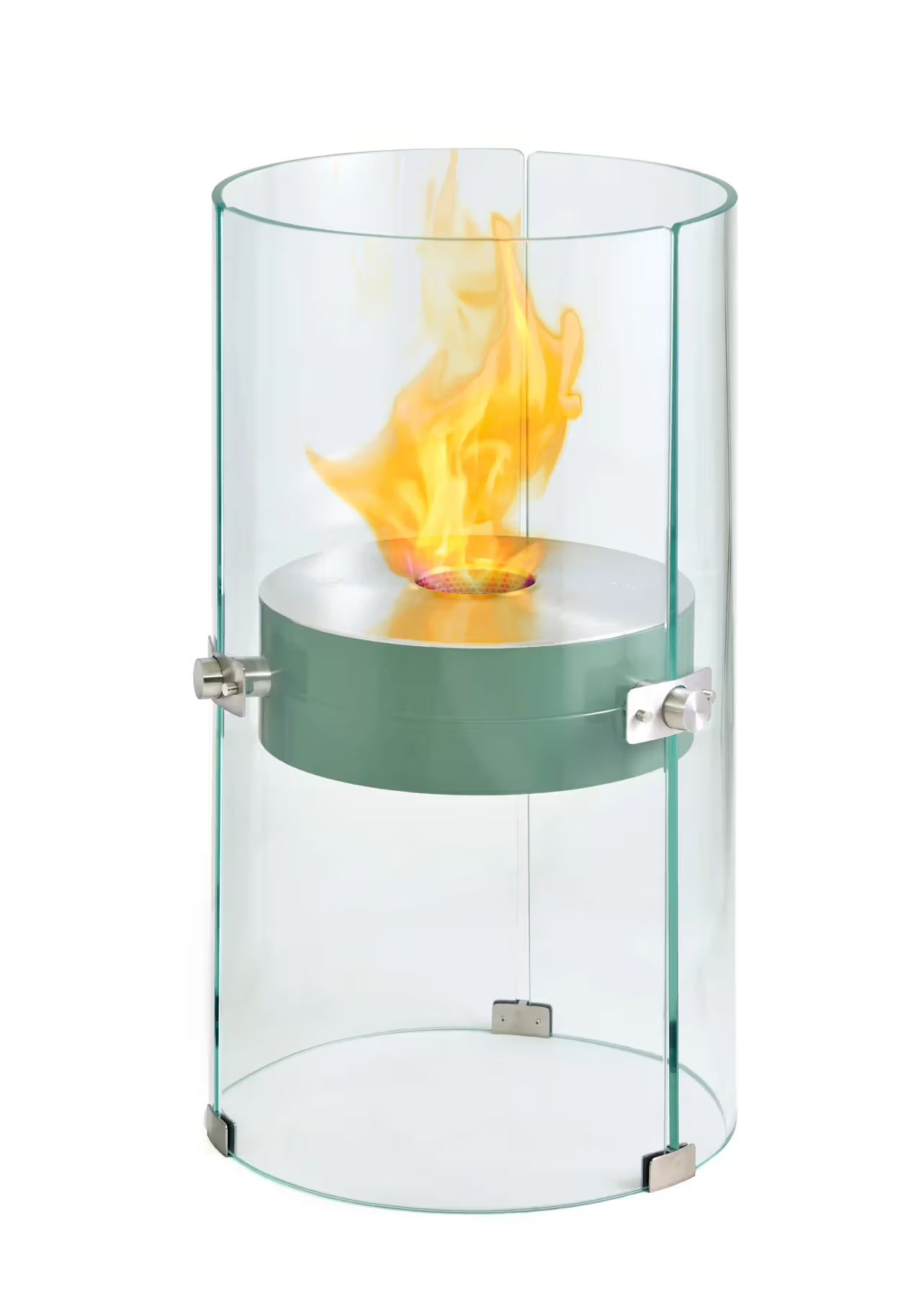
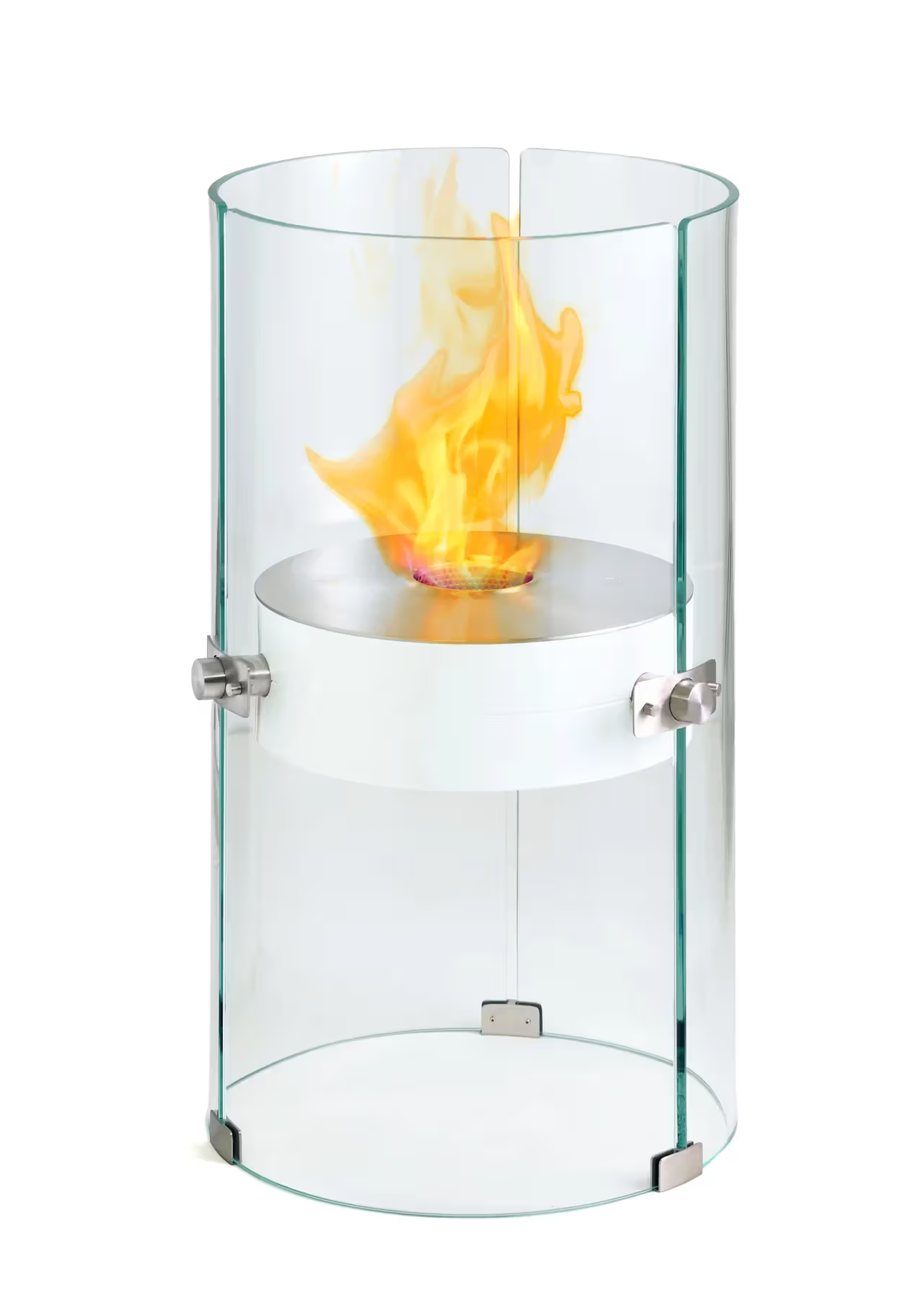
Halo comes in Wasabi green, Snow white and Stainless Steel. The official Japanese retail page lists ¥560,000 before tax, or ¥616,000 including tax. Each has the same glass enclosure, with colour concentrated around the circular body. Green can relate to plants and textiles, while white and metal let the flame become a stronger visual focus. That is a reading of the palette and photographs, not a claim of different combustion performance between finishes.
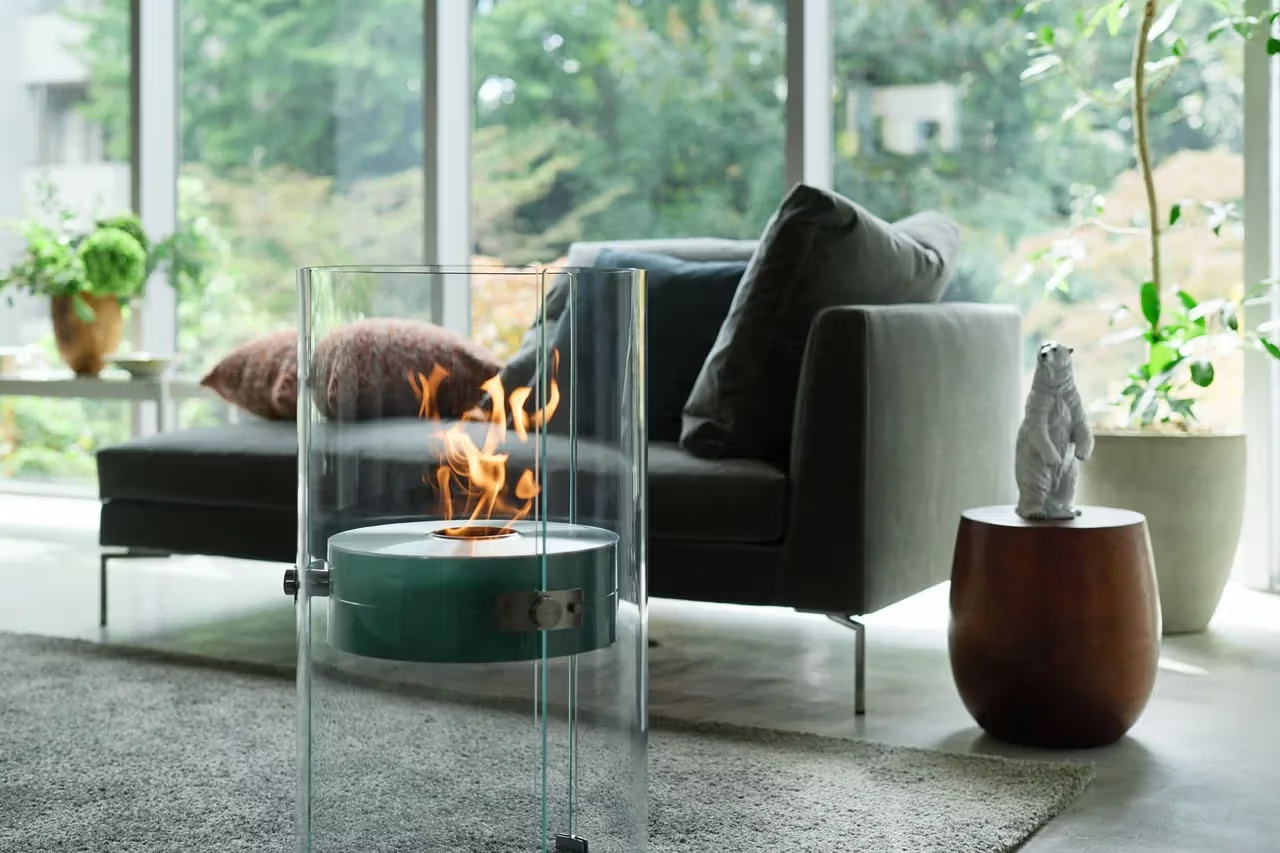
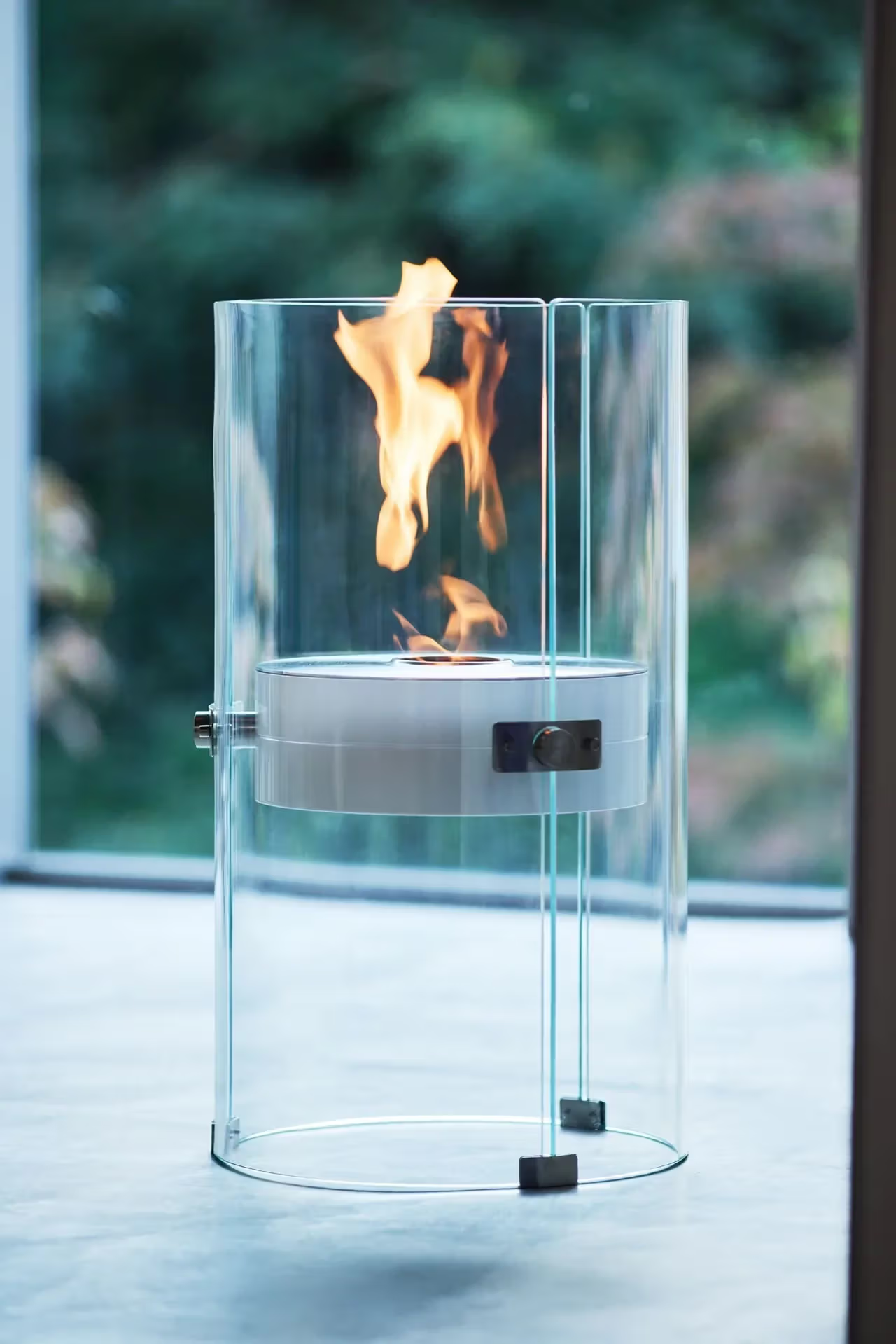
A close-up of Stainless Steel shows the circular burner, curved glass and slender legs.Wasabi combines a green circular body with a transparent enclosure.
How does the glass change a fireplace’s presence?
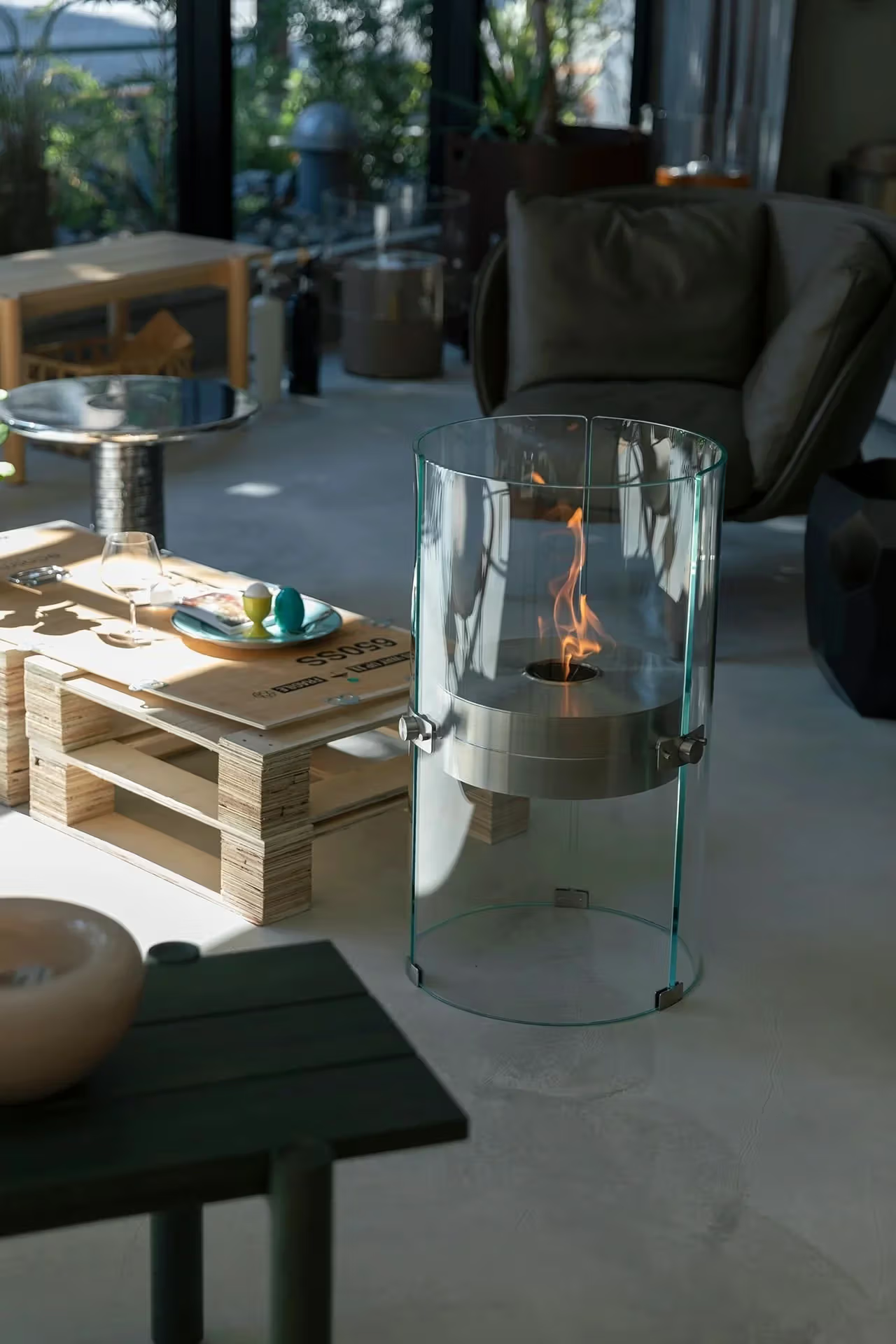
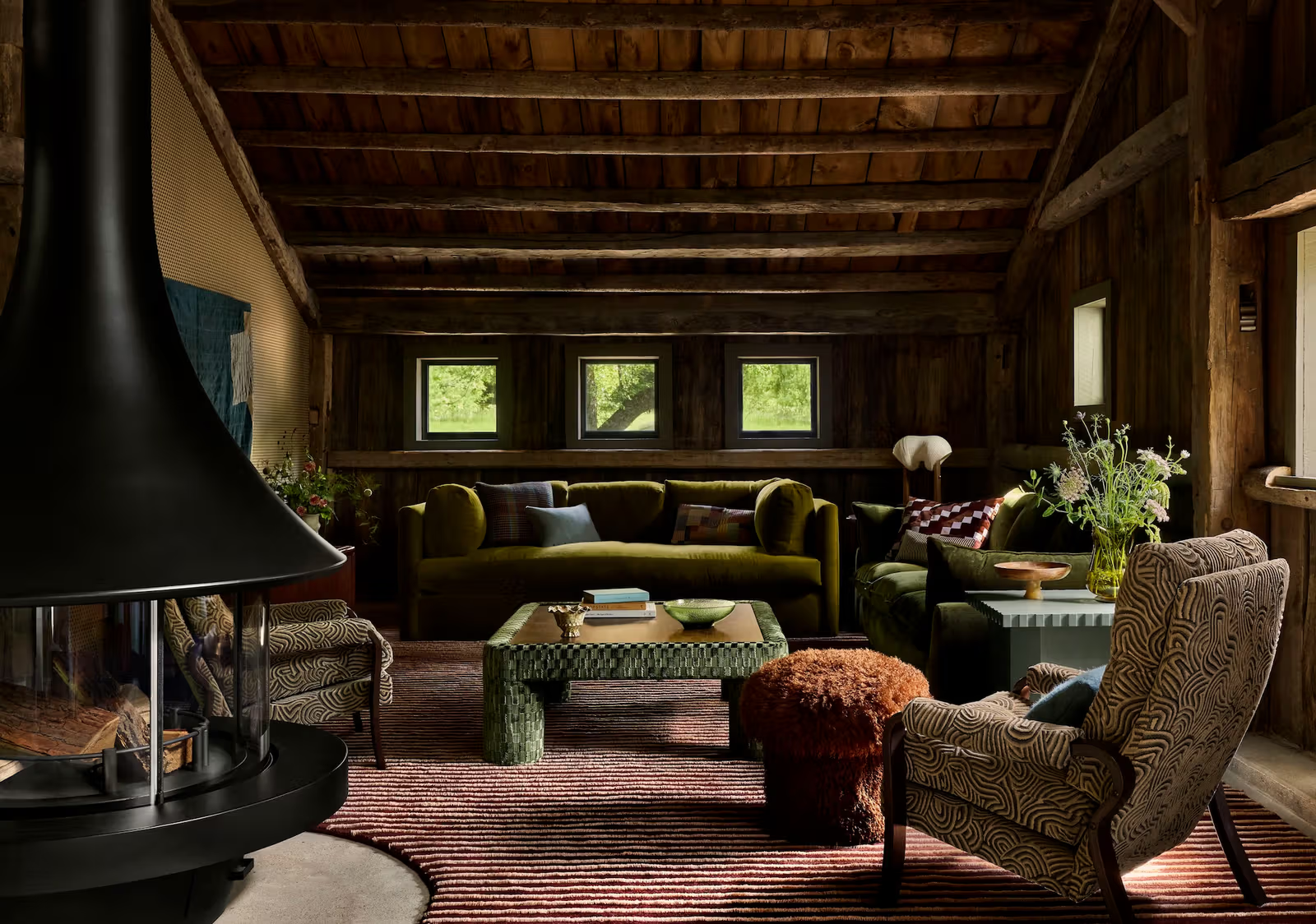
Approximately 70.8cm tall, Halo extends curved glass downwards while leaving openings between the burner and enclosure. Rather than a firebox built into a wall, it becomes a freestanding object visible from several directions. Official scenes position it among sofas, chairs and plants near windows. Slender legs and transparency reduce visual obstruction, but a styled photograph is not permission to place it anywhere: actual clearances must follow the manual.
Snow retains the same curved-glass structure in white.Stainless Steel contrasts its metal ring with the glass enclosure.
An AB3 burner holds 2.5 litres of fuel. Official figures state approximately eight hours of burning and a maximum heat output of 1.7kW, with actual burning dependent on conditions. It uses specified e-NRG fuel. Requiring no chimney does not remove ventilation requirements or make every room suitable. Understanding it as an interior object with a real fire is more appropriate than assuming it will heat an entire home.
When does Tokyo’s FIRESIDE STORY exhibition run?
The Tokyo showroom is hosting Halo, Interior Styling Exhibition FIRESIDE STORY, in collaboration with mountain morning and styled by Fumiko Sakuhara. It runs from October 17 to November 30, from 11am to 7pm Japan time, at 2-31-6 Minami-Aoyama, ground floor, Minato-ku, Tokyo. This is an exhibition already open, rather than an unfinished new store.
The showroom places Halo among chairs, a coffee table and daylight.
On Wednesday, November 4, from 6pm to 7.30pm, Sakuhara will join photographers Norio Kidera and Satoko Imazu for a conversation. It offers styling and photographic perspectives on the same object: flame, glass reflections and daylight can shift a room’s visual centre. Attendance arrangements and places should be confirmed with the organiser; the available information does not establish free admission or entry without booking.
Ask about installation and delivery before ordering
The official page advises allowing around a month or more for orders, with longer waits possible for imported stock. A displayed unit does not establish immediate delivery. Check ventilation, furniture clearances and fuel arrangements before buying. Official instructions require extinguishing and fully cooling the unit before refuelling or moving it; fuel must not be added while it is burning or hot. See the official Japanese Halo product page for finishes and prices, and assess the actual room rather than relying on an appealing photograph.