AHLEM opens its first Tokyo atelier with curved walls and a silk doorway
Open since October 10 in Minamiaoyama, AHLEM TOKYO brings together a Noguchi-inspired plan, walnut furniture and a moving silk screen at the brand’s first permanent Asian location.
AHLEM has opened its first Japanese atelier in Tokyo’s Minamiaoyama, also establishing its first permanent location in Asia. The store opened on October 10, 2026, at 6-7-1 Minamiaoyama, Minato-ku: this is a place already welcoming visitors. For the Los Angeles label known for French-crafted eyewear, the Tokyo atelier connects trying on frames, displays and private consultations along one continuous route, allowing materials beyond the glasses themselves to shape the experience of looking.
A Noguchi drawing becomes a curved wall
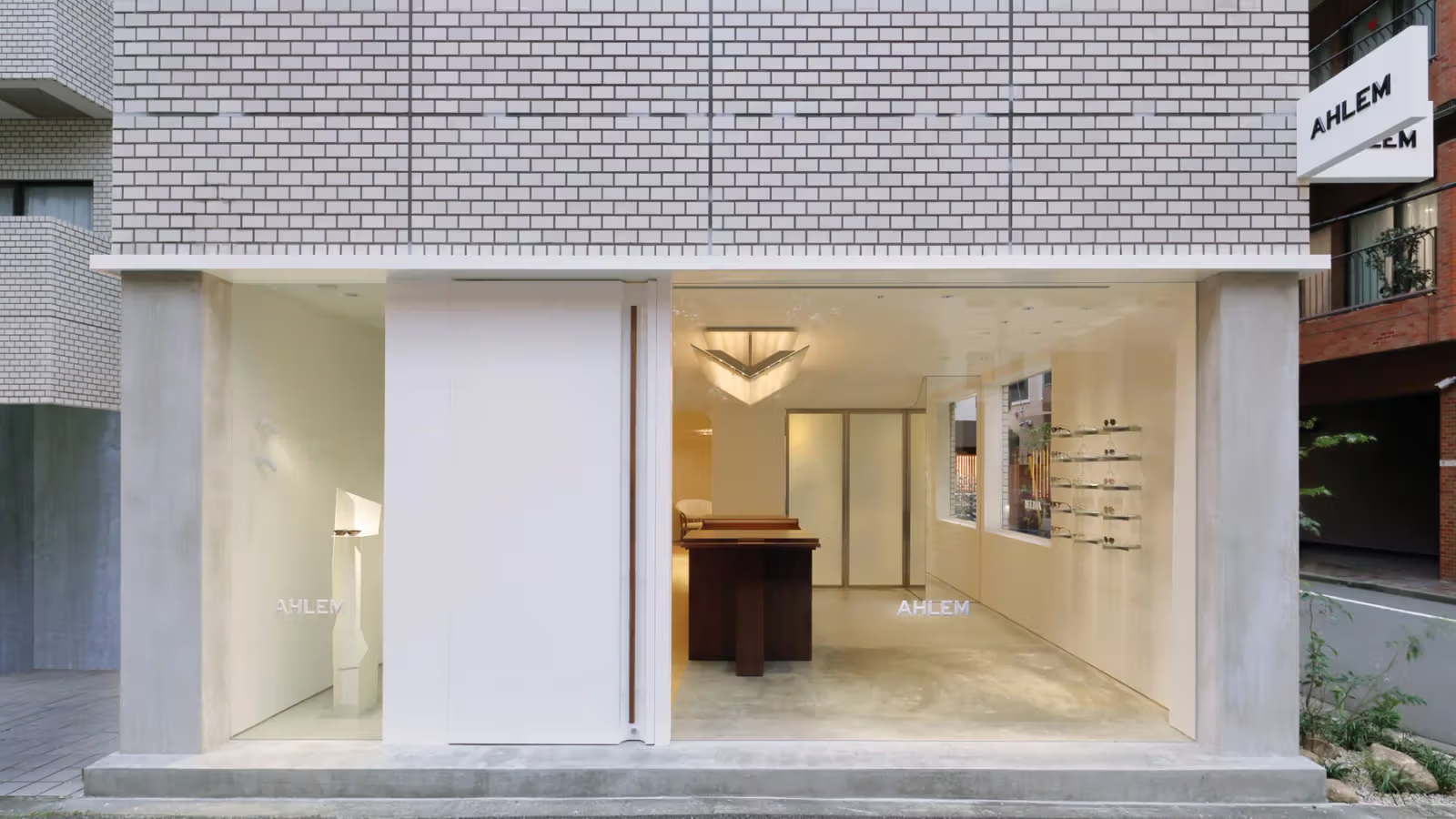
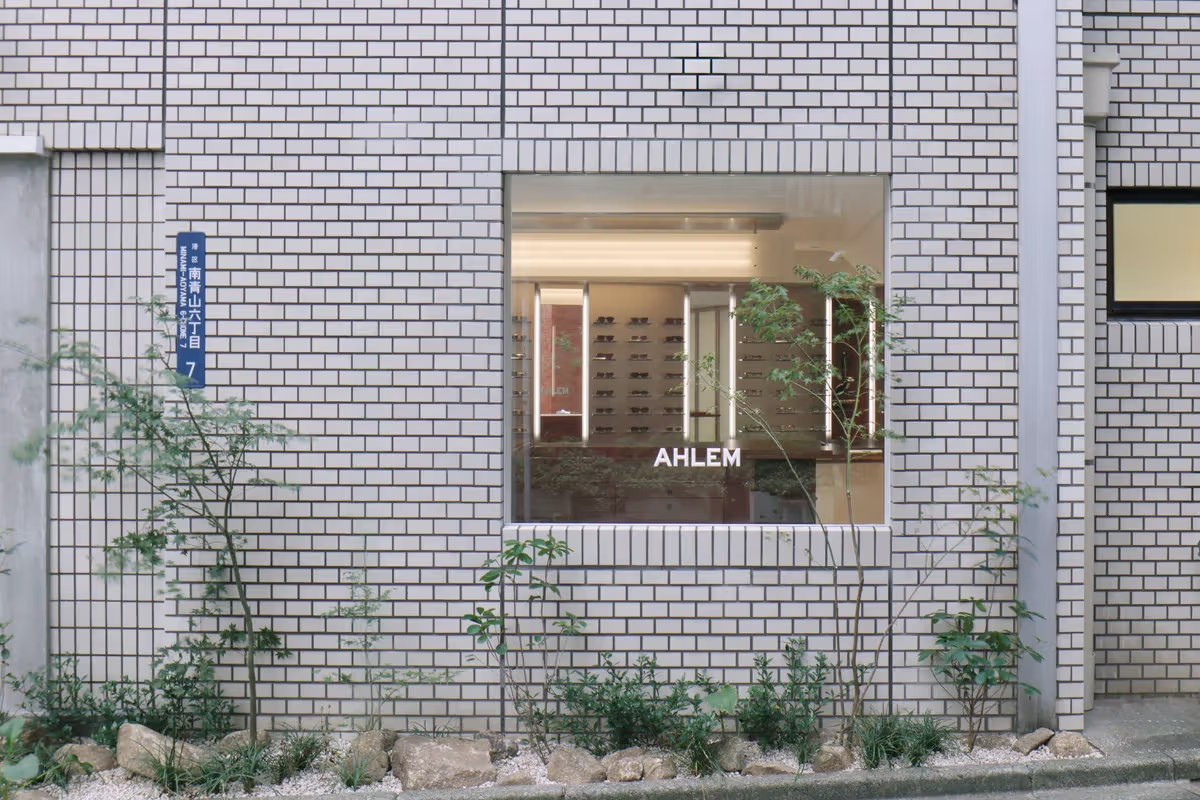
Architect Maja Bernvill worked with Tokyo architect Yuichi Hashimura, who supported the project’s local realization. The single-storey pavilion adjoins a larger building but is exposed on two sides, with cream ceramic tiles matching its neighbour. A street-facing window and the entrance receive light separately, while planting softens the edge. Exterior photographs show a restrained frontage that gives a single pair of frames space in the window.
Street-facing windows and planting connect the atelier with its surroundings.
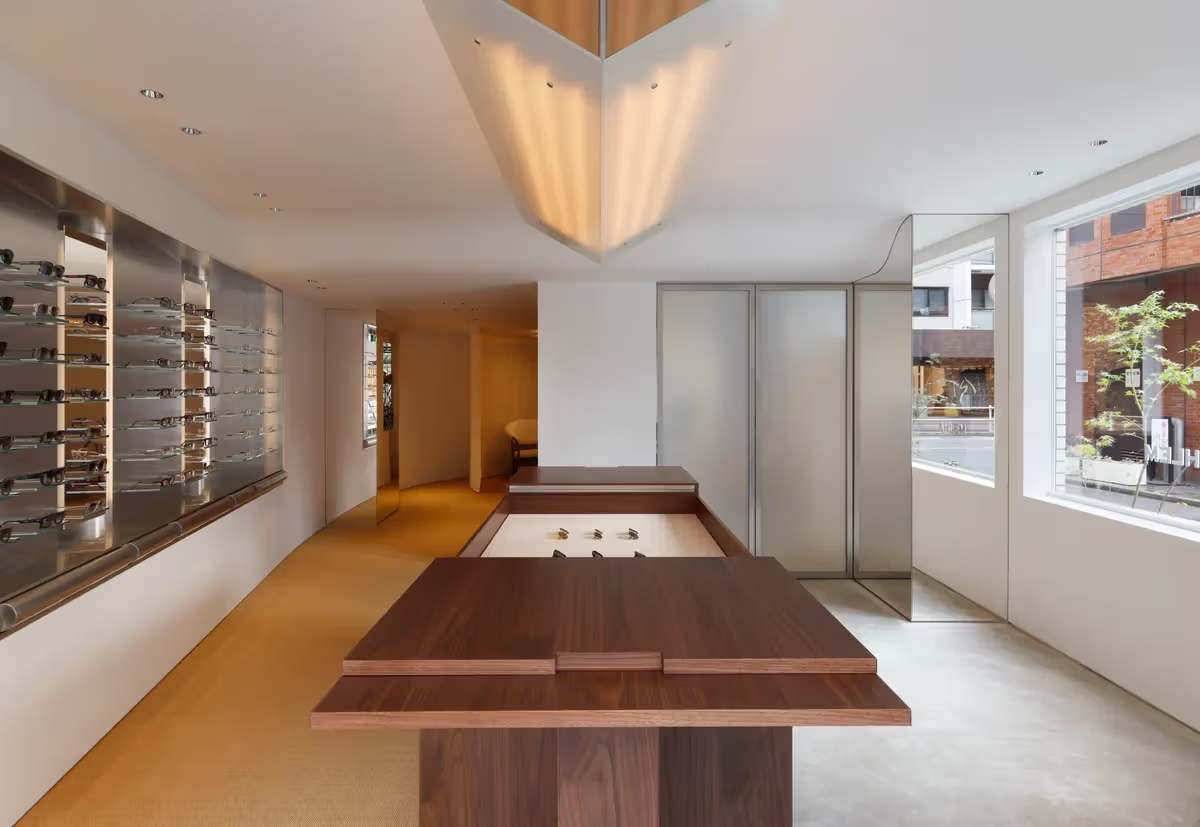
The starting point was a drawing from Isamu Noguchi’s Paris Abstraction series of 1927–28. Its elongated, tapered, curling line informed the plan and display wall. Rather than simply hanging an image, the design lets a turn within the drawing influence how people approach the products. Eyewear arranged along the curved wall is visible from the entrance; a central table sits between an examination room and a fitting workstation, linking display with practical service.
A silk door brings light into privacy
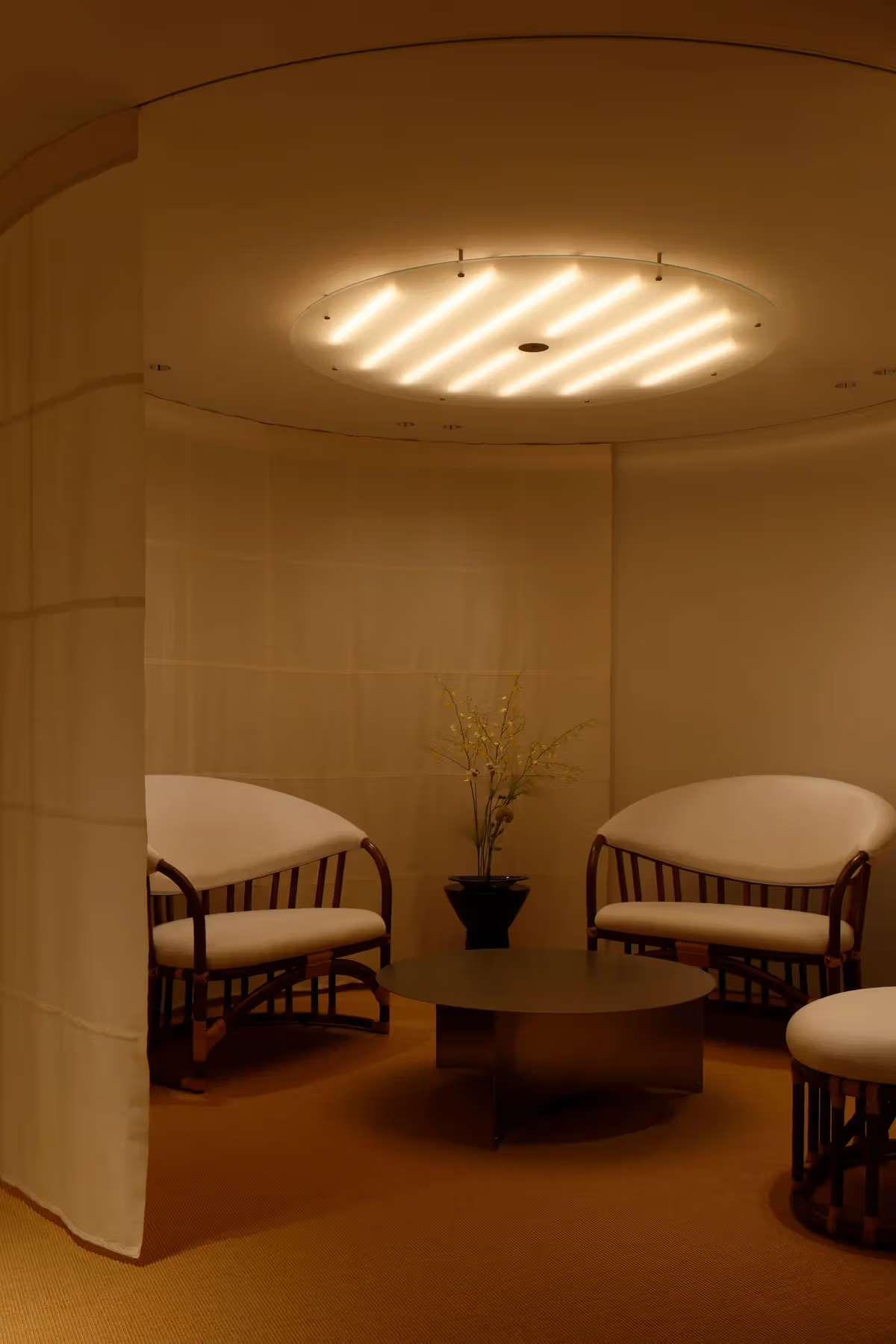
A moving textile door made by Hashimura and a textile designer establishes the boundary of the rear consultation room. White silk traditionally used for kimono travels along a circular ceiling rail, providing privacy through a soft, luminous enclosure. The approach recalls the light-filtering quality of shoji, replacing a straight grid with a sliding curved surface. Photographs show curved walls, chairs and a low table giving this room a different scale from the display area.
Curved walls, chairs and a low table shape the private rear room.
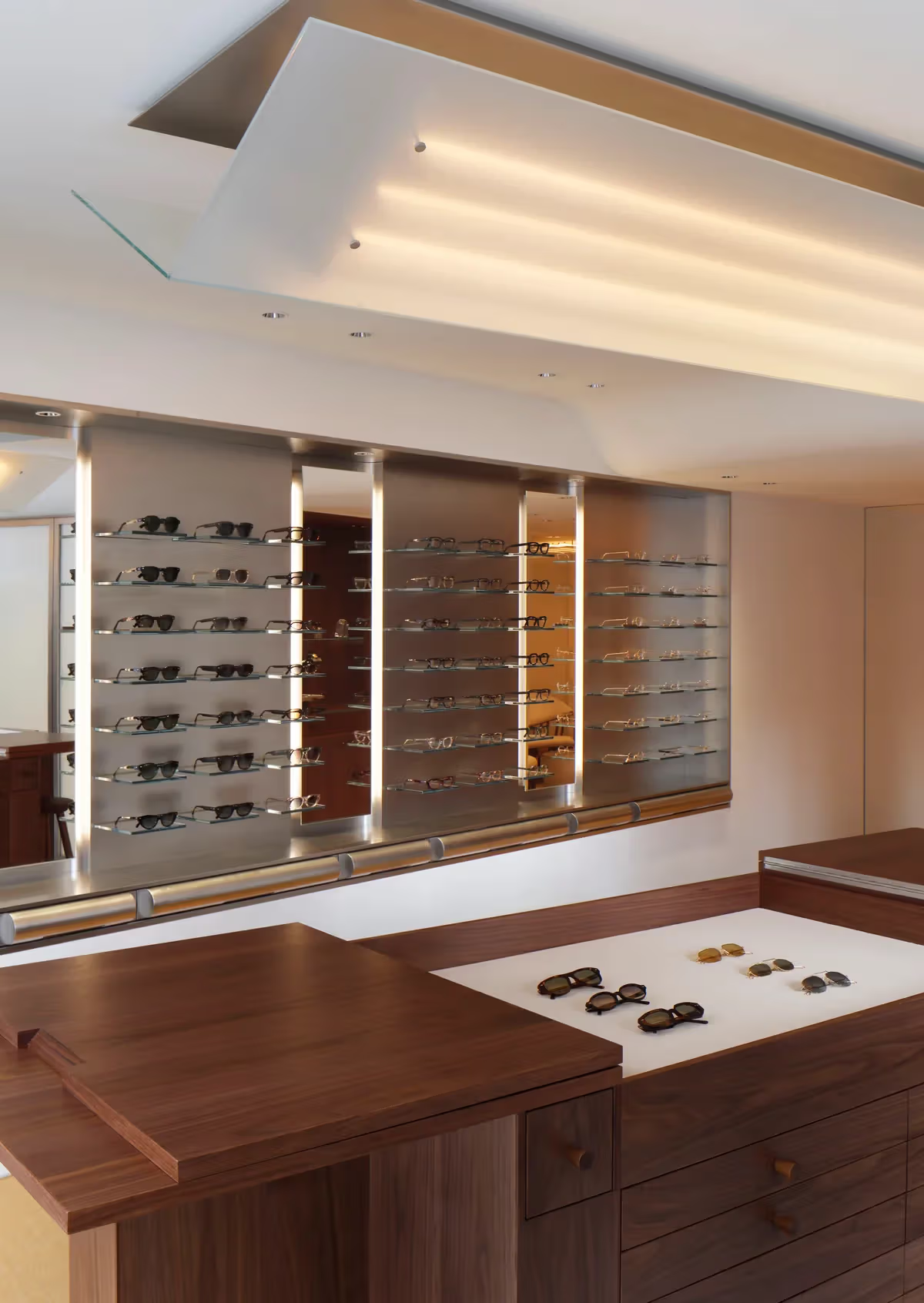
Other references include Hiroshi Sugimoto’s Glass Tea House “Mondrian” and the 100-metre gallery at Enoura Observatory in Odawara, particularly their sense of time and quiet. In Tokyo, these influences become a spatial rhythm that compresses near the entrance and opens toward the rear. Walnut benches and tables add warmth, while concrete, brushed steel and mirrors offer cooler reflections, giving frames different backgrounds against which to be compared.
Walnut tables and a bench meet a curved eyewear display wall.
Planning a visit now
All furniture, fixtures and lighting were custom-designed for the space. The white powder-coated steel vitrine in the front window developed from paper studies into a folded sculptural form. Frame scale, display height, reflections and seating distances therefore belong to one material vocabulary. Selecting a frame and adjusting its fit can bring several different kinds of observation together in the same interior.
Faceted lighting and metal displays create interior layers.
The official store directory currently lists Tokyo hours as noon–7pm on Wednesday and Friday through Monday, with Tuesday and Thursday closed, all in Japanese local time. Check opening days or appointment arrangements before visiting. On a Minamiaoyama design walk, the attraction extends beyond eyewear to the way an abstract line becomes a wall, then connects steel, wood and silk into a working place.