Yond’s Brume Hollow softens a New Hampshire horse barn with colour and textiles
The nineteenth-century barn is now a private family summer residence, with exposed timber, custom furniture, handmade tiles and heirloom textiles rather than hotel bookings.
An old horse barn in New Hampshire has become Brume Hollow, a family summer residence with interiors by Yond Interiors. The studio traces the building to the nineteenth century and connects its yellows, greens and blues to summers in the American Northeast. This is a private home, not a bookable hotel. Recently published interiors show how existing timber can accommodate daily life, rather than announcing a resort opening today.
The barn had been moved onto the clients’ property many years earlier. Some planning, stairs and finishes were already in place when Yond arrived, so relocation and all architectural work should not be credited to this interior project. Founder Julia Miller faced abundant character: a bright-green exterior and exposed beams, posts and boarding inside. Different textures, colours and furniture proportions soften that strong timber presence instead of adding another layer of rustic weight.
Letting the structure step back without painting it white
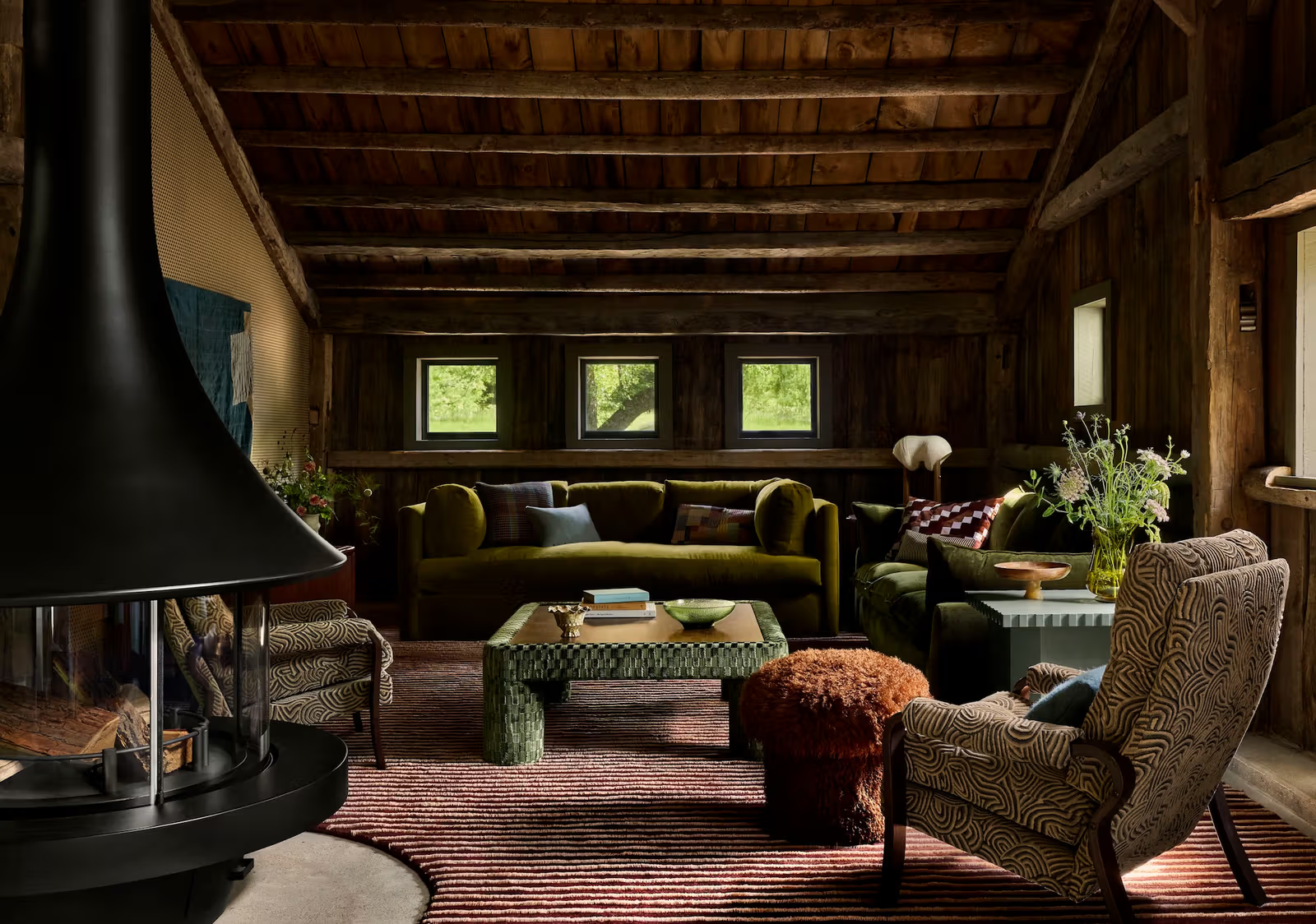
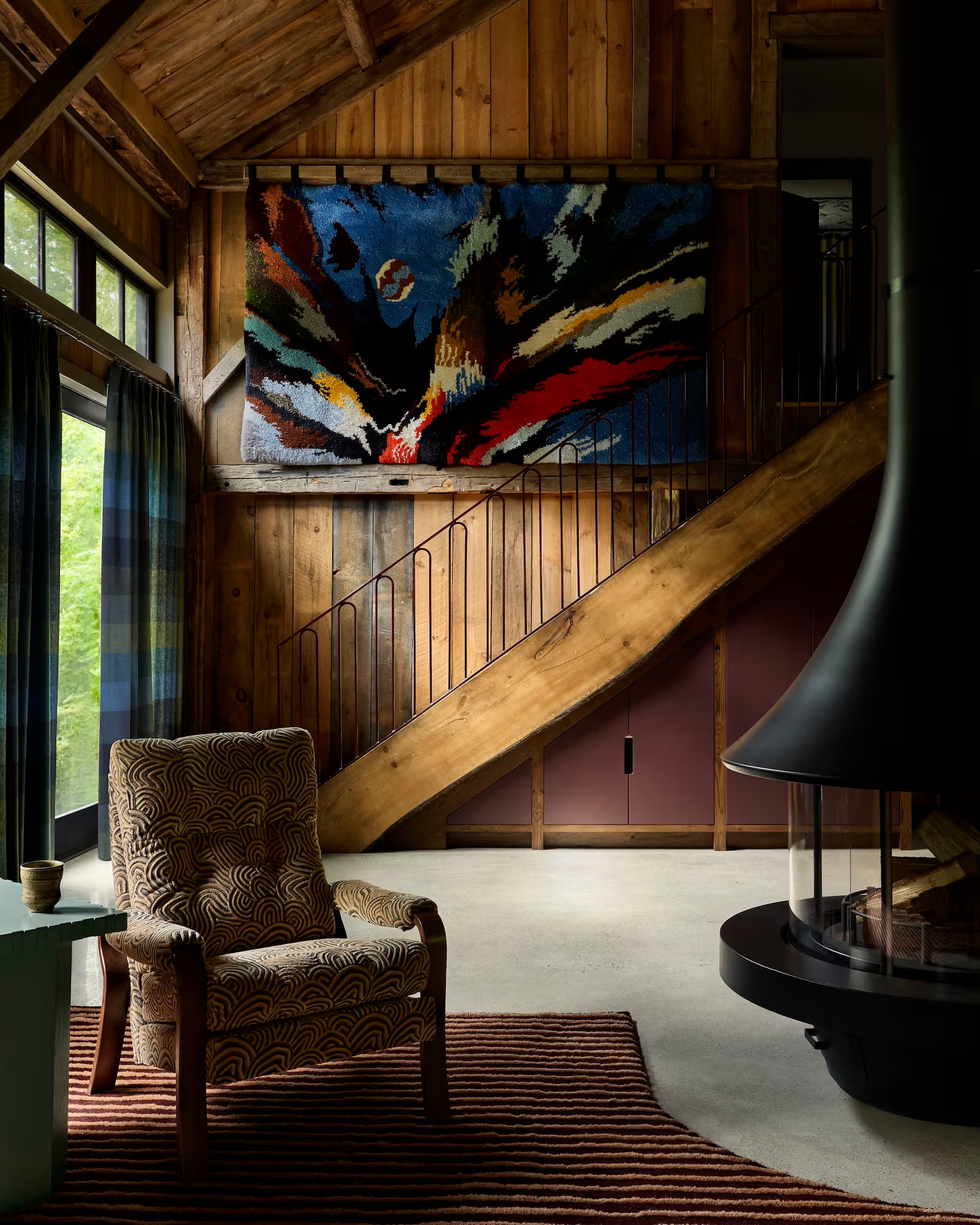
The living room keeps its beams and timber walls, while low green sofas, a striped rug and enveloping armchairs establish softer areas. Shades of green connect the interior to plants outside without making every object match. Fabric, wood and ceramics reflect light differently in the photographs, giving the eye routes beyond the beams. The approach demonstrates how retaining structure can coexist with a change of atmosphere, rather than concealing every old board.
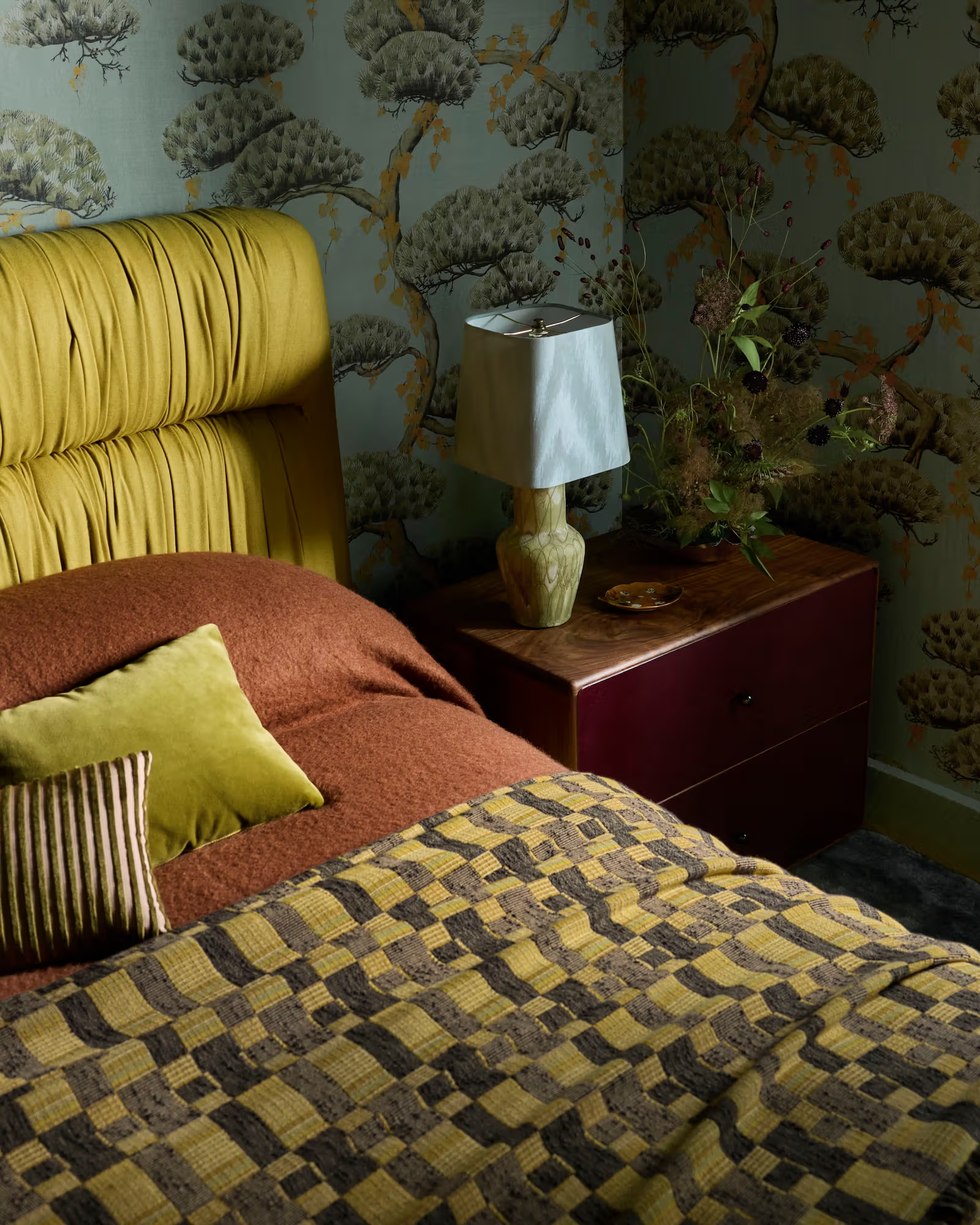
The main bedroom’s yellow upholstered headboard and botanical wallpaper add soft surfaces.
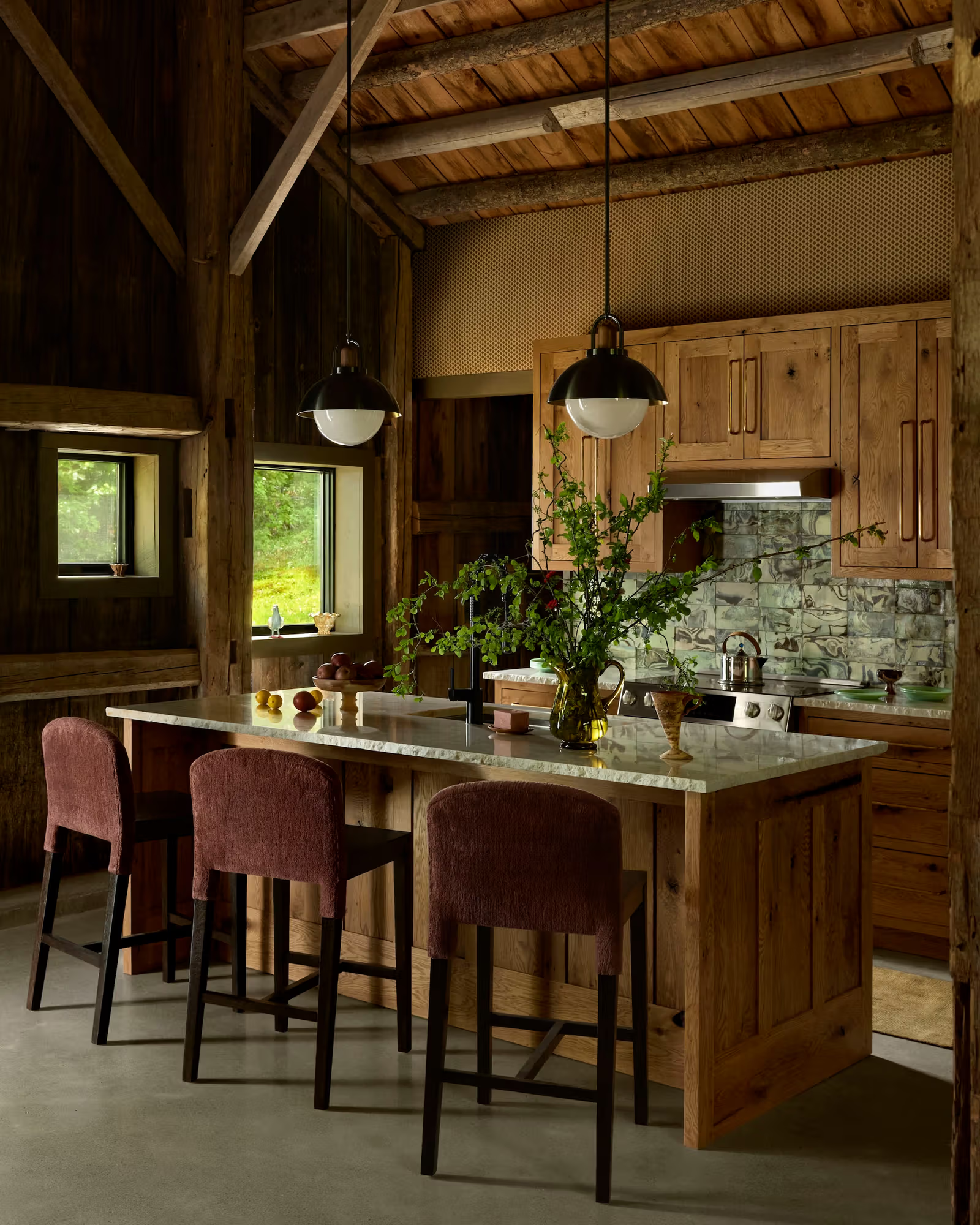
Kitchen splashback tiles by New Zealand ceramicist Lucy McMillan use pressed clay with marble-like movement, relating to the stone countertops. Allied Maker Arc Dome pendants above the island bring attention back to the scale of use instead of only the roof height. The handmade character lies in the differing tile surfaces; it does not mean every piece of kitchen stone was produced by the same ceramicist.
Green handmade tiles and pendant lights connect the kitchen island to the timber structure.
Colour occupies different heights at the table and in bed
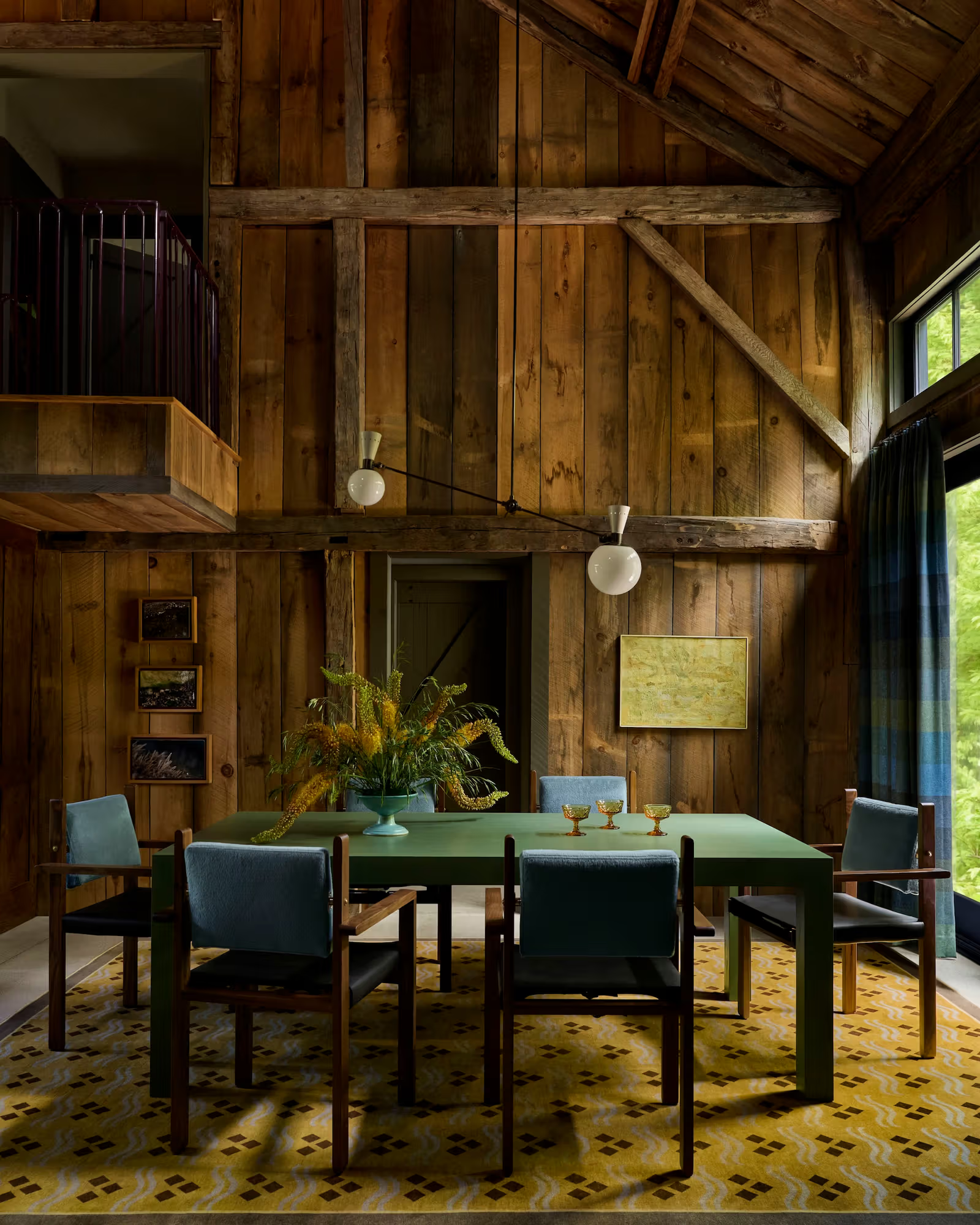
An ash dining table painted Farrow & Ball’s Bancha green sits with chairs combining dark-leather seats and peacock-blue mohair backs, over a yellow rug with an Art Deco inflection. Green is not the only connecting device: blue, yellow and leather share the visual weight. In the main bedroom, a yellow ruched-fabric headboard and botanical-patterned walls extend softness into the sleeping space without repeating one palette identically in every room.
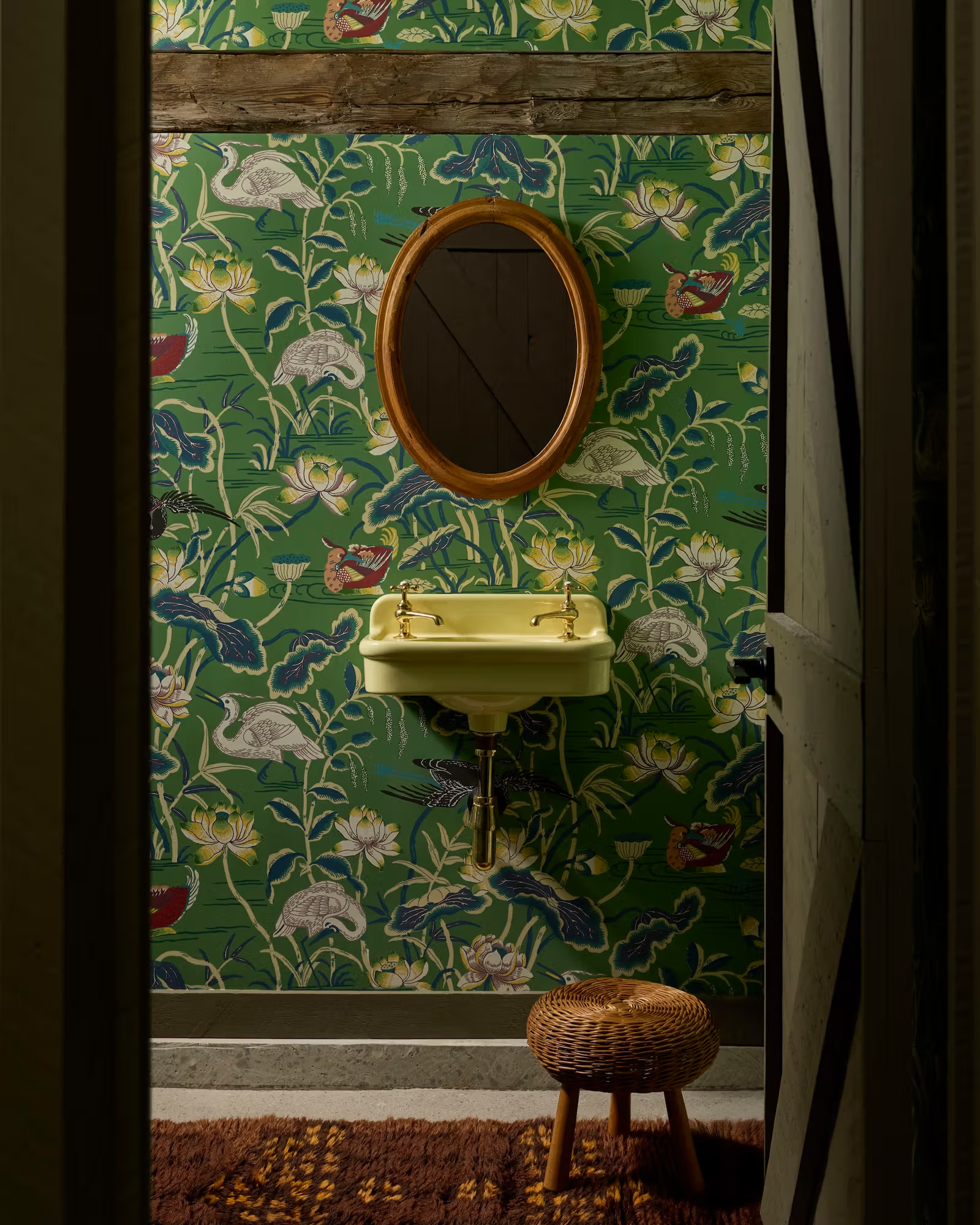
A green table, dark chair seats and yellow rug give the dining area distinct layers.The powder room pairs botanical and bird-patterned wallpaper with a light-green basin.
Yond’s sister brand Brunel custom-designed most furniture and lighting. A coffee table combines fabric-wrapped legs with a flat walnut top, meeting the need for softness and a usable place for a cup. Other pieces include Patricia Urquiola’s ceramic-front Riva Sideboard for Cimento, Kawabi’s conch-like Souvenir Table Lamp and vintage objects. The large colourful textile above the stairs is a client’s family heirloom, not a new commission intended to manufacture a vintage atmosphere.
The colourful textile above the stairs is a family heirloom, contrasting with the wood walls.
A private-home case study offers choices, not a shopping formula
The three-bedroom, three-bathroom home suggests starting with how much an existing structure already says, then adding textiles, ceramics and personal collections where softness is needed. More pattern is not automatically better; each material needs room to register. See the official Yond Interiors Brume Hollow project page for further images. Publication of the design does not establish public visiting or accommodation arrangements. It is best read as an interior case study.
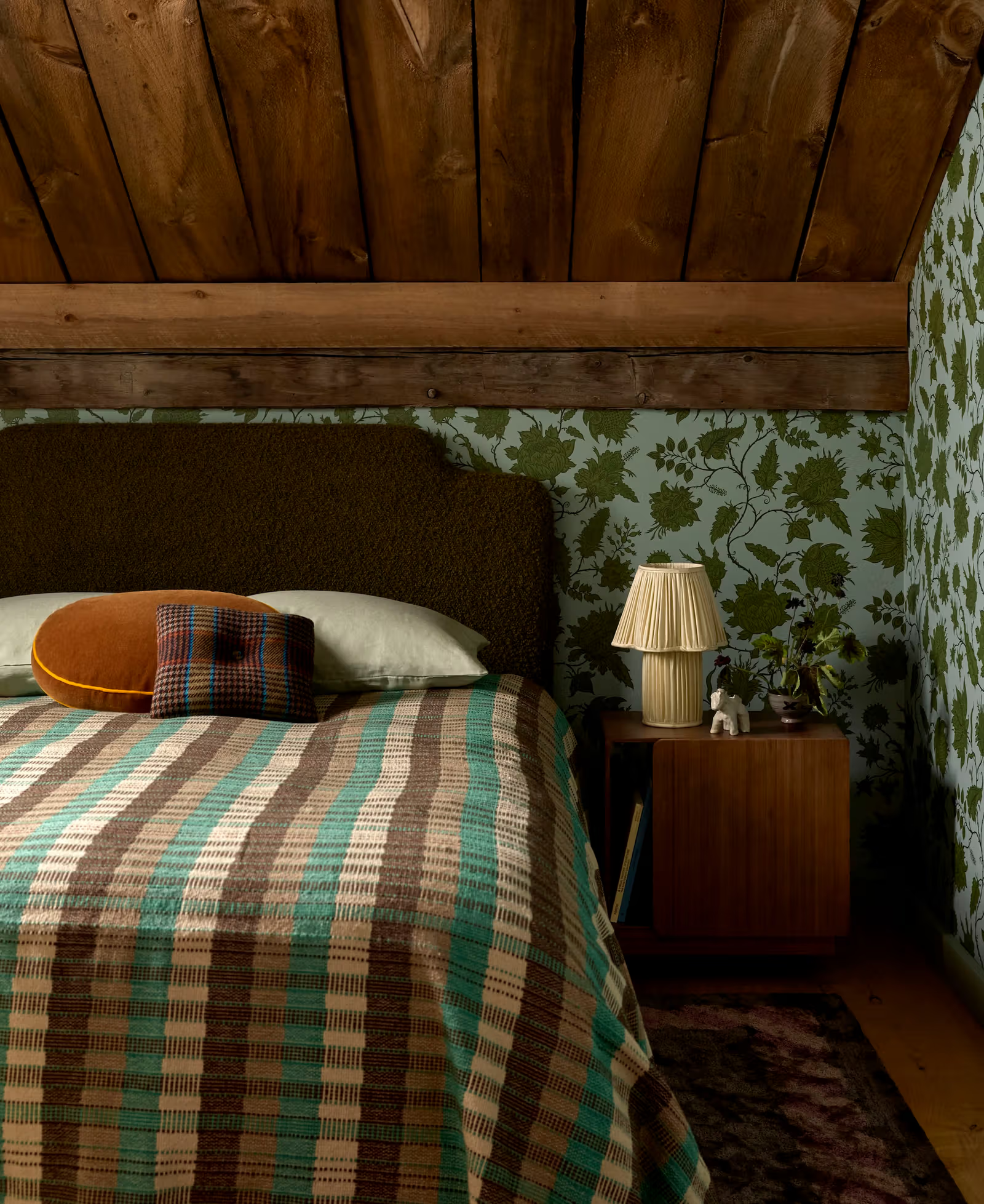
Another sleeping space keeps its sloping timber roof, with striped textiles and botanical pattern.