Phone Dead, Charger Nowhere in Sight? What the Numbers Say About Power Banks and Backup Plans
From the lipstick-sized Anker Nano to the 20,000mAh Belkin BoostCharge 20K, a few real-world test numbers to help you decide which power bank to bring when your phone's about to die—and what to do when you've brought nothing at all.
A dying phone battery never picks a convenient moment. Maybe you've been snapping photos and pulling up maps nonstop on a trip, or maybe your phone's just old and the battery isn't what it used to be. Whatever the reason, the thing that saves you doesn't have to be one of those bulky, pocket-busting power banks anymore.
Options these days range from small enough to slip into your jeans pocket to heavy-duty gear built for charging a laptop. If you're just looking for backup power for your phone, 5,000mAh to 10,000mAh capacity is plenty.
Anker MagGo: Half-Charged in 45 Minutes
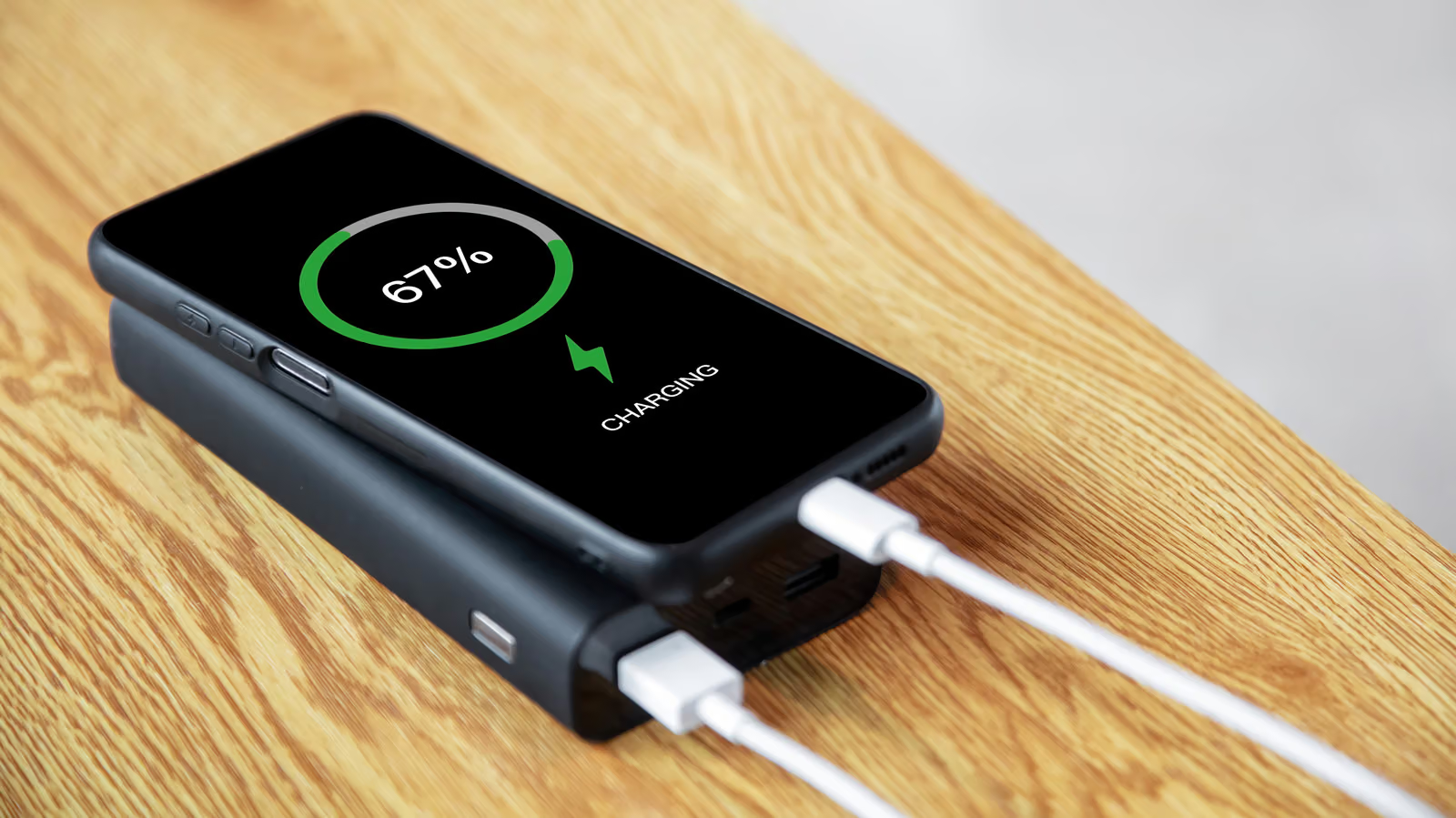
If your phone supports magnetic wireless charging—think MagSafe iPhones or any Qi2-compatible device—the Anker MagGo Power Bank is worth a look. In testing, this 10,000mAh power bank brought a nearly dead iPhone 15 to almost 50% charge in 45 minutes, and a second charge topped it up to 70%. It has an LCD screen showing remaining battery and estimated usage time, plus a built-in kickstand so you can watch videos in landscape mode while charging. For devices without Qi2, it also has a USB-C port for wired charging.
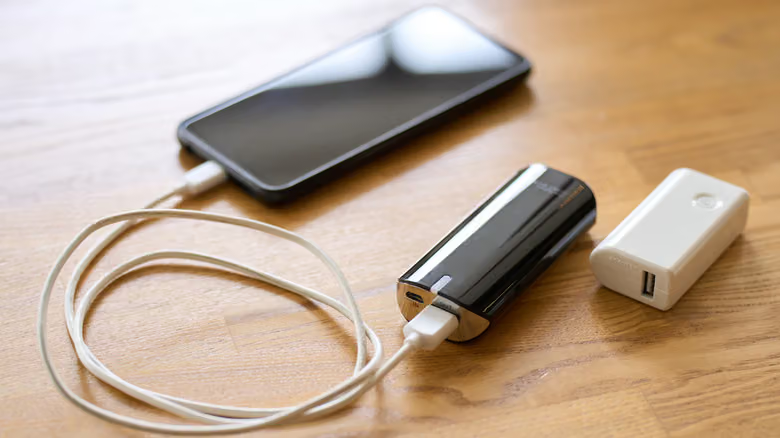
If standard capacity feels like overkill, the Anker Nano goes the other direction—5,000mAh with a built-in USB-C plug, described as looking more like a tube of lipstick than a battery pack. In testing, it charged a completely dead Samsung Galaxy S23 Ultra to 65% within an hour. Anker also makes a card-shaped Nano that's thinner and lighter than the MagGo, still supports Qi2, and keeps the USB-C wired port. There's also a Nano 10K with a built-in retractable USB-C cable, and the Fusion series, which comes with its own USB-C cable and a foldable two-prong plug.
On the high-capacity end, the Belkin BoostCharge 20K was the standout mid-size performer in testing—20,000mAh with a built-in cable, it charged a nearly dead Samsung Galaxy S24 Ultra to full in an hour and 15 minutes, and could repeat that full cycle two more times before running out. If fast-charging speed is the priority, the 65W Nimble Champ Pro fully charged a Galaxy S23 Ultra from 5% in under an hour.
Forgot the Power Bank Too? Here's What to Do
If your car doesn't have a USB port, consider a wireless car charger that plugs into the cigarette lighter socket—these usually clip onto the air vent or dashboard and can double as a navigation mount while charging. Belkin's BoostCharge Pro car charger supports Qi2, and Anker offers several car charger options as well.
Tossing a short USB cable in your bag is another backup plan—if your phone dies, you can at least borrow power from a laptop. If you're stuck without a charger at a hotel or Airbnb, check whether the TV has a USB port and try plugging in. Not every TV can supply power, and it's usually slow, but it can tide you over in an emergency.
Public USB charging stations at places like airports and coffee shops are another option, though the FBI has warned that "bad actors have figured out ways to use public USB ports to introduce malware and monitoring software." That said, this so-called "juice jacking" attack is rare in real life. If you want to be cautious, you can carry a cable labeled "charge-only" or a data blocker, which only supplies power and can't transfer data. Also, if you plug into an unfamiliar USB port and your phone asks whether to trust the device, choosing "don't trust" is the safer call—once you trust it, the other device can access data on your phone.