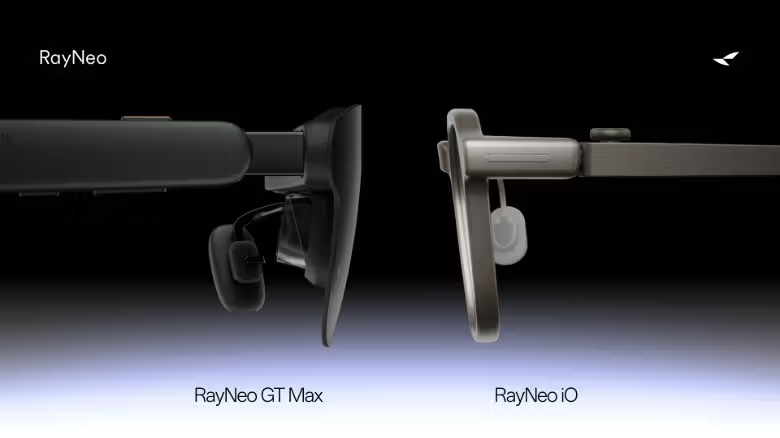
Same company, same week, but two completely opposite bets. RayNeo's new iO Smart Glasses want you to forget you're wearing AR glasses at all, while the GT series goes the other way — chunky, thick, and basically announcing "this is a display device" the moment you put it on. The trade-offs each makes are worth putting side by side.

The iO Smart Glasses weigh just 33 grams and look close to a regular pair of clear-lens glasses, with a monochrome green display hidden inside the lens offering a 23.5-degree field of view. It can show a simplified interface, real-time translation subtitles, or teleprompter text for speeches. To keep that "looks completely normal" silhouette, RayNeo made some clear sacrifices: the display is monochrome only, and the glasses have no speakers and no camera at all. At least the lack of a camera keeps it out of the "hidden recording concerns" conversation that other smart glasses have run into.
Instead, the focus goes to audio pickup specs. The iO Smart Glasses come with a four-microphone array and a bone conduction sensor, which RayNeo says can "isolate vocal cord vibrations for precise transcription" even in noisy environments. This audio system is meant to power the real-time translation feature, which RayNeo says runs on the Timekettle BabelOS 3.0 translation engine — claiming support for 55 languages and 109 accents with about a one-second delay. RayNeo also mentions an Ambient AI Productivity Suite built into the glasses, which listens to conversations, pulls out "to-dos," and suggests calendar updates. On battery life, the official numbers are two days of everyday use, or 18 hours of continuous recording, or 6.2 hours of continuous translation. As for privacy concerns around always-on audio, RayNeo says an indicator light turns on during recording and translation — though similar designs on other smart glasses brands have already proven easy enough to cover up.