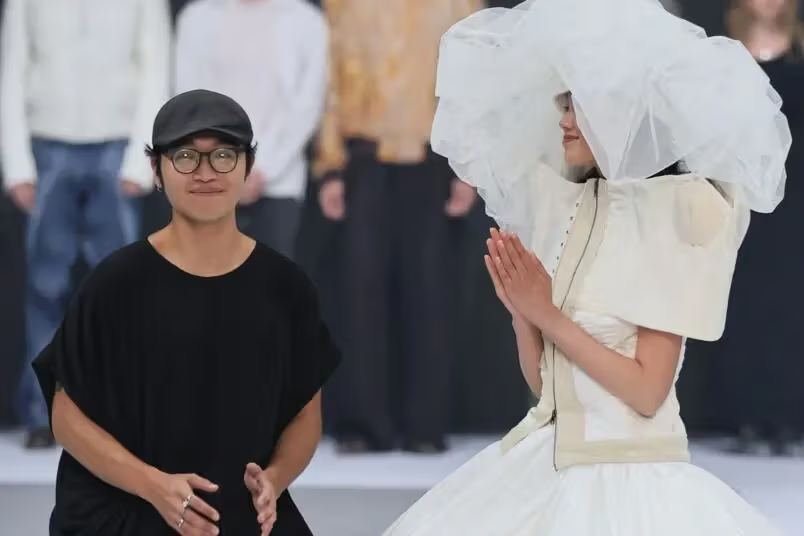
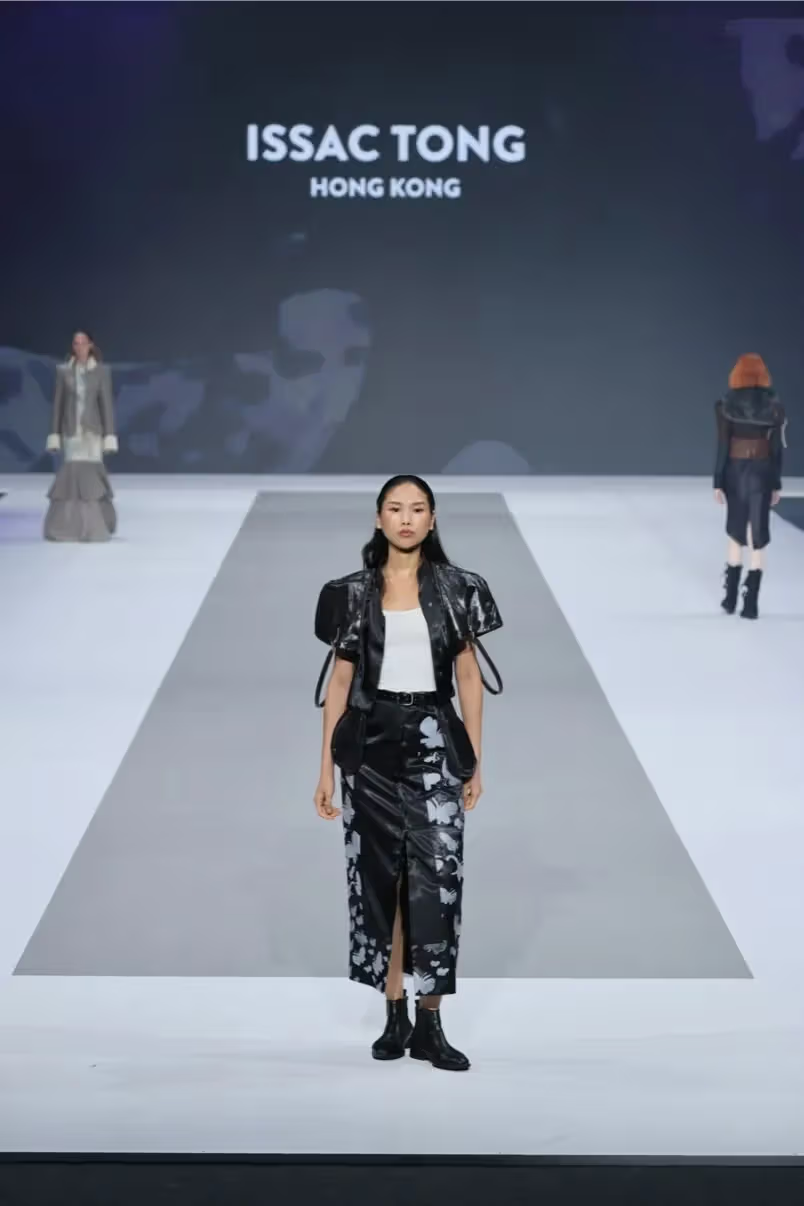
A fashion exhibition in Tsim Sha Tsui can begin with an old handbag. Redress Design Award 2026 finalist Issac Tong responds to Anita Mui’s changing image in Diva, the Chameleon, allowing bags and garments to transform into one another. The related award exhibition runs from October 13 to 30 on Mira Place’s L2 footbridge, with free admission, offering a close look at how discarded materials become new silhouettes.
How does Anita Mui become a garment structure?
Mui inspires the womenswear collection, but understanding it need not end at “a tribute to a diva.” Her shifts between singing, acting and different stage identities correspond to the transformation between clothing and bags. Qipao elements bring Hong Kong popular-culture memory into the cut. The many sides of a person thus become a design method rather than just a photograph printed onto fabric.
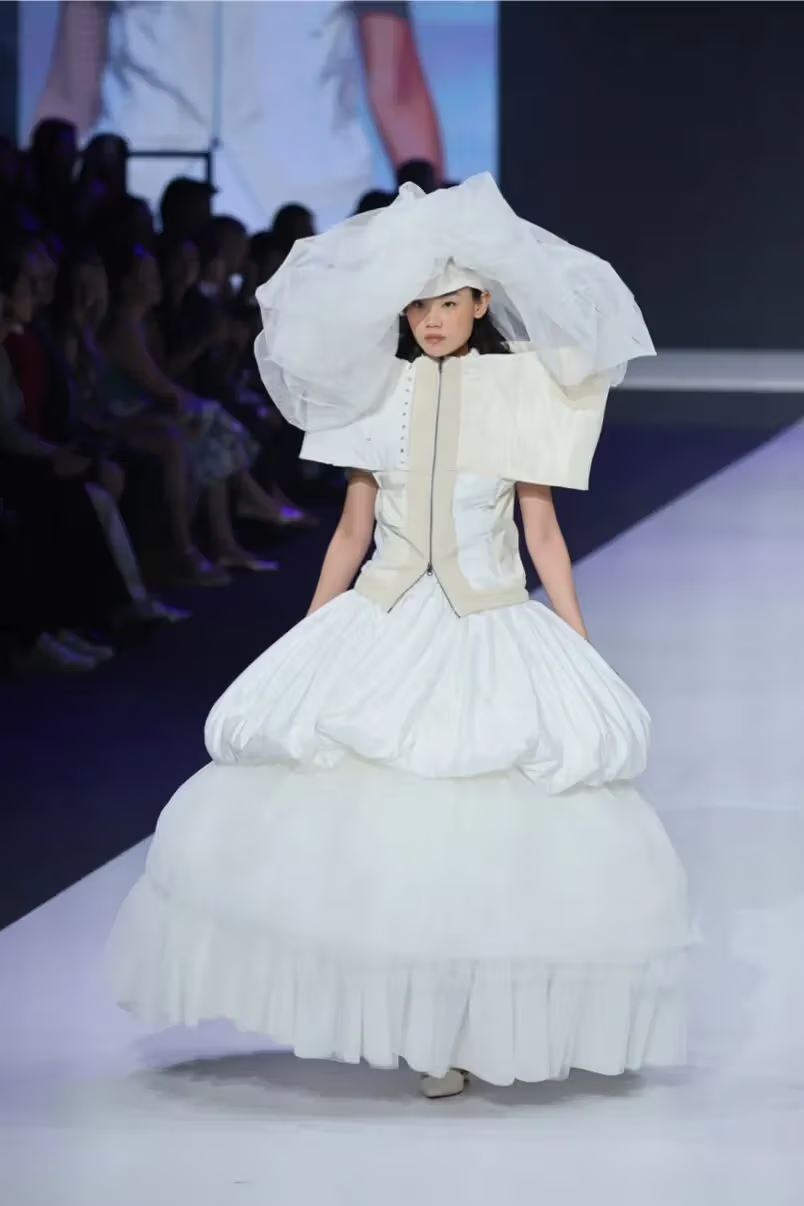
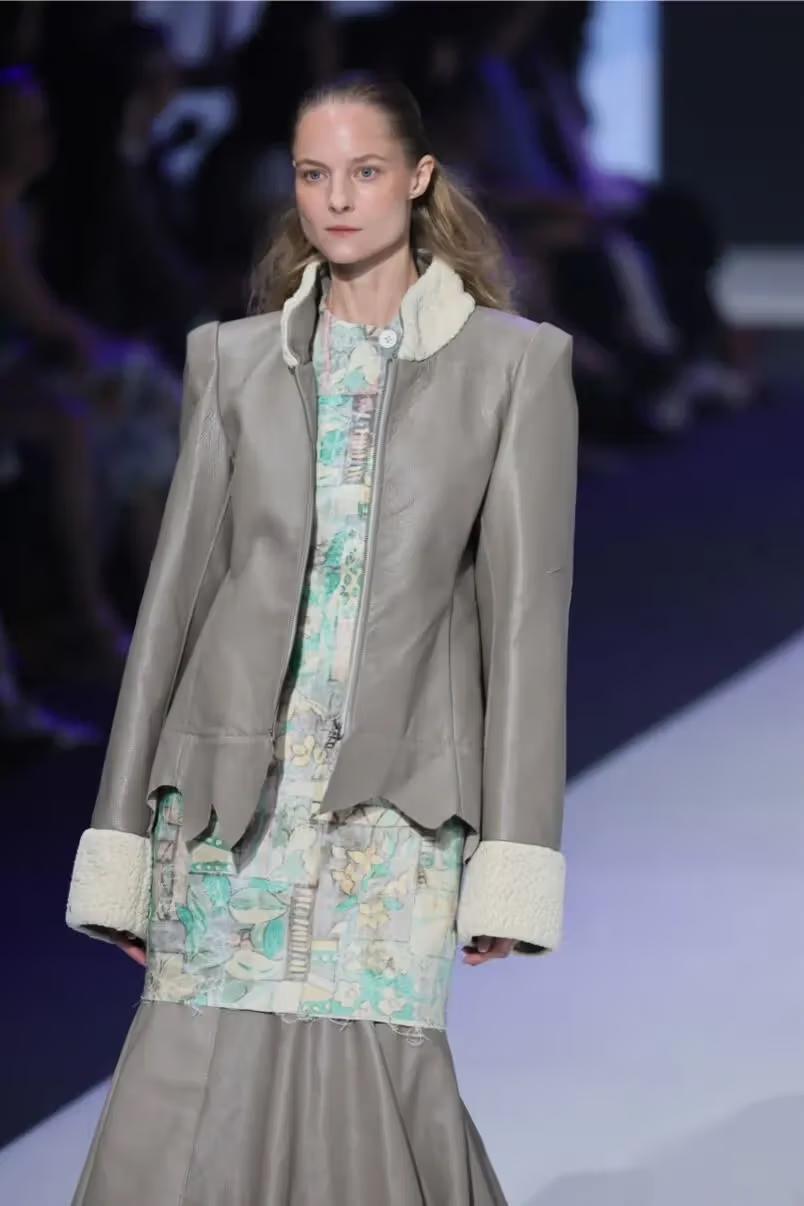
A broad white skirt and sculptural upper body create a stage-like silhouette.A jacket, printed layers and long skirt offer another expression of tailoring.
The collection uses reconstruction and upcycling. Materials include textiles and bags from a recycling facility, factory surplus and old curtains from the designer’s late grandmother’s home. Each source has its own stiffness, dimensions and signs of use. In photographs, the original bag forms remain recognisable, creating a simultaneous reading of what an object used to be and what it has become when worn.
Can imperfections be part of the look?
In his official designer profile, Tong argues that stains and uneven edges can remain in a piece instead of all being cut away. This affects more than surface style: trimming every corner to achieve neatness can create further waste. Keeping traces of an earlier life lets waste-reduction decisions participate directly in the appearance, while viewers can read the time an object has already spent in use.
Reconstructed clothing often poses its hardest questions at the joins. Bag thickness, fabric drape and room for body movement do not automatically align. Attaching an object to clothing and making it part of the clothing’s structure are different tasks. Look at the shoulder, waist and openings, and at whether the original bag shape changes the wearer’s proportions. These details explain the design more clearly than searching for a recycling symbol.
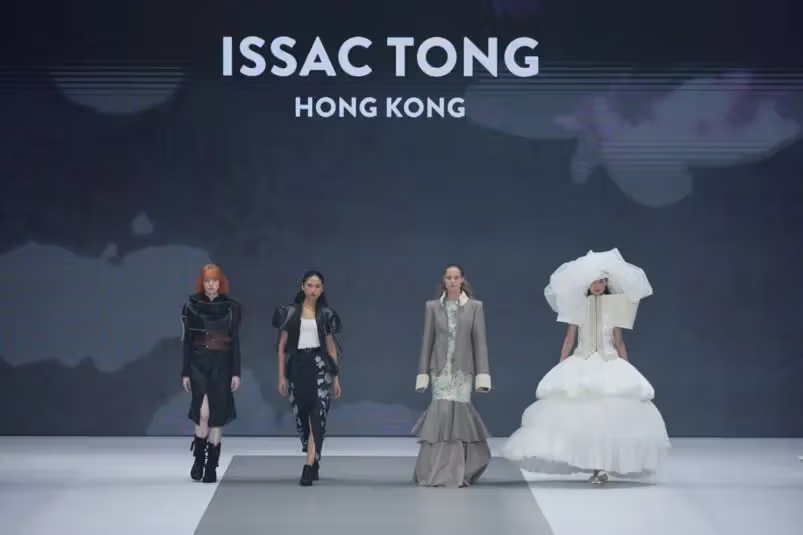
Bag-like structure meets sheer material in another look.
What can visitors see in Tsim Sha Tsui?
Mira Place presents work by this year’s finalists and selected Redress alumni. The venue is the L2 footbridge at 118–132 Nathan Road, Tsim Sha Tsui, Kowloon. This is a post-competition display, rather than a declaration that every exhibited piece is for sale. It offers a compact visit for comparing materials and techniques and discovering other participants.
Tong holds a Higher Diploma in Fashion Design from the Hong Kong Design Institute and a BA (Hons) in Fashion Design from Nottingham Trent University. From familiar discarded objects to runway clothing, his work poses a concrete question: must circular fashion hide its previous traces? In this collection, edges, wear and bag forms are precisely the design content that remains visible.
Four looks shown together on the Redress Design Award runway.Dark reconstructed clothing retains irregular proportions on the runway.