Instagram Stories Creator's Latest Project: Retro Wants to Be the Photo Album App You Only Share With Friends
Retro was co-founded by Nathan Sharp, the man who once led Instagram Stories, and it bills itself as a "friends-only photo diary" where you share one photo a week. Engadget spent a week testing it out, and the verdict turned out more mixed than expected.
Nathan Sharp, the man who once single-handedly built Instagram's Stories feature, is now doing the opposite. His new co-founded app, Retro, sells itself on bringing back that early Instagram vibe of "seeing what your friends are up to"—no algorithmic recommendations, no short-form video, no ads.
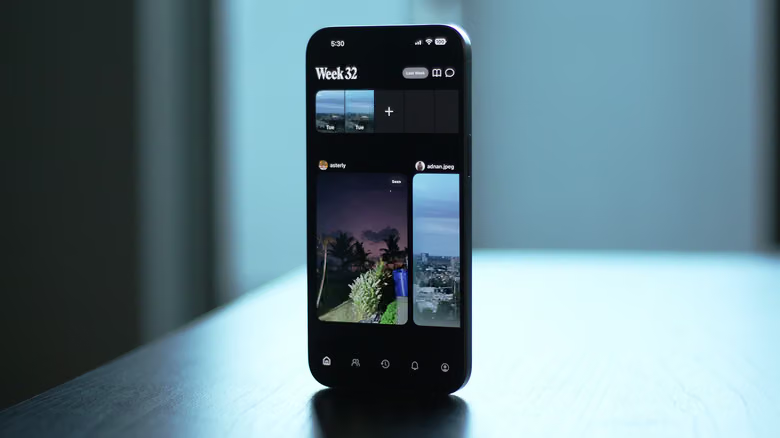
According to Engadget reporter Adnan Ahmed's hands-on testing, Retro officially bills itself as a "friends-only photo diary." The core rule is simple: users upload at least one photo from their life per week, and that photo is only shown to your followers—it's never made public, and it never gets pushed to any explore page.
Setup and camera roll logic: only photos from this week can be selected
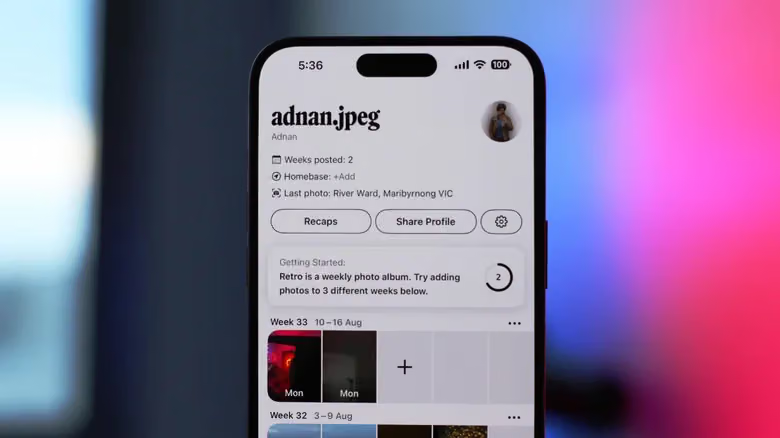
During initial setup, the app has users choose their sharing frequency—daily, weekly, or monthly—and the system then sends reminders to post based on that rhythm. Ahmed noted a key restriction in his report: the free version's photo picker only lets you choose photos taken "within the same week," a design choice that both solves decision paralysis and keeps content closer to real, present-day life. The system automatically reads the photo's metadata, displaying the time and location it was taken alongside the post.
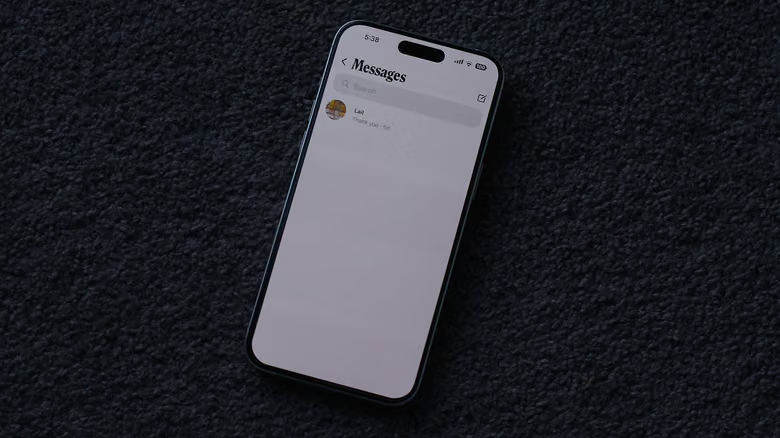
Once you've accumulated a certain number of uploads, you can organize your photos into an album, choosing different fonts and a cover image, deciding whether to make it public on your profile or keep it private, and even inviting friends to co-edit the same album with you. When friends visit your profile, they can only see the past four weeks of content by default; if you want someone to see your complete photo diary, you can hand them a "key"—but the free version only lets you give out one key at a time, essentially forcing you to publicly pick a favorite. There's also a direct messaging feature built into the app.
The Memories tab replaces swiping with a dial
Ahmed specifically mentioned that the "Memories" tab was the most fun part of his testing experience. The feature itself isn't groundbreaking—most social platforms have some kind of "throwback" feature—but Retro pulls directly from your phone's camera roll for old photos, which is especially useful for new users who just joined and haven't accumulated many posts yet. Browsing isn't done through the usual swiping or tapping either; instead, you use a rotating dial to jump back to different points in time.
Retro itself has zero ads, which is why it needs paid subscriptions to stay afloat. Retro Premium is priced at $2 a week, $5 a month, or $36 a year. Subscribers can retroactively upload photos from further back, share short videos, and are exempt from the "post at least once a week to see friends' updates" rule, plus they can hand out unlimited keys to different friends. Retro also built in a referral system: invite five friends and get a full year of Premium; invite ten and get lifetime membership outright.
Ahmed was blunt in his piece that these paid features weren't quite enough to convince him to subscribe—the only one that stood out to him was being able to hand keys to multiple friends at once. If you want to print your photos as postcards to mail to friends, that costs an extra $2 per print.
The problem isn't the design—it's whether you have enough friends on it
Ahmed's biggest reservation about Retro isn't the interface or features—it's that "there just aren't enough people here." During his testing, he only found two familiar faces on the app, and he admitted this dampened the experience; Retro's referral rewards are, in some sense, an attempt to solve this exact growth problem. He also noted that if people in your friend group are already using it, the experience would be completely different—even with minimal social interaction, Retro can still work well as a personal photo diary tool for long-term life documentation. But if you're hoping to discover new content or meet new people, Retro was never designed for that in the first place.