How Much Is That Retired Cartridge Worth? Decoding Rarity Value Through a Gold NES Cart
Not every old game buried in your closet can be cashed in—it all comes down to release year, print run, whether the box survived, and nostalgia factor. From GameCube to Pokémon, here's how to break down what actually determines a game's worth.
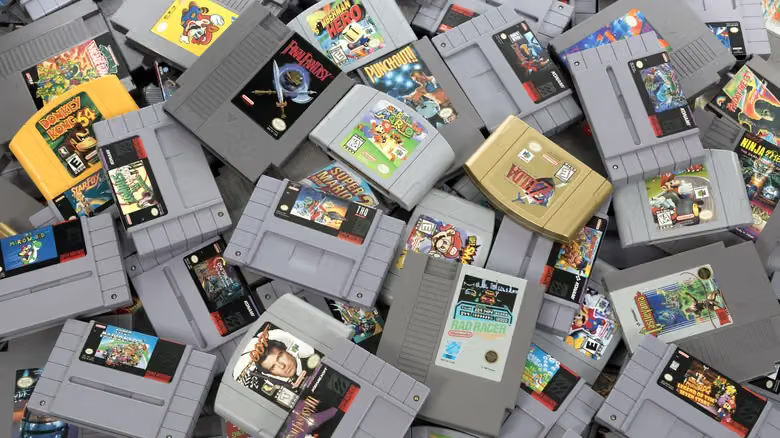
An NES cartridge can sell for over $100,000—if it's called the Nintendo World Championship Gold cartridge. Distributed in the 1990s by Nintendo's own magazine, Nintendo Power, as a competition prize, only 26 copies exist worldwide. Most of the old games sitting in your closet obviously aren't in that league, but this extreme case points to a real question: how do you actually tell whether that stack of cartridges or discs is trash or cash?
There's no single universal checklist for the answer—you have to work through a handful of concrete indicators one by one.
From Gold NES Carts to GameCube: How Rarity Gets Calculated
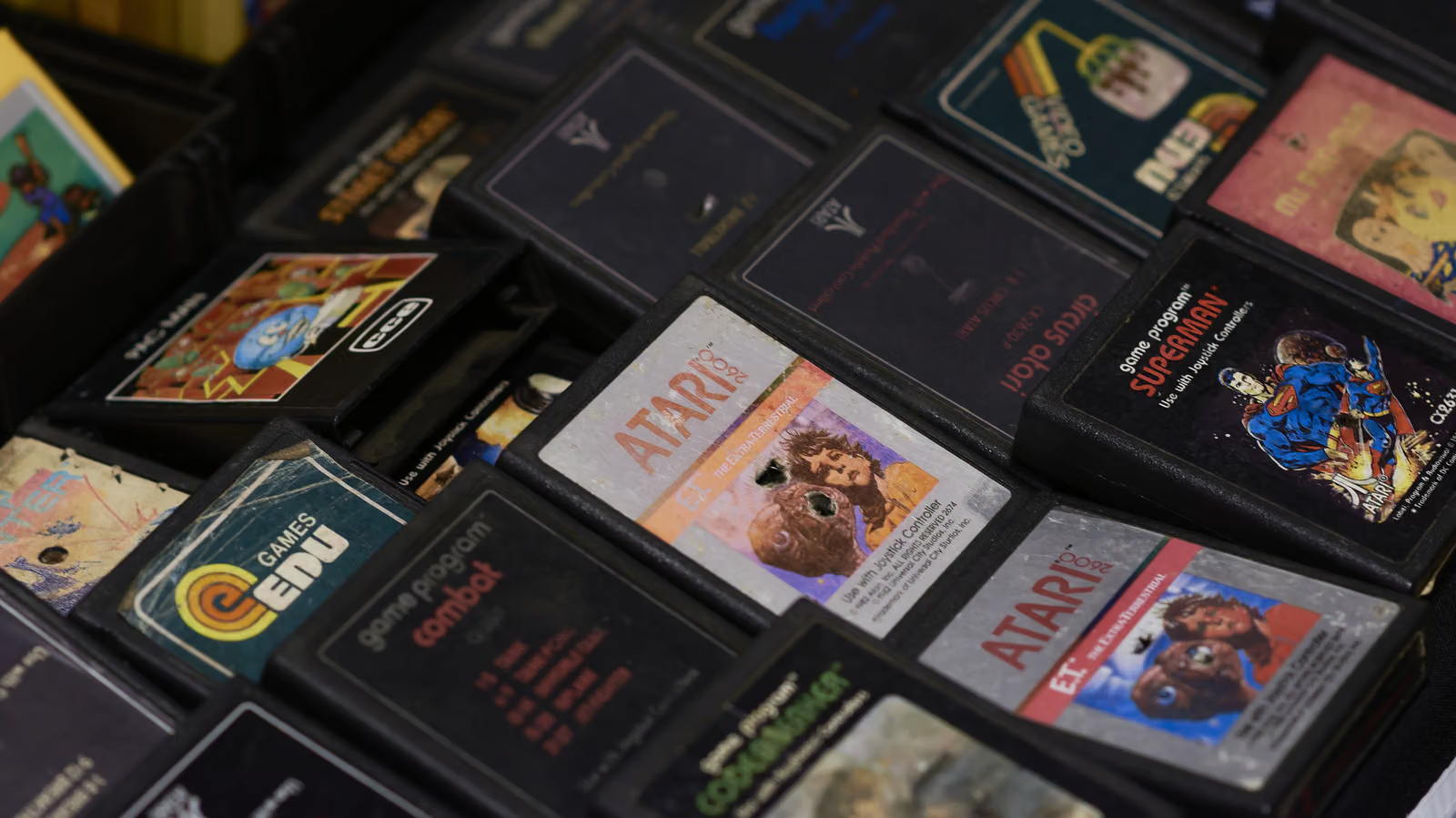
The first thing to look at is release year and print run. Games for a console like the Xbox 360—"old, but not that old"—still hold some value, but usually can't compete with earlier titles from long-discontinued systems like the Atari 2600, simply because those have been out of production for much longer. It's not an absolute rule, but generally speaking, the older the game, the more likely it is to carry real value.
The sales performance of the console itself also feeds back into how rare its games are. GameCube titles routinely command noticeably higher prices than PlayStation 2 games from the same era, for a straightforward reason: the GameCube sold far fewer units than the PS2, so its games were printed in smaller quantities too. Special editions, region-exclusive releases, or copies that leaked through non-standard channels also tend to fetch higher prices—the Nintendo World Championship Gold cartridge is simply the extreme version of this same logic.
Even for genuinely rare items, though, condition still swings the final price. The industry standard term CIB (complete in box) refers to items that still have their manual and box intact—these are worth significantly more than a loose disc or cartridge circulating on its own, and if the original factory shrink wrap is still sealed, the price climbs another notch. Visible scratches on a disc, or a cartridge label that's badly faded or worn, will drag the valuation straight back down.
Nostalgia Adds Value, But Remakes Can Subtract It
Nostalgia is always working in the background. If what you're holding is from a long-running franchise like Pokémon or The Legend of Zelda, the baseline value tends to stay pretty stable. Even Pokémon Red/Green/Blue—which sold over 31 million copies worldwide back in the day—still fetches a decent price today despite its massive print run.
But titles that later got remakes or remastered ports can actually see their value drop, since nostalgic players now have an alternative option. The original Legend of Zelda: Ocarina of Time was already trading below its original launch price on the secondary market, and that dip got even more pronounced after the remake came out. This rule doesn't hold every time, though—the original Silent Hill 2 has kept its value steady even with a remake now available. So it's worth checking current market prices before pricing anything, rather than going off assumptions.
Before You Sell: Grading, GameStop, or eBay?
If what you've got is CIB, ideally still sealed, and your initial read suggests it's worth a fair amount, it's worth considering professional grading. CGC is the most commonly used grading service in the industry, with a clear set of condition standards. Grading costs money, but it gives buyers an official paper trail backing up the item's condition, which usually makes it easier to sell—and typically fetches a noticeably higher price than an ungraded copy.
Trading games in through a retailer like GameStop will generally net you far less than selling them yourself. Take GameStop's official Trade Values page as an example: Mario Kart: Double Dash, which trades around $60 on the open market, tops out at just $27.50 in store credit—and even less if you take cash instead. That said, if you just want to clear things out fast and don't have anything particularly valuable on hand, GameStop or a local used-game shop is still the low-effort option.
The more labor-intensive approach—but the one that usually yields the highest profit—is pricing and selling the games yourself on eBay. Sites like PriceCharting or apps like Plynt let you build out a collection list and track pricing trends based on recent sale records, making it easier to decide what to charge and when to list. If you go the eBay-and-mail-it route, make sure you understand the seller protection policies first, and keep records of every shipment.