Galaxy Watch 8 Antioxidant Index: The 5-Second Thumb Scan Is Actually Measuring Carotenoids
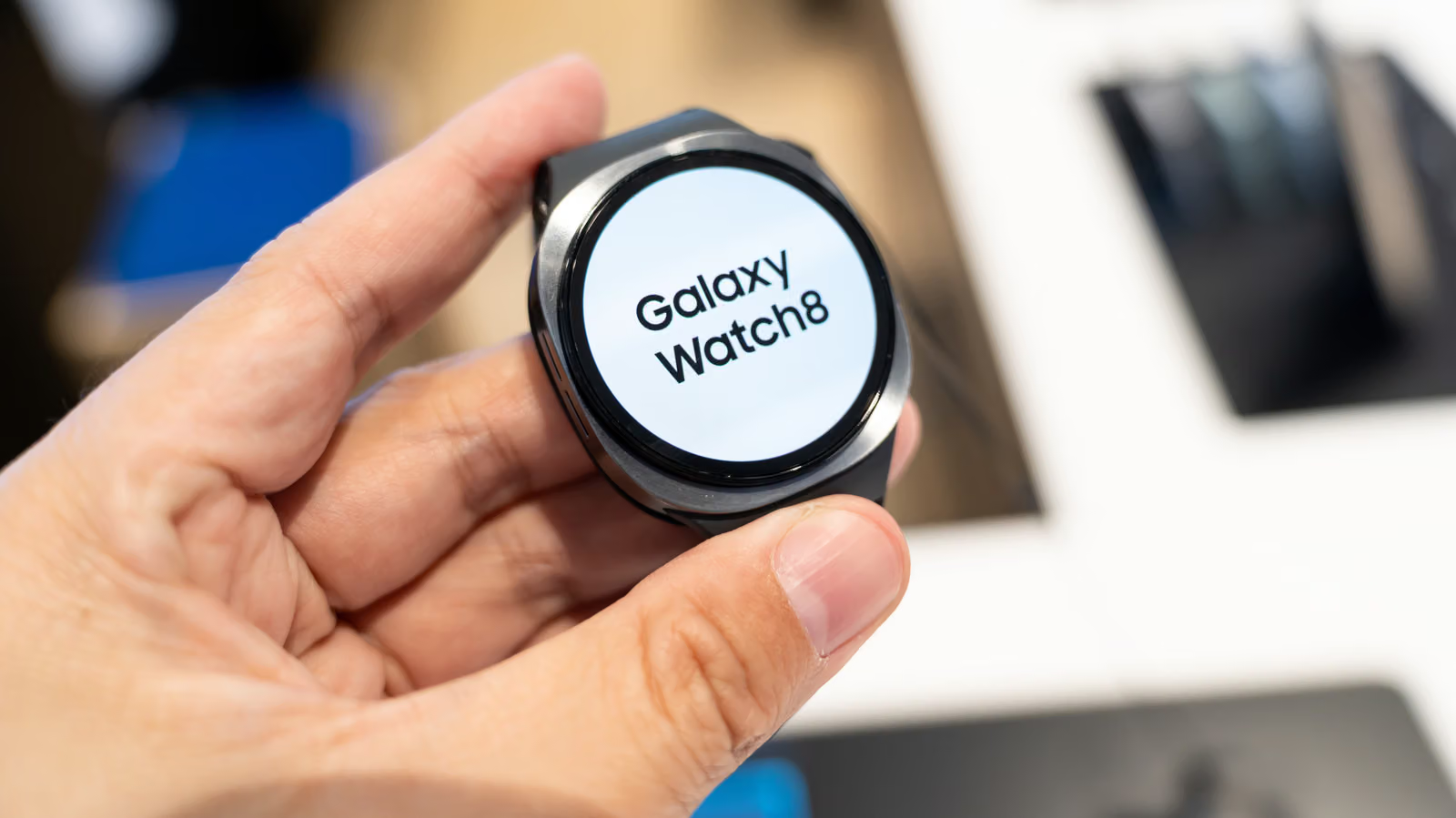
Samsung's Galaxy Watch 8 comes with a new Antioxidant Index feature—press your thumb on the back sensor for five seconds and get a score from 0 to 100. But what it's actually measuring isn't antioxidants themselves, it's the concentration of carotenoids in your skin.
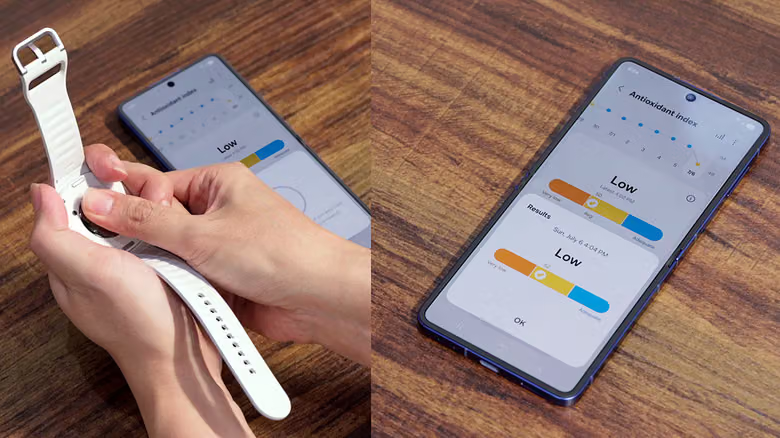
Take off the watch, open Samsung Health, tap the Antioxidant Index, then press your thumb on the BioActive sensor on the back for five seconds—that's the whole process for measuring the Antioxidant Index on Samsung's Galaxy Watch 8. During the scan, yellow, blue, purple, and green LED lights flash in sequence, and a score between 0 and 100 pops up at the end.
That number sounds like it's measuring overall antioxidant capacity in your body, but it's not. What it's actually estimating is carotenoids—pigments found in yellow, orange, and green fruits and vegetables that accumulate in the skin. Samsung uses this reading as an indirect indicator of fruit and vegetable intake, but the company also notes that UV exposure, alcohol consumption, and stress can all affect the score.
How the sensor reads your skin
Samsung says the sensor uses multi-wavelength absorption spectroscopy, analyzing how different wavelengths of light are absorbed and reflected by the skin. Carotenoids absorb certain wavelengths especially strongly, with blue light being the key one—the photodiode inside the sensor detects the reflected light and uses it to estimate carotenoid concentration, which then gets converted into a score.
Choosing the thumb isn't just because it fits the sensor well. Samsung explains that both melanin and hemoglobin can interfere with optical measurements—finger skin helps reduce melanin's impact, while the pressure of pressing down temporarily restricts blood flow, cutting down interference from hemoglobin.
So how accurate is it, really?
Samsung says the sensor has been validated against Raman spectroscopy—a lab technique used to measure skin carotenoids—and cross-checked with blood tests, dietary records, and clinical data from hundreds of test subjects. A separate 2023 randomized controlled trial, which included Samsung researchers, also found a high correlation between reflectance spectroscopy and Raman spectroscopy in measuring skin carotenoids.
That said, Samsung hasn't published a simple, easy-to-understand accuracy rate or margin of error for consumers to reference, and the company stresses that the Antioxidant Index isn't meant to be used for diagnosing or treating any medical condition. In Engadget's Galaxy Watch 8 review, writer Amy Skorheim deliberately changed her diet for a day and saw the score drop by only two points, with readings over the following days settling between 56 and 60—suggesting the number isn't easily swayed by a single day's dietary changes.
Worth noting: on Samsung's current US comparison chart, the Antioxidant Index isn't listed as a feature on the Galaxy Watch 7—only the Watch 8, Watch 8 Classic, Galaxy Watch Ultra, plus the newer Watch 9 and Ultra 2 support it. Samsung hasn't explained why the Watch 7 is left out, but notes that carotenoids from food typically take two to three weeks to build up to detectable levels in the skin.