Can That Old Satellite Dish on Your Roof Still Get Free TV? Mostly No in the US, But the UK Has a Workaround
Hook the coax from that old DirecTV or Dish satellite dish into your TV and you won't get local ABC or CBS. Here's the difference in how they work, whether the cables can be reused, and why the UK's Freesat is the exception.
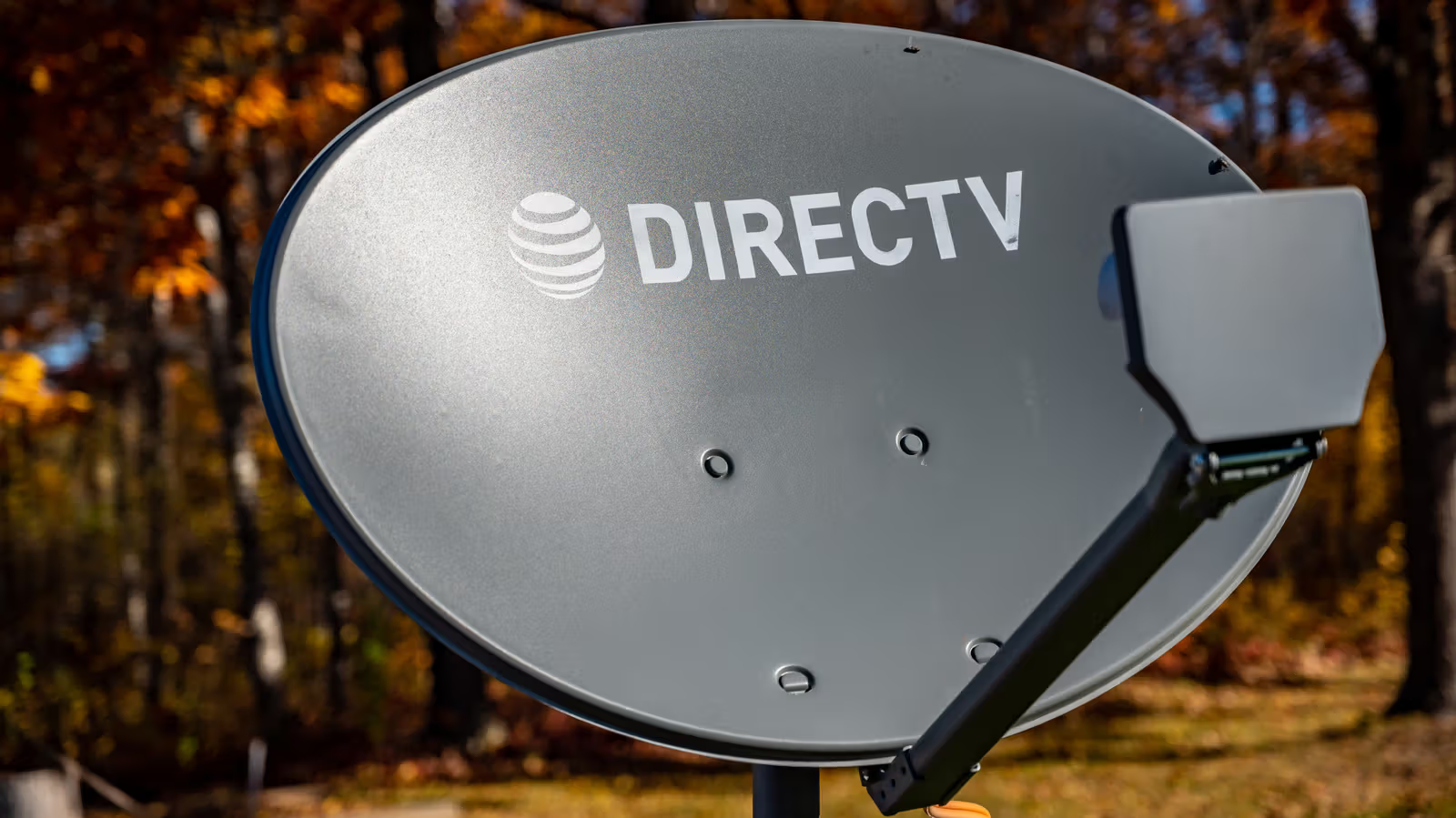
That dust-caked satellite dish on your roof, its curved dish angled up at the sky, looks like it should be picking up signals. But plug its coaxial cable into your TV and local ABC, CBS, or NBC signals won't magically appear—at least not for most Americans.
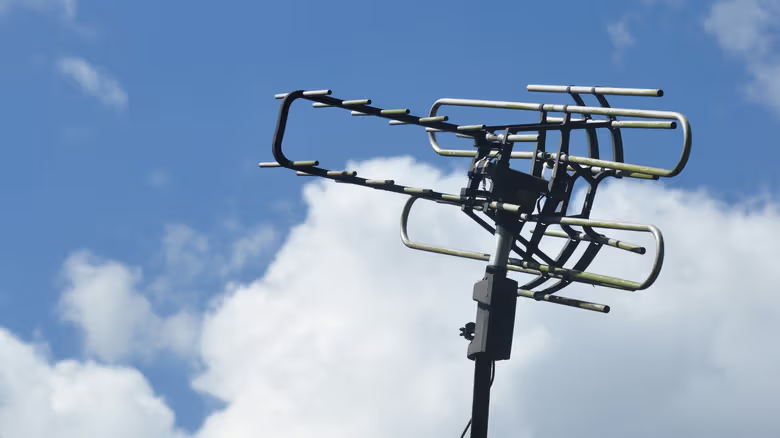
Satellite dishes pick up signals beamed from space, while over-the-air (OTA) antennas receive signals from much closer ground-based broadcast towers. Both use coaxial cable and both might be mounted on a roof, but the underlying technology is completely different. A satellite dish's parabolic reflector focuses signals onto the LNB (low-noise block downconverter) at the end of its arm, while an OTA antenna is designed to pick up much lower-frequency VHF and UHF signals. Even if you force-connect a regular antenna to a satellite dish, the way the dish focuses signals doesn't actually help with this kind of terrestrial broadcast antenna. The advice from consumer electronics DIY site Solid Signal is blunt: use an antenna actually built for the job.
That said, the whole setup doesn't have to become pure roof decoration. If the original mounting bracket or anchor point has a suitable angle and lines up with the direction of local broadcast towers, it can be repurposed to mount an outdoor antenna. The existing coax wiring might also save you the trouble of running new cable—though any satellite-specific parts in the line, like splitters or diplexers, usually need to be removed first.
Reception still depends heavily on location. Terrain, nearby buildings, trees, and antenna height all affect signal quality, and outdoor antennas generally perform better than indoor ones. Some areas also require an antenna model capable of picking up both VHF and UHF. A smart TV with a built-in tuner won't solve the problem either—it can decode OTA signals, but only if an antenna is feeding them in first.
The UK's Freesat: Where That Old Dish Might Actually Still Work
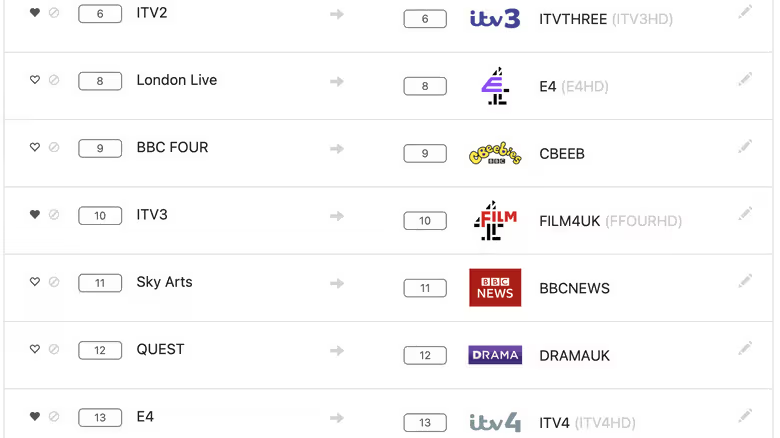
Cross the Atlantic, though, and the picture changes entirely. Freesat in the UK is a subscription-free satellite TV and broadcast service offering more than 100 channels, viewable on any Freesat-compatible TV without needing a separate set-top box—the only requirement is that the TV must be connected to a working satellite dish. Many existing setups can be reused, including old dishes left over from Sky Q or Sky+, though the specific LNB model fitted to the dish can affect features like simultaneous recording, and Freesat itself doesn't guarantee that every old setup will be compatible.
The US isn't entirely without free satellite signals either. According to data from Lyngsat, the Galaxy 19 satellite at 97.0°W still carries free-to-air programming, mainly serving multicultural and faith-based audiences across North America, and its current channel list still shows unencrypted signals. But this isn't a free lunch you can pick up just by plugging in a TV cable—you'll need the right dish, LNB, and receiver to actually pull it in.
For the vast majority of American viewers who just want the local major networks, an OTA antenna remains the simplest route. Depending on the market, some channel gaps can also be filled by free streaming services that offer local news and live content.