9 Temples to Heaven turns nine stops into a family journey: director Boat’s way of looking
Sompot Chidgasornpongse’s first fiction feature moves through international festivals while focusing on conversations, relatives and the spaces along a road.
A family visits nine temples in one day, hoping to extend an elderly mother’s life, while differences between them gradually emerge. Thai director Sompot “Boat” Chidgasornpongse makes this journey the centre of his first fiction feature, 9 Temples to Heaven. It premiered at Directors’ Fortnight in Cannes in 2026 and is Thailand’s submission for the 2027 Academy Award for International Feature Film. A recent profile traces how watching cinema led him towards making it.
Why are nine temples more than an itinerary?
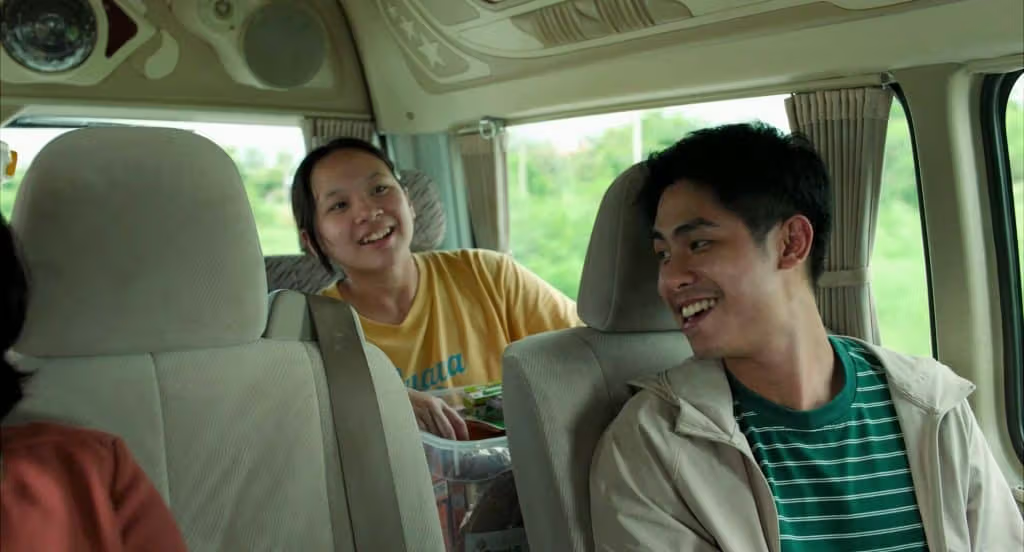
In the official synopsis, Sakol learns that his mother may have little time left. He sets out with his wife, siblings, children and ill mother. Generations share a vehicle as worship, movement and waiting alternate. Time becomes a tangible condition: each stop asks the family to coordinate bodies, beliefs and pace again.
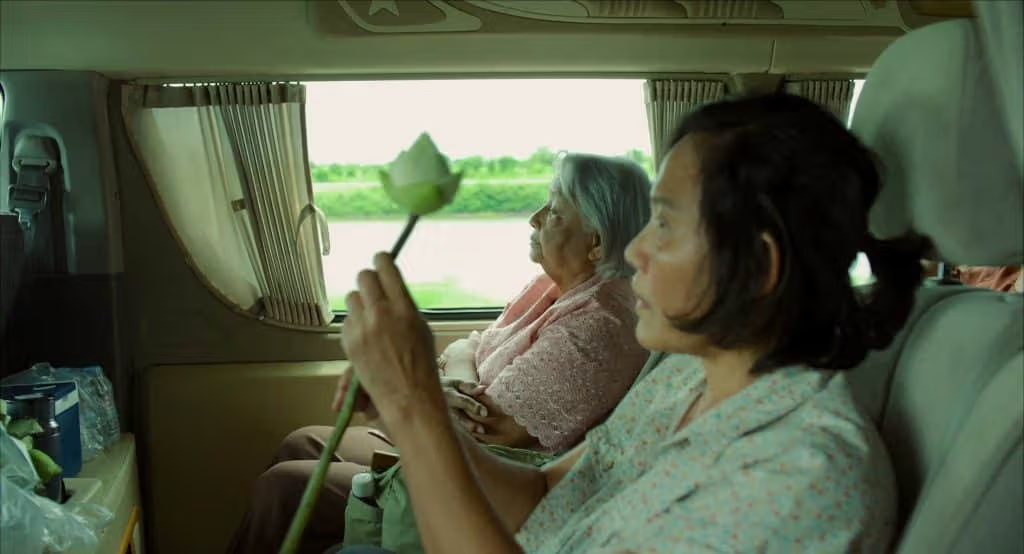
Two questions offer an entry for viewers: who decides the route, and who bears its demands? Grand buildings along the way may matter, but a sentence or pause inside the car can also change a relationship. A road film’s space includes the unavoidable closeness of narrow seats as well as the view beyond the window. Travel becomes another way to encounter family.
Time together inside the vehicle reveals different family rhythms.
From animation to the cinema of everyday journeys
Boat recalls repeatedly watching Aladdin as a child, pausing videotapes, drawing and making flipbook animations to understand moving images. Later, Abbas Kiarostami’s Where Is the Friend’s House? showed him how a simple task could sustain a complete film. These experiences can coexist: one opens imagination, while the other gives everyday life weight.
He studied architecture before completing an MFA in Film/Video at CalArts. The connection can be understood through scale. Where someone sits, the distance between camera and body, and what becomes visible during movement all contribute to storytelling. The journey structure need not depend only on plot turns; environments and the duration of a stay can build relationships too.
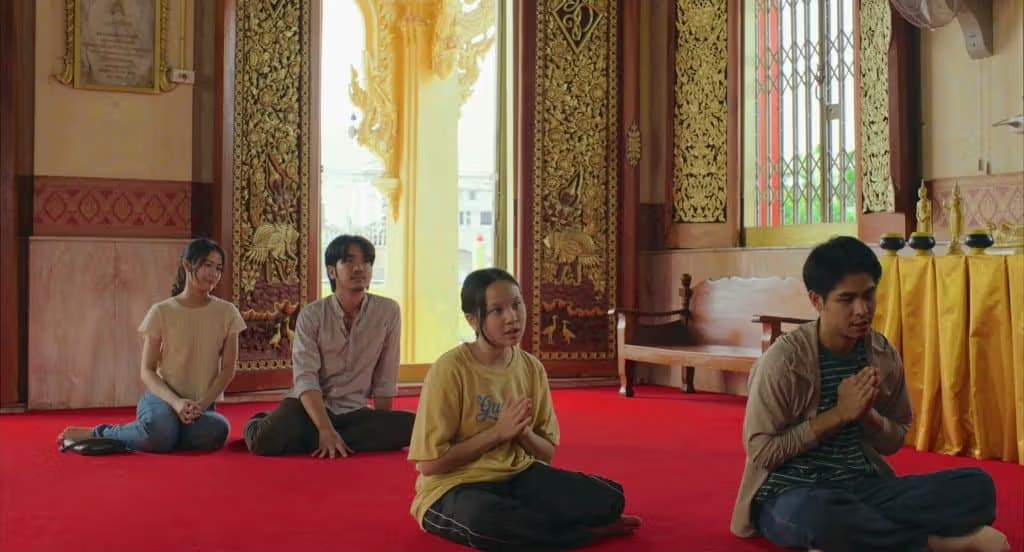
Pausing together inside a temple makes worship part of the family story.
What context comes from working with Apichatpong?
Official festival biographies confirm Boat’s long work as an assistant director on Apichatpong Weerasethakul’s films, including Tropical Malady and Memoria. Apichatpong is also a producer of this film. Boat previously made the documentary feature Railway Sleepers. His first fiction feature therefore connects practical production, documentary observation and narrative imagination, rather than representing a sudden first encounter with feature filmmaking.
The international festival route brings a Thai family story before audiences in other languages. It need not be approached as a handbook explaining every Thai belief. Beginning with disagreements, care and shared movement offers a closer view of everyday contradictions. Once nine temples become more than nine destinations to tick off, the question returns to people: how can something intended for a family be done together with that family?