Peter Parker's Lost Year: The Toei Spider-Man Who Rode Motorcycles and Piloted Giant Robots
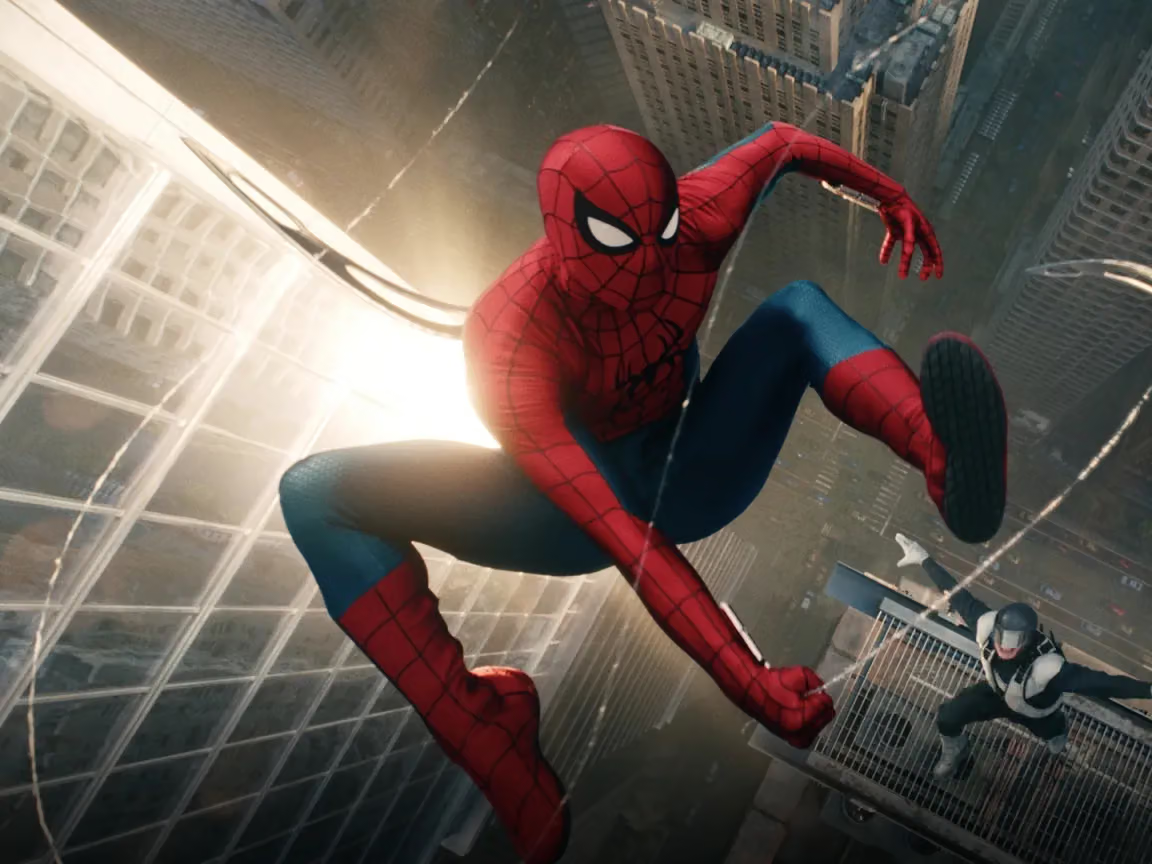
Before Spider-Man: Brand New Day hits theaters, we're digging back through 64 years of Spider-Man evolution — and the weirdest chapter isn't any movie version, it's Japan's Toei studio turning Peter Parker into a motorcycle-riding stuntman who summons a giant robot in 1978.
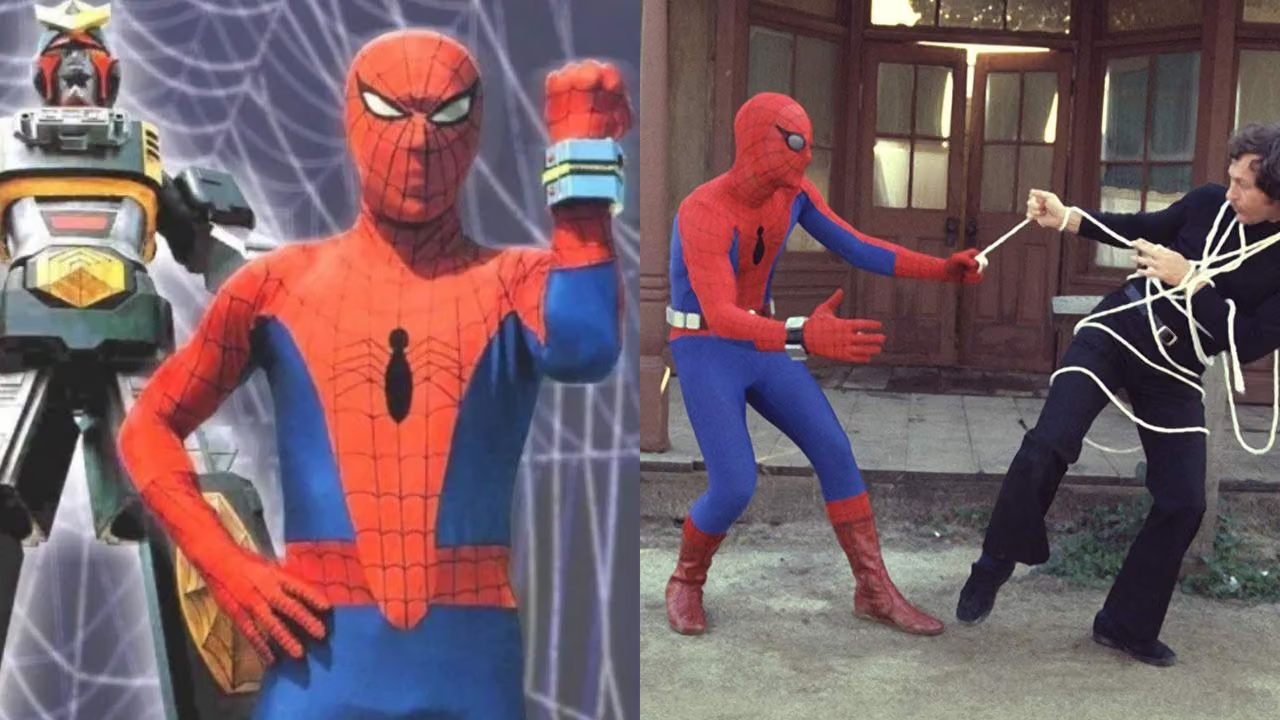
Before Tom Holland's Spider-Man gets his next upgrade in Spider-Man: Brand New Day, the web-slinger had already evolved into something completely different once before. In 1978, Japan's Toei network aired a 41-episode live-action series simply called Spider-Man — except the hero wasn't Peter Parker, he was Takuya Yamashiro, a motorcycle racer and world martial arts champion. Before every fight, he'd strike a pose in front of his enemy and deliver a signature catchphrase, then finish things off by piloting a massive robot. It looked exactly like a Super Sentai show wearing a Spider-Man costume.
All of this traces back to a deal Toei struck with Marvel in the late 1970s: for three years, both companies could freely use each other's characters. Toei got Spider-Man, and while they were at it, made their own version of Captain America too — following the same logic, they just renamed him "Captain Japan." Toei even made a movie version later, with a plot slotted between episodes 10 and 11 of the series, essentially filling in canon for this parallel universe.
Rewind to August 1962, when Spider-Man first appeared in comics — it was actually a deliberate experiment by Marvel. Up until then, teenage characters could only be sidekicks to adult superheroes. Spider-Man was the first teen hero in history to headline his own story from day one. That famous line — "with great power comes great responsibility" — which nearly every version of the character repeats, actually comes from the final panel of that very first Spider-Man comic. It wasn't some catchphrase added later; it was baked in from the very beginning.
In Animation, Spider-Man Has Made Even More Mistakes Than in Film
Spider-Man has actually appeared more often in animation than in movies — eight series between 1967 and 2017. The first one, 1967's Spider-Man, had such a limited budget that the costume's spider logo was drawn with the wrong number of legs — six instead of eight. The entire first season stuck with this six-legged template, and it wasn't corrected back to eight legs until the following two seasons. Still, this show's theme song melody lived on — it was later directly reused in Spider-Man: Homecoming and Spider-Man: Far From Home.
1999's Spider-Man Unlimited sent Peter Parker to a parallel dimension called "Counter-Earth." The story itself wasn't bad, but it happened to launch right as Pokémon was exploding in popularity, and ratings suffered — the show got cancelled after just one season. 2008's The Spectacular Spider-Man actually performed well, but thanks to unresolved rights disputes following Disney's acquisition of Marvel, it got cancelled after two seasons with no third season. 2012's Ultimate Spider-Man was Disney's stopgap solution while animation rights were secured but Spider-Man still couldn't join the live-action Avengers lineup — that problem wasn't truly solved until Captain America: Civil War in 2016. The 2017 animated series then went ahead and covered the origin story that the live-action Marvel Cinematic Universe had skipped over — the same year Spider-Man: Homecoming hit theaters.
As for the "first Spider-Man movie trilogy" — that title doesn't belong to Tobey Maguire either. It was Nicholas Hammond, who starred in three Spider-Man films — Spider-Man, Spider-Man Strikes Back, and Spider-Man: The Dragon's Challenge — between 1977 and 1981, more than two decades before Tobey Maguire's version. Tom Holland's current position in the timeline actually sits at the tail end of a long chain of branching universes — and the Japanese motorcycle-riding Spider-Man remains the strangest, and most easily forgotten, chapter of them all.