Preserving Hong Kong’s bamboo culture can involve more than putting a stalk in a cabinet. Studio RYTE designer Dennis Cheung approaches the question from opposite directions with Benboo and Scaffold. The former makes copper tubing resemble bamboo joints; the latter combines previously used bamboo with contemporary components to make lighting. Both projects have already been shown overseas. A recent Hong Kong feature brings them back into a discussion of the city’s materials and craft.
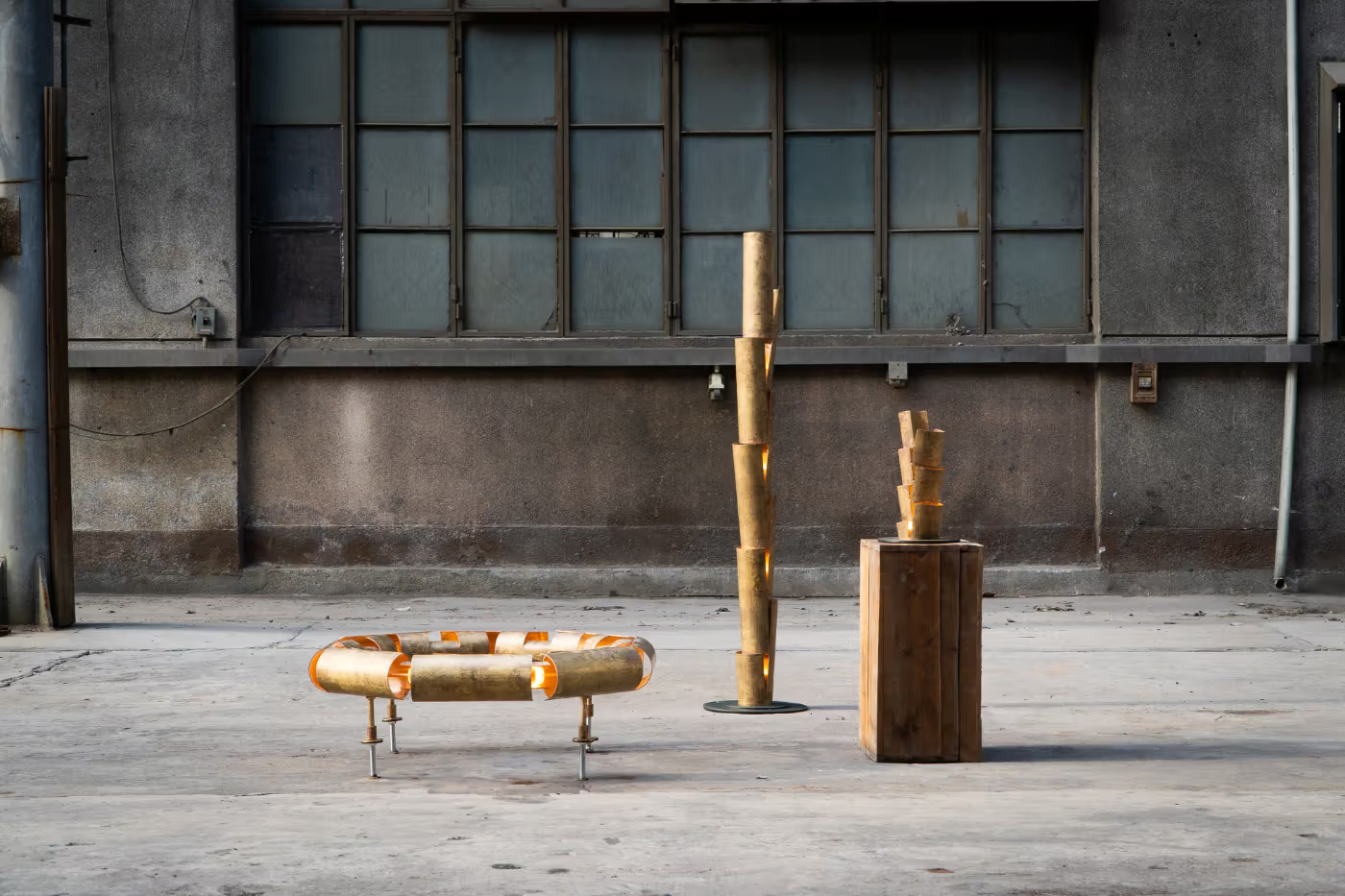
Warm light escapes through openings in the bamboo-like copper tubing.Old bamboo and a light source form a low tabletop configuration.
Why speak about bamboo without using it?
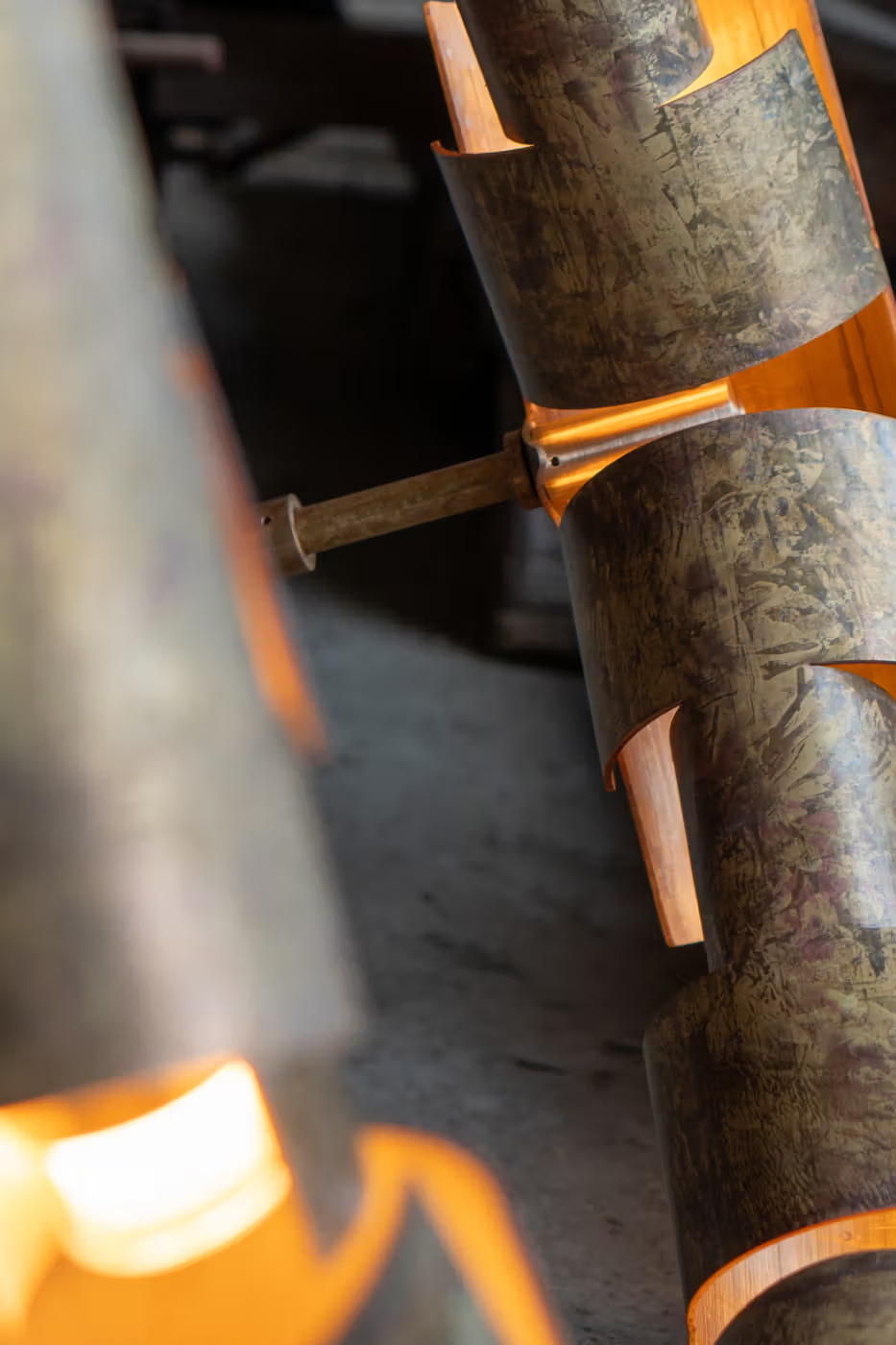
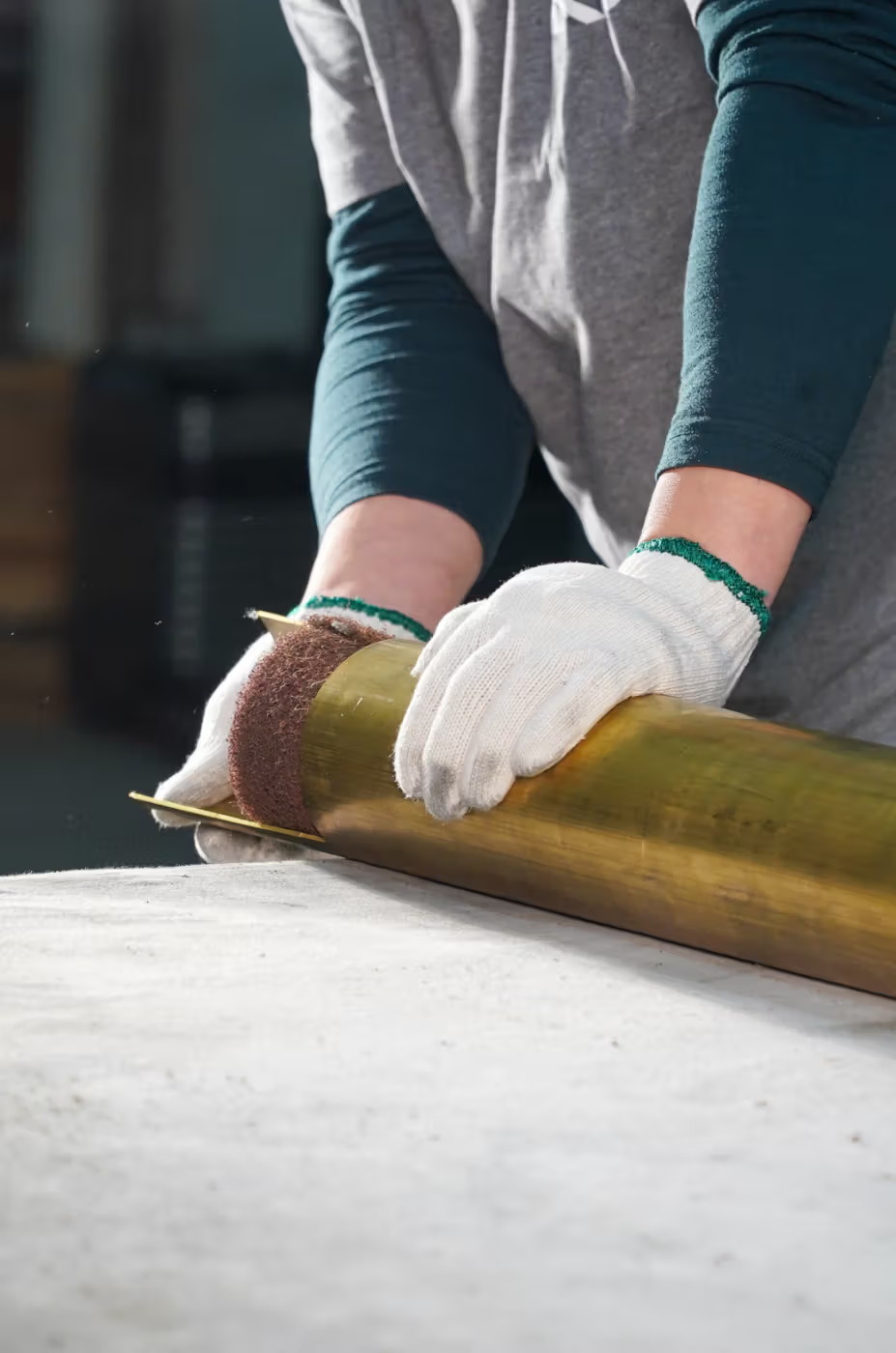
Created with Hong Kong manufacturer Ricardo Lighting, Benboo begins with a continuous copper tube. Precise cuts and the craftsperson’s manual pulling open the metal into shapes recalling split bamboo, followed by surface oxidation that creates mottled colour. As light escapes through the openings, viewers first recognise familiar bamboo-like nodes. A closer look reveals that the material is not what they initially imagined.
This mistaken recognition opens a conversation. If a lamp only copied bamboo’s colour, attention might remain on its surface. Discovering that a metal tube has been pulled into this shape prompts questions about the making. A machine locates the cuts, while hands determine the opening. Material identity and the process of forming it become visible together.
Handwork and the surface of the tube appear during production.
What craft does Scaffold bring into lighting?
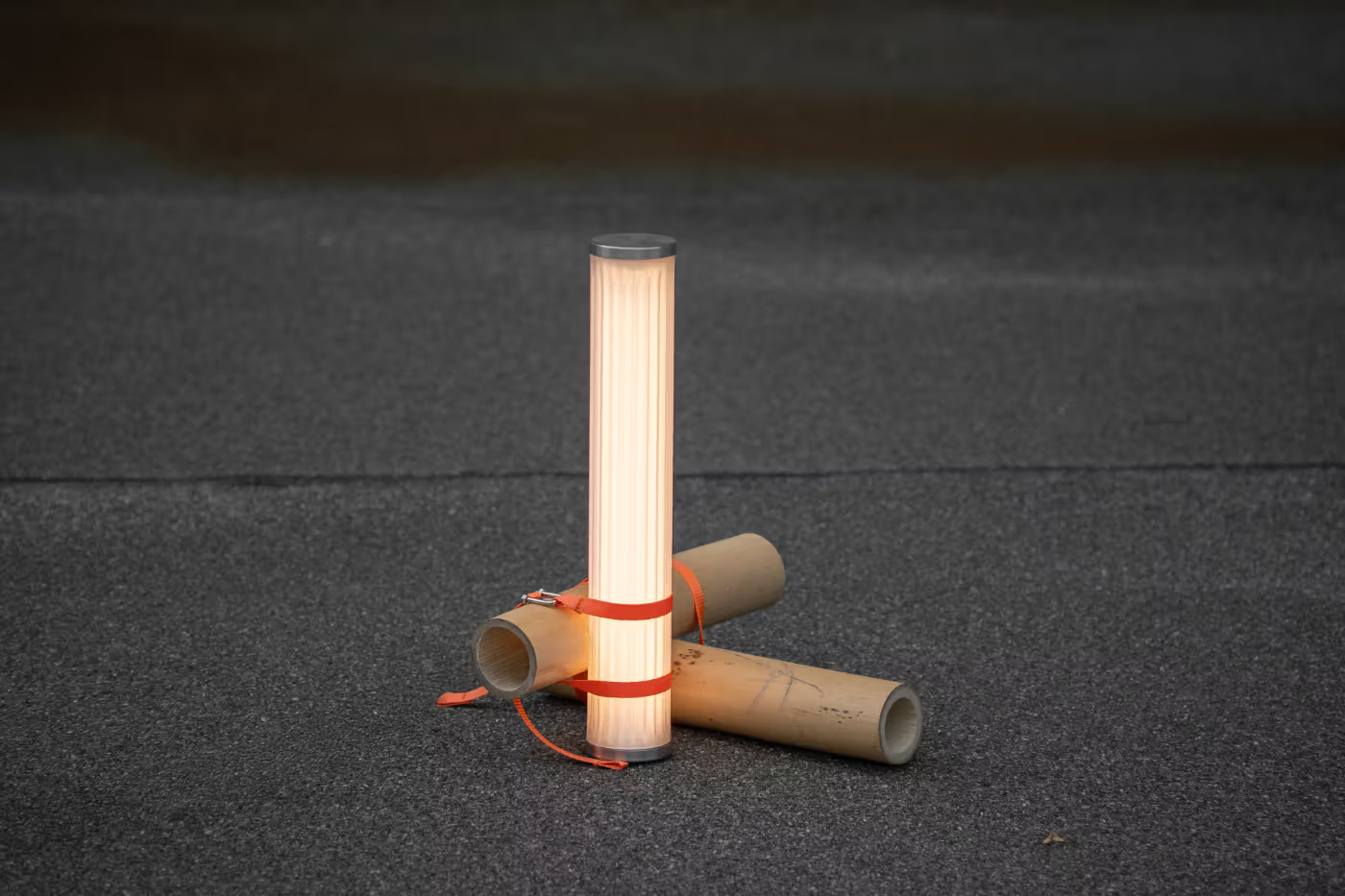
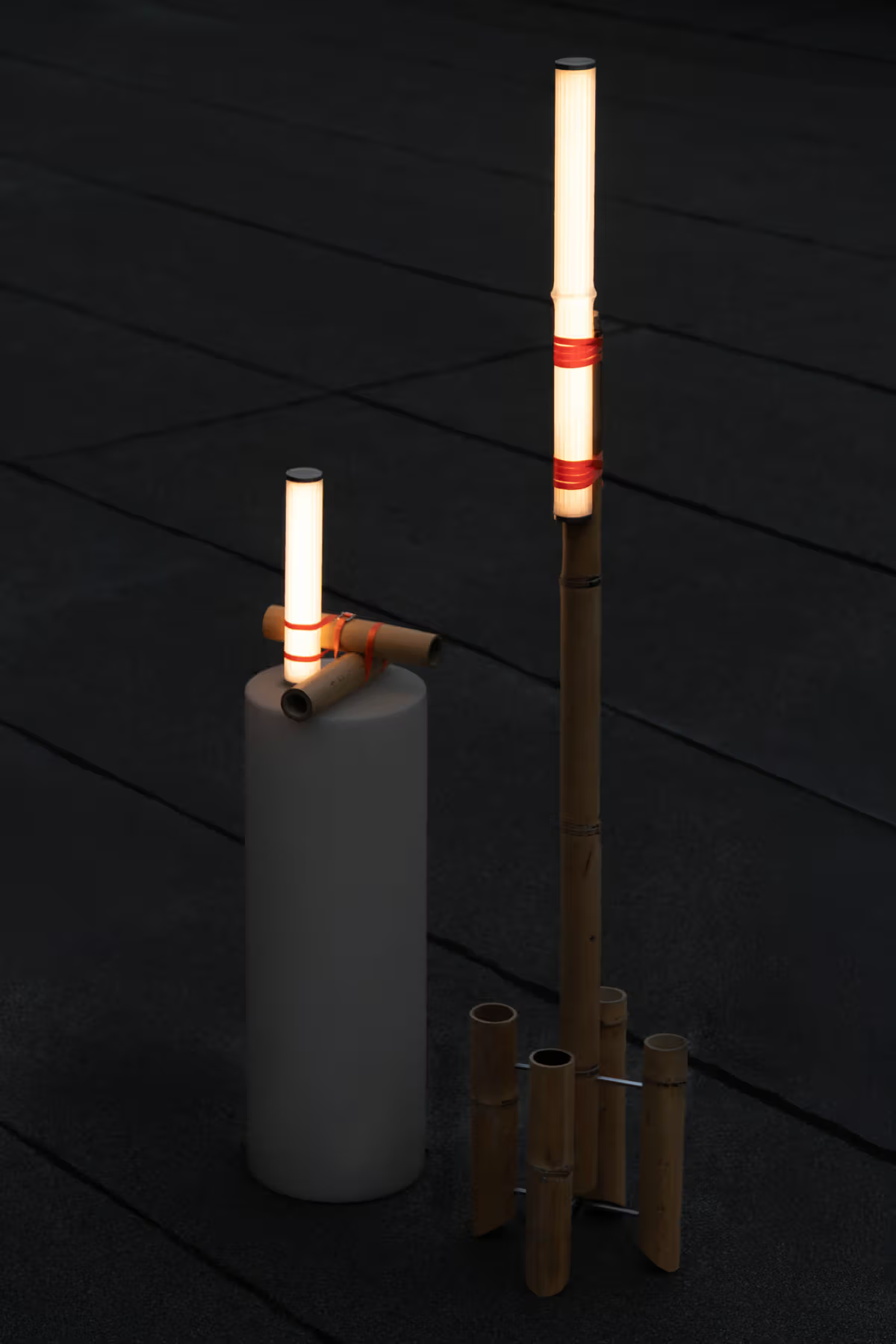
Scaffold uses old bamboo, metal supports, 3D-printed lighting components and orange straps. It retains the cylinders and irregular surfaces of real bamboo, turning the tightening and binding associated with bamboo scaffolding into legible construction. Where Benboo evokes bamboo through metal, Scaffold invites attention to how different materials connect, rather than only the shape of a shade.
Scaffold leaves its orange straps visible as connecting details.Two heights reveal the relationship between support and illumination.
Product design often conceals joints to create an impression of a seamless whole. Scaffold leaves straps and supports visible, making the assembly logic part of its appearance. A viewer can follow a strap to see which two components it fixes, then observe how the light source and bamboo divide their roles. Understanding can begin with a visible connection without requiring every manufacturing term in advance.
Is it the material or the method that is preserved?
Bamboo is hollow and varies naturally in dimensions and surface. Methods for joining flat wooden boards cannot simply be applied unchanged. These projects raise the question of how construction can respond to a material, rather than requiring every stalk to fit the same mould. Flexibility and tolerance for variation need not imply a lack of precision; precision can instead be placed in a connection that adapts to each different piece.
Benboo and Scaffold are established projects, rather than products first released today, and deserve more than a broad label of eco-friendly lighting. Their particular interest is the translation of familiar urban craft to the scale of domestic objects: from a distant grid to a close-up tightening gesture, and from material surfaces to knowledge of joining. Even away from Hong Kong’s streets, these readable actions preserve a specific local memory.