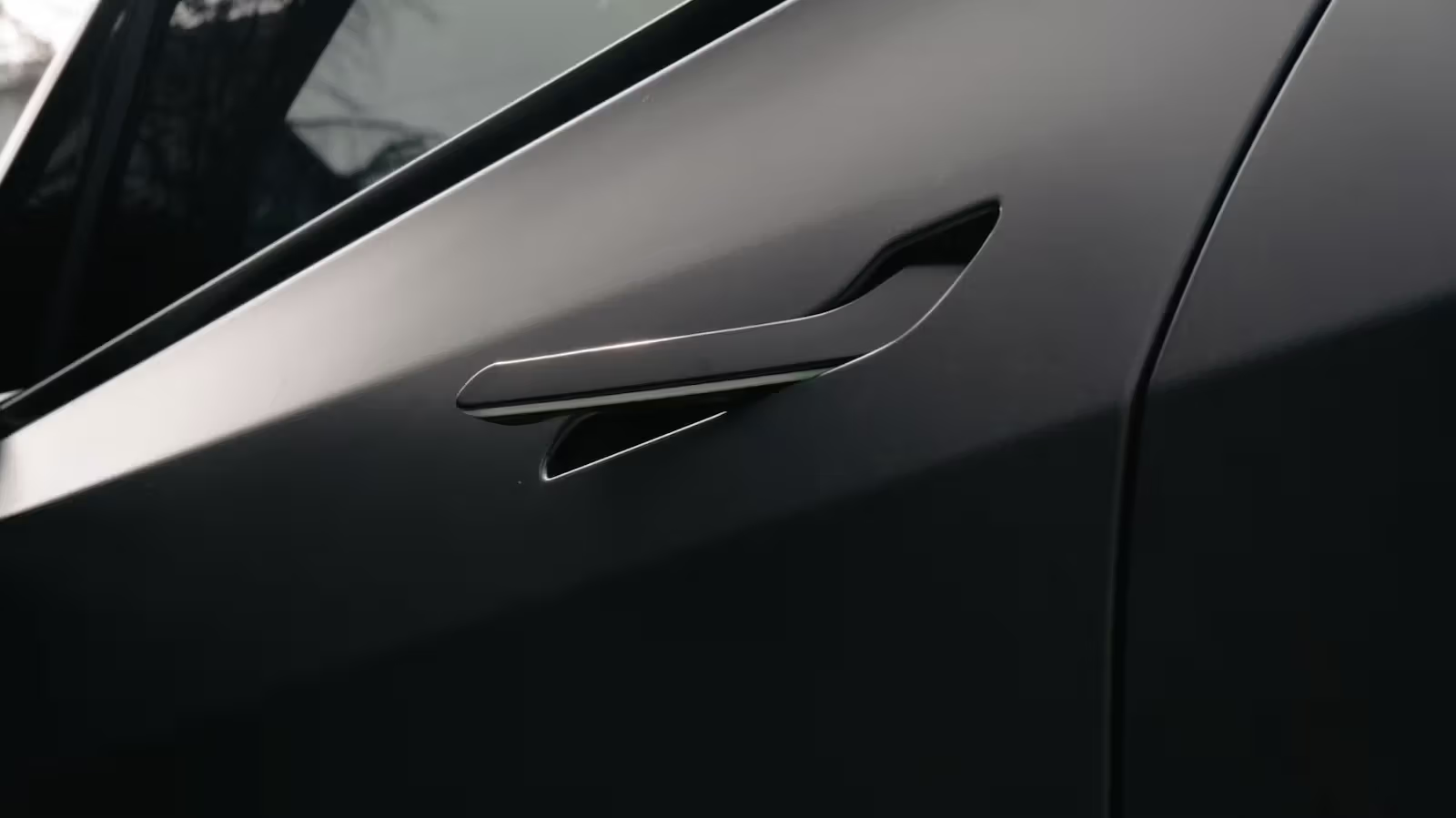
A single car crash has turned the sleek, flush-fitting hidden door handle into the center of a safety controversy. According to Reuters, Tesla and 10 other automakers have recalled nearly 4.3 million vehicles in China—the largest recall in the country's automotive history—after it emerged that hidden door handles can become difficult to operate when a vehicle's electrical system fails, sometimes leaving people outside the car unable to even locate the handle.
Tesla is the hardest-hit brand in this recall wave, with nearly 3 million imported and locally produced Model 3, Model Y, Model S, and Model X vehicles affected. Tesla says it will install warning labels marking the handle locations at no charge, a move also being taken by eight other automakers, including Xiaomi. Several manufacturers are also rolling out software fixes that automatically lower the windows after a collision, giving passengers and rescuers a way to escape or intervene through the window.
The incident that brought the issue to a head, as noted in the report, was a fatal crash involving a Xiaomi sedan, where bystanders were unable to open the doors after the collision, preventing the trapped driver from being rescued in time. The tragedy turned the hidden door handle's design flaw from an abstract concern into a concrete, life-or-death case.
This time, China isn't just demanding recalls and fixes—it's tackling the problem at its root: hidden door handles will be banned outright starting in 2027. Under the new rules, every car door, inside and out, must be equipped with a mechanical handle that can be operated without relying on electrical power. The design at issue isn't unique to Tesla—it's also widely used across many domestic Chinese EV brands.
The controversy isn't confined to China. The U.S. National Highway Traffic Safety Administration (NHTSA) has also opened an investigation into Tesla's electronic door handles, citing the same risk of malfunction after a power failure. In response, Tesla's design chief Franz von Holzhausen acknowledged that the company is considering a new design that would combine the electronic and mechanical release mechanisms into a single button. "The idea of combining the electric and the mechanical into one button, I think, makes a lot of sense, and it's something we're looking at," he said.