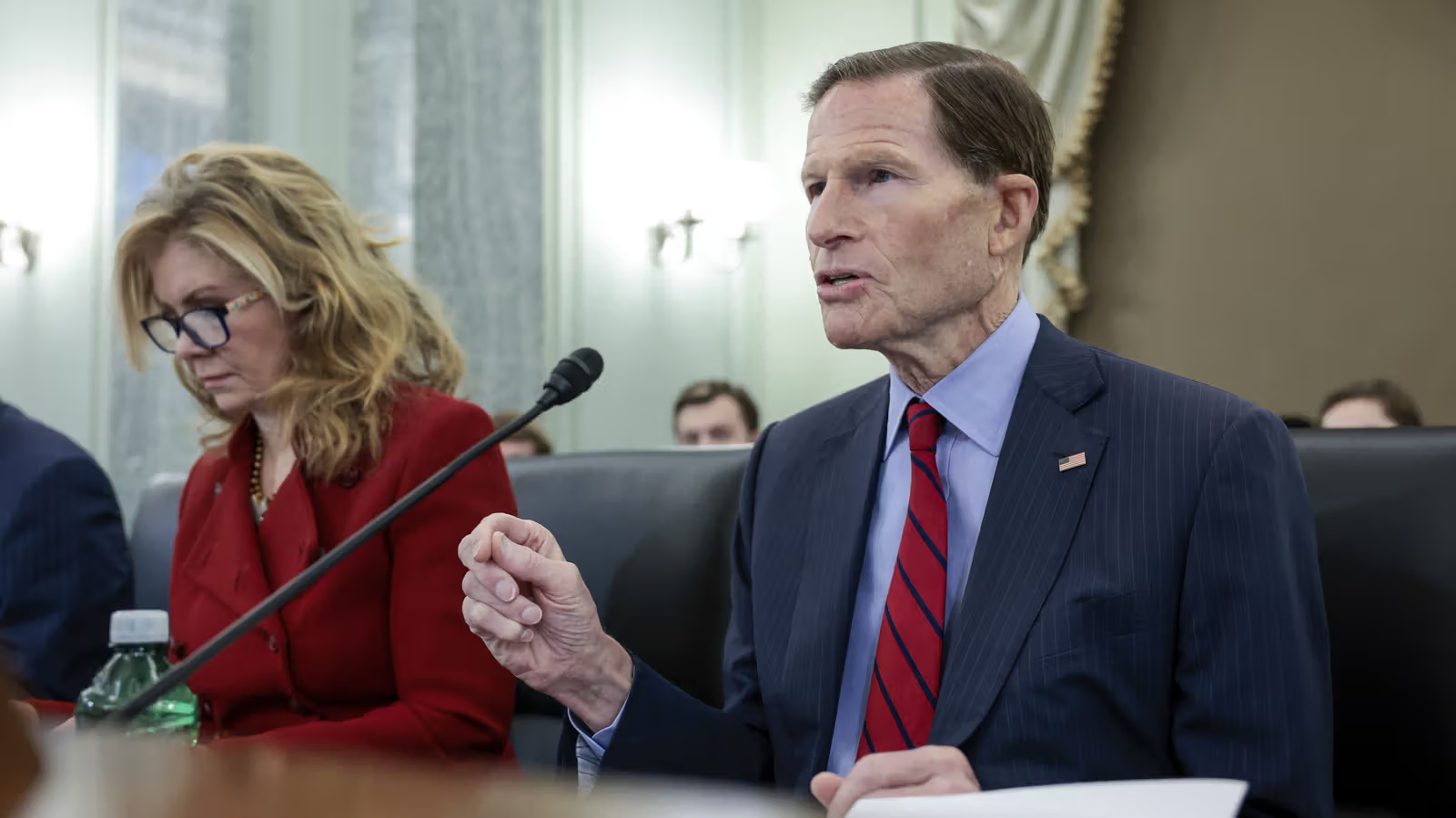
A sharply worded letter has pulled back the curtain on an internal TikTok experiment that was never disclosed publicly. Senators Marsha Blackburn and Richard Blumenthal sent a letter to TikTok executives demanding an explanation of how the company tested—and reportedly shelved—an algorithm safety feature, following a Bloomberg report on a 2021 experiment.
The feature in question was designed to address "repetitive patterns" on the "For You" recommendation page—commonly known as content rabbit holes. At the time, TikTok publicly stated that the update was meant to prevent users from "repeatedly seeing the same type of content—a single video may be fine, but concentrated viewing could be problematic." What the company didn't disclose was that this safety mechanism was deliberately withheld from some user accounts, allowing TikTok to use this "control group" to test the feature's impact on user engagement.
According to internal TikTok documents cited in the Bloomberg report, the account of American teenager Chase Nasca was one of those in the control group. The documents described him as having "fallen into a content rabbit hole, with his account being fed a heavy volume of repetitive content related to suicide, self-harm, and depression, particularly in the period leading up to his death." Nasca died by suicide shortly after his account was placed in the control group.