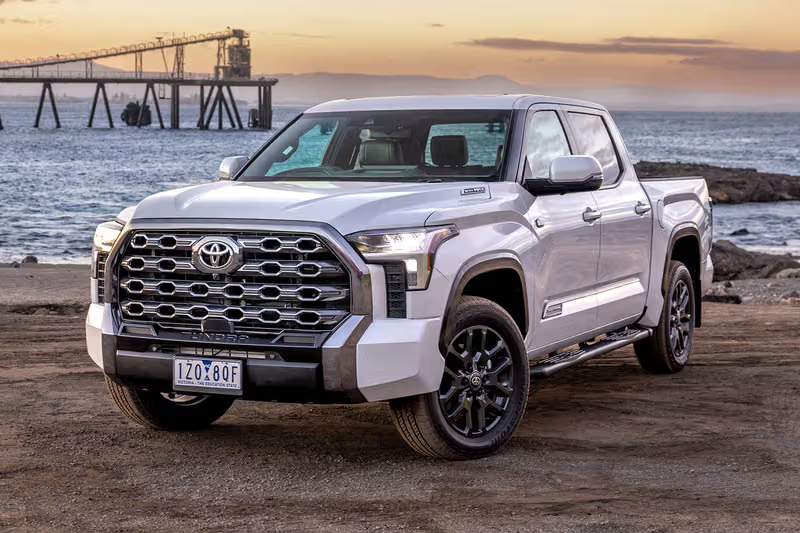
To tackle an engine recall affecting over 100,000 vehicles, Toyota's engineers didn't reach for more sophisticated equipment—they reached for a custom-made plastic hammer.
The diagnostic method, dubbed "V35A Crankshaft Bearing Inspection," targets the 3.4-liter twin-turbo V6 engines found in recent Tundra pickups and Lexus SUVs. The root cause is leftover machining debris from the production line—if not cleared out, this debris gradually wears down the engine's main bearings, which over time can lead to engine failure.
Here's how technicians do it: they mount a small accelerometer on the crankshaft bolt, then strike the pulley at the front of the engine with a specialized hammer. Diagnostic software then reads the resonance frequency traveling through the metal block to assess the condition of the No. 1 main bearing—the same principle behind a tuning fork test. This process replaces what used to require a full engine teardown just to check what's going on inside.
Since every component in the same engine model should be consistent in mass and material, a healthy engine will produce a predictable frequency range when tapped. The hammer itself even provides feedback on the force of impact, ensuring every test falls within standard parameters. If the reading deviates from the baseline, the software flags that bearing as damaged.
Before this acoustic testing method came along, Toyota's solution for the first wave of affected owners was to swap out the entire twin-turbo V6 engine. Vehicles that fail the acoustic test today still get a free brand-new engine replacement, but dealers can now quickly pinpoint which high-risk vehicles genuinely need a new engine—sparing every car that comes in for service from a full teardown.