A government task force named "Super Intelligence Force" sounds like a spin-off division from a Marvel movie, but this is the real deal — personally announced by US President Donald Trump on Truth Social this week, complete with an actual appointee at the helm.
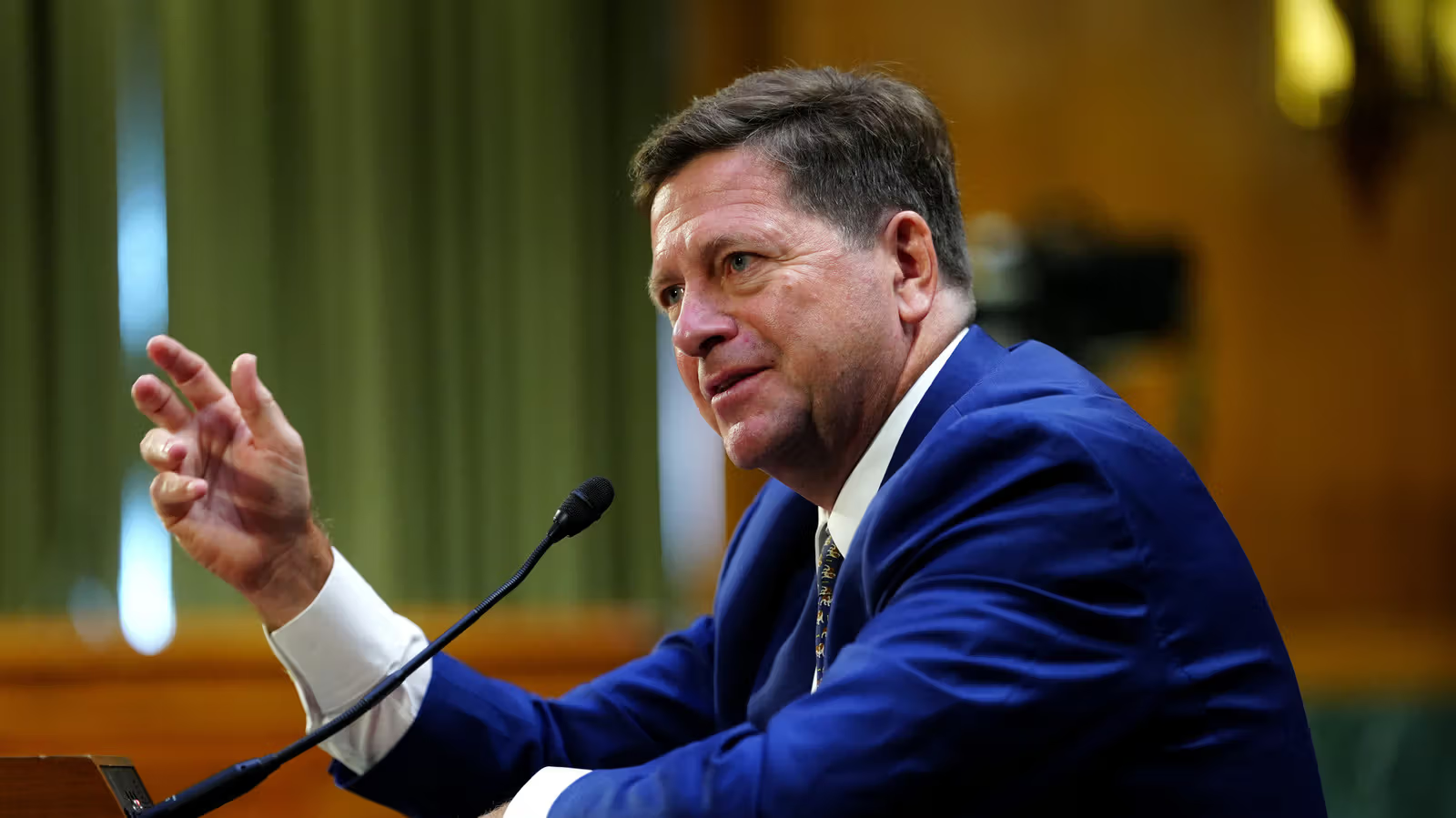
Trump wrote that the force's mission is to "coordinate efforts across federal agencies to ensure the United States maintains its lead over the rest of the world in Super Intelligence." According to him, the group will work with consumers, public interest groups, religious organizations, critical infrastructure operators, and what he called "Super Intelligence companies." The appointed leader is current Director of National Intelligence Jay Clayton — a choice worth pondering in itself, given that the person steering America's AI policy direction comes from the intelligence community, not Silicon Valley.
According to a Wall Street Journal report, the task force has already received its first assignment: complete a report on AI risks and opportunities within 120 days. Joining Clayton are three others: Federal Trade Commission Chairman Andrew Ferguson, Deputy Secretary of Defense for Research and Engineering and Chief Technology Officer Emil Michael, and Director of the Office of Personnel Management Scott Kupor. The group will ultimately report progress to Trump himself and his Chief of Staff Susie Wiles.
This isn't the first time Trump has tinkered with AI naming. Just weeks ago, he announced plans to establish another unit called "AI Force," and around the same time ran a poll on Truth Social asking supporters whether the term "artificial intelligence" should be replaced. Now that the Super Intelligence Force has officially launched, it reads, in a way, as the concrete follow-through of that renaming poll — this announcement feels less like a technical roadmap and more like settling on terminology first, governance later.
The timing of when the report will be delivered isn't happening in a vacuum either. Several tech company CEOs have already publicly called for slowing down AI development. Whether this risk-and-opportunity assessment, due in 120 days, will respond to those calls for a slowdown remains unclear, with no further details disclosed so far.