Wako’s five-artist lacquer exhibition opens November 27 in Ginza: from a bat-decorated tea caddy to sculpted figures
The free exhibition at SEIKO HOUSE HALL runs until December 6, bringing together vessels, abstract forms and figures by five contemporary lacquer artists.
Wako will present “幻視の小宇宙Ⅱ ―現代漆藝家5人の燐光―”, the second edition of its contemporary lacquer microcosm exhibition, from November 27 to December 6, 2026, at SEIKO HOUSE HALL on the sixth floor of SEIKO HOUSE in Ginza. Admission is free. Ken Hiwatashi, Takamasa Yoshino, Katsuji Kamata, Yoshihiko Murata and Mamiko Masumura contribute vessels, independent sculptural forms and figures. For visitors planning a Tokyo craft exhibition trip later in the year, it offers a route from small-object details to the scale of bodies and space. It has not opened yet.
Begin with a tea caddy and the lines of lidded vessels
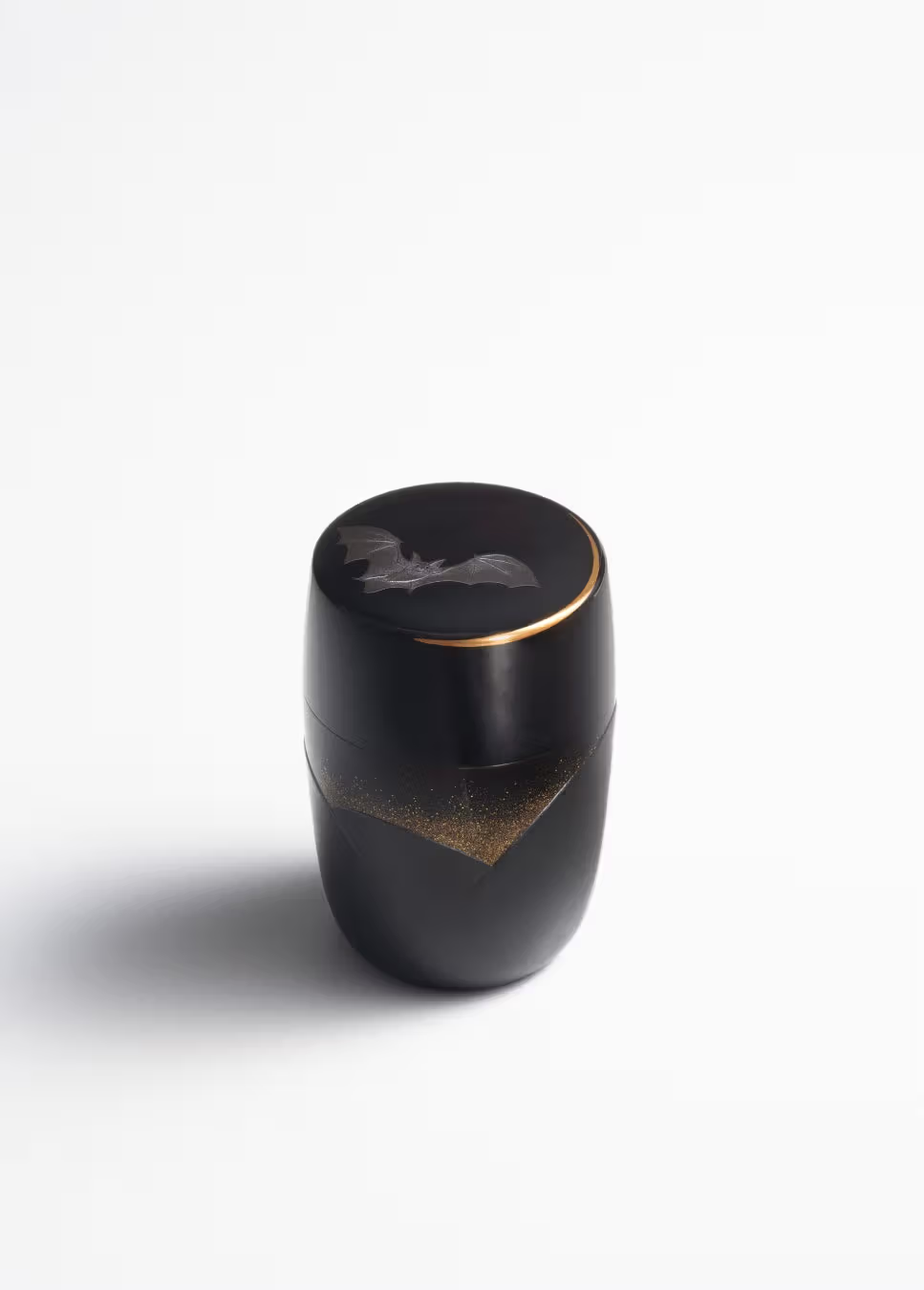
Hiwatashi’s maki-e decorated natsume tea caddy “月下蝙蝠” measures 5.4cm in diameter and 8cm high. The official photograph contrasts its black body, a bat motif on the lid and a gold-coloured curve following the edge. Attention can move to the meeting of lid and body and the way decoration turns with the form, rather than treating the motif as a flat picture. Its compact size also suggests that visual density in craft need not depend on large volume.
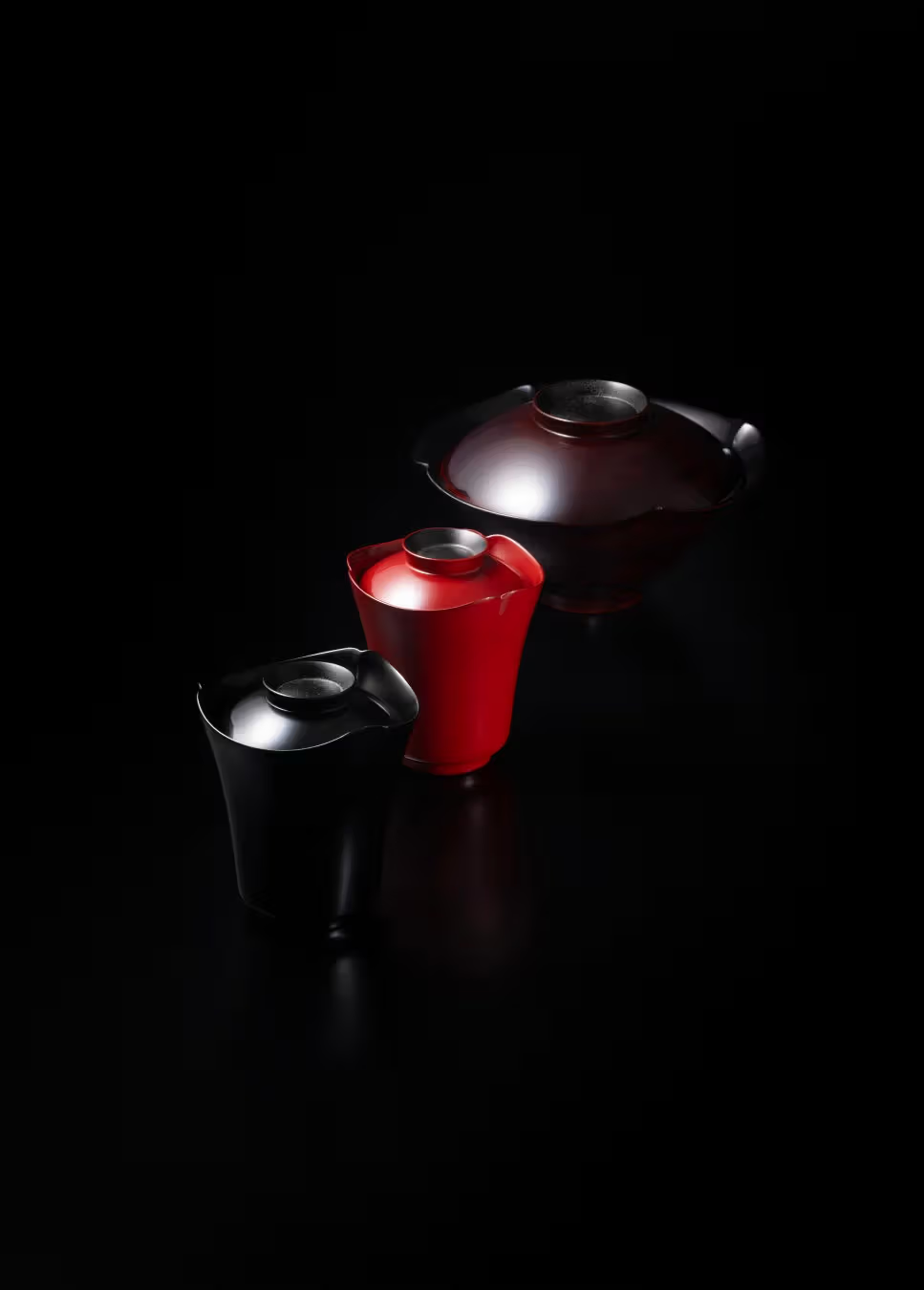
Kamata makes vessels with flowing lines using dry lacquer. The release photograph groups black and red “輪花小吸物椀”, each 8.2cm in diameter and 9.5cm high, with a tame-coloured “蓋付端反輪花椀”, 16.1cm in diameter and 9.2cm high. Shaped rims and lids guide reflections in different directions. Comparing silhouettes before colour and light offers a way to consider depth. This is a visual reading, rather than a dining test or a judgement of how the objects feel in the hand.
Black and red small lidded bowls and a tame-coloured lidded bowl by Katsuji Kamata.
A weathercock, black curves and “Honey”
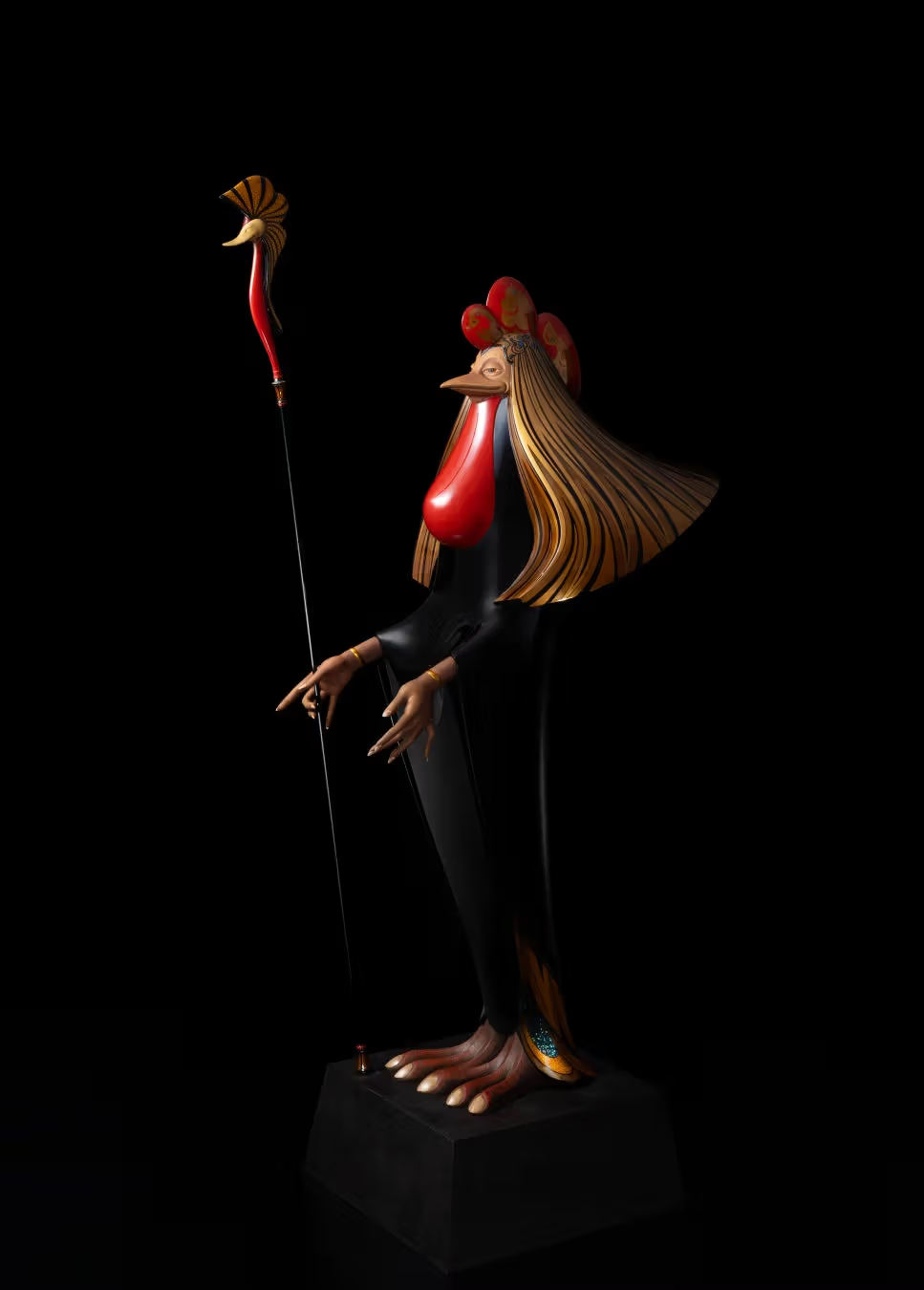
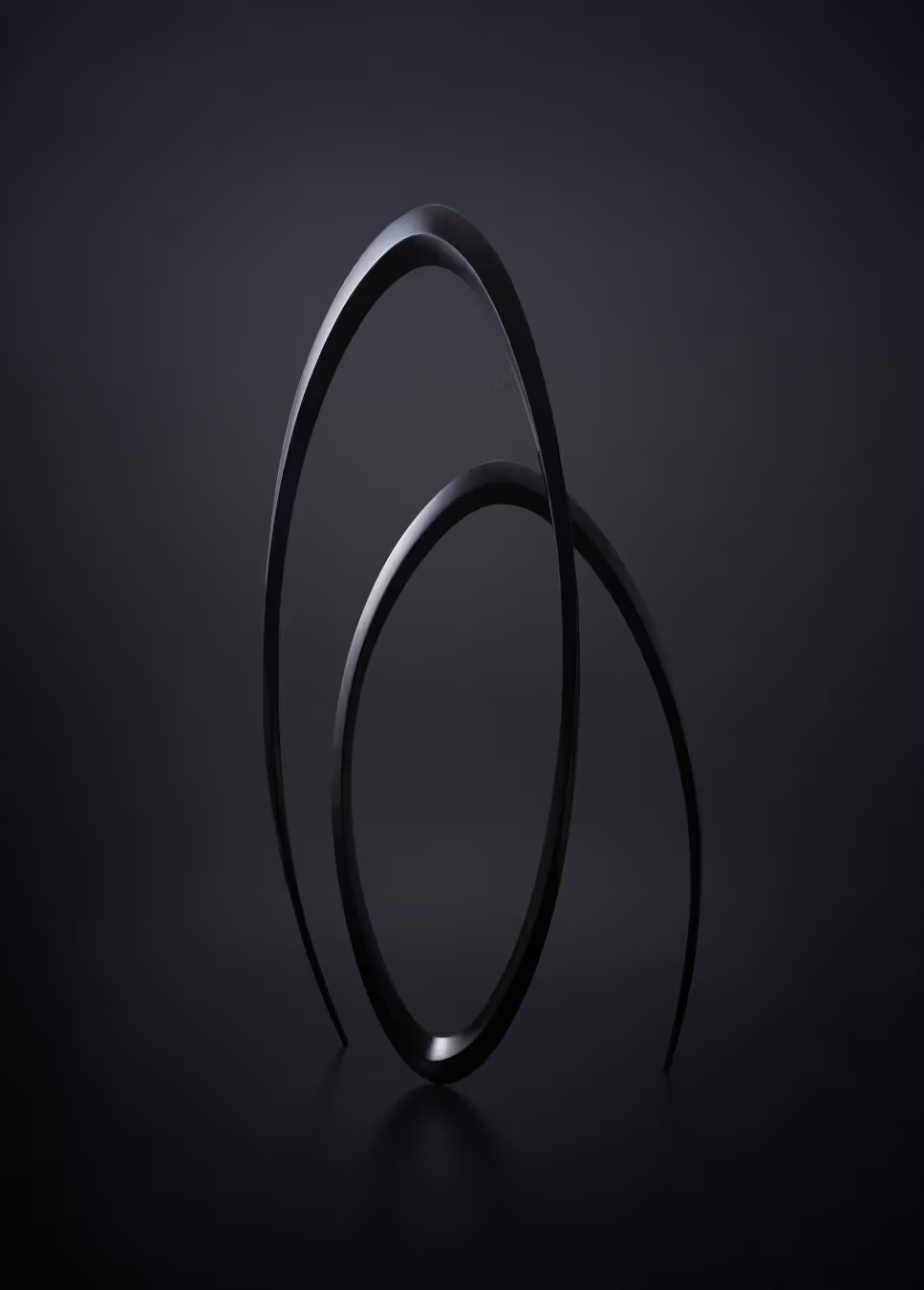
Yoshino’s dry-lacquer idol “風見鶏” measures W48 × D60 × H100cm. Its official image shows a bird-like head, an elongated body and hands, with vivid red areas and stripes drawing attention upward. Murata’s “ひかるかぜ”, W41 × D18.5 × H79.5cm, offers a different rhythm through curving black outlines and open space. Seen together, they suggest a comparison between narrative imagery and abstract lines, without requiring an invented story for either work.
Takamasa Yoshino’s dry-lacquer “風見鶏” combines an elongated form with bird-like features.Yoshihiko Murata’s “ひかるかぜ” uses black curves and open space to establish rhythm.
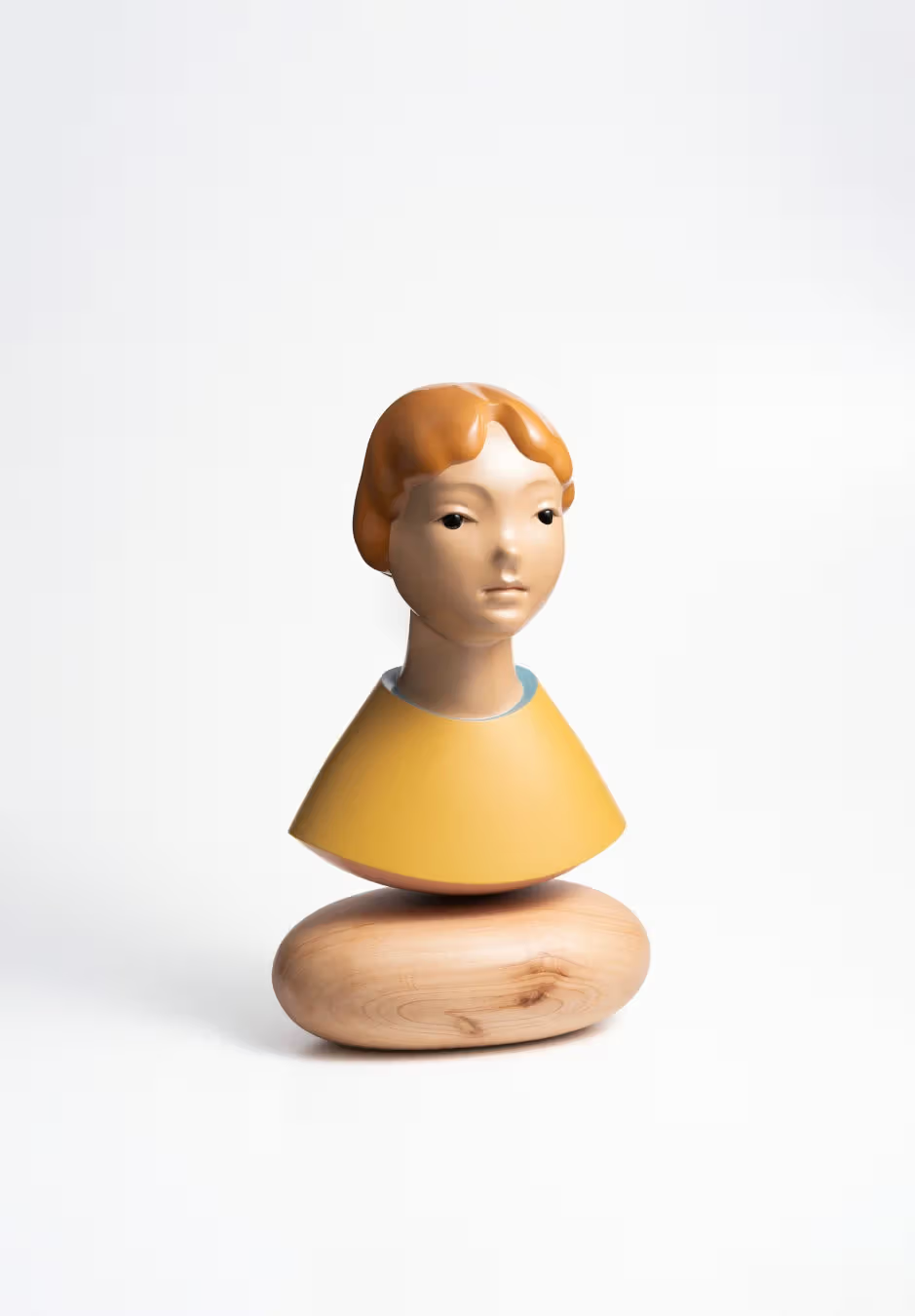
Masumura’s “ハニー”, or “Honey”, measures W27.5 × D18.5 × H46cm. The release photograph shows a yellow garment, orange hair and a pale face above a base with visible wood grain. Glossy surfaces and a restrained expression hold attention between face and shoulders. These are visual clues from an artwork photograph, not conclusions about a model’s identity, a figure’s age or emotions, or a guarantee that colours will appear identical under every gallery light.
Mamiko Masumura’s “Honey” combines a figure with a visibly grained base.
Free admission, with an earlier finish on the final day
The exhibition centres on inheriting lacquer traditions while testing new expression, with an emphasis on communicating with others shared by the five artists. Moving from the scale of a vessel to abstract forms and figurative surfaces also changes how close a viewer may need to stand. The title’s reference to phosphorescence can suggest a subtle radiance; it should not be taken as a technical claim that the objects glow in the dark or emit their own light.
The venue is on the sixth floor of SEIKO HOUSE, 4-5-11 Ginza, Chuo-ku, Tokyo. It is open every day during the exhibition, normally 11am–7pm, with a 5pm finish on December 6. Free entry does not establish unrestricted photography: the organiser has separate arrangements for photography enquiries, and visitors should follow venue rules. Check Wako’s latest information before travelling, particularly the final-day hours, and allow time to look closely at vessels, sculptural forms and figures in turn.