YOKE x REPRODUCTION OF FOUND German Trainers Launch October 31: Black, Brown and a ¥39,600 Price
YOKE’s exclusive REPRODUCTION OF FOUND German trainers arrive October 31 in black and brown at ¥39,600 each. Stores open sales at noon JST and the online shop at 7 p.m. Examine suede and nubuck, heel lacing and the insole’s country-of-manufacture marking.
YOKE’s exclusive German trainers by REPRODUCTION OF FOUND are scheduled for Saturday, October 31, 2026, in black and brown at ¥39,600 each. Announced sales begin at noon Japan time in physical stores and 7 p.m. online, equivalent to 11 a.m. and 6 p.m. in Taiwan. Starting with a familiar military-training silhouette, the collaboration puts different leather surfaces at the center. Look beyond the names to the subtle layers linking toe, side panels and heel.
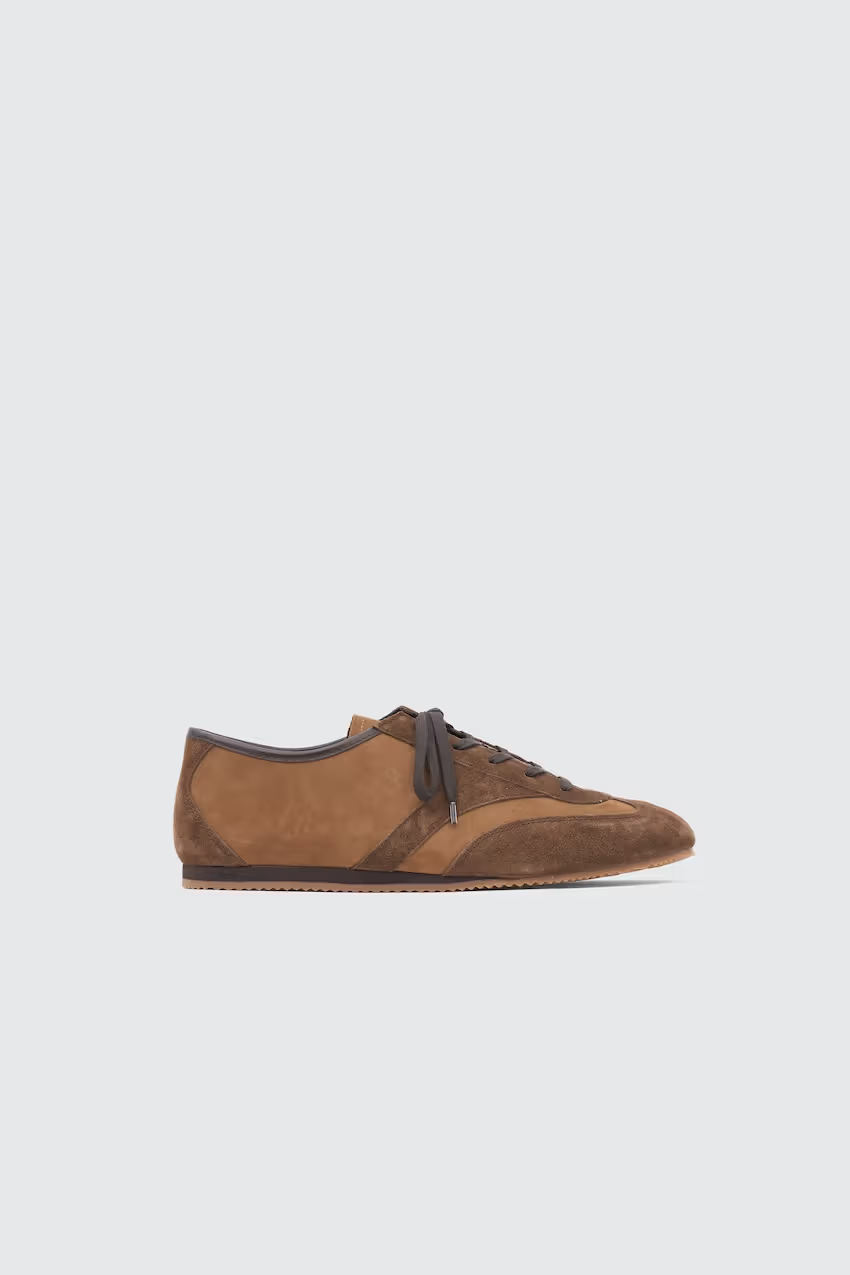
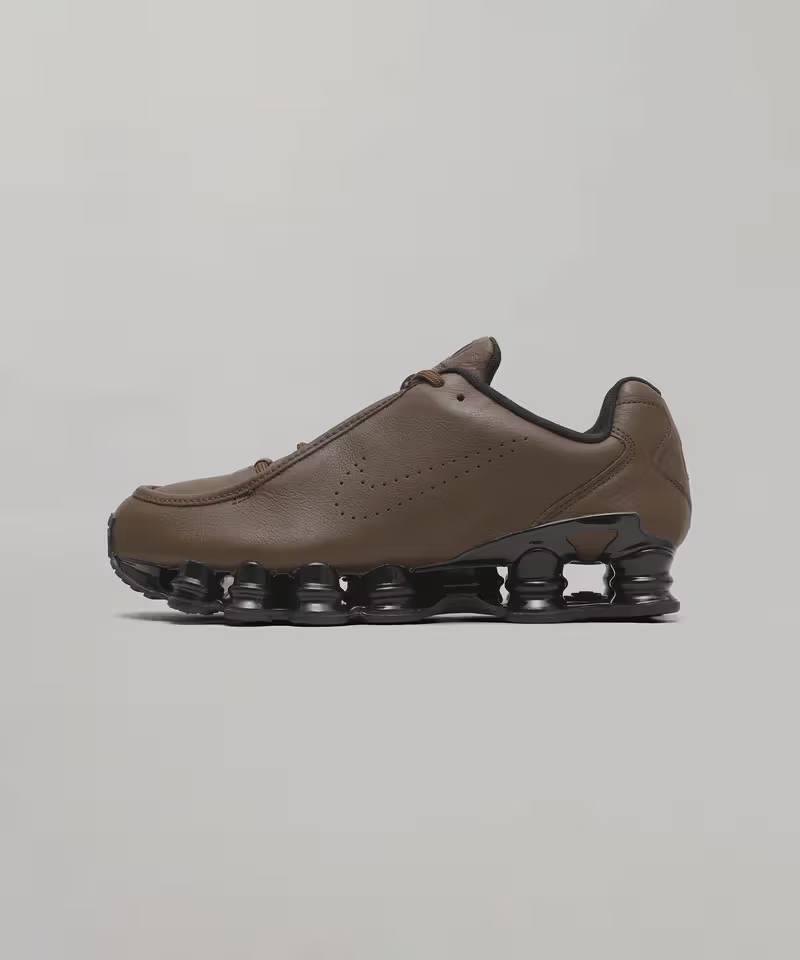
A side view shows the low-profile shape and divisions between brown leather panels.
How does military-trainer history remain visible?
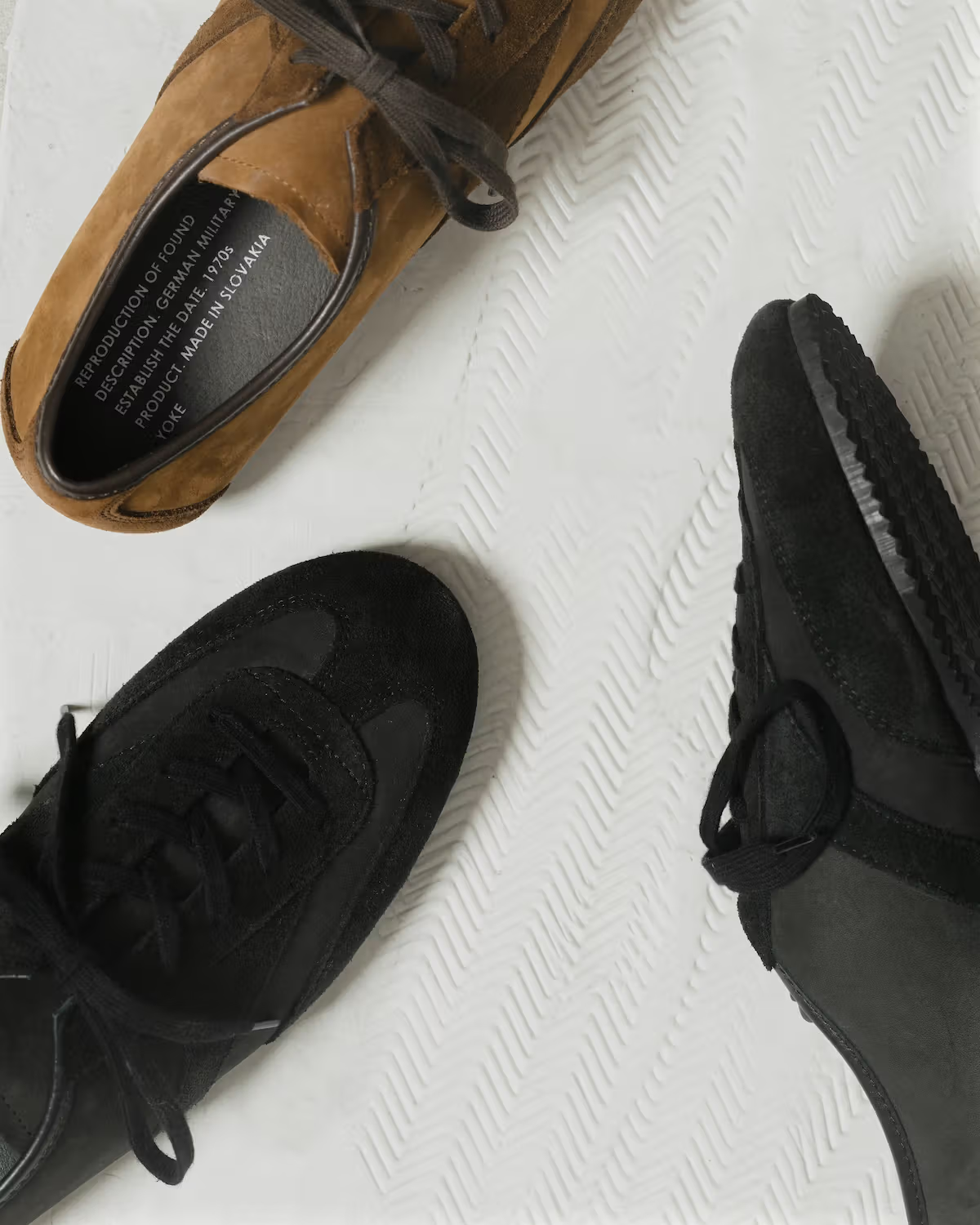
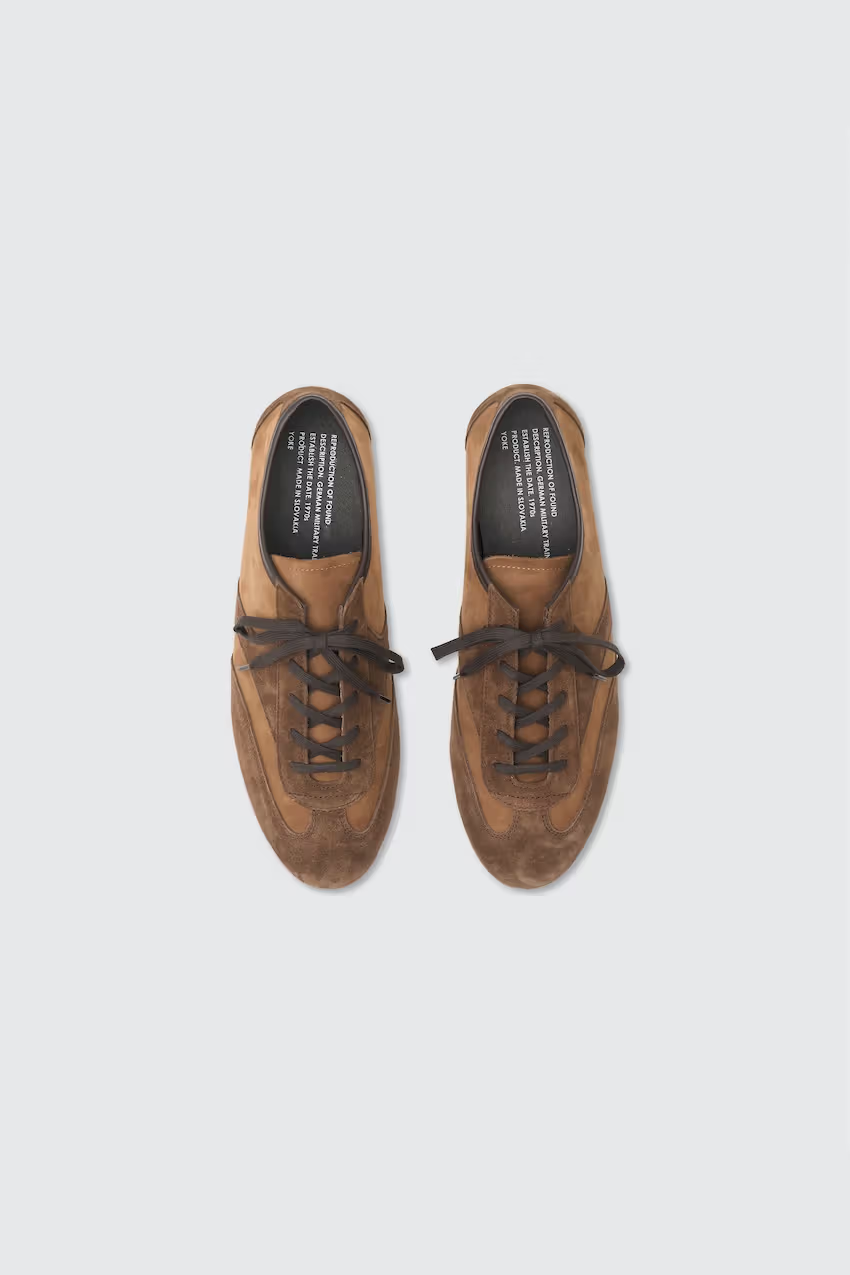
The Japanese report identifies a 1970s German military-training-shoe basis, specifically mentioning a rare former East German model and production by a factory that made military shoes at the time. The photographed insoles also carry original wording including “GERMAN MILITARY TRAINER,” “1970s” and “MADE IN SLOVAKIA.” Historical reference and present manufacturing country are separate facts: one describes design background, the other the marking on this shoe. Neither makes the pair original German army deadstock.
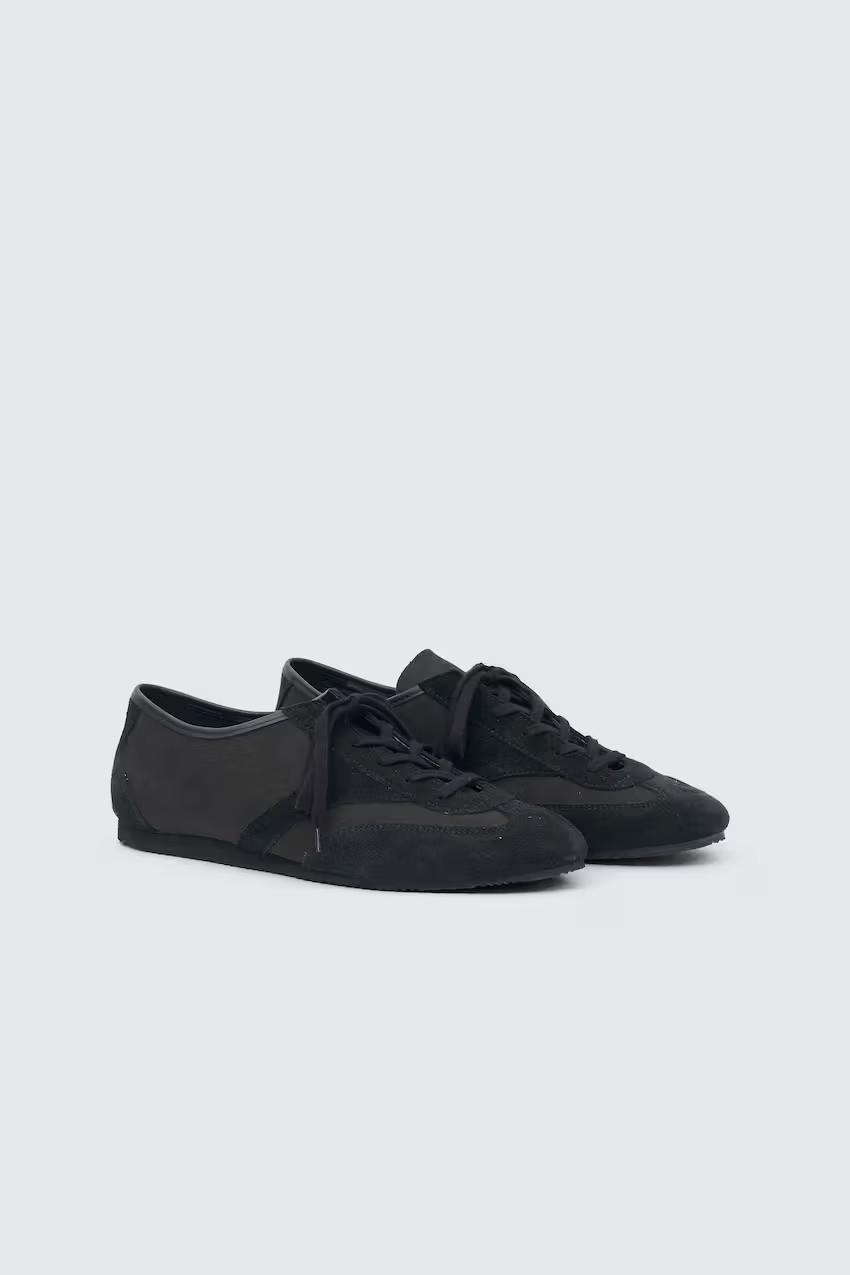
The low-cut outline sits visually close to the ground, with clear seams separating the toe overlay, lacing area and side panels. Rather than relying on enormous logos, it works through tonal differences and texture. Light makes the brown version’s darker and lighter areas easier to distinguish; black gathers the panels into a more unified surface. With wide trousers, consider whether the hem covers the laces, allowing either the toe line or rear detail to become the focus.
The black version reveals toe and side-panel seams through tonal differences.An overhead brown view shows lacing, toe overlays and interior markings.
How do suede, nubuck and interior materials differ?
The announced specification combines Italian suede and nubuck for the upper, nappa leather around the opening, and pig leather for the lining and insole. The report also describes EVA within the rubber sole. These choices address appearance and contact areas, but no whole-shoe weight, cushioning test or waterproof rating is supplied. Describe the composition without converting “contains EVA” into running-shoe-level cushioning or guaranteeing comfort for everyone over long wear.
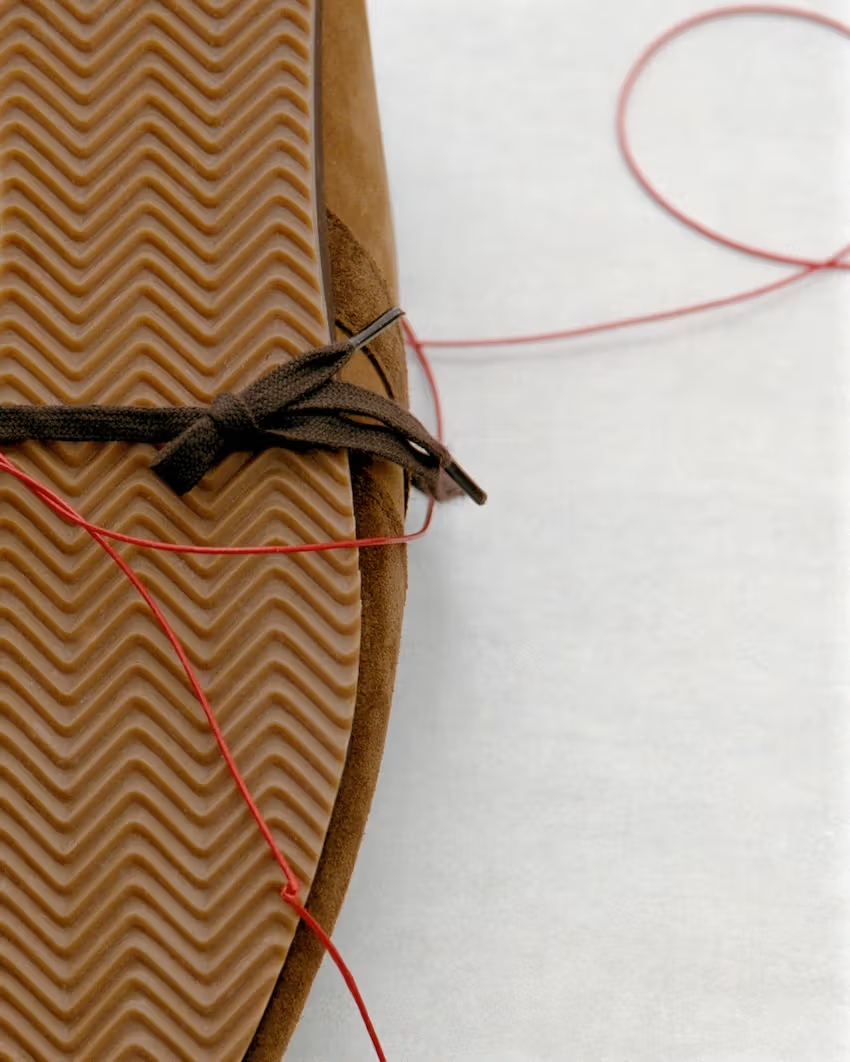
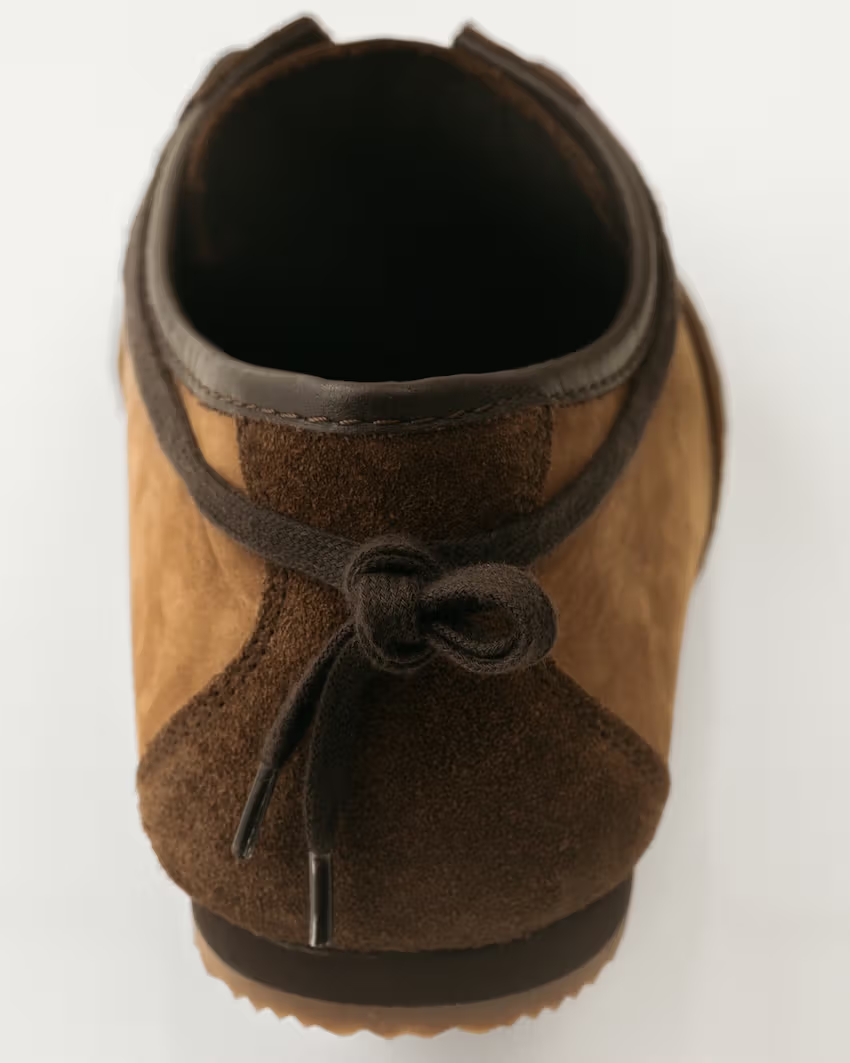
The selected images separate the details clearly: a sole close-up shows repeating herringbone tread, while the heel has lacing tied around the back. A brown side view distinguishes darker overlays from lighter panels. The rear lacing is visually prominent, but its adjustment method and effect on securing the shoe still need checking during a fitting. Pictures help explain structure and proportion; heel hold and pressure across the forefoot ultimately require your own feet to assess.
A sole close-up shows continuous herringbone tread, with a dark lace and red thread beside it.A heel close-up shows different leather surfaces, the opening and lacing tied around the back.
How should different store and online launch times be read?
The announcement lists YOKE Aoyama at the second floor of Machida Building, 2-11-15 Kitaaoyama, Minato-ku, Tokyo. Noon in store and 7 p.m. online are both Japan time. They are different schedules, so online sales should not be assumed to start as soon as the physical shop opens. Follow YOKE’s official Journal for updates and official entry points. Whether individual shops carry both colors in every size needs confirmation from product announcements or the retailer.
The exclusive’s report does not provide a complete size chart or nationwide stock. Nor should prices, sizing or mesh specifications from the brands’ earlier French military-trainer collaboration be carried across. To choose black or brown, first consider existing trousers and leather-care habits, then check length, width and sock thickness. That brings the historical reference, different leather surfaces and actual daily use into one decision, rather than automatically using another shoe’s size because the outline looks familiar.