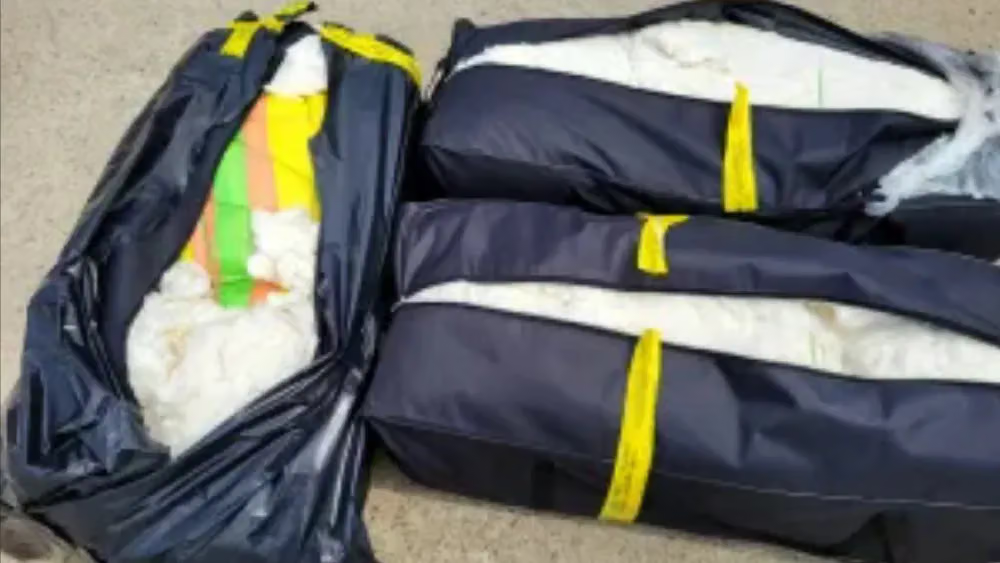
Three large duffel bags, packed not with clothes or souvenirs, but with a full 440 pounds (about 200 kilograms) of unprocessed cotton. Last Thursday, agriculture inspectors with U.S. Customs and Border Protection (CBP) stopped a family arriving from Afghanistan at Dulles International Airport in Virginia. When the bags were opened, it was certainly an unusual sight.
After being referred for secondary inspection, CBP officers got a straightforward explanation: the cotton had been bought locally, and the family planned to bring it back to the U.S. to make their own bedding by hand. The intention was purely domestic, but it ran straight into federal regulations.
The problem was that the cotton still contained seeds. According to CBP, unauthorized cotton fiber and cottonseed are both on the prohibited list, requiring a permit issued by the U.S. Department of Agriculture (USDA) as well as a phytosanitary certificate detailing information about the plant. Raw cotton must also undergo fumigation, or it risks becoming a breeding ground for invasive pests like the cotton seed bug and pink bollworm—which, if they made it onto U.S. soil, would pose a real threat to crops and the textile industry alike.
The family was ultimately allowed to proceed, but all the cotton was confiscated. Christine Waugh, CBP Port Director for Washington, D.C., said in a statement: "Travelers need to understand that some things they consider traditional and harmless may actually be prohibited from entry because they pose a serious threat to our nation's agriculture and textile industries." She added that the role of agriculture inspectors goes beyond enforcement—it also includes educating travelers about these potential risks, all while safeguarding the country's agricultural resources and economic security.
Inspections like this happen every day, and not on a small scale. CBP data shows that on an average workday in 2025, officers intercepted 4,691 violations involving plants, meat, animal byproducts, and soil, along with 222 cases of insect pests. This family's handmade bedding project ended up as just one entry in that massive tally.