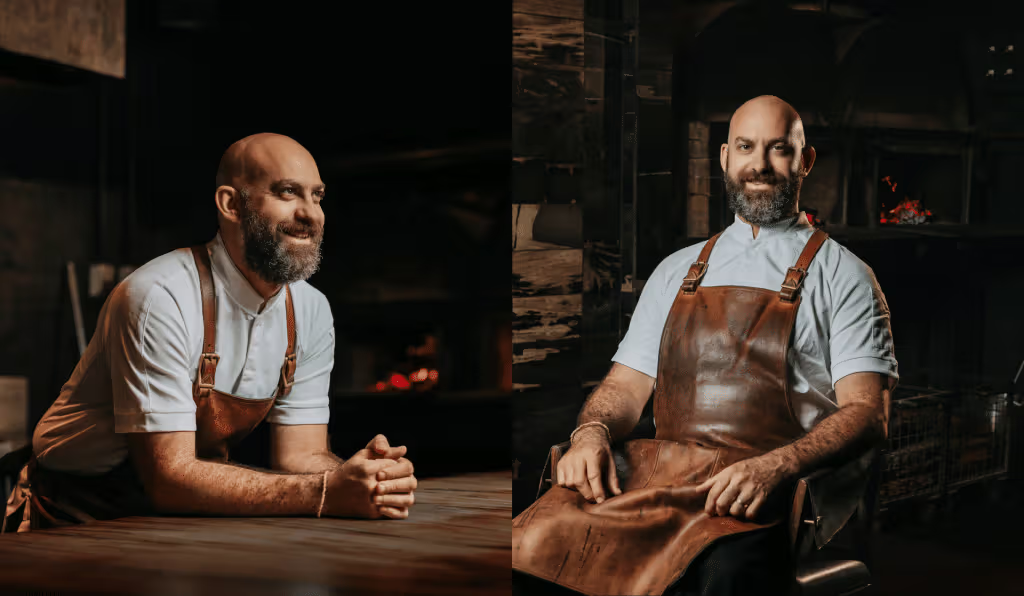
Dave Pynt looks at Bangkok’s table: fire, marinades and the exchange of cooking techniques
The Burnt Ends founder discusses Thai cooking and Bangkok dining, with official Singapore kitchen images clarifying the relationship between heat and space.
In a recent conversation, Burnt Ends chef-owner Dave Pynt describes Bangkok as a place to understand street food and refined dining together. Beyond heat and excitement, Thai marinades, meat cuts and sauces offer techniques worth continuing to study. Seen from his wood- and charcoal-focused Singapore restaurant, the exchange treats travel as a chance to ask new questions, rather than simply bring someone else’s flavours onto a menu.
Why does cooking with fire have more than one answer?
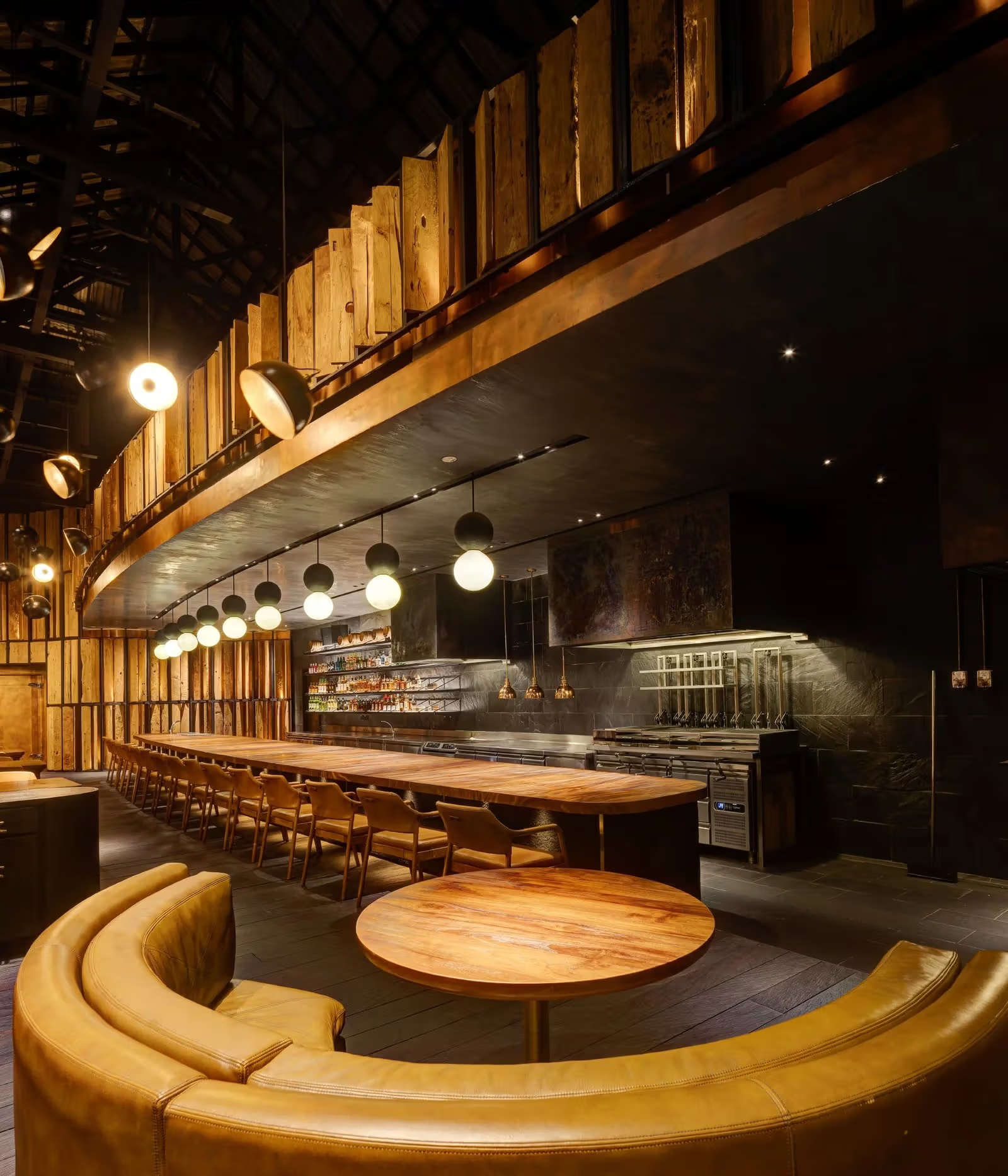
The official Burnt Ends description identifies an open kitchen, a custom four-tonne dual-cavity oven and four elevation grills. This equipment makes the distances between heat, ingredients and workers adjustable conditions. Rather than imagining live-fire food only through flames and char, observe how far food sits from the heat, when its surface colours and whether different cuts need different periods of exposure.
The Singapore restaurant’s kitchen and seating reveal distances between cooking and dining.
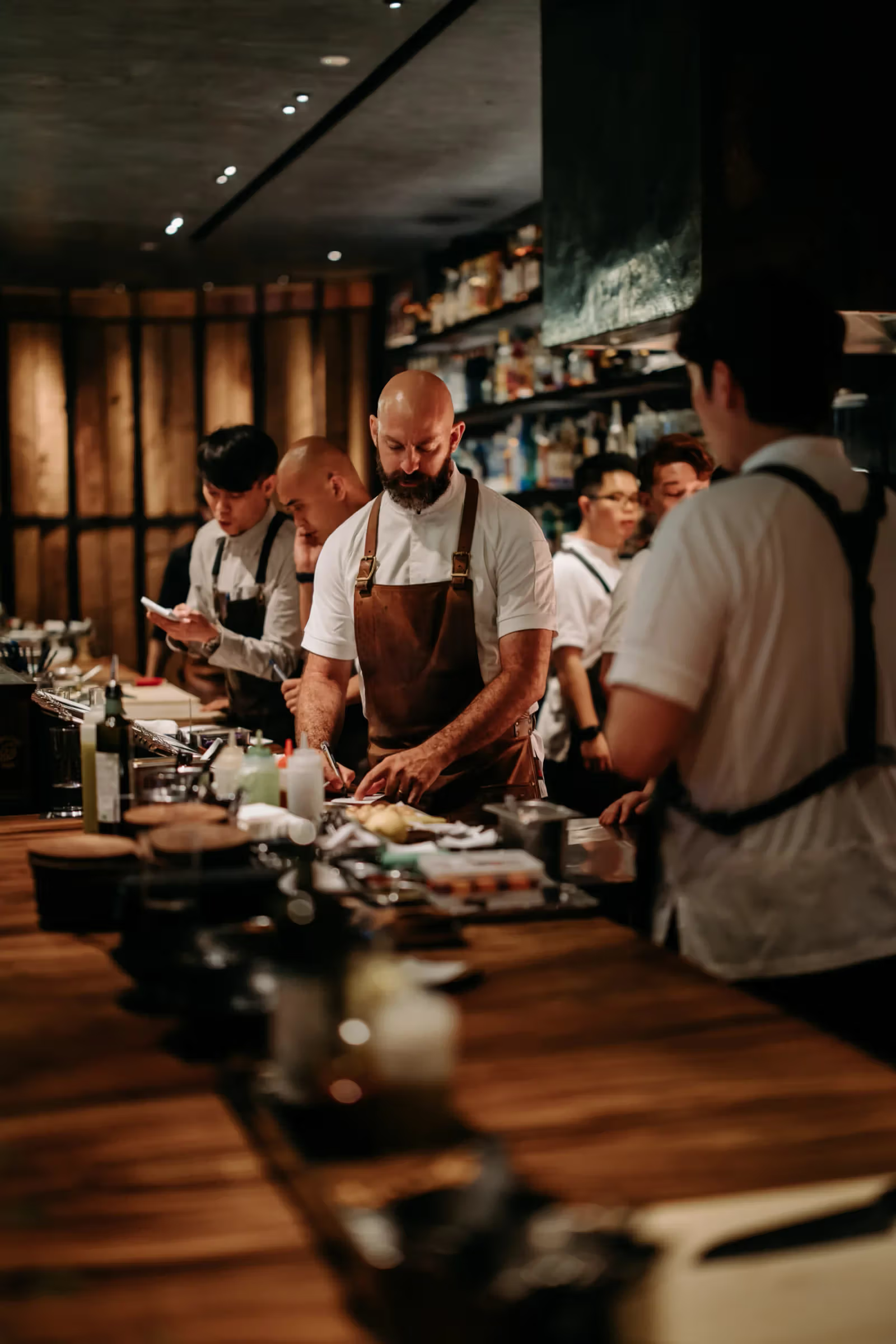
Height, time and position work together, but a photogenic flame cannot establish the result. The restaurant also writes menus daily, keeping equipment from serving only one fixed set of dishes. Official kitchen photographs offer a starting point in the relationship between worktops, ovens and people. Cooking becomes a sequence of decisions rather than a single theatrical moment before serving.
An official kitchen image shows the relationship between worktop, team and ingredients.
What returns from Thai food: a flavour or a method?
Pynt discusses Thai marinades, particular meat cuts and sauces as sources of ideas. An apparently direct dish need not involve a simple preparation. Flavour may be established before heating begins. Exchange between places can therefore start with the handling of an ingredient and the sequence of work, rather than adding one spice to an existing dish.
Diners can bring that question to a table. Distinguish the roles of charcoal aroma, marinade and dipping sauce, then consider whether they obscure or support one another. Different cuisines can share tools while retaining different cultural contexts. Instead of immediately sorting everything into traditional or innovative, ask at which step a change actually occurs.
Why does Bangkok reward repeated visits in his view?
Pynt names Samrub Samrub Thai, 100 Mahaseth, Sorn, Le Du, Wana Yook and Bo.lan among restaurants he enjoys visiting. These are his personal choices rather than a new ranking by TIDEZINE. He also notices how Bangkok draws attention to regional Thai cooking. Street food and formal dining can supply different densities of learning rather than requiring an exclusive choice.
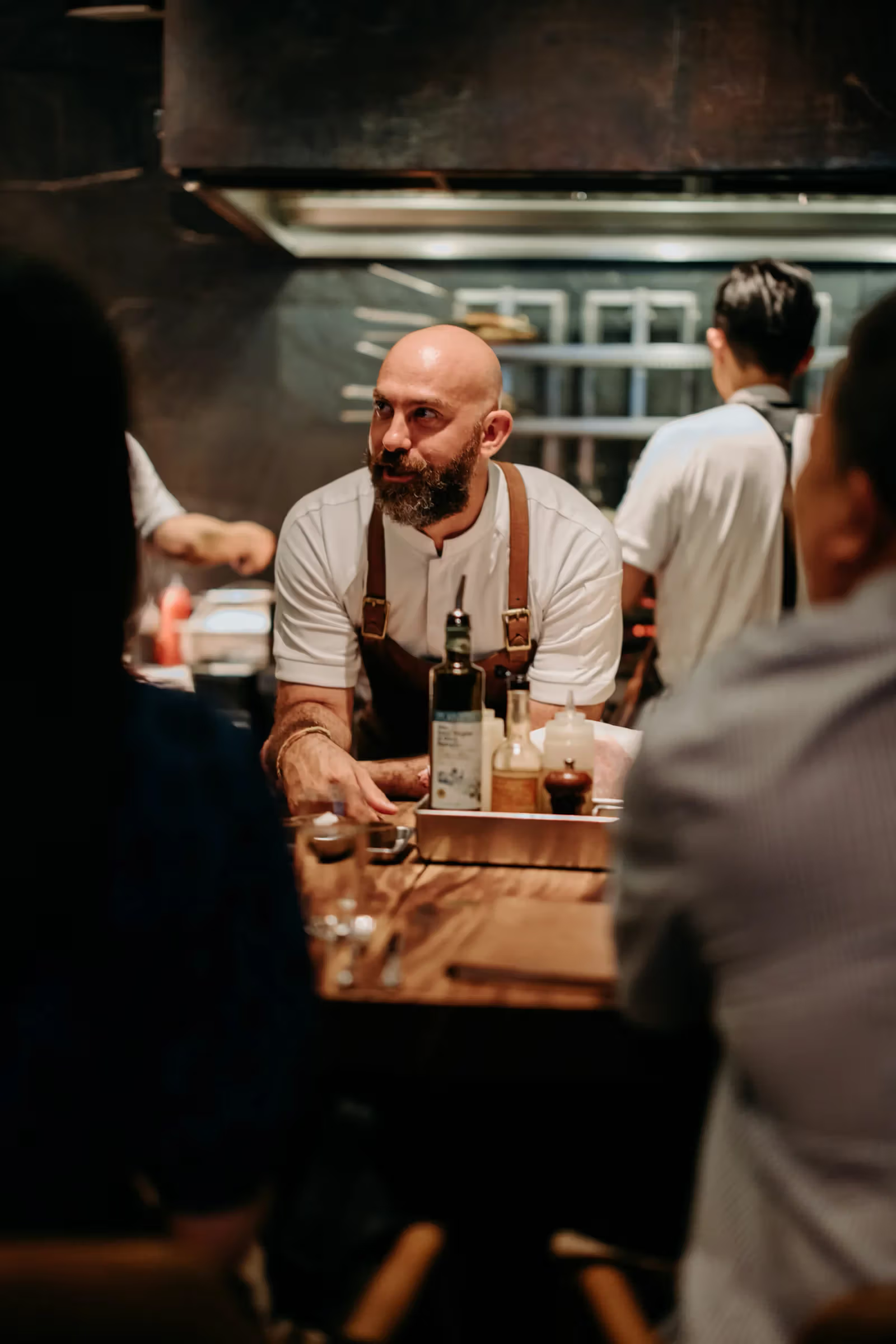
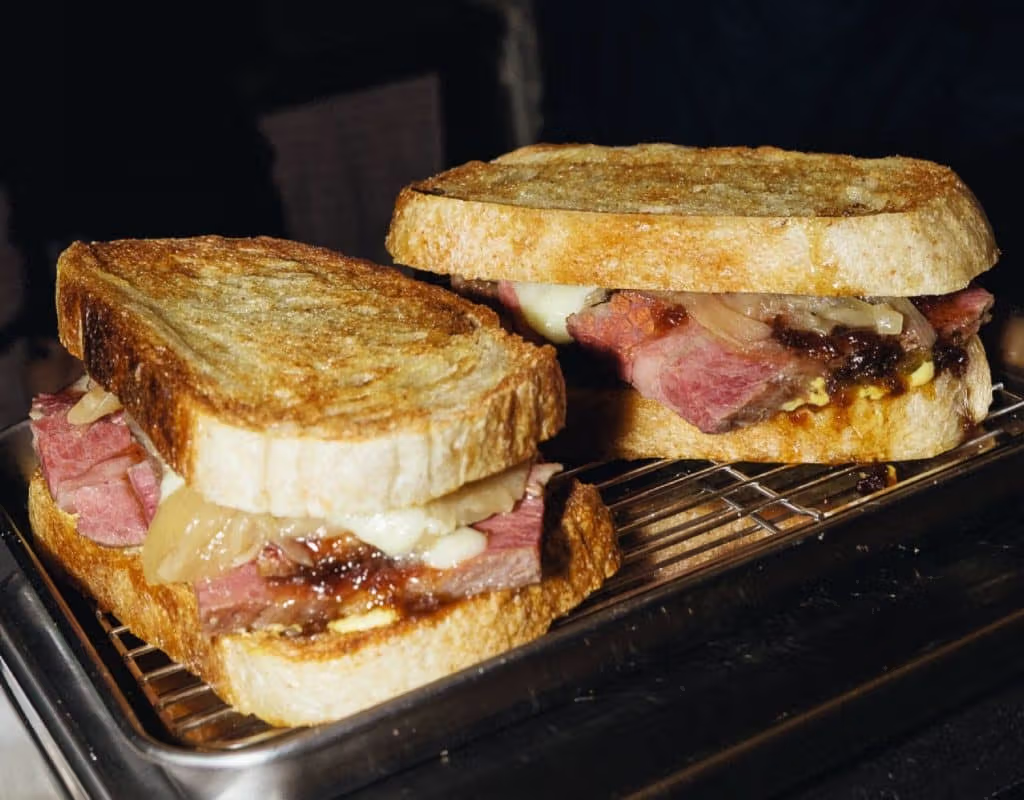
The additional Burnt Ends kitchen and interior photographs here are official images of the Singapore restaurant. They do not depict a Bangkok guest event or imply that pictured food is currently served in Thailand. The lasting value of the conversation is an order of looking: preparation and materials, fire and sauce, then the ways people understand them through local experience. Travel can accumulate questions as well as restaurant names, opening a familiar bite to another perspective.
Dave Pynt working at the Singapore restaurant, rather than a Bangkok guest event.