Dirk Salz’s Painting Without Brush in Taipei: resin layers turn a surface into depth
Deep Dives and Fadings are on view at Bluerider ART Taipei through December 31. Compare geometry, resin, gravity and changing viewpoints across works made in different years.
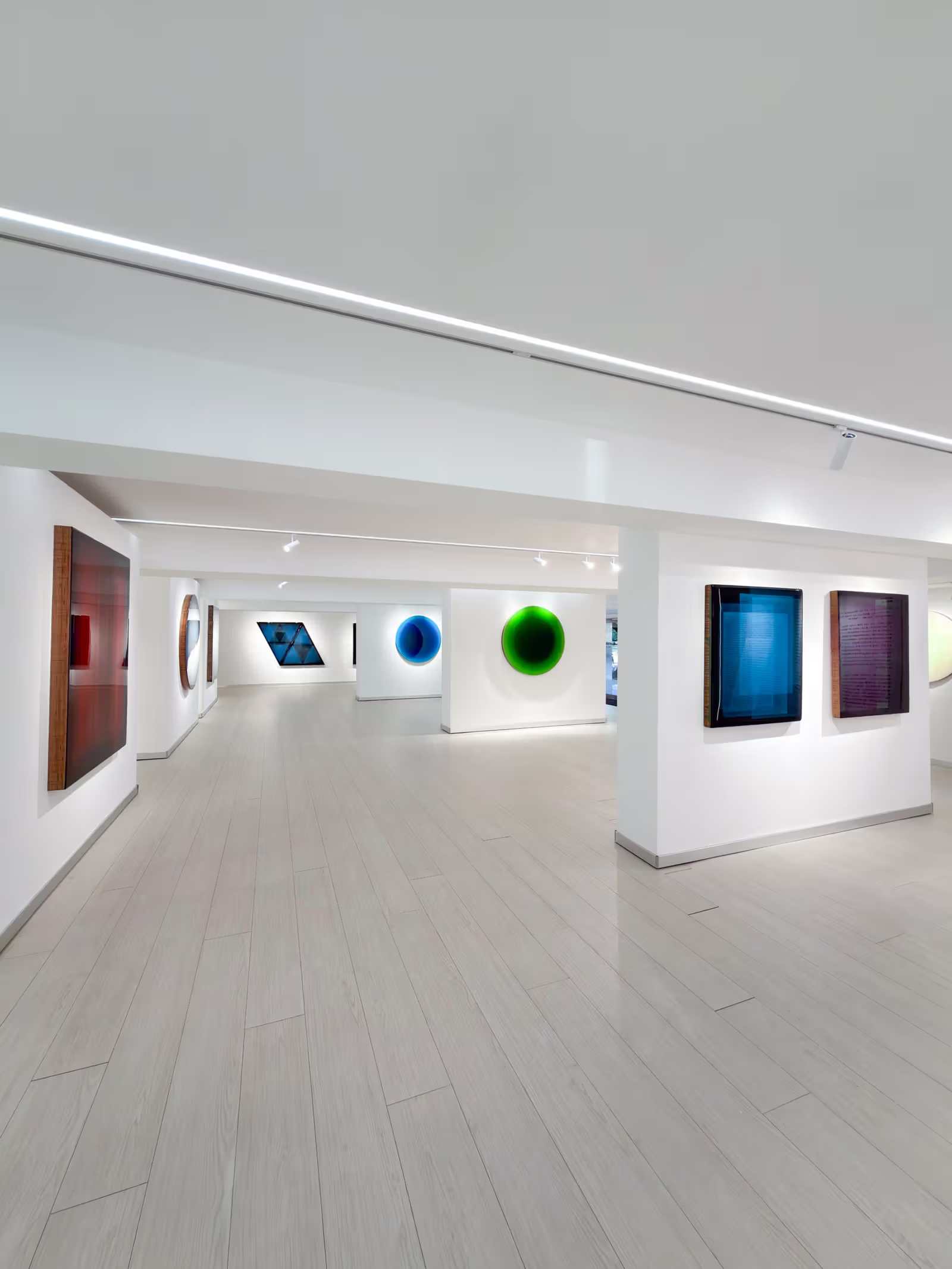
What first looks like an even field of blue reveals overlapping forms on closer inspection, while a circular color field shifts in density with viewpoint and reflection. German artist Dirk Salz builds this experience from pigments and resin in Painting Without Brush — Layers of Translucence, Silence, Depth at Bluerider ART Taipei, Dunhua. Running October 17–December 31, it presents Deep Dives and Fadings, rather than only new works from this year. The exhibition poses a concrete question: how can painting take shape without a brush?
Born in 1962, Salz studied engineering and now lives and works in Mülheim, Germany. Instead of leaving brushstrokes on canvas, he mixes pigment into resin, spreads it with a paint roller and allows gravity to make the material flow and level out. Each layer must cure before the next can be added, so the finished surface embodies repeated waits. Color accumulates between transparent and translucent materials rather than covering only the outermost surface.
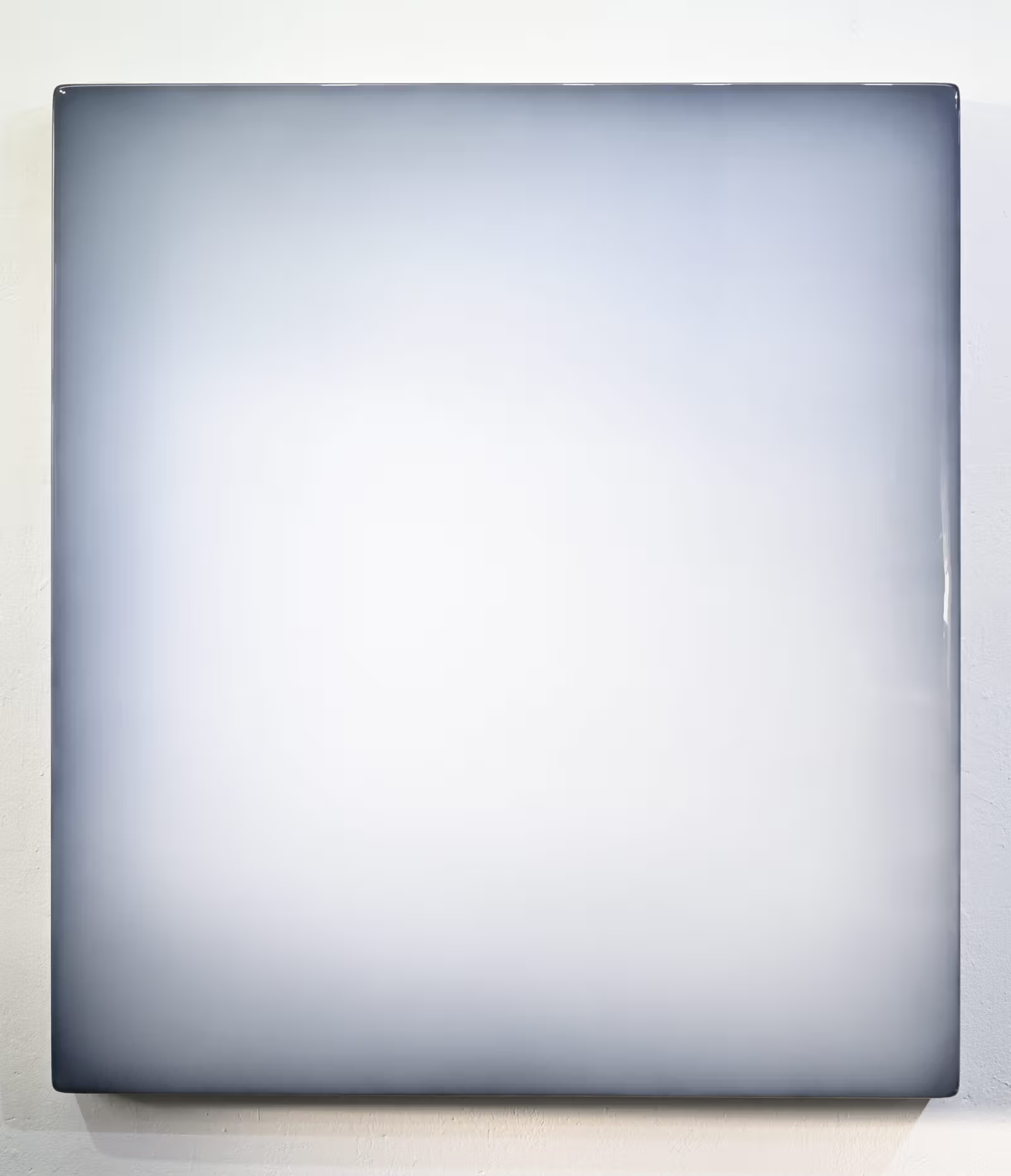
This changes the work’s relationship with light. Reflection reveals the surrounding room, while transmission and layering guide the eye inward. A single piece can read as an object, a color field and a composition with depth. The thickness visible in the official exhibition images is a reminder that these are not flat printed simulations of transparency. The material’s volume is itself part of the viewing experience.
Compare the series through four works from different years
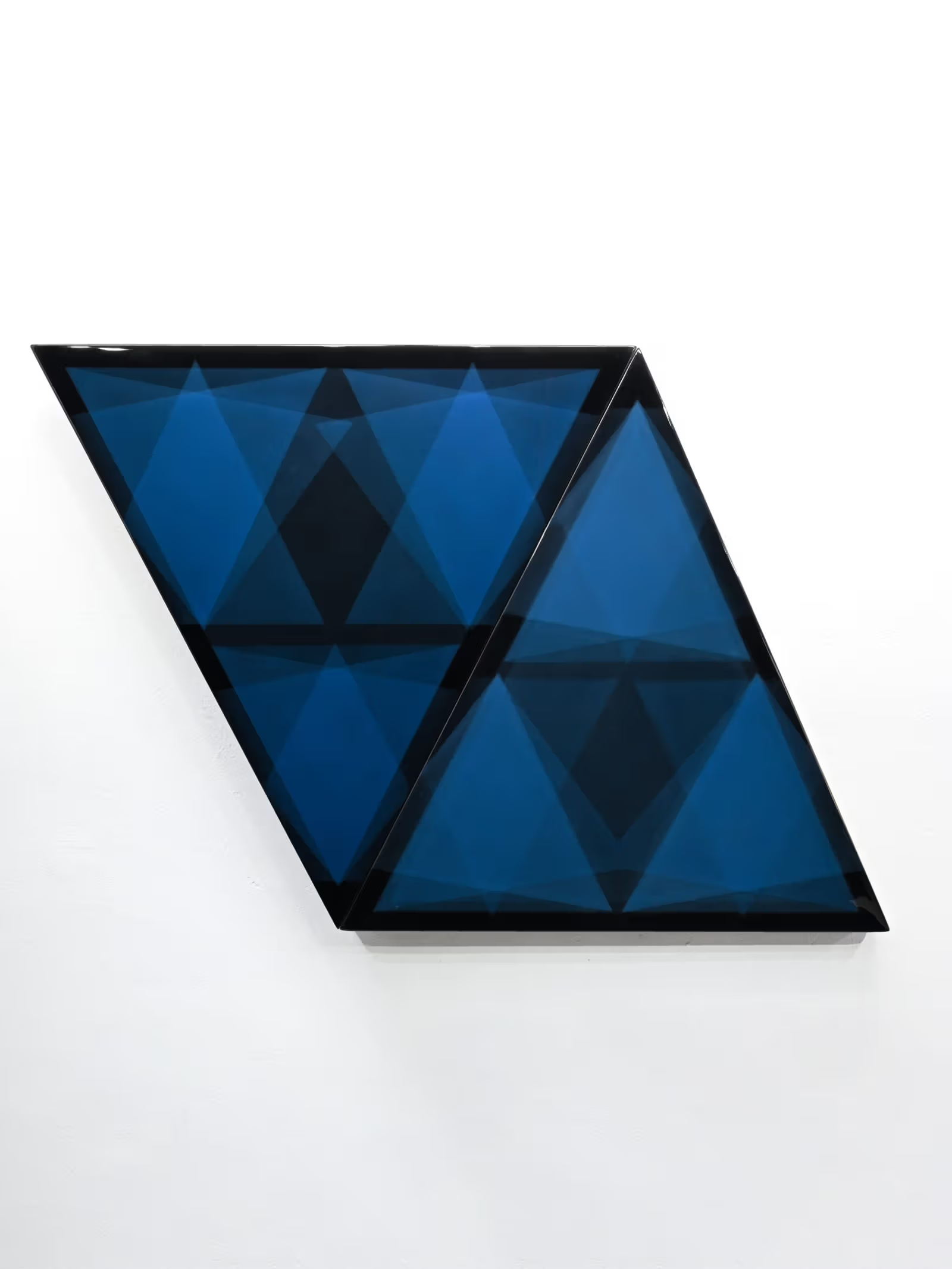
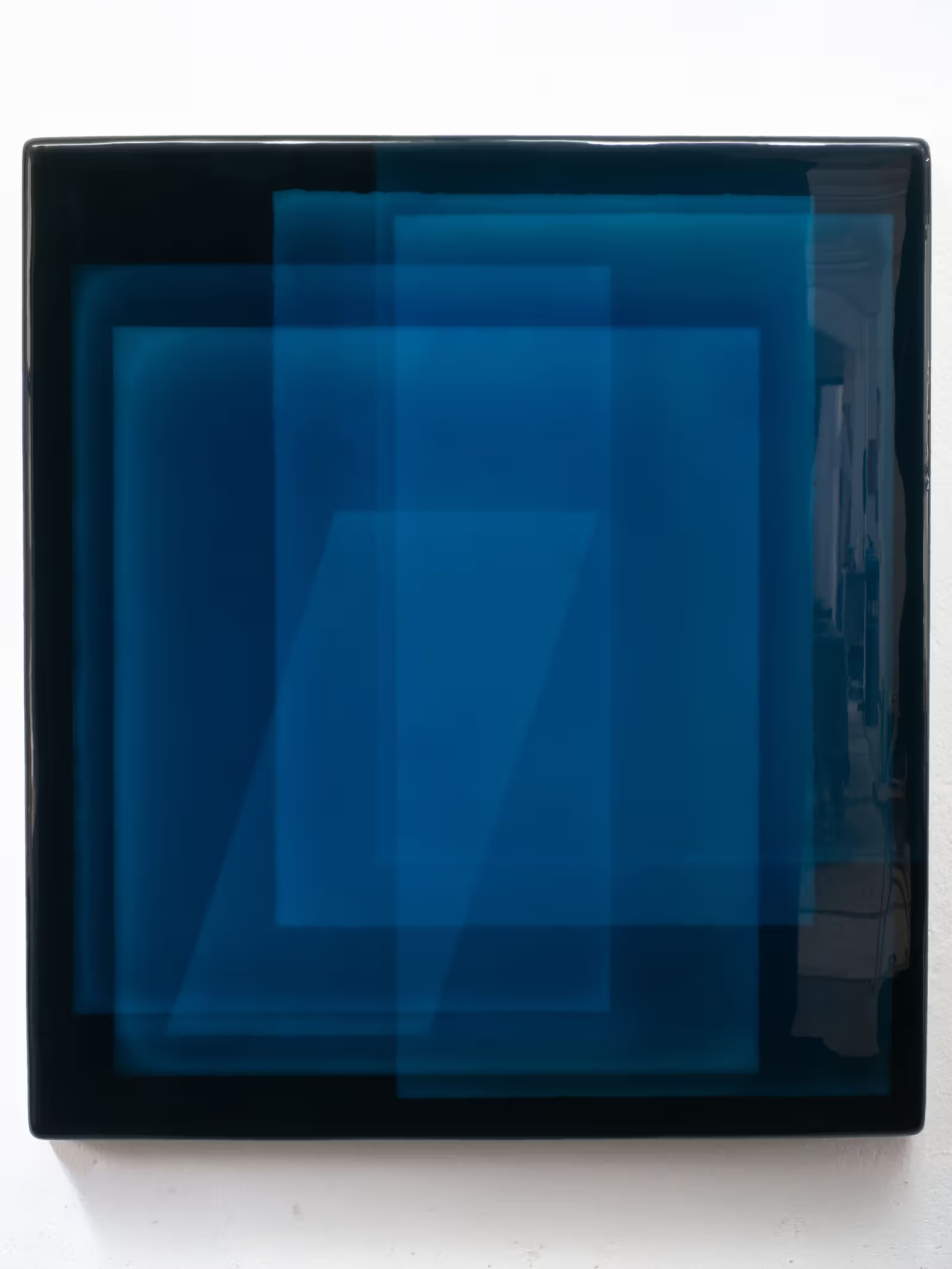
Deep Dives’ DSA/M 1003 #2712, made in 2021, measures 140 × 210 × 10 cm and organizes overlapping blue geometric forms. DSA/M 1516 #3223 from 2026 measures 100 × 90 × 8 cm, approaching an upright rectangle with dark edges and blue interior layers. Both use pigments and resin on multiplex. Within one series, geometric directions, dimensions and layering create different paths for the eye.
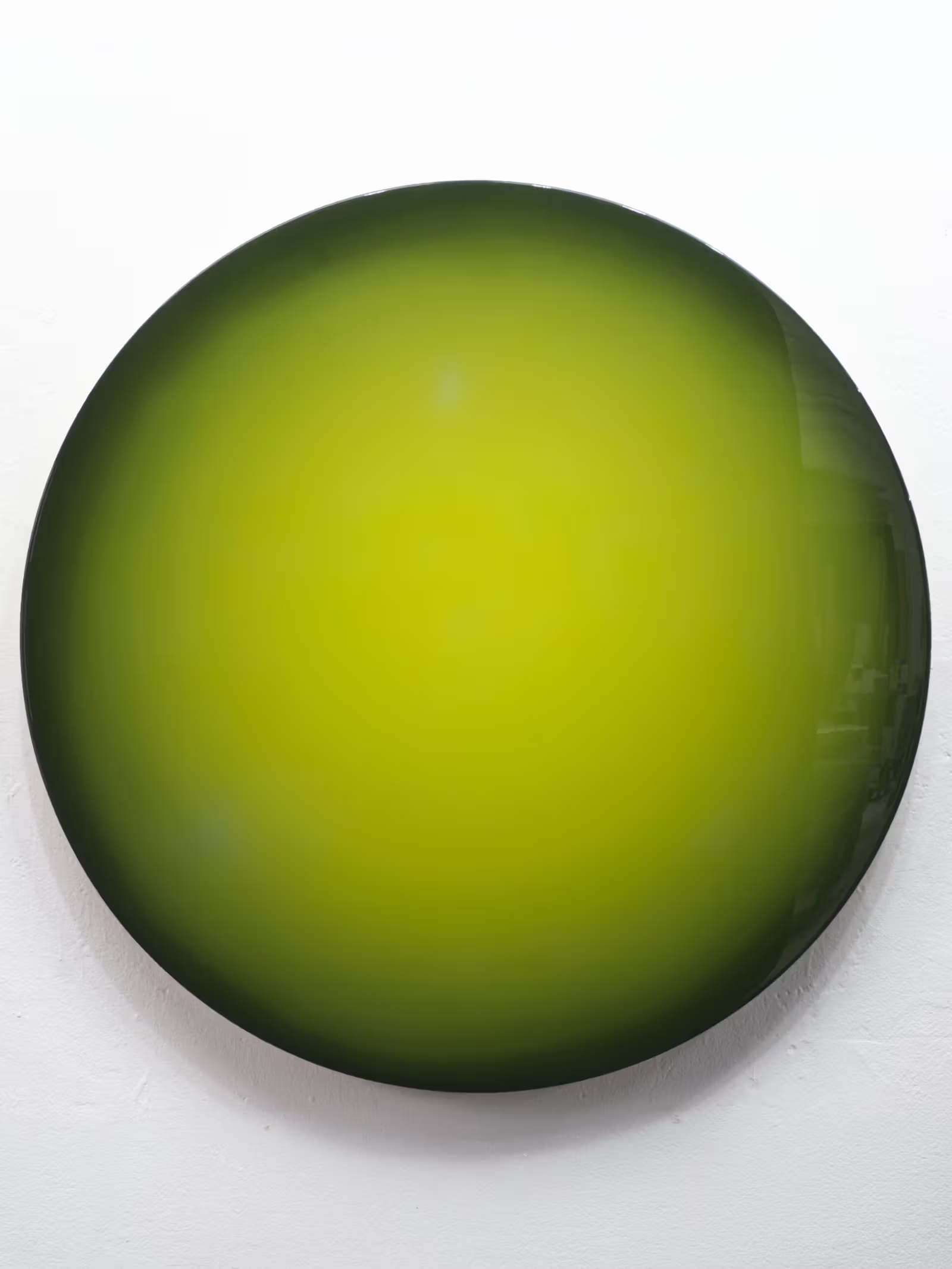
Fadings directs attention toward gradual changes in color density. DSA/M 1395 #3111 from 2025 is circular, 120 cm in diameter and 6 cm thick; DSA/M 1214 #2915 from 2023 measures 160 × 140 × 10 cm. Both circles and rectangles can carry gradual transitions: the series cannot simply be divided into “one is square, the other circular.” Photographs provide clues to color, but surface reflections and their relationship with the surroundings remain integral to these works.
With works that reduce brushmarks and emphasize material layers, begin with the overall outline before comparing frontal and side views. Move closer to examine boundaries and transparency, then step back to see how color fields form a whole. Changing position can reveal whether reflections bring your own figure or the gallery back into the image. These approaches follow the works’ mechanisms without needing to assign a story to every patch of color.
The gallery is at 1F, No. 77, Section 2, Dunhua South Road, Da’an District, Taipei. Hours are Tuesday–Sunday, 10:00–18:30; it is closed Mondays. The October 17 opening event has ended, and the exhibition is now in its regular visiting period. Group tours can also be reserved. Check Bluerider ART’s official exhibition page before visiting. Reviewing dates and materials beforehand can leave more attention for scale and light in the gallery.