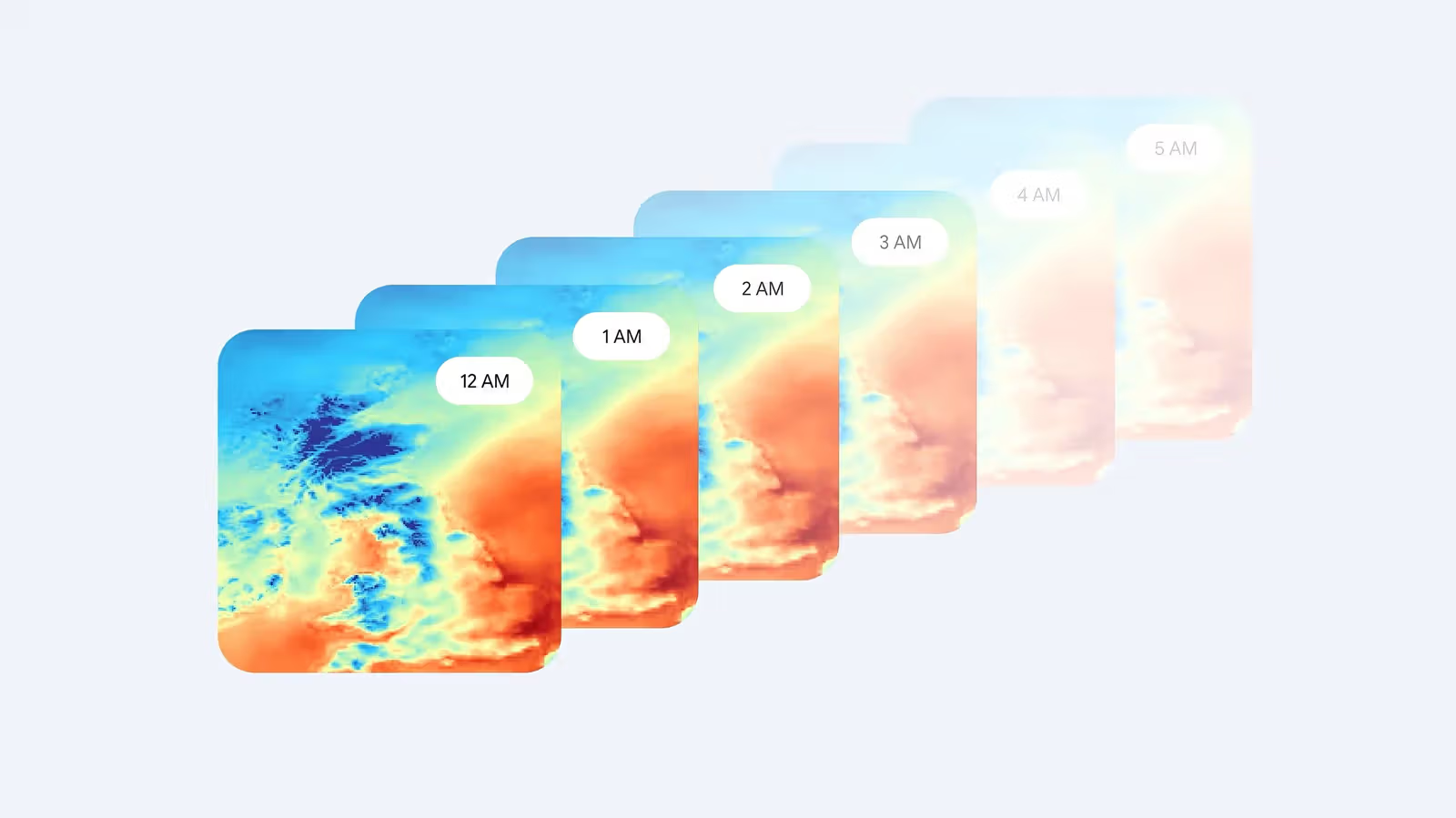
The biggest enemy of weather forecasting is often not that the model isn't smart enough, but that the data is too old. Google DeepMind's changes to WeatherNext 3 tackle exactly this problem—swapping out the numerical weather prediction data it used to rely on (typically delayed by six hours) for real-time satellite observations, letting the model continuously read "the atmosphere's latest look."
This change shows up directly in resolution. WeatherNext 2's forecast grid was 25km square; WeatherNext 3 shrinks that down to 5km square and can deliver hourly forecasts. DeepMind says the model also ingests scattered weather station data, allowing it to make finer-grained readings on variables like humidity that can swing wildly over short distances.
For the renewable energy industry, WeatherNext 3 brings a few concrete new uses: the model can reportedly predict wind speeds at around 100 meters altitude (close to wind turbine blade height) for more precise wind power output calculations, while also providing high-resolution cloud cover and solar radiation data to help solar farms assess generation conditions.
Precipitation forecasting is another key focus. WeatherNext 3 combines precipitation data analyzed from both NASA and Google's own satellites, which DeepMind claims boosts the model's rain and snow prediction accuracy by up to 50%, with "the biggest improvements seen in regions where forecast reliability used to be lower."
This model will power weather features in Google Search, the Gemini App, and Google Maps, and will also be made available through the Google Maps Weather API and Google Earth Engine. Anyone who wants to try it out first can head straight to Google Weather Lab; and for those looking to integrate it into their own projects, the previous generation WeatherNext was open-sourced back in August 2026.