Hsinchu City Glass Art Festival 2026: two exhibitions, sound installations and visitor details through November 15
Feng livehouse and the Hsinchu City Glass Museum connect global material history with local makers. Admission is NT$50, concessions NT$30; both exhibitions close on Mondays.
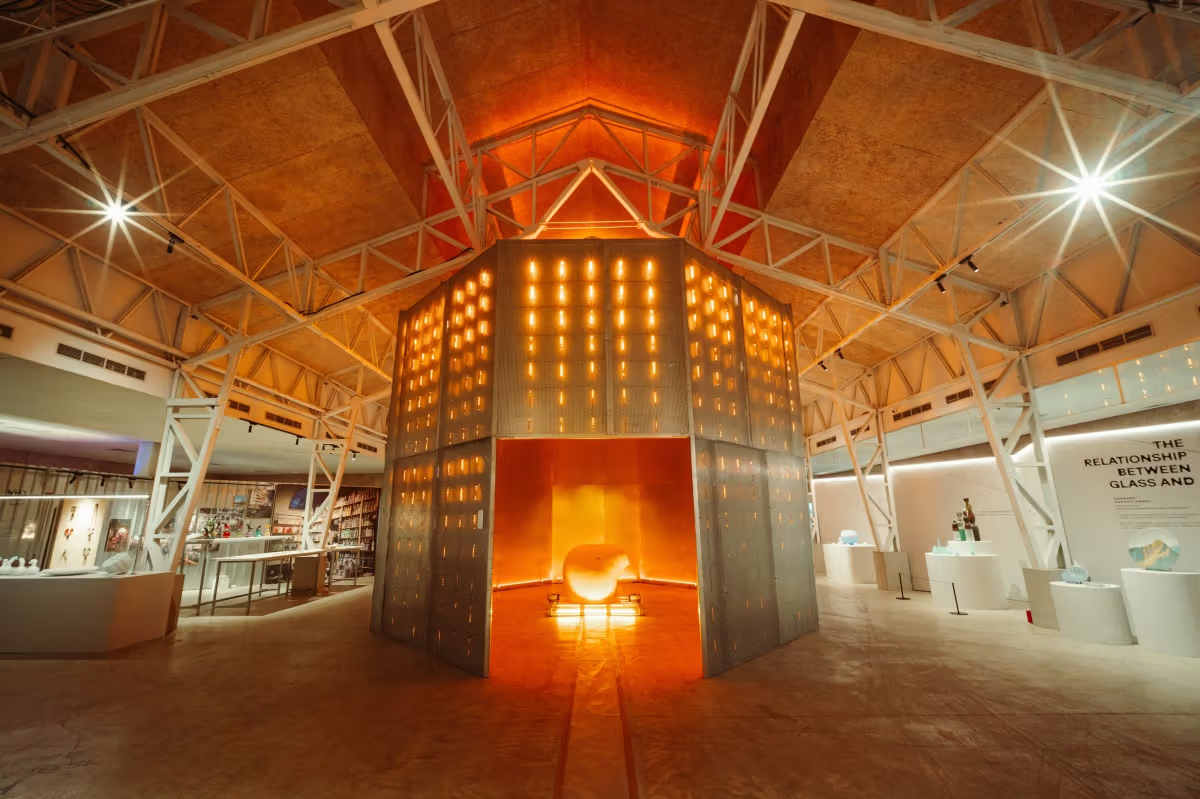
The 2026 Hsinchu City Glass Art Festival, titled "GLASS AGE", will be held in two venues in Hsinchu Park from October 17th to November 15th. The main exhibition of Feng Livehouse and the special exhibition of Hsinchu City Glass Craft Museum put glass back between industry, art, sound and urban memory, allowing the audience not only to see transparent objects, but also to understand how the material was used in different eras.
Cover image: 春池玻璃
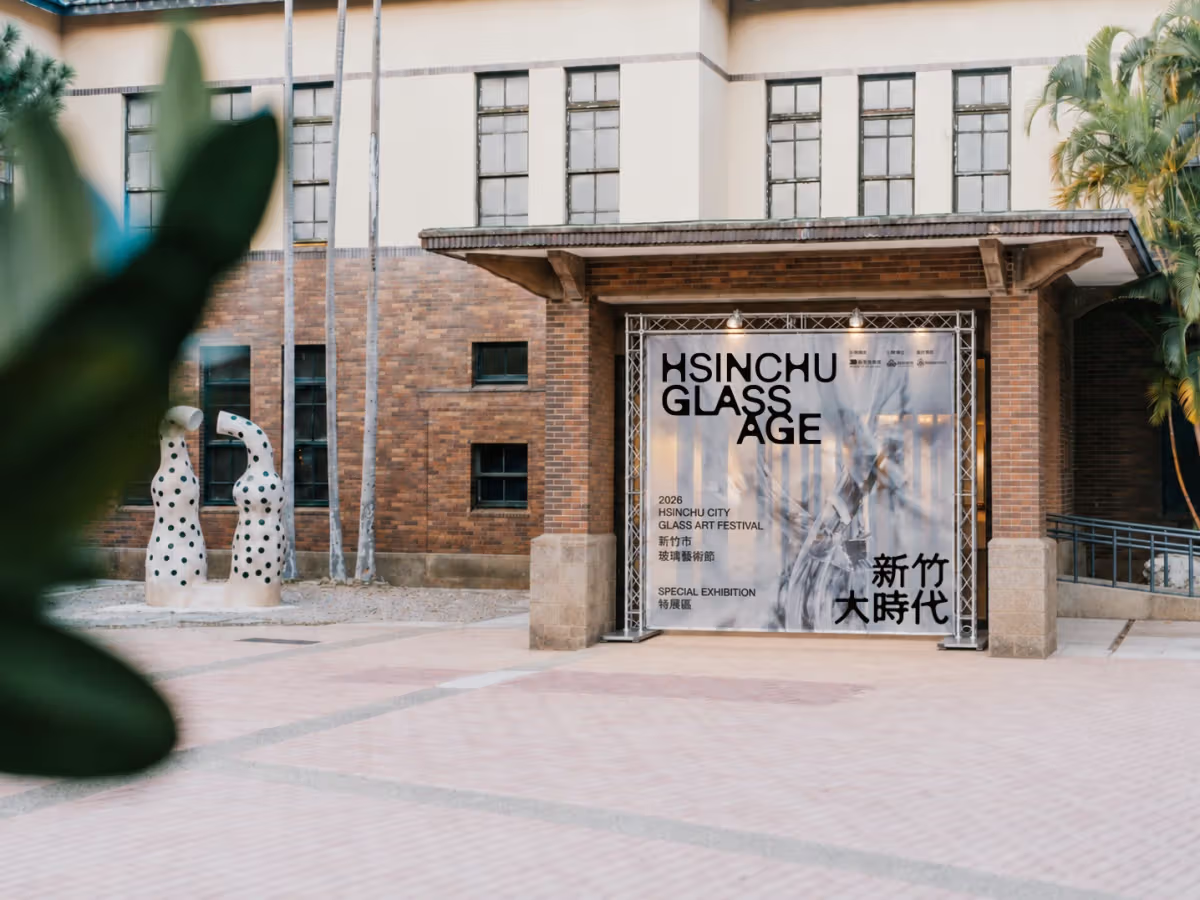
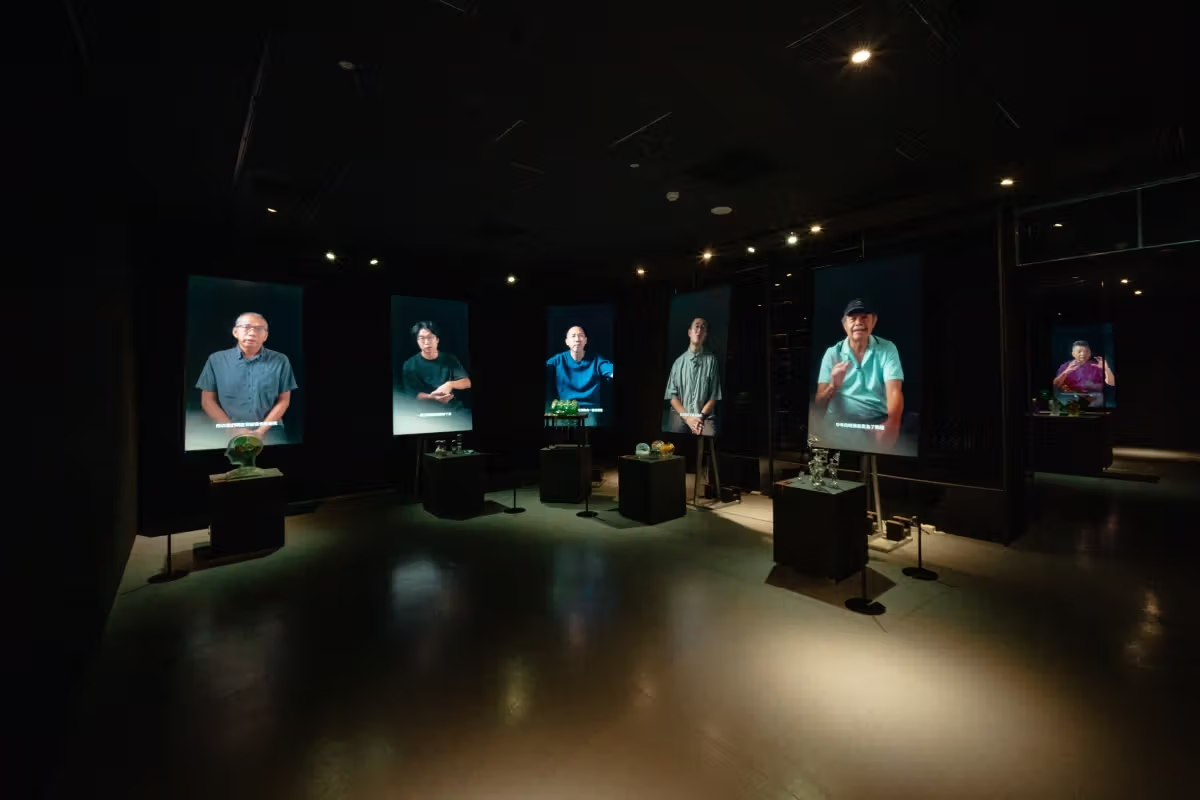
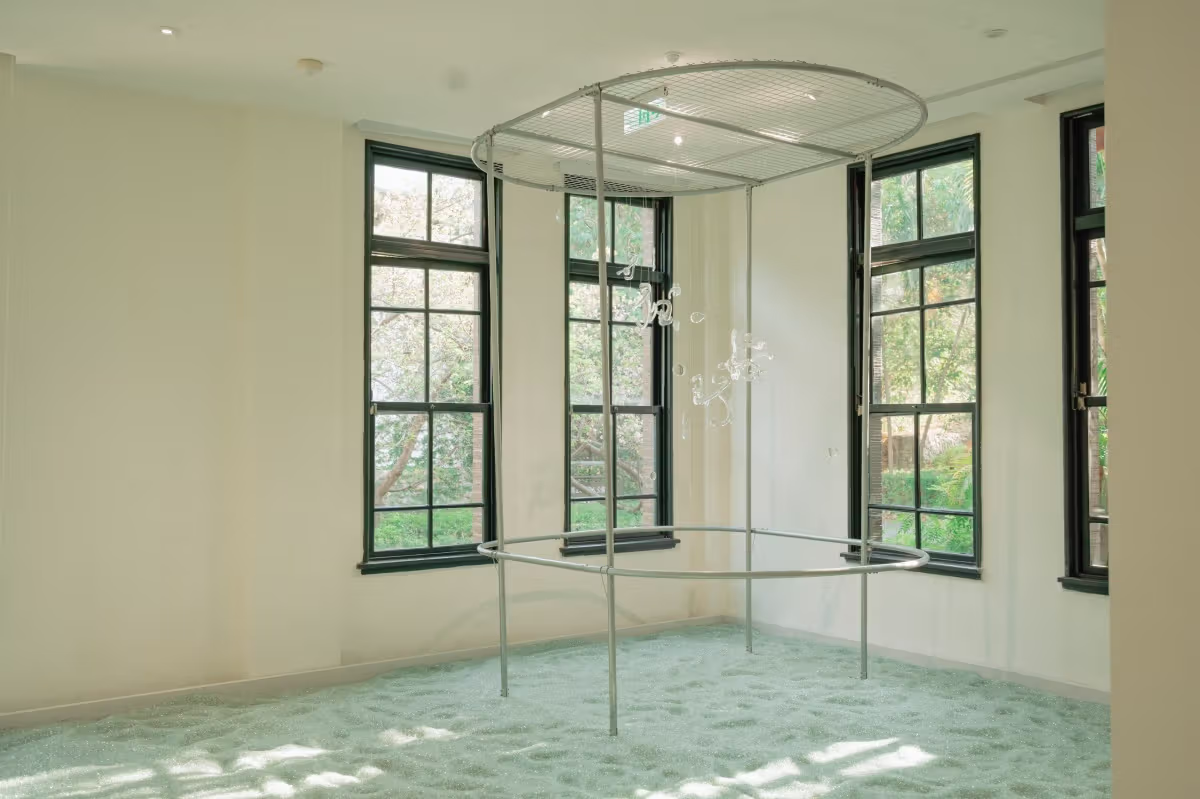
Entrance to Feng livehouse exhibition area. Image: 春池玻璃Interviews with glass creators at the Great Times Exhibition Area in Hsinchu. Image: 春池玻璃
Two venues: global material history and Hsinchu’s makers
The main exhibition "The Great Era of Glass" starts from the development of glass in Taiwan and the world, including Taiwan's transparency, the transparency of the world, the glass quadrant and the melting pot of ideas; the special exhibition "The Great Era of Hsinchu" focuses on creators, the Golden Glass Award and the city network that supports creation. The two exhibitions complement each other and do not mean that the same works are displayed in another room.
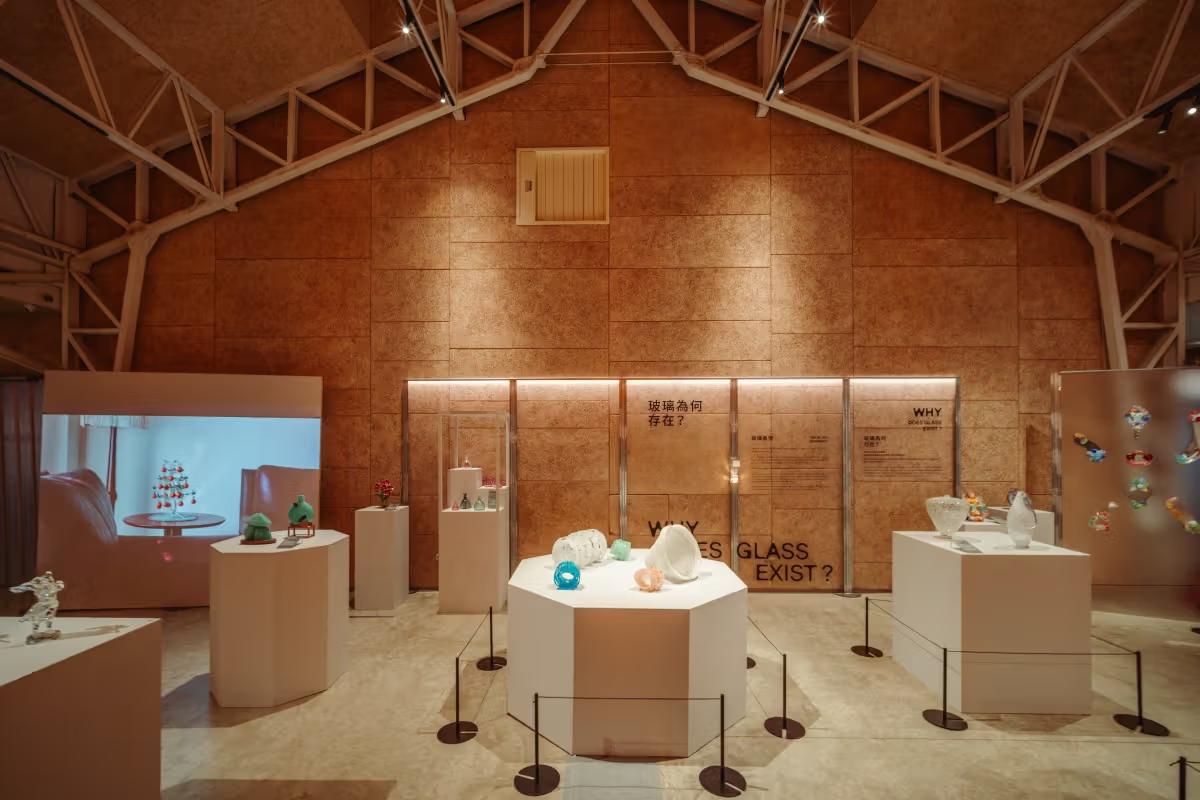
Display of glass works in the exhibition hall. Image: 春池玻璃Air Has a Cat, a collaboration between Wang Yi-Chun and Spring Pool Glass. Image: 春池玻璃
If you have enough time, you can first look at the larger background of industry and technology, and then go into the experience of local creators; if you already have a foundation in glass craftsmanship, you can also go in from the characters. The order of visits can be adjusted according to interests. The key is to save time to compare the two scales.
From export light bulbs to space telescopes, glass is more than just a look
The exhibition juxtaposes bottles, Christmas light bulbs and contemporary technology, connecting glass with architecture, communication and viewing methods. The same material can serve daily mass production and can also be used in artistic creation. The value does not only come from whether it looks exquisite.
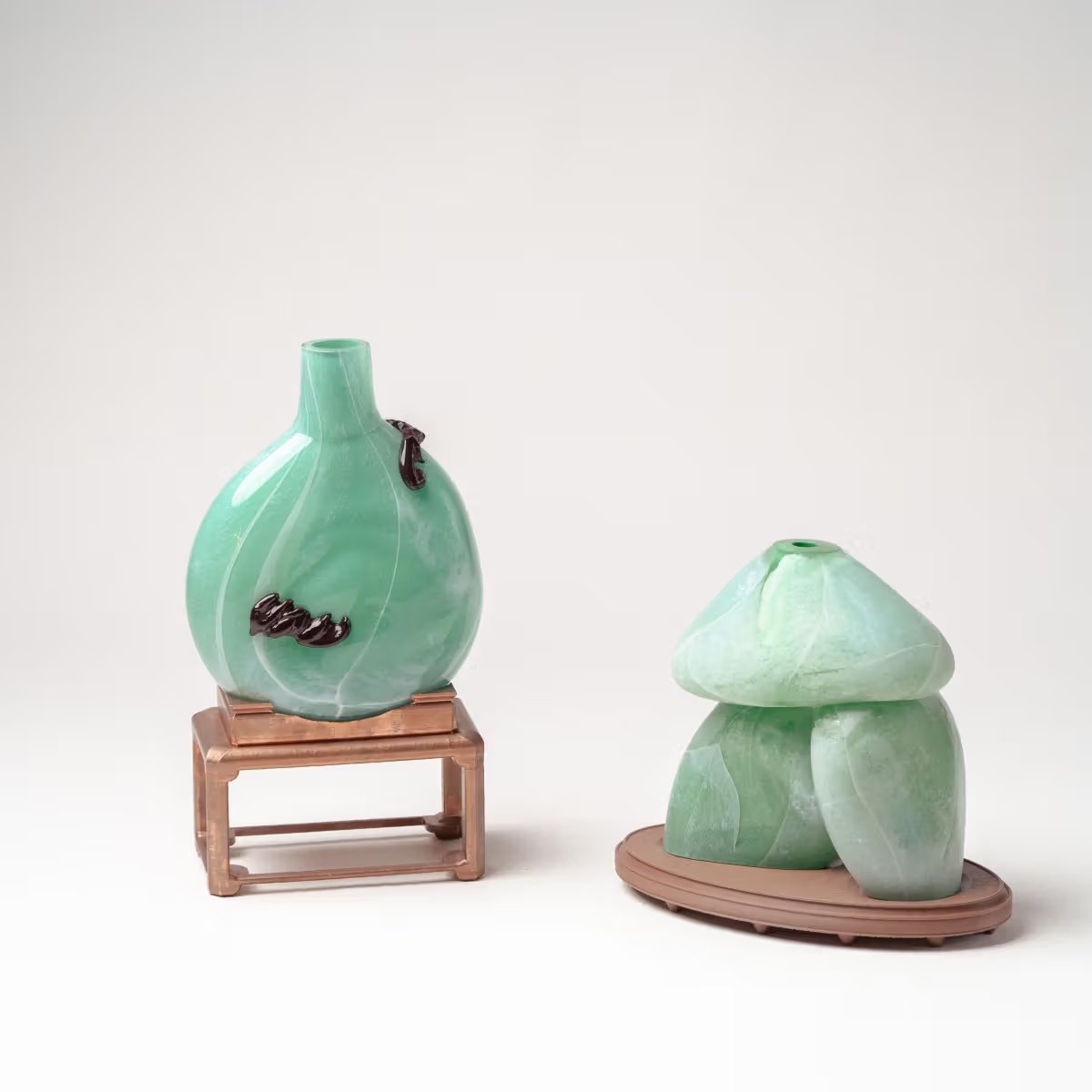
The jade-like color of Liu Jianguang’s glass works. Image: 春池玻璃
When looking at a work, you can first ask who made it, how it is going to be used, and why it is placed in the exhibition now. These questions will extend the observation from color and shape to technology, division of labor and culture without having to memorize all the production terms first.
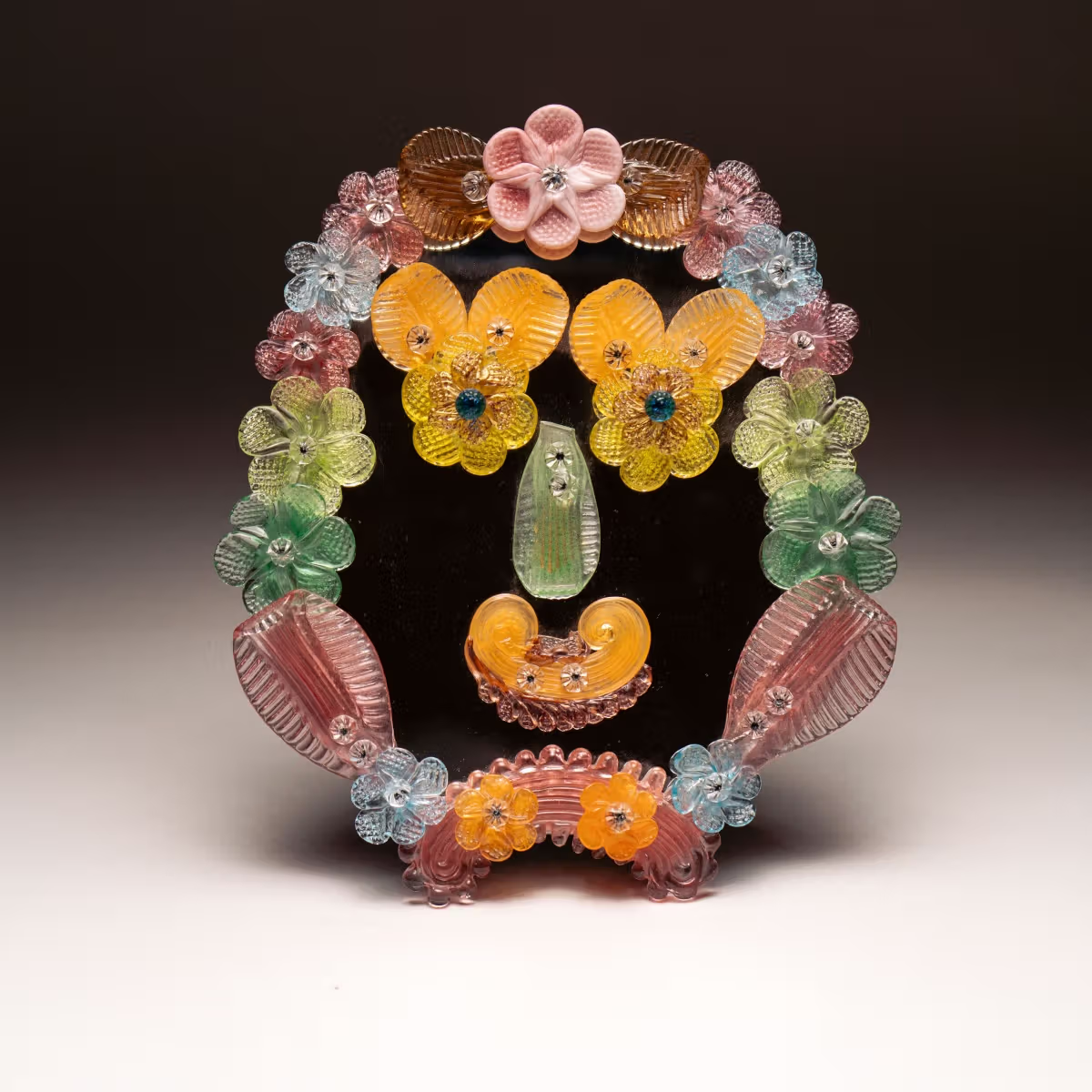
Lucia Massari’s Mario series of glass works. Image: 春池玻璃
Sound installations invite another way to experience glass
The sound work "Glass First Sound" was co-created by Zhuang Ruiming and Cai Junyu, re-weaving factory machines, raw materials and daily glass sounds. Another piece, "SHŌWA NOTE" uses a stylus to read the texture of old embossed glass, turning the time left on the material into an auditory clue.
These devices can first listen to the distance and rhythm, and then look back to see the source of the object. Glass is thus simultaneously a sound-producing surface, a material that records industrial life, and a rearranged memory. It is a different experience than just taking a photo of the work.
Why can artworks and commodities be juxtaposed?
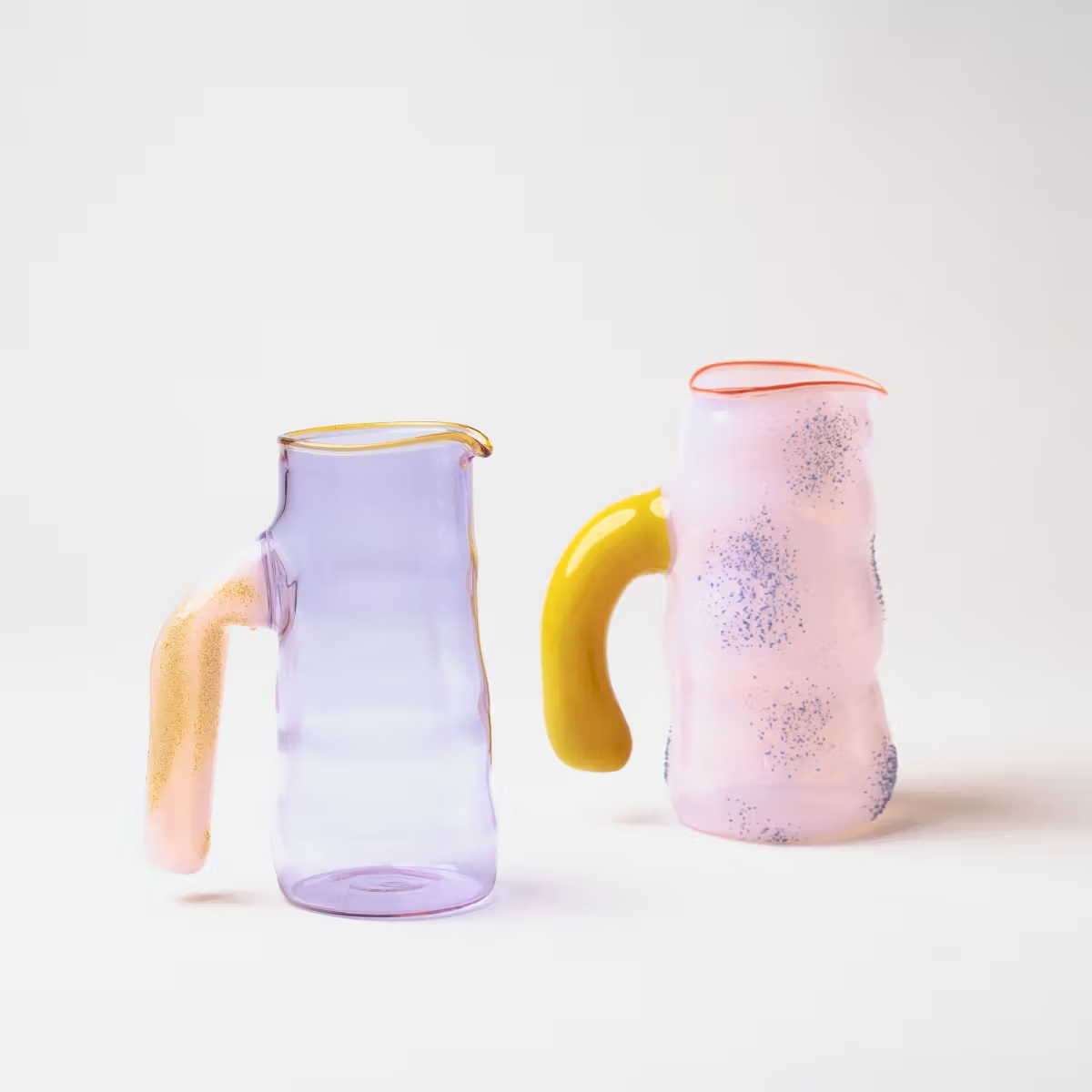
The exhibition also uses examples such as Jochen Holz’s creations and the pitcher designed for HAY to think about the relationship between unique works and daily utensils. After the use is changed, the viewing distance, production quantity and usage situation will also be different. The discussion cannot be ended by just choosing between art or merchandise.
Jug glass pitcher designed by Jochen Holz for HAY. Image: 春池玻璃
This connects exhibition viewing and daily object selection: when you like an object, in addition to its appearance, you can also further understand how it was made and why it is suitable for use as it is. Material knowledge not only remains in the exhibition space, but can also become a way to view daily objects later.
Ticket prices, opening hours and visit arrangements
The public ticket price is NT$50 for the full ticket and NT$30 for the discounted ticket. Hsinchu residents, eligible persons over 65 years old and under 6 years old are free of charge. 09:00 to 17:00 on weekdays, 09:00 to 18:00 on holidays, closed on Mondays; proof of free admission and arrangements for the day are subject to the organizer's announcement.
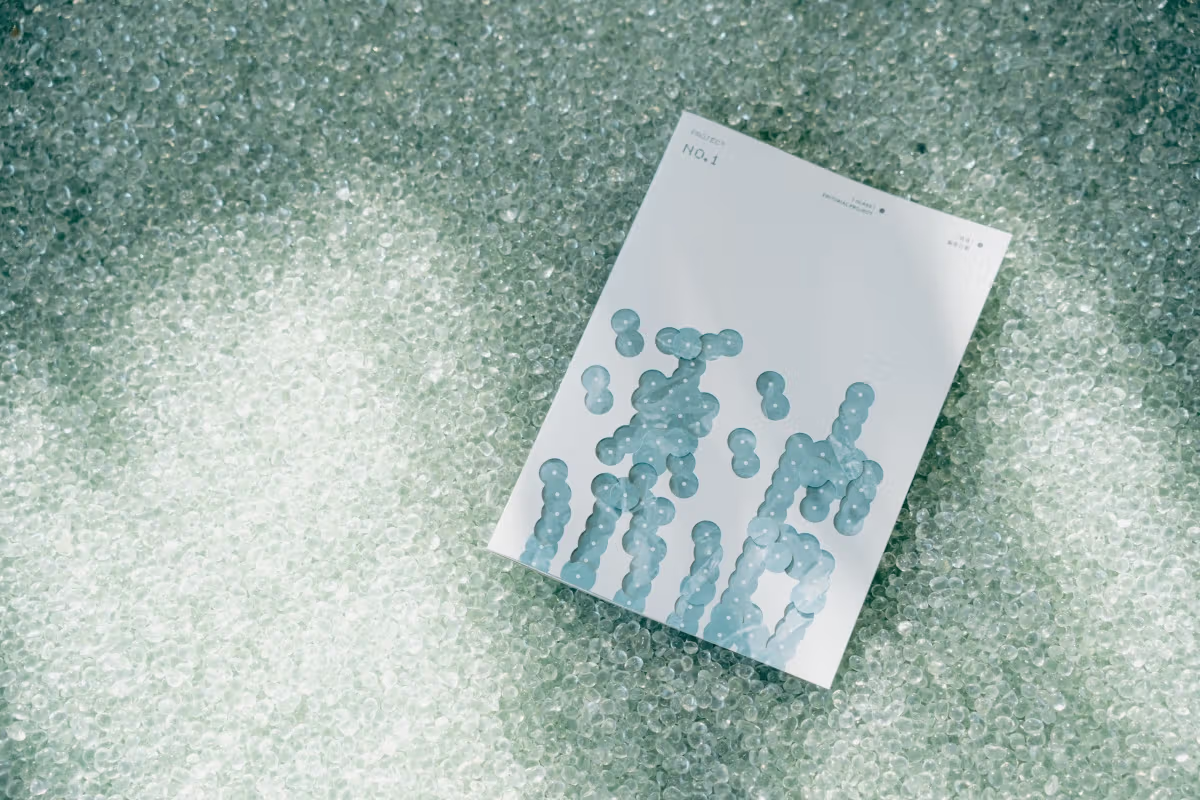
Exhibition publications and glass images. Image: 春池玻璃
Both exhibition venues are located within the Hsinchu Park area, so it is suitable to leave a full period of time and walk slowly. By first writing down the exhibition period, closing days, and the sound works you want to see, this glass art festival will not only focus on visual impressions, but also take away new questions about materials and cities.