Leica Q3 43 Formula 1 Edition: carbon-fibre controls and a 43mm view of racing culture
The USD9,950 camera begins Leica’s F1 licensing partnership with Microvelour, red controls and an exclusive Leica Look, retaining a 60MP full-frame core.
Racing and photography both value an instant, but bringing racing language into a camera need not make its body resemble a car. Leica and Formula 1 have begun a licensing partnership with the Q3 43 Formula 1 Edition, now available at a US price of USD9,950. Based on the Q3 43, it places carbon fibre, a covering reminiscent of a racing steering wheel and red controls where the hands work. These differences are best considered alongside its existing fixed-lens approach.
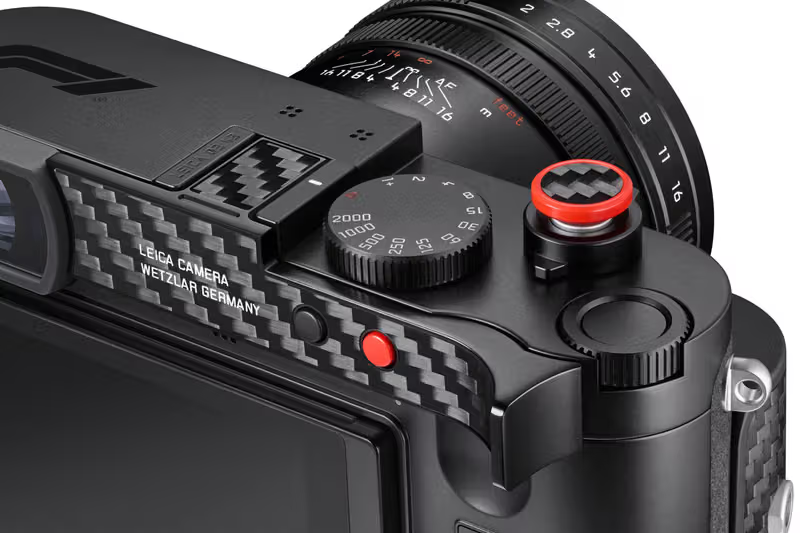
A closer view makes the carbon weave and red release clearer.
Carbon fibre is placed where the camera is held
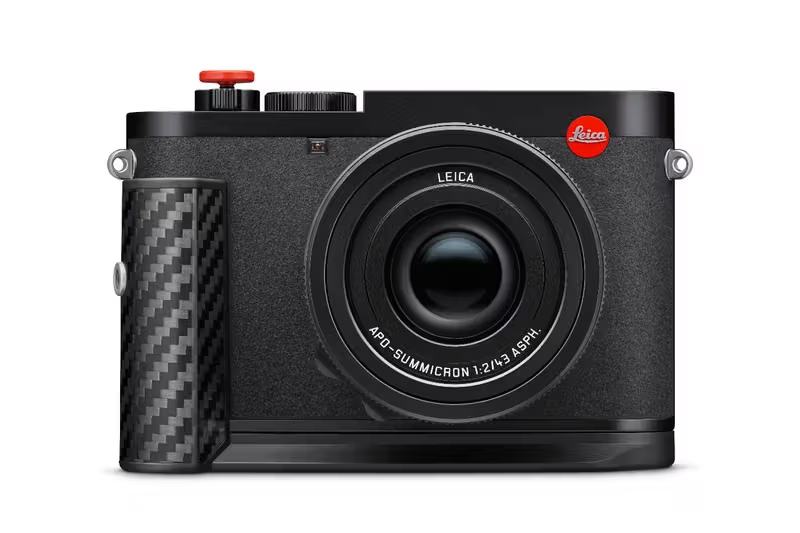
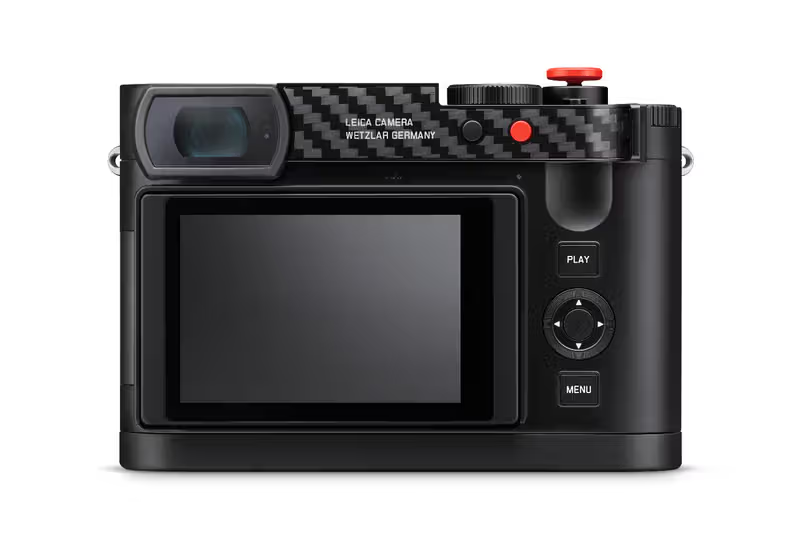
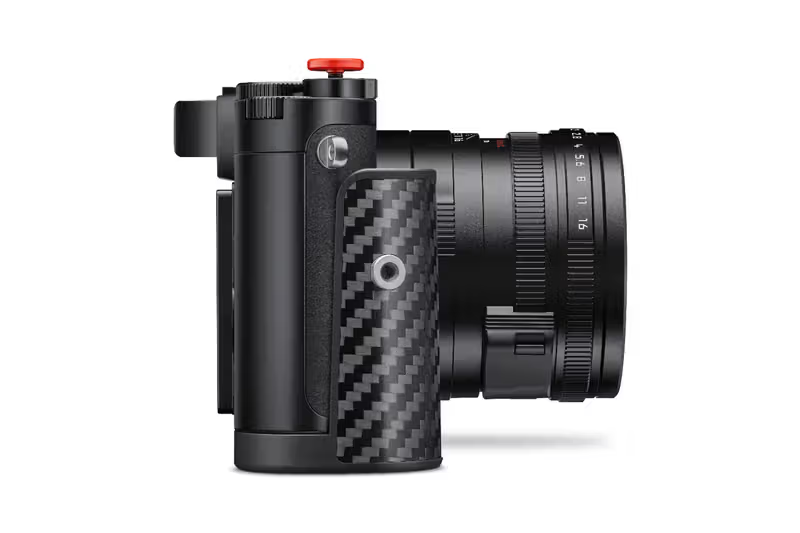
German-made carbon-fibre components appear in the wireless charging handgrip, thumb support and soft-release button details, with the weave reflecting light as angles change. Black Microvelour covering recalls a racing steering wheel’s grip. Front, side and rear product views show materials distributed around holding and control areas rather than spread evenly over the entire camera.
Weave and a red button distinguish the rear thumb support.A side view clarifies the relationship between grip and lens.
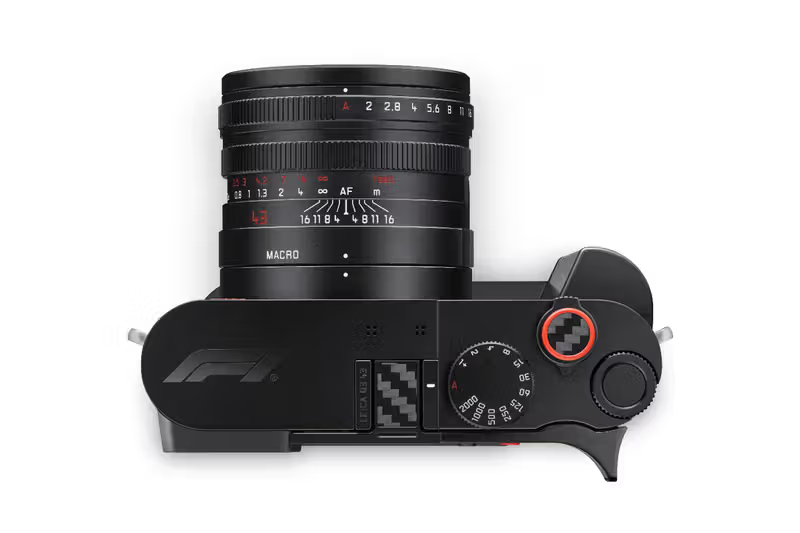
The shutter release and one function button on the thumb support stand out in red. F1 identifiers appear on the top plate and lens cap, with a co-branded rope strap supplied. The collaboration enters touch, sight and carrying. Although carbon fibre is associated with lightness, its name alone cannot establish a weight reduction against the standard camera; the complete official specifications remain necessary.
The top retains its dials while adding F1 identification.
A 43mm prime and 60MP full-frame sensor retain the photographic core
The camera retains the fixed APO-Summicron 43 f/2 ASPH. lens, full-frame sensor and hybrid autofocus, with 60, 36 or 18MP still-image options. Those resolutions continue to use the entire sensor area rather than simply selecting a smaller crop. They explain how the camera works; the racing covering does not create a new sensor.
A 43mm lens can frame people, the paddock and surrounding scenes through a chosen working distance. It does not bring a distant racing car closer in the way a zoom lens does. Deciding whether to follow faraway cars or record people and atmosphere at a circuit helps assess suitability more clearly than the F1 lettering alone.
The Formula 1 Leica Look enters the shooting workflow
The exclusive Formula 1 Leica Look uses stronger contrast and saturation in response to circuit colours. It can be transferred to the camera through Leica FOTOS and applied to JPEGs, with its effect previewed during shooting. FOTOS also handles smartphone transfer. This is an optional visual style rather than an increase in the sensor’s resolution or a requirement for every photograph.
The collaboration was introduced at Leica’s Los Angeles store and gallery with Ariana Bravo and Jenson Button, alongside 26 racing photographs by Callo Albanese. Leica’s official edition page provides technical information. Materials, controls and image style are three distinct layers to consider. Beyond liking the racing appearance, the central question remains whether a 43mm fixed lens fits the photographer’s way of seeing.