Hong Kong choral musician Sanders Lau discusses a shift in emphasis in a recent profile: after years of conducting, he wants to leave more room for his own vocal interpretation. The founder and artistic director of NOĒMA also works as a conductor, music producer and singer. Bringing music and stage clothing into the same conversation connects two practical questions: how to produce a voice and how to move.
Conducting and singing require different forms of attention
A conductor coordinates breathing, entries and relationships between sections. In singing, the body directly produces the sound. Lau describes the former as helping the whole ensemble succeed and the latter as focusing more closely on the pursuit of an individual voice. This is not an abandonment of choral music. It distributes one musician’s attention across different roles, allowing audiences to encounter another side of his work.
His official biography also lists guest conducting, individual lessons, choral coaching and workshops. Choral work extends well beyond the time spent onstage. Programming, communication in rehearsals and building a shared language among performers all precede the final chord an audience hears. For a new listener, understanding these roles can offer a more approachable starting point than memorising a long list of pieces.
Why can a small unaccompanied ensemble be powerful?
In the interview, Lau discusses unaccompanied choral singing with a little over ten people. Once instruments step aside, voices must build rhythm, pitch and layers of sound as well as communicate lyrics. Listen first to how a phrase passes between sections, then to when the singers breathe together. A seemingly simple ending can reveal coordination more directly than sheer volume.
The distance between classical and popular music does not always require an arrangement of a hit song to bridge it. Lau observes that a pop element may attract attention while leaving listeners focused on that familiar song. Another route is to bring familiar listening habits to an unfamiliar piece: follow the melodic direction, identify repetition and change, and gradually hear the relationships between voices.
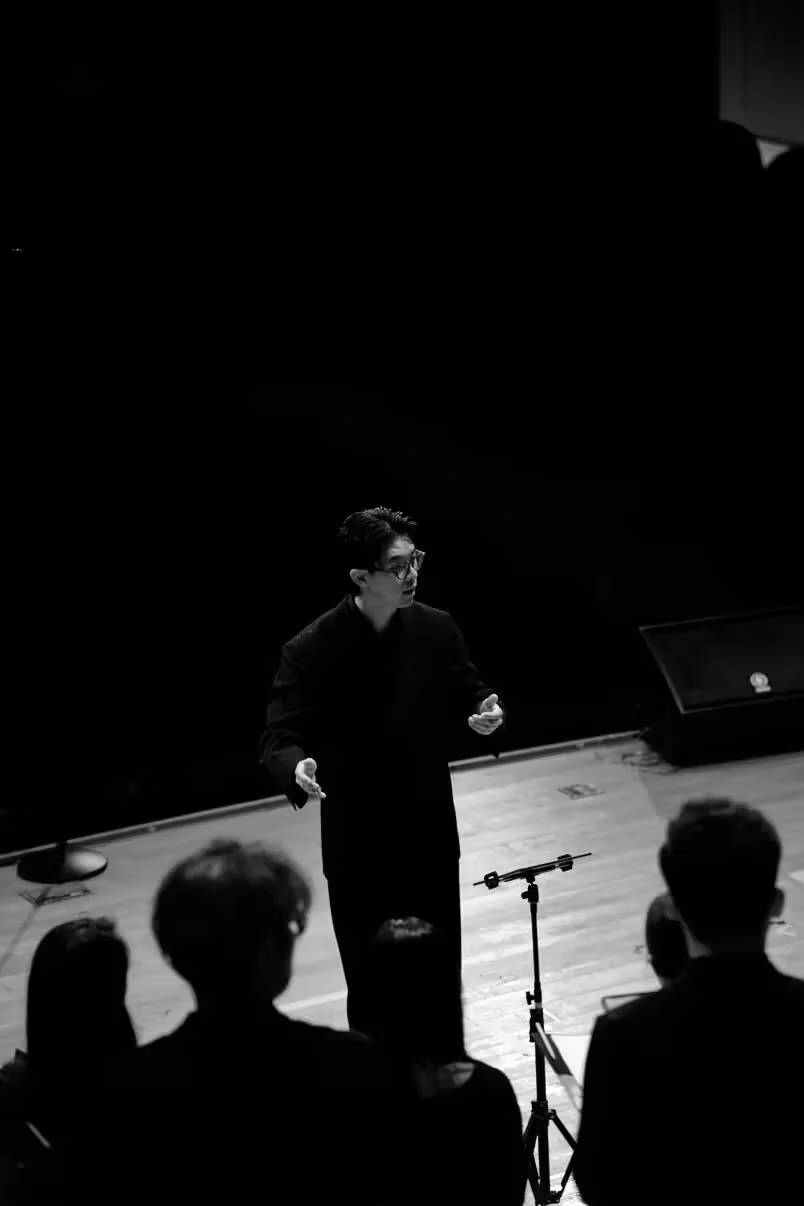
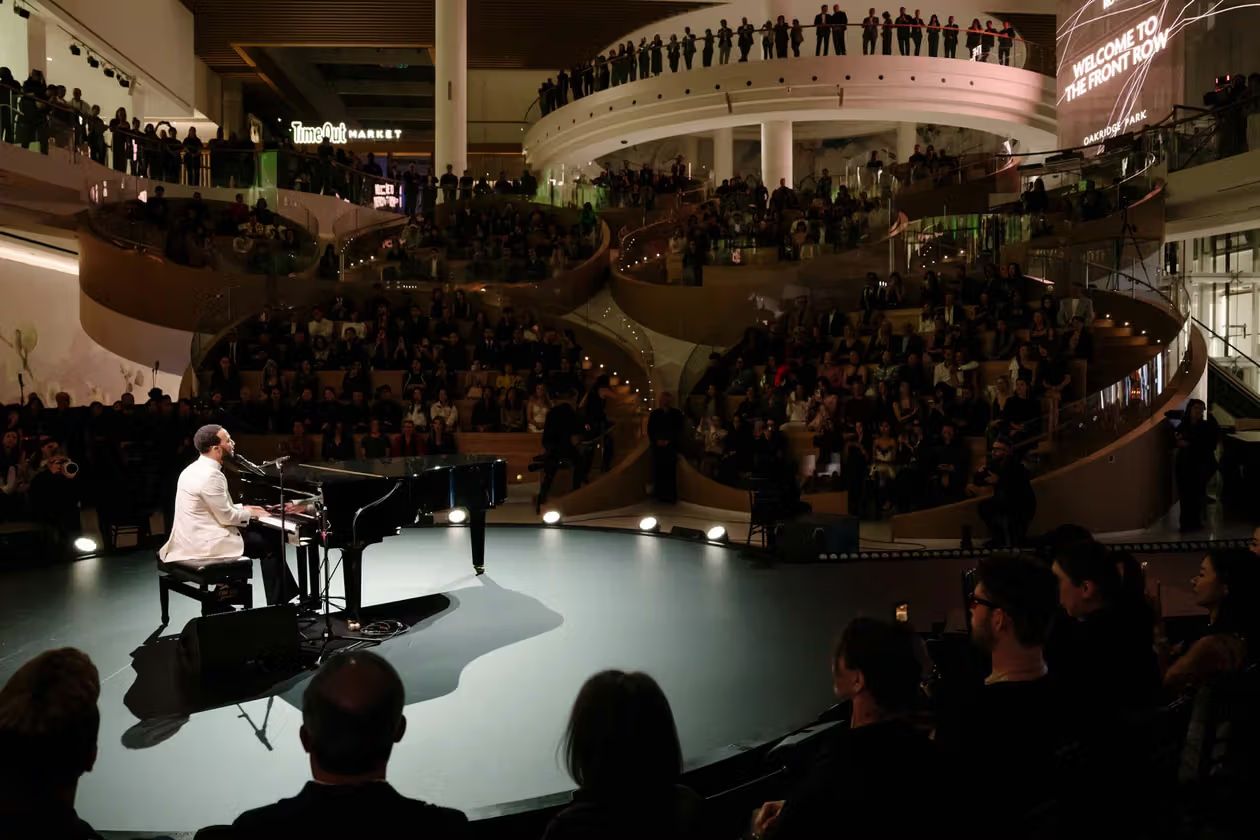
A performance image shows the spatial relationship between conductor and ensemble.
Why must a suit accommodate the arms?
Stage clothing has its own movement requirements. Lau discusses breathable fabrics, softer construction and reduced shoulder padding, with particular attention to armholes and the collar. Raised conducting arms, a singer’s breath and a turn of the body take clothing beyond a static display. A suit that looks good at rest may be less suitable for a long performance if movement pulls the entire jacket out of position.
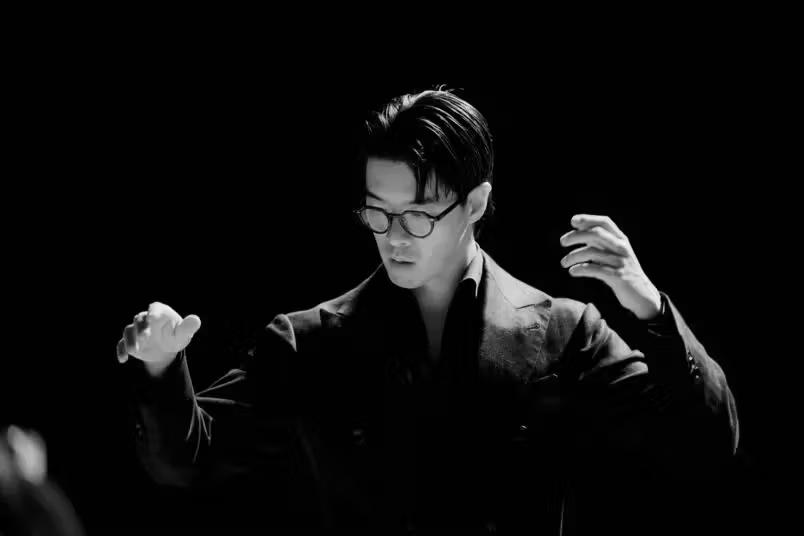
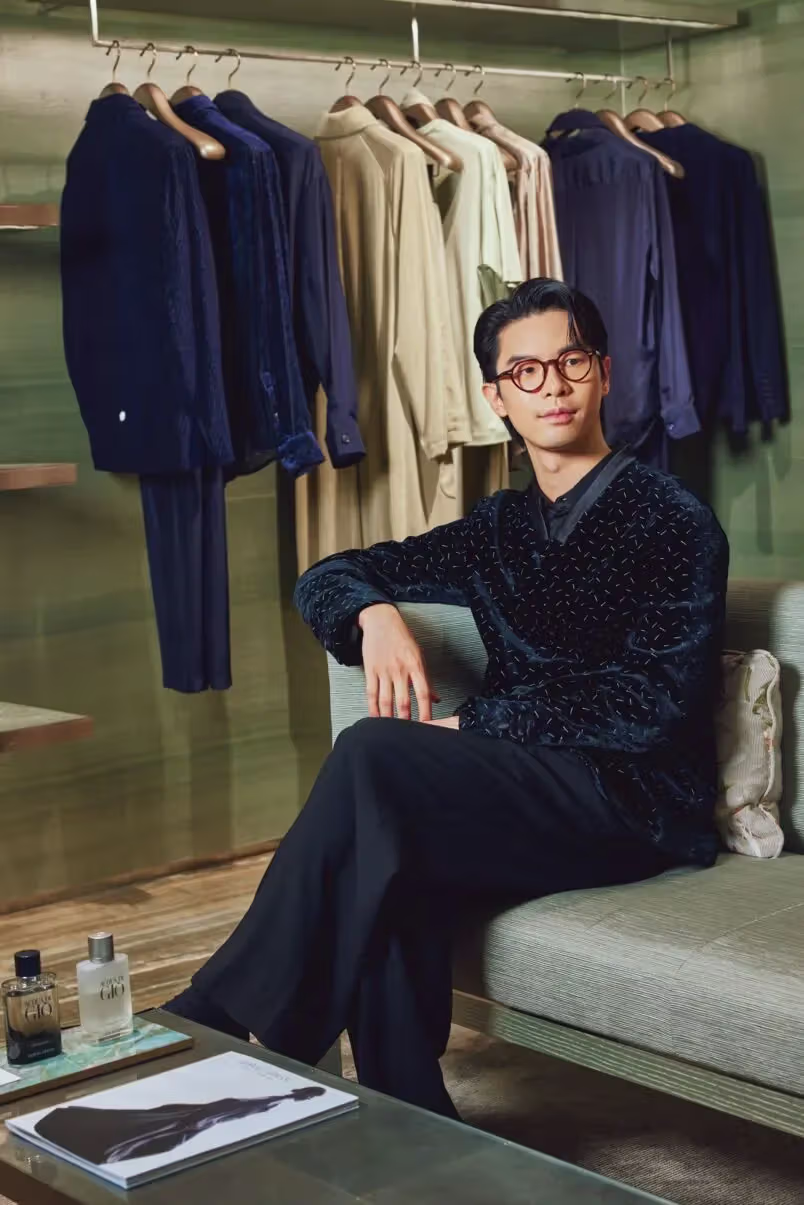
The profile’s dark clothing directs attention towards the face and gestures. Performance photographs place similar black clothing back within its working context. The two kinds of images can be read together without treating them as the same event. From choral music to tailoring, the discussion returns to a concrete scale: how one person breathes freely, how a group coordinates movement and how details make the overall form clearer.
A black-and-white performance photograph focuses on the conductor’s hands and gaze.A seated pose reveals a more relaxed line through the dark suit.