The First Japanese Watch from 1913, Reimagined by Seiko in Enamel and Lacquer
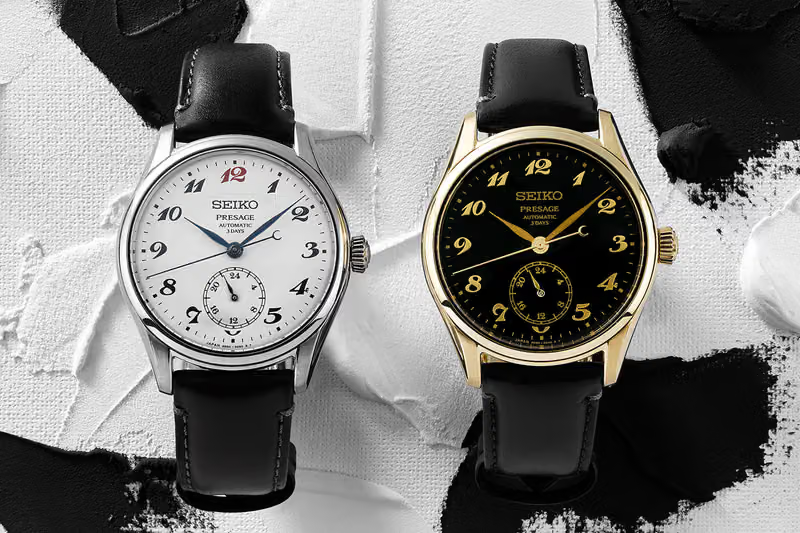
Seiko has launched two Presage Craftsmanship watches paying tribute to the 1913 "Laurel," recreating the same face in white enamel and black lacquer respectively. Pre-orders open August 13.
For the same 1913 watch face, Seiko has given two answers this time: one fired in white enamel, one brushed in black lacquer. Both point back to the same origin — the "Laurel," Japan's first mass-produced wristwatch.
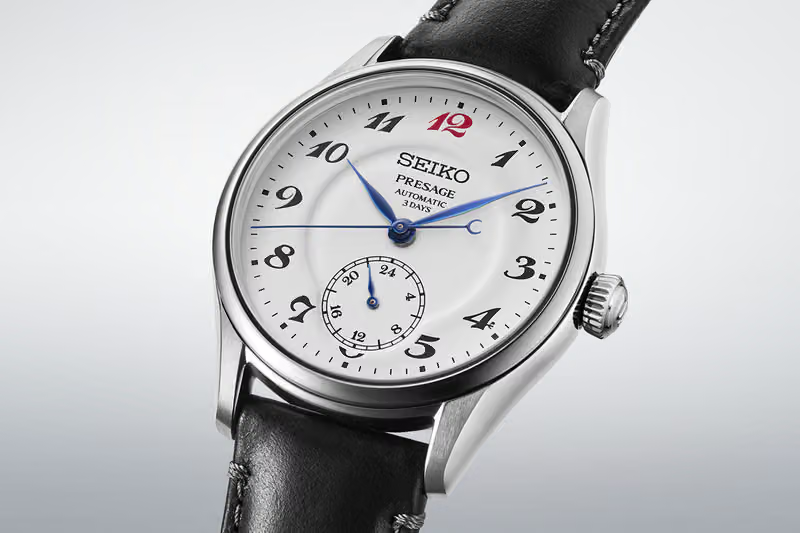
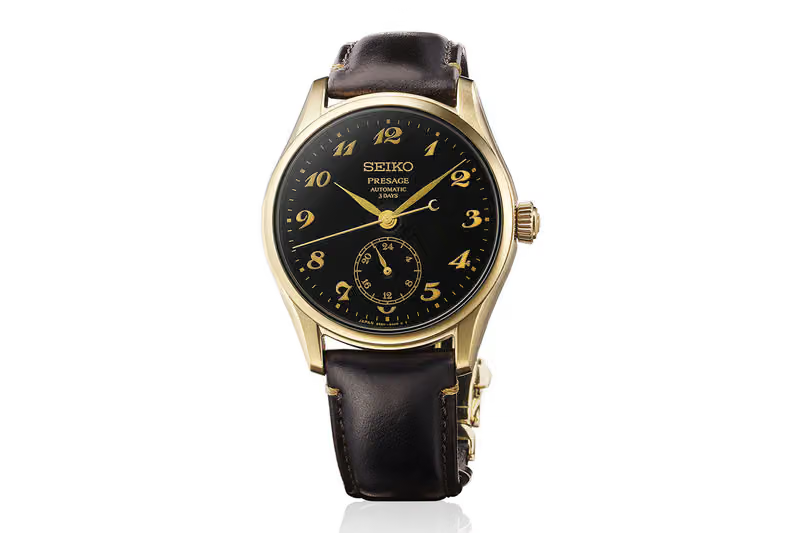
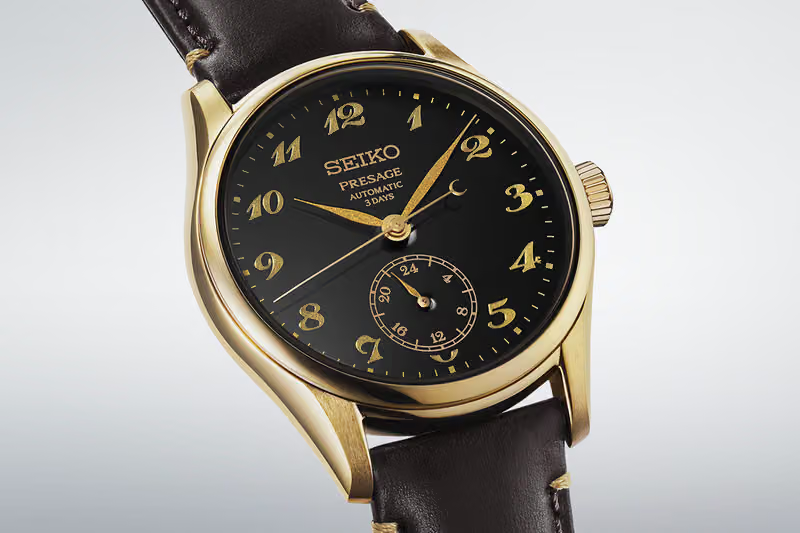
Rather than simply reissuing the vintage watch, Seiko's two new Presage Classic Series "Craftsmanship" models take apart the original design vocabulary and hand it over to two traditional Japanese crafts to rewrite separately. The dial retains Laurel's signature details: vintage-style Arabic numerals, a small seconds sub-dial at 6 o'clock, and a red marker at 12 o'clock. These elements remain consistent across both watches — all the differences lie in materials and technique.
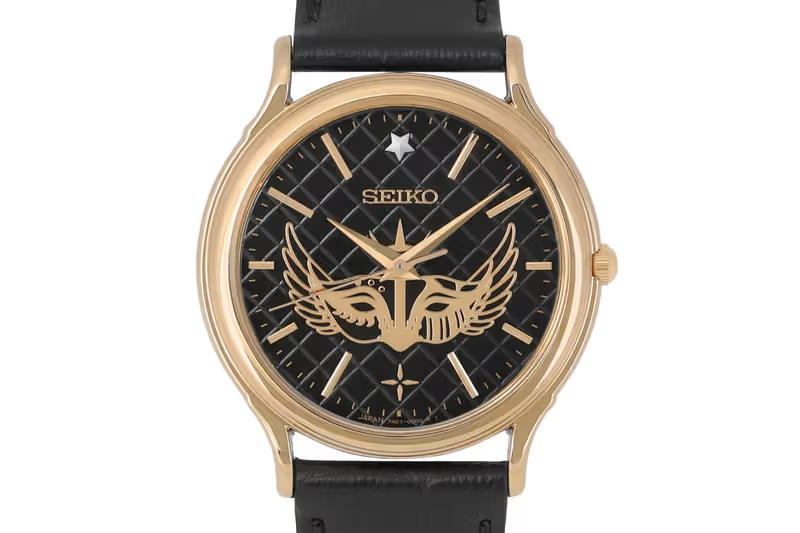
The Enamel Laurel Dial uses hand-applied enamel, its white face taking on a porcelain-like sheen beneath a double-curved sapphire crystal — a process closer to firing than painting. The Urushi Lacquer Laurel Dial takes a different route, using centuries-old Japanese lacquer craft to create a deep black dial, paired with a gold-toned case and vintage-style detailing, giving the surface an extra layer of lacquerware's characteristic depth compared to enamel.
Both watches come fitted with black leather straps certified by the Leather Working Group (LWG), and are powered by Seiko's in-house 6R5H automatic movement, with a daily rate of +25 to -15 seconds and roughly 3 days of power reserve — the one spec where the two models don't diverge, leaving all the craftsmanship distinctions to the dial.
The Seiko Presage Classic Series "Craftsmanship" Enamel Laurel and Urushi Lacquer Laurel are now available for pre-order on the Seiko Boutique website as of August 13, 2026, with deliveries expected to begin in September. Pricing ranges from £1,250 to £1,400 (approximately $1,680 to $1,882).