The flashlight feature on your watch is underrated: An Engadget testimonial
Engadget editor Max Miller tested the flashlight function of Samsung Galaxy Watch and found that this often ridiculed white screen light design is actually more practical than imagined. The key lies in those moments when the phone is not at hand.
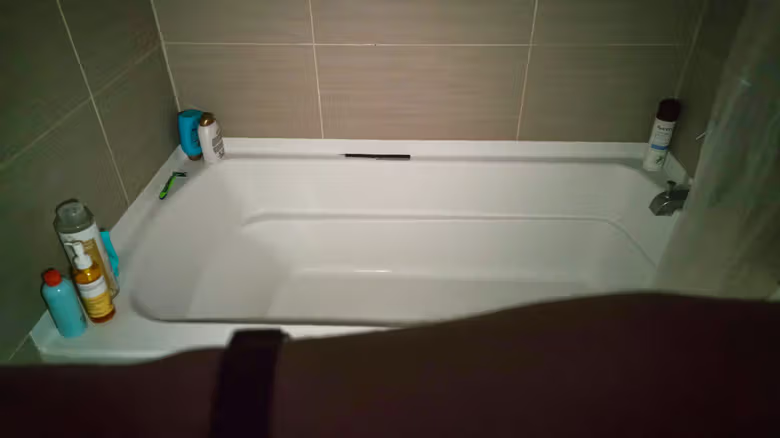
Finding a pill that's fallen deep in the carpet doesn't necessarily involve digging through your kitchen drawers for a flashlight. Engadget editor Max Miller did a not-so-scientific but convincing enough test in his bathroom: he adjusted the screen brightness of the Samsung Galaxy Watch to maximum brightness and used it as a flashlight. The result was that the effect of illuminating the space was "completely sufficient". It was not the power of the sun, but it was more than enough to find things.
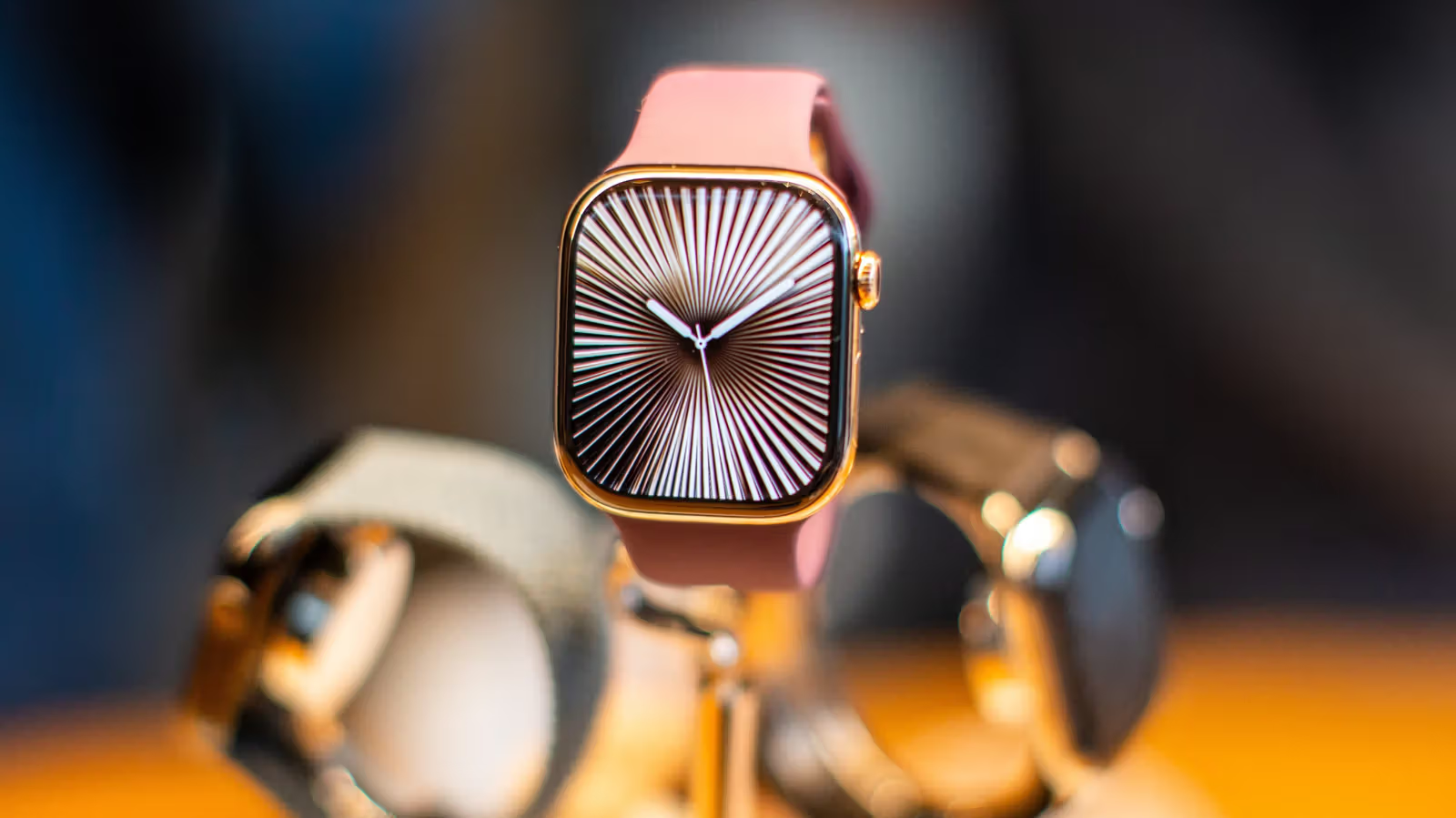
The feature itself is nothing new. Apple Watch, Google Pixel Watch and Samsung Galaxy Watch all have built-in similar designs, and the principle is very straightforward: turn the entire screen white and maximize the brightness. Compared with the real LED flashlight built into some Garmin models, this approach is indeed easy to be ridiculed in quotes. After all, the phone’s camera flash is brighter and more like a genuine flashlight.
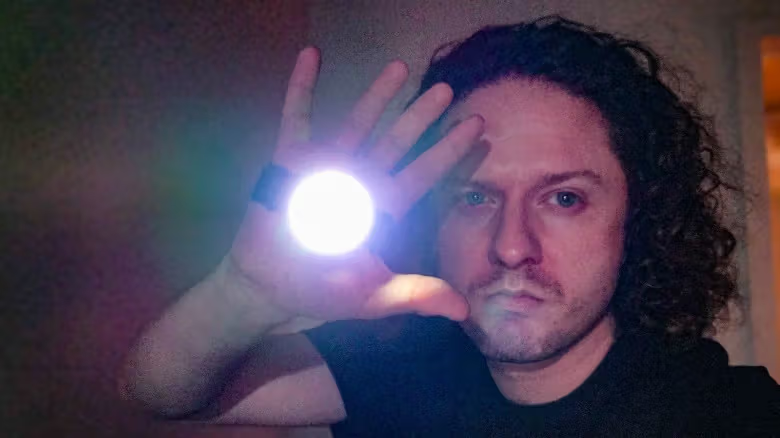
But Miller's angle is practical: Phones won't stick to your hands forever. One of the reasons to buy a smart watch is that you can leave your phone on the charging cradle without missing calls or text messages. When the phone is charging in another room and a light source is needed temporarily, the watch is the only device that can be used at the moment. He also pointed out that a mobile phone is a heavy object with a difficult shape to hold, and it is difficult to take care of lighting when using both hands. If you don’t want to lean the phone awkwardly against something, a watch becomes a more convenient option - you can even tie the strap directly to the palm of your hand to act as emergency lighting.
The article does not provide any specifications or test data. It is purely an observation of personal usage scenarios: the watch flashlight is not intended to replace mobile phones or professional lighting tools, but to supplement the light that no one expected it to provide at the moment when the mobile phone is not around and both hands are needed.