A car wearing the Suzuki badge but assembled in India rolled into Japan and knocked Mercedes-Benz down to second place on the import charts. Sounds like a punchline, but the first-half 2026 numbers are real: reverse imports of Japanese-brand vehicles back into Japan hit 72,330 units that quarter, up 38% year-over-year, with Suzuki alone accounting for 34,288 of them — enough to claim the top spot.
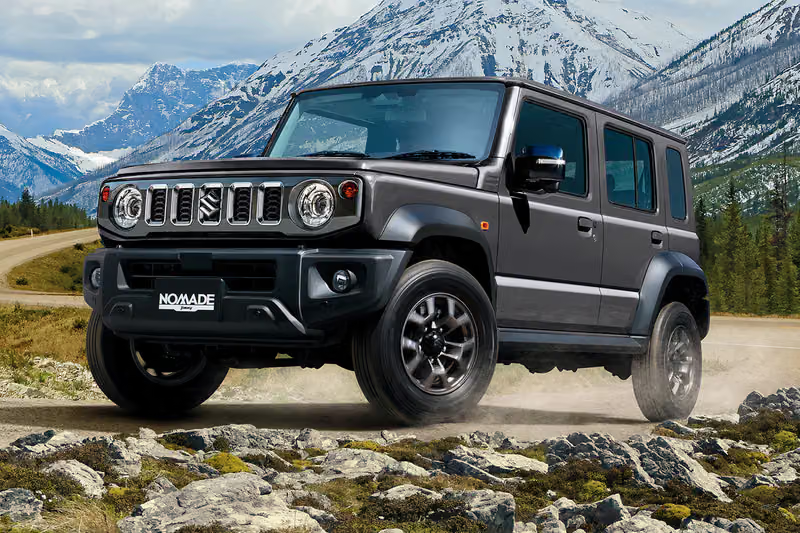
Carrying that number is the Suzuki Jimny Nomade, the five-door version of the boxy off-roader, built exclusively at an Indian plant and pitched as offering more cargo space than the three-door standard model, all powered by a 1.5-liter engine. Japanese families are sold on a simple pitch — the same Jimny look and off-road chops, plus two extra doors and a more usable trunk. Demand got so hot that Suzuki actually had to pause domestic pre-orders in Japan after bookings blew past 50,000. Suzuki executives have said publicly that manufacturing quality at the Indian plant is now closing in on that of its home production lines.
The cost math behind all this isn't hard to follow. Reports show workers at the Indian plant earn about $388 a month, versus an average of $1,900 a month for the same job in Japan. That gap explains why automakers are happy to shift production to India or Thailand and ship the finished cars back to sell in Japan. Toyota's running the same playbook, importing 15,977 units over the same period, led by the Thailand-built Hilux and the newly launched Land Cruiser FJ.