Wu Wu-yi on flowing homes: Lafon’s architecture talks connect light and circulation with GROHE bathroom design
Two autumn events in Taichung and Kaohsiung used models and everyday circulation to explore living spaces, distinguishing Grohtherm Aqua Tiles controls from Rainshower ceiling modules.
How well a home works often becomes apparent while turning, walking and using its fixtures every day. This autumn, Lafon Group held two architecture talks in Taichung and Kaohsiung on shaping a home through life and flowing architecture, inviting Yuan Gen Architectural Firm principal Wu Wu-yi, with GROHE as co-organizer. The events combined a kitchen-and-bath distributor’s architectural discussions and product presentation. Published records already show model discussions and bathroom proposals, rather than future sessions still awaiting registration.
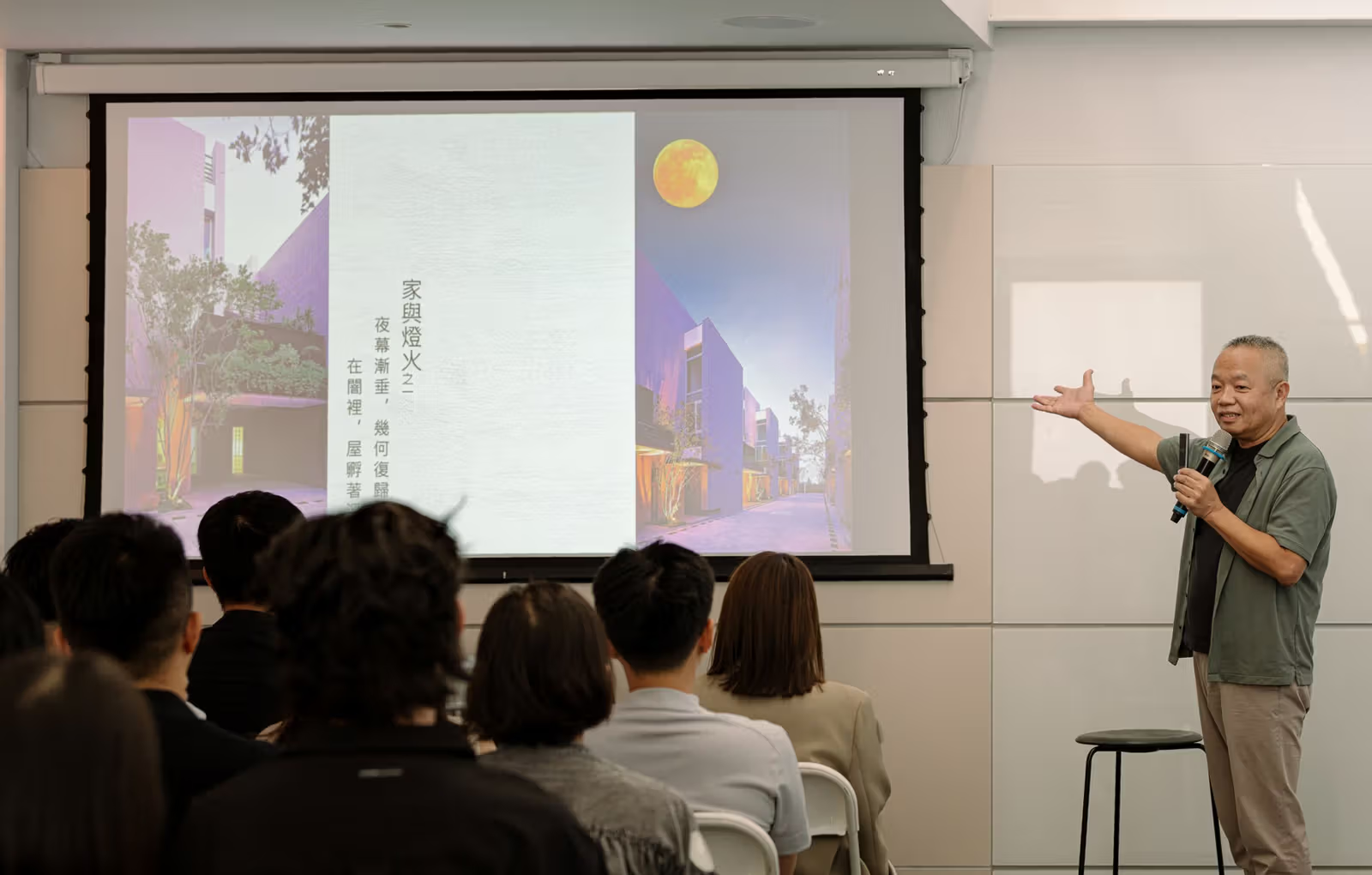
Wu Wu-yi shares spatial ideas through residential projects at the talk.
Light and circulation come before decorative vocabulary
The presentation drew on projects including Xin Di Ju, Bi Bo Fei, Zhen Xiang Zhi Jia and Feng Huang Pu Ti to explore people and nature in housing. Wu discussed natural light, unfilled space, connections involving stairs and light wells, and courtyard trees and seasonal views. These are not decorations added after rooms are finished. They shape where sightlines lead, how bodies move and how the atmosphere changes through the day.
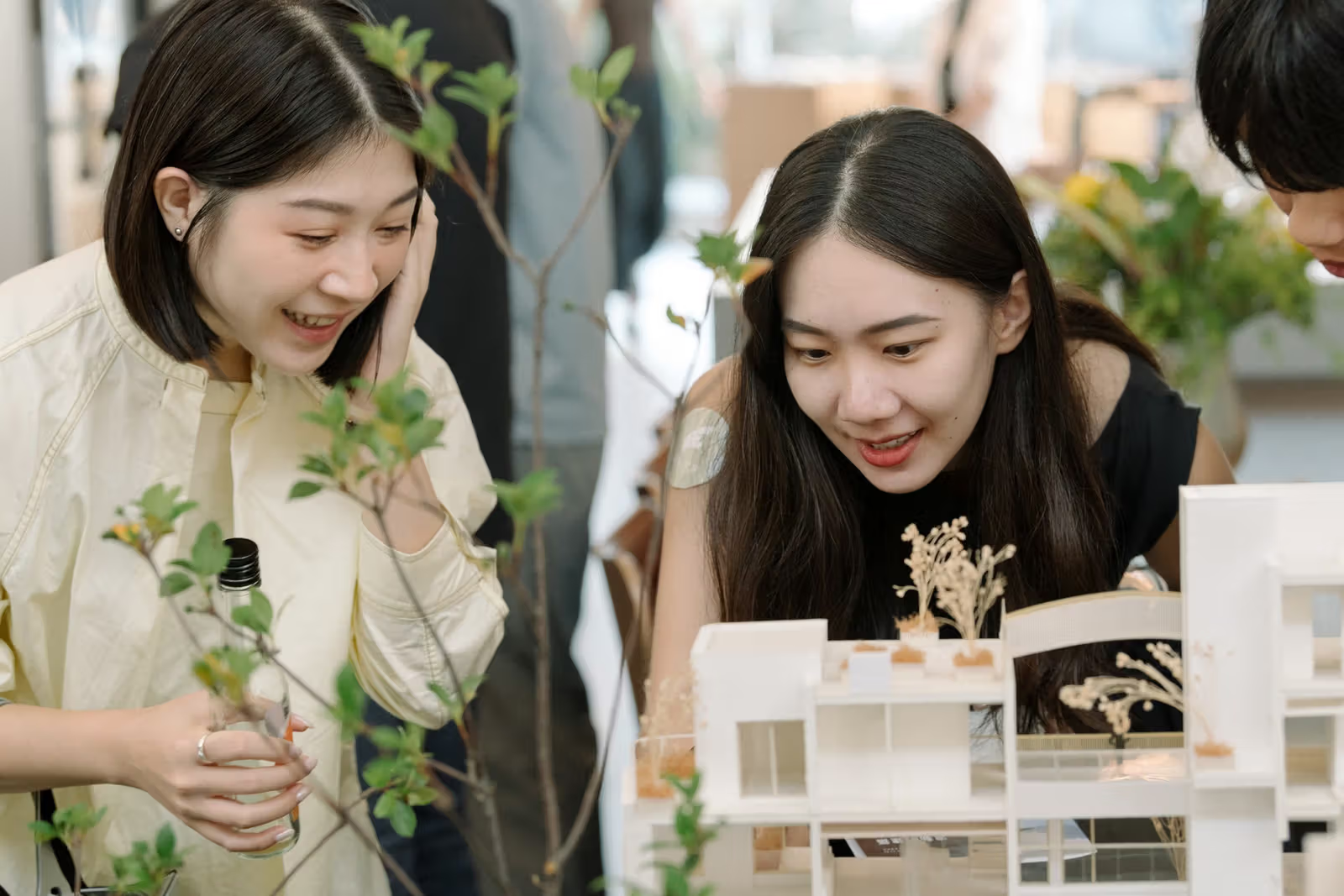
Event photographs show the architect and participants examining a model together, bringing white volumes, floor openings, trees and connecting routes into the same field of view. Models can temporarily unite relationships otherwise scattered across plans, sections and imagination. Where one enters, what appears while moving between floors and how a courtyard meets an interior become starting points for discussion, beyond an attractive photograph of a completed building.
The architect and participants discuss spatial relationships through a model.The model brings volumes, trees and connecting routes into one view.
Controls and overhead showers are different systems
The bathroom presentation included the Grohtherm Aqua Tiles concealed thermostat. GROHE’s official product description specifies a metal faceplate and recessed buttons that protrude slightly when activated. Configurations can support up to five shower functions, connecting hand showers, overhead showers or optional body sprays. “Up to five” describes configuration capacity, not a promise that every purchased set includes five showerheads.
Rainshower Aqua Tiles, by contrast, are ceiling shower modules. Single, double or extended elements can form horizontal, vertical and right-angle arrangements. Their role differs from the wall-mounted thermostat panel: one determines where water falls within the space, while the other selects and controls functions. Separate Rainshower Aqua overhead options include a 360 mm diameter round head and a 400 × 230 mm rectangular head. The 360 mm figure is not a universal dimension for all ceiling modules.
Turning a presentation into questions about your own home
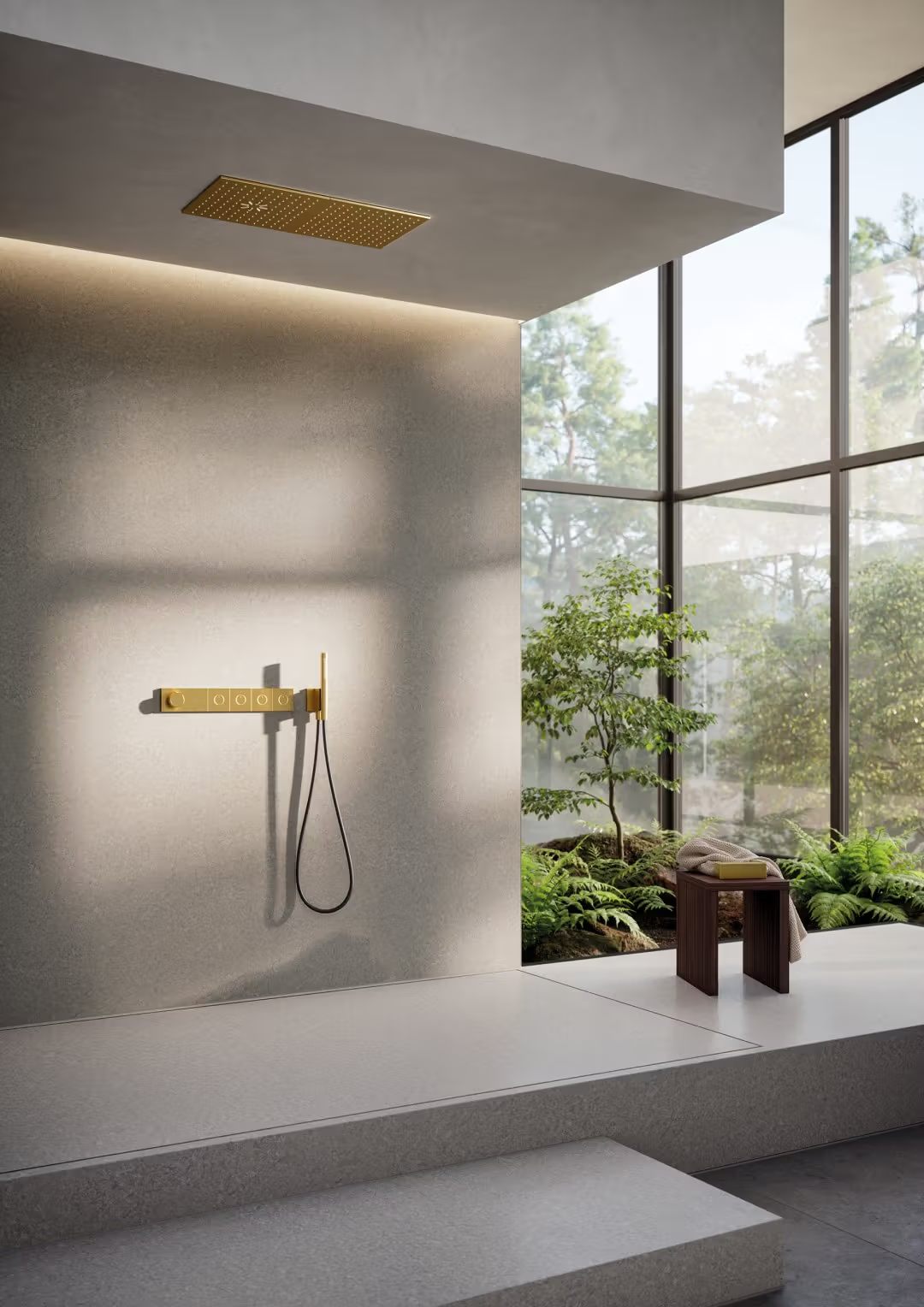
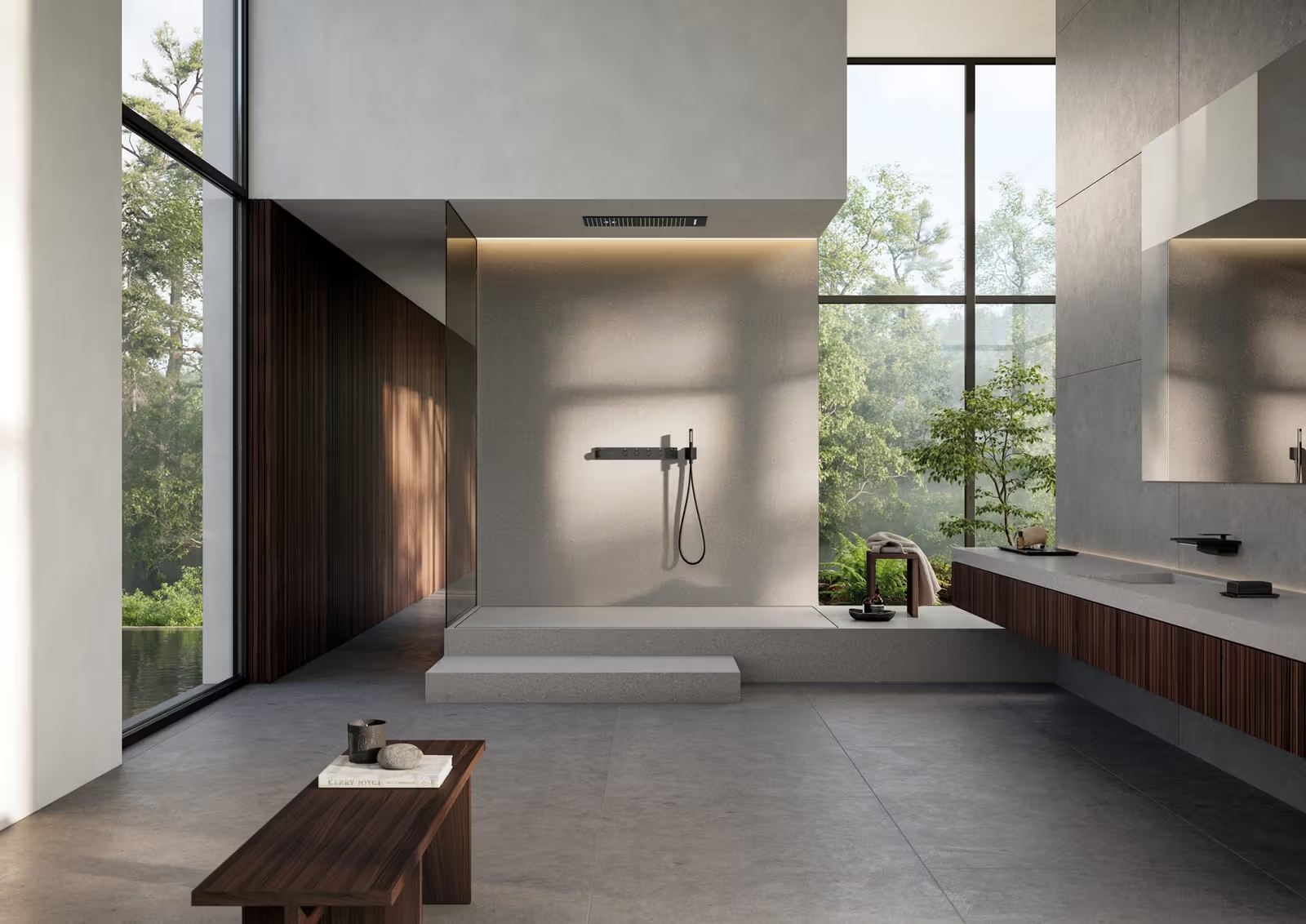
The published bathroom imagery connects large window views, stone-like tones and restrained controls to light and water use. It helps illustrate how fixtures can merge with a wall, but these are brand spatial illustrations, not completed photographs of Wu’s residential projects mentioned above. Useful questions to carry from the architecture talk into product selection include where frequent controls are easiest to reach, how multiple users identify functions, and whether a shower arrangement suits the room’s dimensions.
Another spatial illustration connects dark controls with window views and wood furniture.
The public event records give no new registration date, package price or standard installation charge, making this a reference for pre-renovation thinking. For further comparison, consult the official Lafon website for brands and displays, then discuss existing bathroom measurements, intended water functions and fixtures to retain with a professional. Clarifying habits and spatial conditions first makes it easier to judge which forms of “flow” improve daily life and which remain visual effects in an image.